TRUMP SAYS U.S. ALLIES WILL REPAY ‘ANY AND ALL’ COSTS OF IRAN WAR AS ANALYSTS QUESTION WHETHER DEMAND IS REALISTIC
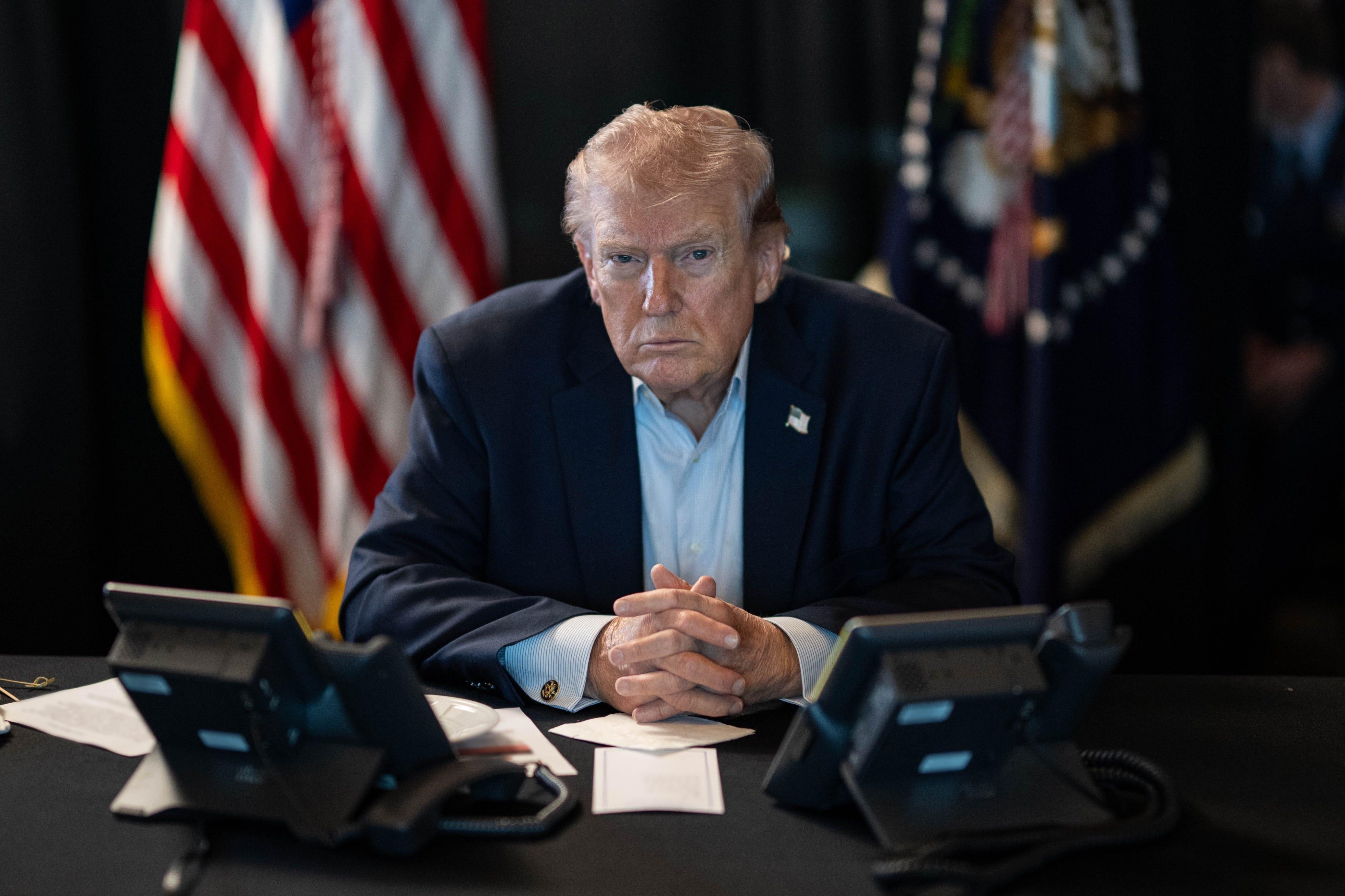
President Donald Trump says countries protected by the United States during the Iran war will repay Washington for “any and all” costs associated with the conflict. The Pentagon estimates direct U.S. spending had reached about $47.1 billion by October 16, while the Congressional Budget Office says continued fighting could cost another $2 billion to $3 billion per month. Trump has not announced a repayment formula or agreements with Israel or Gulf allies, and analysts say the comments are more likely to reflect political signaling and negotiating pressure than a fully developed compensation policy.
President Donald Trump has said countries protected by the United States during the war with Iran will be expected to reimburse Washington for what he described as “any and all” costs of the conflict, reviving a demand he has raised repeatedly throughout the year and placing new pressure on Israel and Gulf allies already dealing with the economic and security consequences of months of fighting. Trump made the remarks during a wide-ranging CBS 60 Minutes interview aired on Sunday, November 8, saying the United States would recover the money it had spent defending countries across the Middle East and maintaining military protection around critical shipping routes. He did not identify a specific repayment formula, disclose agreements already signed with allied governments or explain how Washington would legally compel another sovereign state to reimburse U.S. military expenditure, leaving analysts to question whether the comments represent a serious policy proposal or another example of Trump using financial leverage and public pressure as part of his negotiating style.
Asked during the interview about the continued U.S. military presence around the Strait of Hormuz and how Washington could eventually reduce that deployment, Trump rejected the suggestion that maintaining American forces in the region was prohibitively expensive. He then broadened his answer into a financial claim, saying that countries the United States had protected during the conflict would repay Washington for the costs it had incurred. Trump argued that U.S. intervention had been essential to the survival and security of allied governments, particularly Israel, and presented reimbursement as an expected consequence of the military support Washington had provided.
The president’s comments were direct but lacked the policy detail normally associated with a formal burden-sharing agreement. He did not specify which countries had accepted the demand, how much each would be expected to pay, what categories of military expenditure would qualify for reimbursement or whether the payments would take the form of cash transfers, defense purchases, investment commitments or broader economic concessions. No joint announcement was issued by the governments potentially affected, and the White House has not publicly released a written reimbursement framework.
That absence of detail is one reason analysts have treated the statement cautiously. Several Middle East specialists told Al Jazeera that Trump’s language was more likely intended as political signaling, domestic messaging or negotiating leverage than as evidence of an established policy mechanism. Neil Quilliam, an associate fellow in the Middle East and North Africa program at Chatham House, characterized the remarks as political signaling rather than a fully developed repayment plan, while other analysts suggested Gulf governments would probably resist any attempt to present them with a direct bill for a war they did not start.
The idea is not entirely new. Trump raised a similar demand in July while discussing U.S. protection of the Strait of Hormuz, arguing that wealthy Gulf states benefiting from American military protection should help cover the cost. At the time, he specifically named Saudi Arabia, the United Arab Emirates, Qatar, Bahrain and Kuwait among the governments benefiting from U.S. security operations. He said the United States was protecting a wealthy part of the world and should be reimbursed for doing so.
Those comments reflected a principle Trump has applied repeatedly to U.S. alliances: that countries receiving American military protection should contribute more directly to the financial cost. He has used similar arguments in discussions involving NATO allies, South Korea, Japan and other partners, often portraying U.S. security commitments in transactional terms and questioning why American taxpayers should carry what he considers a disproportionate share of the burden.
The Iran war has made that argument considerably more consequential because the financial cost has grown rapidly. According to an estimate provided by U.S. Central Command to Congress, direct American expenditure on the conflict had reached approximately $47.1 billion by October 16. That figure included around $29 billion to replace weapons and munitions, $11.9 billion for military operations and roughly $6 billion in equipment losses. The estimate did not include all damage to U.S. military installations in the Middle East, meaning the eventual total could be higher.
The Congressional Budget Office has separately estimated that the continuing conflict could cost approximately $2 billion to $3 billion per month depending on the intensity of military exchanges. Its earlier estimate placed direct U.S. costs at roughly $38 billion from the beginning of the war on February 28 through August 1, while warning that a prolonged conflict would also create broader economic consequences through higher energy prices and inflation.
The financial burden has become politically sensitive in the United States, particularly after Republicans suffered major losses in the November 3 midterm elections. Trump acknowledged during the 60 Minutes interview that the Iran war and higher fuel prices had contributed to voter dissatisfaction, although he also argued that the broader economy remained strong and blamed what he called poor Republican messaging for the party’s defeat.
Vice President JD Vance has also publicly distanced himself from aspects of the war following the midterm setback, adding to speculation that the administration is looking for ways to reduce the domestic political cost of the conflict. Demanding reimbursement from allies could allow Trump to argue that American taxpayers will not ultimately bear the full financial burden, even if no formal repayment arrangement has yet been negotiated.
That political context is central to how analysts are interpreting the comments. Stefan Lukas, a security and foreign-policy analyst specializing in the Middle East and North Africa, told Al Jazeera that the remarks should be understood partly through the domestic fallout from the midterms, while Bader al-Saif of Kuwait University said Gulf states were likely to treat the president’s comments with caution rather than immediately assume they would receive a formal invoice from Washington.
For Gulf governments, the issue is particularly sensitive because many have already suffered economic and security consequences from the war. Iranian missile and drone attacks, disruptions to shipping, pressure on energy infrastructure and the broader instability surrounding the Strait of Hormuz have imposed substantial costs across the region. Governments that allowed U.S. forces to operate from bases on their territory have also faced increased security risks.
Saudi Arabia, Qatar, the United Arab Emirates, Bahrain and Kuwait all maintain deep security relationships with the United States, and several host major American military facilities or provide logistical support for U.S. operations. Those arrangements already involve substantial financial contributions, including base maintenance, military procurement, infrastructure spending and long-term defense contracts.
That is one reason analysts say any attempt by Washington to demand direct reimbursement could meet resistance. Gulf governments could argue that they already contribute heavily to American regional security operations and that their defense spending, arms purchases and investment commitments should count toward any burden-sharing calculation.
Trump may nevertheless define repayment broadly enough to avoid a direct cash demand. Analysts have noted that he frequently treats trade agreements, investment pledges, weapons purchases and other economic arrangements as forms of compensation or evidence that another country is contributing more fairly to the relationship.
That could create room for the administration to claim success even without governments transferring money explicitly labeled as reimbursement for the Iran war. Existing Gulf investment commitments in the United States, expanded defense contracts or new trade agreements could potentially be presented politically as offsetting part of the cost.
The distinction matters because a formal demand for sovereign governments to repay the United States for military action would raise difficult diplomatic and legal questions. There is no automatic international-law principle requiring an ally protected during a war to reimburse the country providing military assistance unless such an obligation is established by treaty, contract or another agreement.
Military alliances typically involve shared obligations rather than retroactive billing. NATO, for example, sets defense-spending expectations but does not operate as a system in which the United States invoices other members each time American forces participate in collective defense. Bilateral defense arrangements in the Gulf similarly contain specific agreements governing bases, equipment, access and cooperation.
Trump’s approach has often challenged those traditional assumptions by treating security relationships more like commercial arrangements. He has repeatedly argued that allies benefiting from American power should compensate the United States in measurable financial terms.
Israel presents an even more complicated case. Washington has historically been Israel’s largest military supporter, providing billions of dollars in annual assistance under long-term agreements. Trump’s suggestion that Israel should effectively repay the United States for protection during the Iran war would run in the opposite direction from decades of financial arrangements in which U.S. assistance flows toward Israel rather than the other way around.
During the 60 Minutes interview, Trump singled Israel out while arguing that American intervention had been essential to its survival. He credited U.S. B-2 bomber strikes on Iranian nuclear sites with protecting Israel and claimed that Washington’s military actions had destroyed or severely damaged Iran’s nuclear capabilities.
Those claims remain politically and technically contested. U.S. officials have said the strikes caused major damage to Iranian nuclear facilities, but assessments of Tehran’s remaining material, technical capacity and ability to rebuild have varied. The continued U.S. search for information about Iran’s nuclear program also indicates that Washington does not possess complete visibility into every aspect of the program.
Israel itself has not announced that it accepts an obligation to reimburse Washington for the Iran war. Analysts have questioned whether a government that has traditionally received U.S. military support would agree to a new arrangement requiring it to cover a significant share of American combat spending.
The issue also comes at a time when Trump has signaled potential changes to the future structure of U.S. support for Israel. Analysts cited by Al Jazeera suggested that Washington could seek economic concessions or revised assistance arrangements rather than literal repayment of past military expenditures.
That possibility would fit Trump’s broader negotiating style more closely than a direct demand for a check covering a percentage of the Pentagon’s $47.1 billion estimate.
The Strait of Hormuz remains central to the president’s argument because maintaining security there requires a substantial U.S. naval presence. The narrow waterway is one of the world’s most important energy corridors, connecting major Gulf producers with global markets. Disruption during the Iran conflict has affected oil shipments, insurance costs and energy prices worldwide.
American naval vessels have escorted commercial traffic and maintained security around the passage while Washington has also used military force against Iranian assets. Trump has repeatedly argued that countries dependent on Gulf energy benefit directly from those operations and should contribute financially.
That argument raises another question: whether countries outside the Middle East could eventually be included. Asian and European economies import large volumes of oil and gas through the Strait of Hormuz, and Trump previously called on major trading nations to participate more directly in maritime security efforts.
If the administration defined reimbursement according to economic benefit rather than geography, the list of governments potentially affected could expand far beyond Israel and the Gulf states.
No such framework has been announced. For now, the president’s remarks remain a political declaration rather than a published financial plan.
The broader strategic context is also shifting. Trump said in the 60 Minutes interview that he was not seeking another major escalation with Iran and suggested that the war was effectively winding down, even as U.S. forces continued operating in the region and diplomatic negotiations remained incomplete.
Washington and Tehran have been exploring possible negotiations through intermediaries, including Qatar, while unresolved disputes remain over sanctions, nuclear restrictions, maritime security and the future of the Strait of Hormuz.
A reduction in fighting could make the compensation question more politically prominent because governments would begin assessing the war’s final financial costs. It could also create opportunities for Trump to link reimbursement demands to broader diplomatic settlements.
However, any attempt to extract significant payments from Gulf partners could complicate those negotiations. Qatar, Saudi Arabia and the United Arab Emirates have all played diplomatic or logistical roles during the conflict, and Washington relies on their cooperation for military basing, intelligence, energy policy and regional diplomacy.
Relations have already been strained by disagreements over the war’s duration and consequences. Gulf governments generally want to prevent further escalation with Iran, partly because they remain vulnerable to Iranian retaliation even when U.S. and Israeli forces conduct the attacks.
Asking those governments to pay for the war afterward could deepen resentment, particularly if leaders believe they were exposed to additional danger because of American or Israeli military decisions.
Analysts have therefore predicted that Gulf states would likely respond quietly rather than engage in a public confrontation with Trump. They could resist specific payment demands while offering alternative forms of economic cooperation that allow both sides to claim progress.
That approach would be consistent with previous interactions between Trump and Gulf leaders, where large investment announcements, arms deals and business commitments have often been presented as evidence of stronger partnerships.
The domestic American audience may ultimately be just as important as the foreign governments targeted by the remarks. By promising that allies will repay the United States, Trump can argue that the war’s financial cost will not remain entirely with taxpayers at a time when public concern over government spending and fuel prices has increased.
Whether that promise can be fulfilled is another matter.
A direct reimbursement system would require identifying which military expenditures were incurred specifically to protect each country, determining whether those governments had requested the protection and negotiating agreements for repayment. Some military operations served multiple objectives simultaneously, including protecting U.S. forces, defending shipping, supporting Israel, deterring Iran and maintaining regional access.
Dividing those costs among allies would therefore be difficult even before political resistance is considered.
There is also the question of congressional authority. Depending on the form of any repayment arrangement, Congress could become involved through appropriations, defense agreements, foreign military financing or oversight of executive-branch negotiations. The administration has not yet explained what role lawmakers would play.
The new political balance in Washington could complicate that process further. Democrats are set to exercise greater influence in Congress after the midterm elections and have signaled plans to scrutinize the administration’s conduct of the Iran war, including its cost, authorization and strategic objectives.
That scrutiny could bring more detailed public accounting of military spending and raise questions about whether the executive branch can promise or collect foreign reimbursements without congressional involvement.
Trump’s demand therefore sits at the intersection of foreign policy, domestic politics and fiscal accountability. The president is arguing that American power has protected wealthy allies and that those allies should help pay for it. Critics and analysts are questioning whether that principle can be translated into a workable policy without damaging strategic relationships.
The comparison to earlier Trump promises is difficult to ignore. During his first presidential campaign, he repeatedly said Mexico would pay for a wall along the U.S. southern border. Mexico did not directly finance the wall, and Trump later argued that broader trade arrangements and economic benefits effectively fulfilled parts of that promise.
Analysts now see the possibility of a similar rhetorical pattern with Iran-war reimbursement: a highly visible promise followed by a broader interpretation of what counts as payment.
Existing Gulf investment commitments could eventually be cited by the administration as evidence that allies are compensating the United States, even if those investments were negotiated for separate reasons.
That would give Trump political flexibility but would make it difficult to determine how much actual war spending had been recovered.
The current Pentagon estimate of $47.1 billion itself is also not necessarily the final cost. The figure only runs through October 16 and does not include every category of damage or longer-term consequence. Equipment replacement, medical costs, base repairs and future deployments could increase the total substantially.
If negotiations with Iran fail and military operations resume at a high level, the cost would rise further. The CBO’s monthly estimate of $2 billion to $3 billion demonstrates how quickly additional expenditure can accumulate.
The economic effects extend beyond the Pentagon budget. Disruption in the Strait of Hormuz has affected global oil markets, transportation costs and inflation, creating indirect costs for consumers and businesses that cannot easily be assigned to a single country.
Trump’s reimbursement proposal appears focused on government military spending rather than those wider economic effects, but he has not formally defined the scope.
For now, the statement should therefore be treated as a presidential demand rather than an established financial obligation. Trump has clearly said he expects protected countries to repay the United States, and he has made similar statements before, but there is no evidence yet of a binding agreement requiring Israel, Saudi Arabia, Qatar, the UAE, Bahrain, Kuwait or any other government to reimburse Washington for the conflict.
The next significant development would be evidence that the administration has moved from rhetoric to negotiation. That could take the form of formal talks with individual governments, written repayment agreements, changes to existing defense arrangements, new investment commitments explicitly linked to the war or congressional legislation authorizing a reimbursement mechanism.
Until then, analysts are likely to continue viewing the remarks largely through the lens of Trump’s negotiating style and domestic political needs.
The administration is facing pressure to explain the war’s cost after Republican electoral losses, while Trump is simultaneously trying to persuade voters that the conflict achieved strategic goals and will not become a permanent drain on American resources.
Promising repayment addresses that political problem rhetorically by shifting the ultimate burden away from U.S. taxpayers.
Whether it produces actual money is far less certain.
The confirmed position as of November 10 is that Trump has said countries protected by the United States during the Iran war will repay “any and all” American costs, while Pentagon estimates put direct U.S. spending at more than $47 billion. The president has not released a repayment formula or documented commitments from allied governments, and analysts say Gulf states in particular are likely to resist a literal bill for a conflict they did not initiate.
The significance of the statement therefore lies less in an immediate transfer of funds than in what it reveals about Trump’s approach to American alliances. He continues to frame U.S. military protection as something that should produce measurable economic returns, even in relationships traditionally built around broader strategic commitments. Whether that approach becomes a genuine postwar compensation policy or remains political leverage will depend on what the White House does next and, crucially, whether any of the countries Trump says America protected agree that they owe Washington anything at all.