TRUMP WARNS HE MAY HAVE TO DESTROY IRAN, SAYS COUNTRY COULD NEED 25 YEARS TO REBUILD AFTER WAR
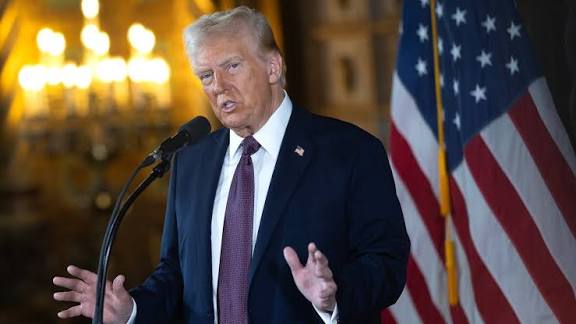
U.S. President Donald Trump has reportedly warned that he may have to destroy Iran, saying he would prefer to avoid devastating the country but might have no alternative. The remarks include an estimate that Iran could take 25 years to rebuild after the U.S.-Israel war, although that specific figure and the precise setting of the statement could not be independently verified. The comments follow Trump's earlier threats to annihilate the Islamic Republic, even as diplomatic contacts involving Iran and regional mediators have continued.
U.S. President Donald Trump has warned that he may ultimately have to destroy Iran, despite saying he would prefer to avoid completely devastating the country, as the U.S.-Israel war continues to raise questions about the future of the Islamic Republic and the possibility of a diplomatic settlement. The remarks attributed to Trump include a warning that Iran could require as long as 25 years to rebuild after the conflict, adding to a series of increasingly severe statements from the American president about the scale of destruction he is prepared to inflict if Tehran does not agree to Washington's demands.
“I would rather not destroy the country if possible, but maybe I’ll have to,” Trump reportedly said, indicating that the possibility of further devastating military action remains under consideration. The 25-year rebuilding estimate has not been independently established as a military or economic assessment, and the precise setting in which Trump made the latest remarks could not be independently confirmed. Nevertheless, the statement is consistent with the broader threats he has made throughout the conflict, including previous warnings that the United States could annihilate the Islamic Republic if negotiations failed.
The latest comments come amid a war that has placed Iran's military capabilities, nuclear infrastructure, political leadership and civilian economy under sustained pressure. The United States and Israel have conducted military operations against Iranian targets, while Tehran has responded with attacks and threats against American and Israeli interests. The conflict has also created wider regional and international concerns because of the strategic importance of the Middle East, the security of energy supplies and the possibility that renewed fighting could draw additional countries into the confrontation.
Trump's language has increasingly focused on the possibility of destroying Iran's ability to rebuild its military and strategic infrastructure. His administration has repeatedly argued that the military campaign is intended to prevent Iran from developing nuclear weapons, weaken its missile capabilities and reduce the threat posed by Iranian military operations and regional allies. Tehran has rejected Washington's position and maintained that it has the right to defend its sovereignty and national interests.
In September, Trump used his address to the United Nations General Assembly to warn that he could annihilate the Islamic Republic if an agreement to end the conflict was not reached. He presented Iran with a choice between a negotiated arrangement that would allow the country to rebuild and a military outcome in which the United States would destroy the Islamic Republic's ability to threaten other countries. The remarks attracted international attention because they went beyond conventional warnings about military targets and raised questions about the possible scale and consequences of a campaign against a country with a population of more than 90 million people.
The distinction between destroying Iran's military capabilities and destroying the country itself is particularly important. Iran is not simply a collection of military installations or government buildings; it is a country with millions of civilians, major cities, hospitals, universities, transport networks, energy facilities and essential public services. Any military campaign that extensively damages these systems could have consequences extending far beyond the Iranian government and armed forces, affecting ordinary people and the country's ability to function for generations.
The rebuilding estimate attributed to Trump also raises questions about the scale of destruction being contemplated. A recovery period of 25 years would suggest damage extending well beyond the repair of military equipment or the replacement of weapons systems. Rebuilding a modern economy after a prolonged war can involve restoring electricity networks, water systems, roads, bridges, ports, industrial facilities, hospitals, schools and telecommunications infrastructure. It can also require significant international financing, technical expertise, political stability and years of sustained investment.
However, the actual recovery period for Iran cannot be established simply through a presidential statement. The economic consequences of the war will depend on the extent of damage, the condition of the country's remaining infrastructure, the availability of international assistance, the future of sanctions and whether a stable political settlement emerges. A 25-year figure should therefore be understood as a warning attributed to Trump rather than an independently verified forecast.
The conflict has also exposed the competing objectives of Washington and Tehran. The Trump administration has maintained that Iran must never obtain a nuclear weapon and has demanded restrictions that would prevent the country from developing the capability to produce one. Iran, meanwhile, has rejected what it considers unacceptable demands and has argued that its nuclear program is intended for peaceful purposes. The disagreement over nuclear enrichment, missile capabilities and regional security has repeatedly complicated diplomatic efforts.
Trump's position has also included a willingness to consider negotiations rather than continue military operations indefinitely. On November 2, Reuters reported that he had cast doubt on resuming threatened strikes against Iran after the U.S. midterm elections, responding negatively when asked whether he was considering another attack. He also said that an agreement with Tehran remained possible and indicated that Iran appeared willing to negotiate. Iranian representatives had spent three days in Doha in discussions involving Qatari mediators, while Vice President JD Vance described recent discussions as positive.
Those developments demonstrate the uncertainty surrounding the next phase of the conflict. While Trump has continued to use forceful language about the possibility of destroying Iran, his administration has also left room for diplomacy. The two positions are not necessarily mutually exclusive in the administration's approach, as Washington has sought to use military pressure to strengthen its negotiating position. However, the combination of threats and diplomatic engagement has made it difficult to determine whether the immediate objective is a negotiated settlement, a further military campaign or a combination of both.
For Iran, the prospect of additional attacks presents serious challenges beyond the immediate battlefield. A prolonged conflict could weaken an already pressured economy, disrupt essential services, increase the cost of reconstruction and create further uncertainty for businesses and households. The damage to industrial facilities and transportation networks could also affect the country's ability to generate revenue and support public services. Even if the fighting eventually stops, the consequences could remain visible for years through reduced investment, unemployment, inflation and the displacement of communities.
The international implications are equally significant. Iran occupies a strategically important position in the Middle East, and any escalation involving its territory and military capabilities carries risks for neighboring countries and global markets. The Strait of Hormuz, a critical route for international oil and gas shipments, has been central to concerns about the economic consequences of the war. Any prolonged disruption to shipping through the waterway could affect energy prices, transportation costs and economies that depend heavily on imported fuel.
The conflict has also placed diplomatic pressure on countries that have called for de-escalation. Governments across Europe, Asia and the Middle East have had to consider the potential consequences of a wider regional confrontation, including the security of their citizens, energy supplies and commercial interests. International organizations have also faced renewed questions about how to prevent further civilian suffering and encourage negotiations between the parties.
Trump's latest reported warning is therefore significant not only because of the language used but because it comes at a time when diplomatic contacts have not completely broken down. His September address to the United Nations established the possibility of annihilating the Islamic Republic as an explicit part of his public messaging, while his November 2 comments suggested that negotiations could still offer a route away from renewed attacks. The latest statement attributed to him reinforces the uncertainty surrounding the administration's next decision.
For now, there is no independently confirmed announcement in the reporting reviewed that the United States has made a final decision to destroy Iran as a country or that a new operation has been ordered on the basis of the latest remarks. A presidential warning should not automatically be interpreted as an operational military decision. The distinction matters because the consequences of an actual expansion of military operations would depend on the targets selected, the weapons used, the duration of the campaign and the response from Iran and other countries.
The central question remains whether Washington and Tehran can reach an agreement that prevents another phase of fighting. Negotiations would have to address the nuclear dispute, security guarantees, military capabilities and the broader regional consequences of the war. Until those issues are resolved, Trump's threats and the possibility of renewed military action will continue to shape the diplomatic environment, while the people of Iran face uncertainty over the future of their country and the long-term cost of the conflict.