TRUMP’S NEW GLOBAL TARIFF THREATS RATTLE ASIAN EXPORTERS AS CHINA WARNS OF RETALIATION
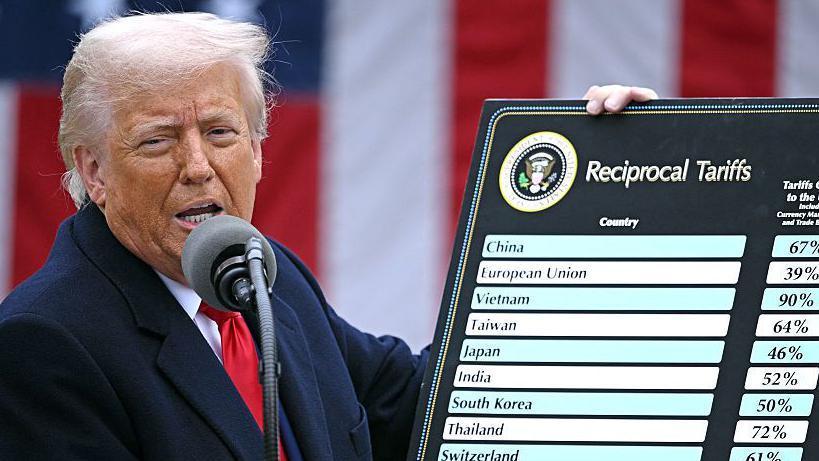
President Donald Trump’s administration has proposed new tariffs targeting 14 major trading partners, intensifying global trade tensions and creating uncertainty for exporters across China, Japan, South Korea, India and Southeast Asia. China could face duties of up to 40 percent and has warned of potential retaliation, while India faces a possible 25 percent rate if trade negotiations fail. Washington argues that the measures are necessary to address unfair industrial practices and manufacturing overcapacity, although affected governments dispute those findings. Public consultations are scheduled to continue into January 2027 before final implementation decisions are made.
President Donald Trump’s administration has reignited global trade tensions after announcing proposed tariffs targeting 14 major trading partners, prompting governments and exporters across Asia to reassess their commercial relationships with the United States amid growing uncertainty over international supply chains, manufacturing competitiveness and access to the American market. China, Japan, South Korea and India are among the economies affected by the measures announced on Wednesday, November 25, 2026, with Beijing warning that it reserves the right to retaliate against policies it considers discriminatory and harmful to international commerce.
The announcement follows an extensive investigation conducted by the Office of the United States Trade Representative (USTR) into manufacturing practices that Washington alleges have contributed to persistent industrial overcapacity. The administration maintains that government subsidies, state-supported financing and other industrial policies have enabled manufacturers in several economies to produce goods at levels that exceed market demand, placing American companies and workers at a competitive disadvantage.
United States Trade Representative Jamieson Greer announced the findings under Section 301 of the Trade Act of 1974, which provides Washington with a mechanism for responding to foreign commercial practices considered harmful to American economic interests. The proposed measures represent a renewed effort by the Trump administration to expand its tariff policy after the United States Supreme Court struck down broad duties introduced under emergency economic powers earlier in 2026.
The economies identified in the latest tariff proposals include China, India, Japan, South Korea, Taiwan, Bangladesh, Cambodia, Indonesia, Malaysia, Singapore, Thailand, Vietnam, Switzerland and the European Union. Mexico and Norway were also included in the original investigation, although Washington has not announced corresponding tariff proposals against them while its assessments remain ongoing.
China faces some of the most substantial potential consequences under the new framework. Washington has proposed a 20 percent duty associated with its investigation into industrial overcapacity, with the possibility of increasing that rate to 40 percent if Beijing fails to address American concerns through ongoing negotiations and existing trade commitments. The proposed duties must also be considered alongside earlier American tariffs on Chinese products, meaning that the overall financial burden could vary considerably depending on the goods involved.
The Chinese Ministry of Commerce responded on Thursday, November 26, rejecting Washington’s characterization of its manufacturing policies and warning that Beijing would defend its economic interests. Chinese authorities have consistently maintained that the international competitiveness of their manufacturers reflects technological advancement, industrial development and established supply networks rather than the unfair commercial practices alleged by American officials.
He Yadong, a spokesperson for China's Ministry of Commerce, urged Washington to resolve its disagreements with Beijing through negotiations rather than unilateral trade restrictions. The ministry also indicated that China had not surrendered its ability to introduce countermeasures if the proposed American duties were ultimately implemented in a manner that damaged Chinese commercial interests.
Beijing’s response has introduced renewed uncertainty into a relationship that had recently experienced a degree of diplomatic stabilization. The two countries remain deeply interconnected through manufacturing, agricultural trade, technology supply chains and financial markets, despite years of increasingly restrictive economic policies and efforts to reduce their dependence on one another.
The administration’s latest proposals arrive as Washington and Beijing continue discussions surrounding access to strategically important minerals, including rare earth elements used in advanced manufacturing, electronics, renewable energy technologies and defense equipment. China occupies an important position in the processing of several critical minerals, giving developments in the bilateral trade relationship significance beyond conventional consumer goods and industrial exports.
Any deterioration in commercial relations could create additional complications for American manufacturers that depend on Chinese industrial inputs, particularly where alternative suppliers are limited or require considerable investment to develop. Although diversification has become an increasingly important objective for governments and multinational corporations, replacing established supply networks can take years and involve substantial financial costs.
India is also facing renewed pressure as its government continues negotiations over a comprehensive trade agreement with Washington. Under the proposed framework, Indian exports could face a tariff rate of 25 percent if negotiations fail, while the rate could be reduced to 17 percent if the two governments successfully conclude an agreement.
The Indian government has disputed the American assessment that its manufacturing sector suffers from structural excess capacity and has maintained its commitment to reaching a mutually acceptable trade agreement. New Delhi’s position reflects the importance of preserving access to American consumers while protecting domestic industrial policies intended to support employment, manufacturing expansion and economic development.
India has spent recent years promoting itself as an alternative manufacturing destination for international businesses seeking to reduce their reliance on China. Government incentives and infrastructure investments have encouraged companies operating in electronics, pharmaceuticals, textiles, automobile components and other industries to expand their production activities within the country.
The prospect of higher American tariffs introduces another consideration for manufacturers evaluating future investments in India. Businesses seeking to diversify production away from China may have to reconsider whether relocating operations would provide sufficient protection against changing American trade policies, particularly if tariffs become increasingly dependent on industrial practices rather than geographical origin alone.
Indian exporters operating in labor-intensive industries could face particular challenges if higher duties reduce their competitiveness in the American market. Companies selling textiles, apparel, footwear, engineering products and other manufactured goods often compete closely with suppliers from Southeast Asia, where relatively small differences in production costs and import duties can influence purchasing decisions.
Japan and South Korea face a different set of circumstances because of their existing trade arrangements and longstanding economic relationships with the United States. Washington’s proposed framework generally seeks to maintain tariff levels consistent with previously negotiated commitments, including arrangements providing for rates of around 15 percent on many goods from both countries, subject to applicable exemptions and the treatment of existing duties.
However, the possibility of higher rates if negotiations or implementation of previous commitments prove unsatisfactory has generated additional concerns for manufacturers in both economies. Japan and South Korea are major suppliers of automobiles, industrial machinery, electronics, semiconductor-related products and advanced manufacturing technologies to international markets, making stability in their American commercial relationships particularly important.
Japanese manufacturers have invested extensively in production facilities throughout the United States over several decades, particularly in the automotive sector. These investments have created employment opportunities in American communities while allowing Japanese companies to establish manufacturing operations closer to their customers.
Nevertheless, even companies operating factories within the United States can remain exposed to tariffs because their manufacturing processes frequently depend on imported components, specialized machinery and materials obtained through international supply chains. Higher duties on those inputs could increase production costs without necessarily leading to an immediate expansion of domestic manufacturing capacity.
South Korean companies face similar challenges because of their extensive involvement in international production networks. Major manufacturers in the country have established significant investments in automotive production, semiconductor fabrication, electric vehicle batteries and other advanced industries, including substantial projects located within the United States.
Changes in tariff arrangements could complicate decisions surrounding those investments, particularly where businesses have made long-term financial commitments based on assumptions about the cost of importing equipment, materials and intermediate products. South Korean authorities therefore have a considerable interest in ensuring that new American measures remain consistent with previously negotiated trade commitments.
Vietnam has emerged as another economy facing potentially significant consequences from Washington’s latest proposals. The country could face duties reaching 35 percent under certain circumstances, depending on the progress of negotiations and the Trump administration’s assessment of its industrial and commercial practices.
Vietnamese authorities have challenged aspects of the American investigation and are preparing responses to findings they consider inaccurate. The country has become an important destination for multinational manufacturing companies, benefiting from investments in electronics, textiles, furniture and other export-oriented industries as businesses have sought alternatives to production facilities in China.
Washington’s concerns extend beyond the direct export of Chinese-manufactured goods. American officials have also scrutinized the role of Chinese investment, components and industrial inputs in other Asian economies, arguing that relocating final production does not necessarily eliminate the underlying commercial practices that the administration seeks to address.
This approach could create considerable complications for manufacturers operating across Southeast Asia. Modern industrial production frequently involves components sourced from several countries before products are assembled in another jurisdiction and shipped to their final destination. Determining the economic origin of a finished product can therefore be considerably more complex than identifying the country from which it was exported.
Malaysia has indicated that it will continue consultations with Washington to protect the terms of its existing trade arrangement, which established a tariff ceiling of 19 percent for many products. Malaysian authorities have rejected claims that their domestic manufacturing sector contributes to structural industrial overcapacity while acknowledging the importance of monitoring imported materials and goods.
Thailand is also seeking to negotiate a more favorable outcome, with officials expressing interest in securing tariff arrangements below the proposed 18 percent level. The country's export-oriented manufacturing sector includes automobiles, electronics, agricultural products and industrial components, all of which depend to varying degrees on stable international trading conditions.
Indonesia, Bangladesh and Cambodia face similar uncertainty, although their individual circumstances differ according to their industrial structures and existing agreements with Washington. Bangladesh and Cambodia are particularly exposed through their garment and footwear industries, which employ substantial numbers of workers and depend heavily on orders from international retailers.
For businesses operating in these economies, the possibility of additional duties creates challenges that extend beyond the immediate cost of importing goods into the United States. Retailers may seek revised prices from suppliers, manufacturers could face pressure to accept lower profit margins, and companies considering expansion may delay investment until the applicable tariff arrangements become clearer.
Singapore has also challenged Washington’s assessment of its economic policies after being identified among the economies facing proposed duties. Its inclusion is particularly notable because Singapore has a longstanding free trade agreement with the United States and has developed its economy around international commerce, advanced manufacturing and financial services.
The Singaporean government has disputed the reasoning behind aspects of the investigation, including criticism connected to its domestic savings and economic arrangements. The disagreement demonstrates that Washington’s latest tariff strategy extends beyond countries traditionally associated with inexpensive mass manufacturing and encompasses advanced economies with sophisticated regulatory and industrial systems.
Taiwan’s inclusion in the proposals carries additional significance because of its importance to the global semiconductor industry. American technology companies depend heavily on advanced chips produced through international manufacturing networks, while efforts to expand semiconductor production within the United States have involved considerable investment and cooperation with Taiwanese businesses.
The administration has argued that stronger domestic manufacturing capabilities are necessary to protect American economic security and reduce dependence on overseas suppliers. However, the relationship between tariffs and domestic industrial expansion remains complicated, particularly in sectors where production requires specialized expertise, expensive equipment and extensive networks of established suppliers.
Trump has consistently defended tariffs as a mechanism for encouraging manufacturers to establish production facilities in the United States, addressing trade imbalances and generating government revenue. His administration maintains that existing international commercial arrangements have disadvantaged American industrial workers and allowed foreign governments to benefit from economic practices that distort competition.
Supporters of the administration’s approach argue that targeted trade restrictions can provide American manufacturers with greater opportunities to expand production and compete against foreign companies receiving substantial government support. They also contend that dependence on overseas suppliers can create national security vulnerabilities when essential goods and strategic technologies are concentrated within a small number of foreign economies.
Critics, however, have warned that higher tariffs can increase costs for American consumers and businesses, particularly when imported products cannot easily be replaced by domestically manufactured alternatives. Import duties are generally paid by the businesses importing goods into the United States, although the resulting financial burden may be distributed among foreign suppliers, American companies and consumers through changes in prices and commercial arrangements.
The political environment surrounding Trump’s latest announcement has also changed following the November 2026 congressional midterm elections. Reuters reported that a Reuters/Ipsos survey conducted after the elections found that 62 percent of respondents supported efforts to repeal tariffs, underscoring the domestic political debate surrounding the administration’s trade strategy and concerns over the cost of living.
The new tariff proposals represent an effort to pursue the administration’s commercial objectives through a different legal framework following the Supreme Court’s February decision. Section 301 requires an investigative process focused on identifiable foreign commercial practices, distinguishing the latest measures from the broader emergency-based tariffs previously challenged before the courts.
The administration’s findings do not mean that the proposed duties have already taken effect. American trade authorities have established a consultation process allowing affected governments, companies, trade organizations and other interested parties to present their positions before final decisions are made.
Written submissions are due by January 5, 2027, with public hearings scheduled to begin on January 25. The consultation period provides an opportunity for governments to challenge the underlying findings, exporters to explain potential commercial consequences and American businesses to seek exemptions for imported materials or products considered essential to their operations.
The final structure of the measures could therefore differ from the rates announced in November. Ongoing negotiations, existing trade agreements, product-specific exemptions and responses received during the consultation process could all influence the duties ultimately adopted by Washington.
The uncertainty surrounding the proposals may nevertheless affect commercial decisions before their implementation. Businesses operating through international supply networks frequently negotiate contracts and establish production schedules months in advance, meaning that unresolved questions about future import costs can complicate pricing and investment decisions.
The consequences could also extend beyond the economies directly identified in the investigation. If manufacturers redirect products previously intended for American consumers toward alternative markets, businesses in Africa, Latin America and other regions could encounter changes in the availability and pricing of imported goods.
For African economies such as Ghana and Nigeria, an increase in Asian exports redirected away from the United States could create opportunities for importers seeking more competitive prices for machinery, electronics, vehicles and manufactured consumer goods. However, greater competition from imported products could also create additional pressure on domestic manufacturers attempting to develop their own industrial capabilities.
These outcomes remain conditional on the final American measures and the responses of affected exporters. Exchange rates, transportation costs, domestic demand and local import policies would also influence whether any changes in international trading patterns result in lower prices or increased competition within African markets.
China’s warning that it could introduce countermeasures represents one of the most significant unresolved issues arising from the latest announcement. Previous trade disputes between Washington and Beijing have involved reciprocal tariffs, restrictions affecting strategic industries and measures targeting products considered economically or politically important to the opposing country.
A renewed confrontation could affect agricultural exporters, industrial manufacturers and technology companies across both economies while creating additional uncertainty for businesses operating in third countries. However, Beijing has not announced a comprehensive retaliatory tariff package in direct response to Wednesday’s proposals, leaving room for further negotiations before either government commits to more restrictive measures.
The coming weeks will consequently be important for determining whether the latest American initiative develops into a broader international trade confrontation or becomes another stage in negotiations over revised commercial arrangements. Asian governments will have to balance efforts to preserve access to the American market with the protection of domestic industries, while Washington faces competing demands to strengthen manufacturing, manage consumer prices and maintain relationships with important economic partners.
For exporters throughout Asia, the immediate challenge is navigating a period in which access to one of the world's largest consumer markets remains increasingly dependent on evolving political negotiations and regulatory decisions. Until the consultation process concludes and Washington publishes its final measures, businesses and governments will continue operating under considerable uncertainty about the future cost of international trade and the long-term structure of global manufacturing.