TWO DEAD AS MORE THAN 1,200 MIGRANTS AND REFUGEES REACH GREEK ISLANDS OF CRETE AND GAVDOS WITHIN 48 HOURS
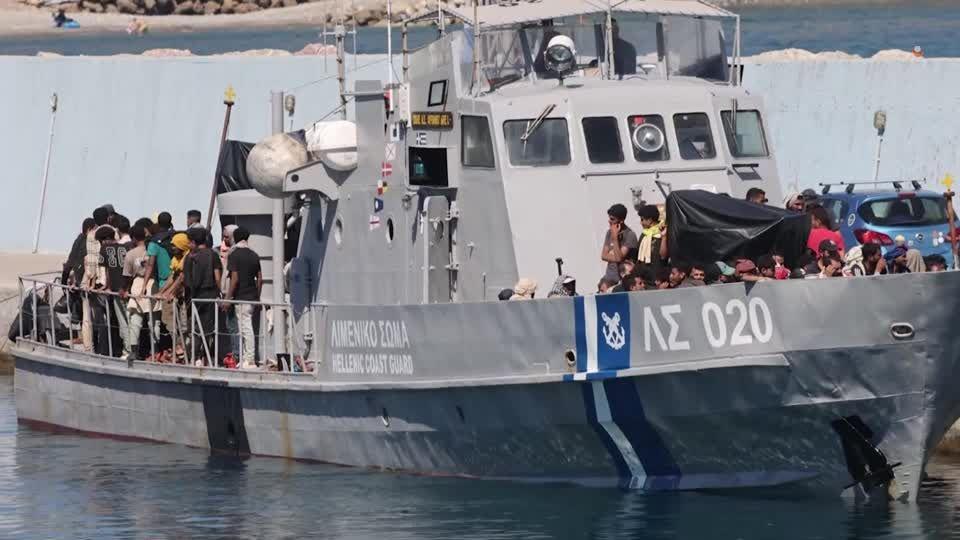
Two people have died and more than 1,200 migrants and refugees have reached the Greek islands of Crete and Gavdos within two days, following multiple maritime rescue operations between November 27 and 28, 2026. The Greek Coast Guard recovered two bodies from a rocky coastal area of Gavdos, rescued 41 survivors and transferred four people to Crete for medical treatment. The vessels are believed to have departed from Libya, although the nationalities of the latest arrivals have not been officially established. The development highlights the growing humanitarian risks associated with Mediterranean migration and mounting pressure on Greek reception facilities, as Greece and four other European countries pursue plans to establish a migrant return facility in Rwanda.
Two people have died and more than 1,200 migrants and refugees have reached the southern Greek islands of Crete and Gavdos within two days, following a series of maritime rescue operations that have renewed international concern over dangerous migration crossings from North Africa into Europe. The Hellenic Coast Guard confirmed on Saturday, November 28, 2026, that the bodies of two people had been recovered from a rocky coastal area of Gavdos, while 41 survivors were rescued and four people were transferred to neighboring Crete for medical treatment.
The deaths occurred amid a significant increase in maritime arrivals between Friday, November 27, and Saturday, November 28, as Greek authorities and the European Border and Coast Guard Agency, commonly known as Frontex, responded to numerous incidents involving vessels carrying people across the Mediterranean Sea. Initial reports placed the number of arrivals at approximately 1,000, but subsequent figures reported by the Associated Press indicated that more than 1,200 people had reached the two islands as additional vessels were discovered throughout Saturday.
The circumstances surrounding the deaths on Gavdos have not been conclusively established. Greek media reported that the vessel carrying the group may have struck rocks while approaching the island, although maritime authorities had not independently confirmed that account. The nationalities and identities of the deceased were not immediately disclosed, leaving questions concerning their backgrounds, families and the precise circumstances under which they embarked on the journey.
The rescue operation on Gavdos involved Greek maritime authorities, Frontex and assistance from a private vessel. The survivors were located along the island's rocky coastline, where access to emergency services can be complicated by geographical isolation and difficult maritime conditions. Four required additional medical attention and were subsequently transported to Crete, which possesses considerably greater healthcare and emergency response capacity.
Separate rescue operations brought additional groups of migrants to Crete throughout Saturday, including women and children. Authorities continued responding to reports of vessels in the surrounding waters as evening approached, indicating that the total number of arrivals could increase as further operations were completed and official figures updated.
The latest deaths have occurred along a migration route that has become increasingly prominent in recent years as people from Africa, Asia and the Middle East attempt to reach European territory through the southern Mediterranean. Many embark from Libya, where political instability, armed conflict, economic difficulties and limited institutional oversight have contributed to the development of extensive human-smuggling networks.
Although the precise departure points and nationalities of everyone involved in the latest rescue operations have not been established, authorities believe the vessels traveled from Libya. Previous arrivals along the same route have included Bangladeshi nationals and Sudanese citizens fleeing violence, alongside people from other countries seeking protection or improved economic opportunities.
The distinction between migrants and refugees remains important when examining the circumstances of those reaching European shores. Some individuals undertake dangerous journeys primarily because of economic hardship, while others are escaping armed conflict, persecution or circumstances that may qualify them for international protection. Their individual legal status cannot be determined solely by their method of arrival and ordinarily requires examination through established immigration and asylum procedures.
For Sudanese nationals, the continuing humanitarian consequences of the conflict that began in April 2023 have contributed to extensive displacement across northeastern Africa. Millions of Sudanese citizens have been forced to leave their homes, with many seeking refuge in neighboring countries where humanitarian resources are already under considerable pressure.
Some displaced individuals subsequently attempt to continue toward North Africa and Europe, particularly when they encounter limited employment opportunities, inadequate accommodation or continued insecurity in countries where they initially seek refuge. Those journeys can expose them to additional dangers associated with trafficking, exploitation and irregular border crossings.
Libya has remained an important transit country within that broader migration environment. Its geographical position along the southern Mediterranean makes it a departure point for people attempting to reach Europe, although the conditions experienced by migrants within the country have generated longstanding concern among humanitarian organizations.
The International Organization for Migration and other United Nations agencies have documented serious abuses affecting migrants in Libya, including arbitrary detention, forced labor, extortion and physical violence. Individuals attempting to travel onward may consequently be escaping dangerous circumstances encountered during their migration journey in addition to the conditions that prompted them to leave their countries of origin.
The route from North Africa to southern Greece presents significant maritime risks because vessels must travel across substantial stretches of open water. Boats used for irregular migration are frequently overcrowded or inadequately equipped for prolonged journeys, increasing the possibility of mechanical failure, exposure to severe weather and shortages of essential supplies.
Those dangers become particularly significant during the colder months, when changing weather conditions can produce rough seas, stronger winds and lower temperatures. Passengers traveling aboard unsuitable vessels may have limited protection against exposure, while rescue operations can become more difficult when maritime conditions deteriorate.
The increasing use of the route toward Crete and Gavdos has also created operational challenges for Greek authorities. Unlike some of the country's more established migration entry points in the eastern Aegean Sea, the southern islands face arrivals from considerably longer maritime journeys originating along the North African coastline.
Gavdos, situated south of Crete, is a small and relatively isolated island whose permanent population and public infrastructure are limited. Its location makes it an important geographical point for vessels approaching Greece from the south, but its capacity to accommodate large groups of newly arrived migrants is considerably smaller than that of major urban centers.
Large arrivals can place immediate pressure on available emergency accommodation, drinking water, food supplies, medical services and transportation arrangements. Individuals requiring specialist treatment may need to be transferred to Crete, while others must await transportation to facilities capable of processing their immigration or asylum applications.
Crete possesses greater infrastructure and administrative capacity, although the increasing number of arrivals has generated concerns regarding the adequacy of its reception facilities. The island's position within Greece's southern maritime environment has transformed migration management into an increasingly important issue for local authorities and communities.
According to figures reported by Euronews, more than 23,000 migrants had reached Crete and neighboring islands by early November 2026. The substantial number of arrivals has placed additional demands on local institutions and highlighted the extent to which migration patterns toward Greece have changed in recent years.
The latest rescue operations represent another significant concentration of arrivals within a comparatively short period. While maritime authorities regularly respond to individual vessels, simultaneous or consecutive operations involving hundreds of people require extensive coordination among rescue personnel, port authorities, medical teams and immigration officials.
The immediate responsibility of maritime rescue institutions is to preserve life and provide emergency assistance to people in distress. Following rescue, authorities must undertake additional procedures involving identification, health assessments, registration and the determination of whether individuals intend to seek international protection.
Those responsibilities can become particularly complicated when survivors arrive without identification documents, require medical treatment or speak languages for which interpretation services are not immediately available. Children traveling without parents or legal guardians may also require specialized protection and accommodation arrangements.
The International Organization for Migration has expressed concern about the growing number of people undertaking journeys between eastern Libya and southern Greece, warning that shortcomings in maritime rescue capacity could increase the dangers confronting those attempting the crossing. The organization's concerns reflect the difficulty of providing adequate emergency coverage across extensive areas of the Mediterranean.
The latest deaths follow other fatal incidents recorded along the same route earlier in November. Humanitarian organizations have continued calling for stronger search-and-rescue arrangements, improved coordination among maritime authorities and measures capable of reducing the number of people who lose their lives while attempting to reach European territory.
The humanitarian consequences of Mediterranean migration are not confined to those who die during the crossing. Survivors may arrive experiencing dehydration, exhaustion, exposure-related illness, injuries or psychological distress associated with dangerous conditions at sea and experiences encountered before departure.
Medical assessments following rescue can therefore play an essential role in identifying individuals requiring immediate treatment. The transfer of four survivors from Gavdos to Crete illustrates the importance of maintaining access to healthcare facilities capable of addressing conditions that cannot be adequately treated on smaller islands.
The increase in arrivals has emerged during a period in which Greece and several other European Union countries have adopted increasingly restrictive migration policies. European governments have placed greater emphasis on border enforcement, the return of individuals whose asylum applications have been rejected and agreements with countries outside the European Union.
Greece is among five European countries supporting a proposed migrant return facility in Rwanda, alongside Austria, Denmark, Germany and the Netherlands. The initiative is intended to establish arrangements through which certain individuals who have exhausted their asylum procedures and are required to leave European territory could be transferred to a facility outside the EU.
Supporters of the proposed arrangement argue that more effective return procedures are necessary to maintain confidence in national immigration systems and discourage dangerous irregular journeys. They maintain that individuals who do not qualify for international protection should be returned in accordance with established legal procedures.
Human rights organizations have raised concerns about such arrangements, particularly regarding access to legal representation, independent oversight and protection against transfer to locations where individuals could face serious harm. Questions also remain concerning the precise responsibilities that would be assumed by participating governments and the safeguards available to people transferred under the proposed framework.
The Rwanda initiative remains a separate policy development from the rescue operations in Greek waters. There is no established information indicating that individuals rescued during the latest operations have already been designated for transfer to Rwanda. Their immigration status and eligibility for international protection would need to be determined through applicable procedures.
The distinction is especially important because people fleeing persecution or armed conflict may possess rights under international refugee law regardless of whether they entered a country through an authorized border crossing. The principle of non-refoulement prohibits the return of individuals to territories where they would face certain serious threats to their lives or freedom.
European governments nevertheless retain authority to administer their borders, examine immigration applications and arrange lawful returns where individuals do not qualify for permission to remain. The continuing policy debate concerns how those responsibilities can be exercised consistently with humanitarian obligations and internationally recognized protections.
The geographical distribution of migrant arrivals has also become an important issue within the European Union. Countries situated along the bloc's external borders frequently face the immediate administrative and humanitarian responsibilities associated with maritime arrivals, while other member states may receive fewer people directly.
Those differences have contributed to recurring disagreements concerning responsibility-sharing, relocation arrangements and financial assistance. Mediterranean countries have repeatedly called for greater cooperation from other European governments, arguing that migration management should not fall disproportionately on the states where individuals first reach EU territory.
The current situation on Crete and Gavdos illustrates the practical consequences of those disagreements. Local authorities must respond to immediate humanitarian needs regardless of whether broader European discussions concerning migration policy have produced permanent solutions.
As Greek authorities continue assessing the circumstances surrounding the latest arrivals, questions remain about the identities of the two deceased individuals and the exact cause of their deaths. Investigators will also need to establish whether criminal organizations were responsible for arranging the journeys and whether any individuals involved in organizing the crossings can be identified.
The rescue of hundreds of people over such a limited period demonstrates the continuing importance of maritime emergency operations in the Mediterranean. However, rescue services alone cannot address the wider political, economic and humanitarian circumstances influencing migration from Africa and other regions.
The deaths on Gavdos represent another tragic consequence of journeys undertaken by people seeking safety, employment or new opportunities in Europe. With maritime arrivals continuing despite increasingly restrictive immigration policies, Greece faces the immediate challenge of protecting lives while managing growing demands on its reception infrastructure. For European governments and humanitarian institutions, the broader challenge remains establishing migration arrangements that address border security, international protection and the circumstances that continue driving people toward dangerous sea crossings.