TWO FORMER SENIOR FBI OFFICIALS CHARGED WITH LYING TO CONGRESS OVER HUNTER BIDEN INVESTIGATIONS
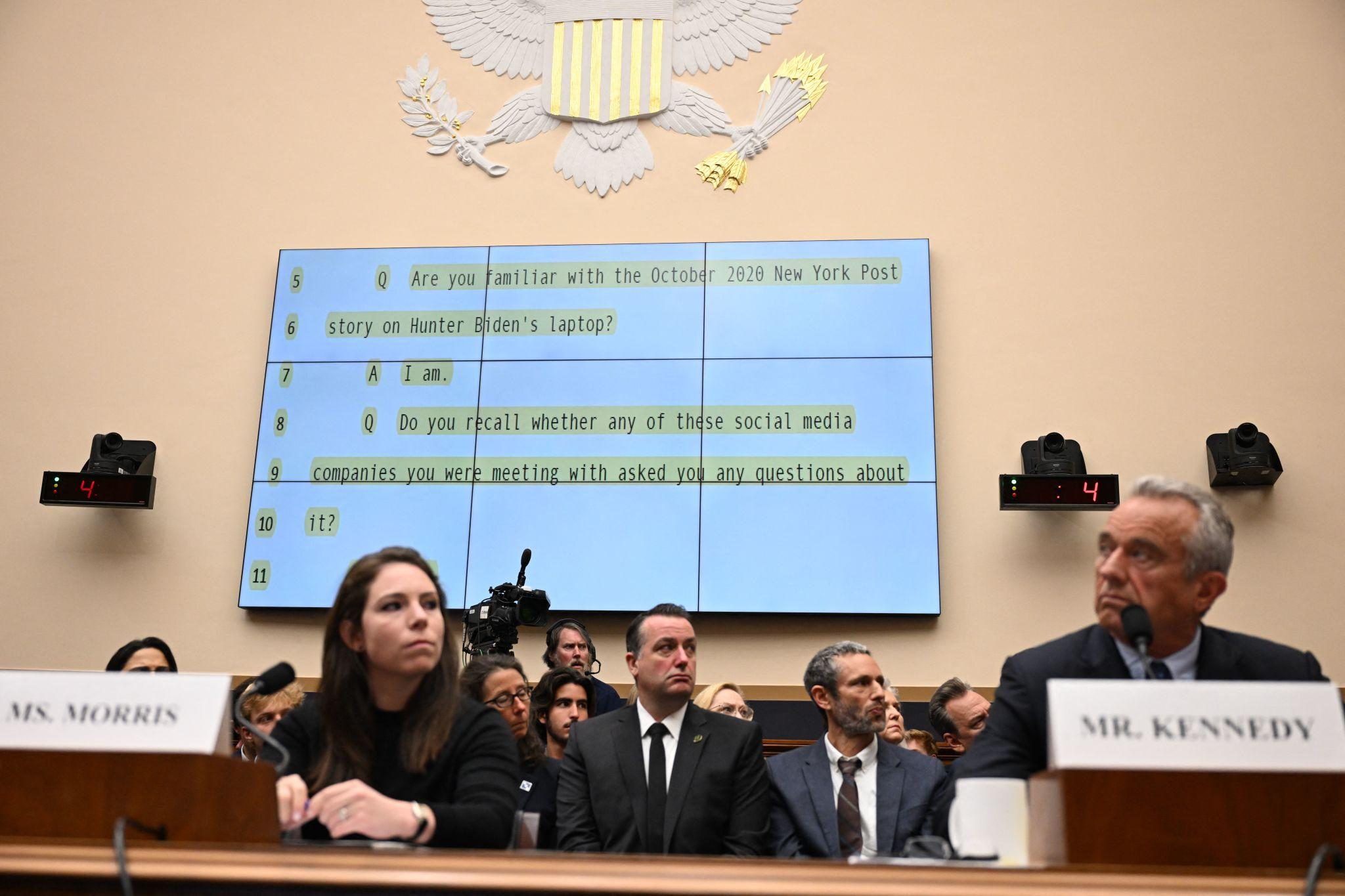
The U.S. Justice Department has charged former senior FBI officials Nikki Floris and Bradley Benavides with allegedly making false statements to Congress in 2023 about the Foreign Influence Task Force’s involvement in investigations concerning Hunter Biden and his laptop. Prosecutors say internal FBI communications and witness testimony contradict the officials’ congressional statements. Floris’ lawyers call the charges politically motivated, while Benavides has not been convicted of any offense. Both men remain presumed innocent, and prosecutors must still advance the case through the federal court process.
Two former senior FBI officials have been charged with allegedly lying to Congress about their knowledge of and involvement in federal investigations concerning Hunter Biden, including the controversy surrounding a laptop associated with the former president’s son, reopening one of the most politically charged disputes of the 2020 election period less than two weeks before the 2026 U.S. midterm elections. Nikki Cole Floris, 46, and Bradley Benavides, 56, surrendered to federal authorities in Washington on Friday after arrest warrants were issued following the filing of a criminal complaint accusing each of making false statements in matters within the jurisdiction of the legislative branch of government.
The Justice Department says both officials held senior positions in the FBI’s Foreign Influence Task Force, a unit created to counter attempts by foreign governments and other external actors to interfere in U.S. elections. Prosecutors allege that the task force was involved in matters connected to Hunter Biden in the period leading up to the 2020 presidential election and that Floris and Benavides later gave congressional testimony in 2023 that misrepresented the extent of their knowledge and participation.
Floris served as a deputy assistant director leading the Foreign Influence Task Force from mid-2019 until mid-2022, while Benavides served as a section chief within the same task force from mid-2019 through the 2020 election. The unit was responsible for coordinating the FBI’s response to foreign malign influence and election-security concerns and became involved in examining intelligence and reporting that touched on politically sensitive allegations surrounding Hunter Biden.
According to the criminal complaint, FBI investigators now say documentary records, internal communications and witness testimony contradict statements the two former officials gave to the House Judiciary Committee. The Justice Department alleges that Floris told lawmakers she had not participated in discussions involving Hunter Biden while working at the task force, even though prosecutors say records show she regularly discussed FBI matters involving him over an extended period.
The government makes a similarly specific allegation against Benavides. Prosecutors say he told the House Judiciary Committee that he only learned that the FBI possessed Hunter Biden’s laptop after reading about it on Wikipedia in 2023. Investigators now allege that internal FBI communications show Benavides had discussed the laptop and related matters with other officials well before the 2020 election, including while serving in a senior role at the Foreign Influence Task Force.
The Justice Department says both defendants were warned before their congressional testimony that knowingly making false statements to Congress could constitute a federal crime. Each has now been charged under a federal statute prohibiting materially false statements in matters within the jurisdiction of the legislative branch. A conviction under the statute can carry a prison sentence, although no guilt has been established and the defendants remain legally presumed innocent unless prosecutors prove the charges beyond a reasonable doubt.
The case centers heavily on a Foreign Influence Task Force effort identified in court documents as “Round River.” According to the complaint, the operation involved collecting and analyzing derogatory informant reporting concerning Hunter Biden and determining whether some of that information might be linked to Russian disinformation efforts. Prosecutors allege that both Floris and Benavides exercised oversight responsibilities connected to the operation and participated in classified briefings involving FBI agents and prosecutors working on Hunter Biden-related investigations.
Those allegations revive a controversy that has remained politically significant since the final weeks of the 2020 presidential campaign. In October 2020, the New York Post published material it said came from a laptop Hunter Biden had left at a Delaware computer repair shop. The material included emails and other records concerning Hunter Biden’s business activities, and the publication became the subject of an intense dispute over authenticity, foreign influence, media coverage and the response of technology companies.
At the time, U.S. intelligence and law-enforcement agencies were operating under heightened concern about possible Russian interference in the election following Moscow’s documented attempts to influence the 2016 presidential race. That environment led officials and social-media companies to treat potentially compromised or foreign-sourced information with caution, particularly when material surfaced shortly before voters went to the polls.
The FBI had possession of the laptop before the New York Post published its reporting, and subsequent investigations established that much of the material attributed to the computer was authentic. The FBI and intelligence community did not ultimately find evidence that the laptop itself was part of a Russian disinformation operation, although questions about how authorities handled information surrounding Hunter Biden continued to fuel Republican investigations after the party regained control of the House of Representatives.
The newly filed criminal complaint does not charge Floris or Benavides with fabricating evidence, suppressing the laptop story, altering the contents of the computer or participating in a conspiracy to help Joe Biden win the 2020 election. Instead, prosecutors are charging them specifically over what the government says were false statements they later made to Congress about their own knowledge and the role of the Foreign Influence Task Force.
That distinction is important because political arguments surrounding the case are much broader than the conduct formally alleged in court. President Donald Trump and his allies have for years accused senior FBI and Justice Department officials of using federal institutions against conservatives and of mishandling investigations involving the Biden family. Democrats and former law-enforcement officials have in turn accused Trump and his administration of using the Justice Department to pursue political adversaries and revisit disputes connected to his grievances over the 2020 election.
The current prosecution sits directly within that wider confrontation, but the criminal case will ultimately depend on whether prosecutors can prove the specific statements identified in the complaint were knowingly false and materially relevant to the congressional inquiry. Political dissatisfaction with an FBI official’s conduct would not by itself be enough to sustain a criminal conviction.
U.S. Attorney for the District of Columbia Jeanine Ferris Pirro announced the charges and said the government would hold senior officials accountable when it believes they have misled Congress. She argued that knowingly lying to lawmakers undermines congressional oversight and public confidence in federal institutions. FBI Director Kash Patel separately said the arrests demonstrated the bureau’s determination to investigate what the current leadership describes as past political weaponization.
The language used by government officials in announcing the case was unusually forceful, reflecting the political history surrounding the investigation. Patel said the FBI had dismantled the Foreign Influence Task Force and other units that the current administration has criticized, while portraying the new charges as part of an institutional effort to restore accountability. Those statements are the administration’s characterization of the case and do not constitute findings of guilt against the two former officials.
Floris’ lawyers sharply rejected the government’s allegations and accused prosecutors of bringing a politically motivated case. They said the charges were based on the claims of politicians rather than the underlying facts and argued that their client had been targeted in order to advance a political narrative. Her defense team is expected to challenge both the accuracy of the government’s interpretation of her congressional testimony and whether the statements prosecutors have identified satisfy the legal requirements for a criminal false-statements case.
An attorney for Benavides was not immediately available to Reuters for comment when the charges were announced. He nevertheless enjoys the same presumption of innocence and will have the opportunity to challenge the complaint, the government’s evidence and the legal sufficiency of the charge as the case proceeds through federal court.
Both defendants appeared before a federal magistrate judge in Washington after surrendering. The case was initiated by criminal complaint rather than by grand-jury indictment, meaning prosecutors must still either obtain an indictment from a federal grand jury or otherwise proceed through the preliminary stages required under federal criminal procedure. A judge scheduled a prompt preliminary hearing to examine whether the government has sufficient evidence to continue the prosecution.
The procedural choice has attracted attention because it allowed the government to arrest and charge the former officials before a grand jury had returned an indictment. Criminal complaints are lawful and commonly used when prosecutors seek an arrest before indictment, but the timing is notable because the charges were announced only days before the November 3 midterm elections and involve an issue that has remained highly partisan for years.
During the first court appearance, the magistrate judge reportedly questioned aspects of the government’s case, including the age of the alleged statements and whether the statements identified in the complaint were sufficiently material to the congressional investigation. Those questions do not represent a ruling on guilt or innocence, but they signal that prosecutors may face early scrutiny over whether the alleged inconsistencies meet the statutory standard required for prosecution.
The false-statements law generally requires prosecutors to establish more than an inaccurate answer. They must prove that the defendant knowingly and willfully made a materially false, fictitious or fraudulent statement in a matter within federal jurisdiction. A statement is generally considered material if it had the capacity to influence the body or investigation receiving it, even if investigators were not actually misled.
That requirement means the eventual case against Floris and Benavides will likely turn heavily on the exact wording of the questions they were asked in 2023, the language of their answers, the internal FBI records prosecutors say contradict those answers and the defendants’ understanding of the questions at the time. Defense lawyers may argue that testimony has been taken out of context, that questions were ambiguous or that records cited by prosecutors do not prove the officials knowingly lied.
The government, meanwhile, is expected to rely on contemporaneous communications and witnesses who prosecutors say demonstrate that both officials had more substantial knowledge of the Hunter Biden investigations than they acknowledged before Congress. The complaint states that internal documents from late 2019 through 2021 show discussions involving the officials and the task force’s participation in briefings and investigative activity related to Hunter Biden.
The case also places renewed focus on how the FBI handled politically sensitive intelligence during the 2020 election. The Foreign Influence Task Force was established partly in response to the Russian interference campaign documented during the 2016 election, and its mission involved working with other agencies and technology companies to detect foreign efforts to manipulate U.S. political debate.
Republican lawmakers later accused the task force and other federal agencies of overreaching in their contacts with social-media companies and of contributing to decisions that limited circulation of reporting about Hunter Biden’s laptop. Former FBI officials have disputed claims that the bureau ordered companies to censor the story, while technology firms have said they made their own content-moderation decisions based partly on warnings that foreign actors could attempt to release hacked or manipulated information before the election.
Twitter, which has since been renamed X, initially restricted sharing of the New York Post’s reporting before reversing the decision. Facebook also temporarily reduced distribution while fact-checking and authenticity questions were examined. Those decisions became central to Republican claims that information damaging to Joe Biden had been improperly suppressed during the campaign.
However, the new criminal charges against Floris and Benavides do not establish that those social-media decisions resulted from illegal FBI orders or that federal officials intentionally concealed authentic information to protect Joe Biden. The complaint focuses on the defendants’ later statements to Congress, and any broader conclusions about institutional censorship would require evidence beyond the allegations currently before the court.
The investigation also comes during a period in which the Trump administration has reopened or revisited several politically sensitive matters involving former federal officials. Critics describe some of those actions as political retribution, while the administration says it is correcting past abuses and ensuring that government employees are accountable under the same laws as ordinary citizens.
That debate is likely to intensify because of the timing of the charges. With the midterm elections approaching, Hunter Biden remains a politically recognizable figure whose business activities and legal troubles have been the subject of years of congressional investigations. Bringing criminal charges against former FBI officials over their handling of related matters immediately returns the controversy to the center of national political discussion.
The Justice Department will nevertheless be required to prove its case in court rather than through political statements. The government must show that Floris and Benavides made statements that were factually false, knew they were false when they made them and did so in a context where the statements were material to Congress’s investigation.
The defense will have opportunities to challenge the admissibility and interpretation of internal communications, question government witnesses and argue that congressional testimony has been selectively characterized. If prosecutors obtain an indictment, the defendants could also file motions seeking dismissal or suppression of evidence before any trial occurs.
The Hunter Biden laptop itself has gone through a complicated public and legal history. Hunter Biden acknowledged ownership of a laptop during later litigation and criminal proceedings, while federal prosecutors used data from the device in connection with investigations into him. Independent forensic reviews also authenticated significant portions of the material, although some files circulating publicly came from copies of the data whose full chain of custody was less clear.
Hunter Biden was separately prosecuted during his father’s presidency on federal gun and tax charges before receiving a pardon from President Joe Biden in December 2024. Those cases were legally distinct from the FBI officials’ current prosecution and did not determine whether the Foreign Influence Task Force acted properly during the 2020 election.
The current charges therefore concern institutional accountability rather than Hunter Biden’s personal criminal liability. The Justice Department is alleging that senior former FBI personnel were not truthful when Congress attempted to understand how the bureau handled a politically sensitive investigation. Floris and Benavides deny wrongdoing, and the question of whether their statements were criminally false remains unresolved.
Congressional oversight depends heavily on testimony from executive-branch officials, particularly in national-security matters where lawmakers cannot independently access all classified information. Making knowingly false statements to Congress can therefore constitute a serious offense because misleading a congressional committee can interfere with its ability to evaluate government conduct, recommend legislation or expose misconduct.
At the same time, prosecutions involving congressional testimony are often legally complex because witnesses may answer imprecise questions, interpret terminology differently or have incomplete memories of events that occurred several years earlier. Courts therefore examine the precise language of the statements and the surrounding context rather than assuming that every contradiction amounts to a crime.
That legal scrutiny will be particularly important in this case because the disputed testimony concerns events from the highly charged 2020 election period and was given during a Republican-led congressional investigation three years later. Prosecutors will need to demonstrate that any differences between the testimony and internal FBI records were deliberate falsehoods rather than failures of memory, differing interpretations or incomplete answers.
The Foreign Influence Task Force itself no longer exists. The Trump administration dismantled the unit after returning to office, arguing that federal election-security operations had expanded into inappropriate political activity. Supporters of the task force have countered that foreign influence remains a genuine national-security threat and that the government still needs mechanisms for detecting covert attempts by foreign states to manipulate American voters.
The prosecution of former leaders of that unit therefore carries consequences beyond the two defendants. It is also becoming part of a larger national debate over how federal law-enforcement agencies should respond to foreign interference without becoming involved in domestic political disputes or creating the perception that government investigators are favoring one political party.
The preliminary hearing and any subsequent grand-jury proceedings will provide the first significant judicial test of the Justice Department’s allegations. Prosecutors may introduce additional evidence supporting the complaint, while defense attorneys will have an opportunity to question whether there is probable cause to continue the case.
If a grand jury ultimately returns an indictment, the case could move toward extensive pretrial litigation and potentially a trial. If prosecutors fail to establish sufficient evidence, the complaint could be dismissed or the charges could otherwise end without a conviction.
For now, the legally established facts are narrower than much of the political commentary surrounding the case. Floris and Benavides have been charged with one count each of making false statements to Congress concerning their knowledge of FBI investigations involving Hunter Biden. They have not been convicted, and the allegations do not by themselves prove a broader conspiracy by the FBI to suppress the laptop story or influence the outcome of the 2020 presidential election.
The case will now test whether the Justice Department can convert its allegations and internal FBI records into admissible evidence strong enough to satisfy a court and, if the prosecution advances, a jury. Until that process is completed, the charges remain accusations, but their timing and subject matter ensure that the prosecution will remain one of the most closely watched federal cases involving former law-enforcement officials and the long-running political controversy surrounding Hunter Biden’s laptop.