UK VICAR BANNED FROM MINISTRY FOR LIFE AFTER INTIMATE RELATIONSHIP WITH WOMAN WHO SOUGHT SPIRITUAL SUPPORT
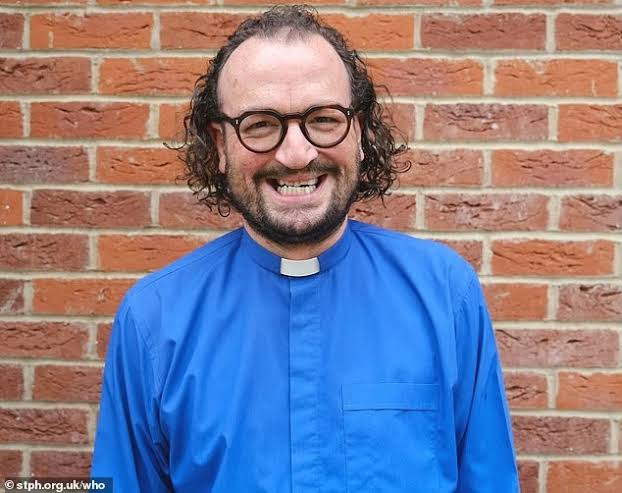
Reverend Dr. Johnny Douglas, 51, a former vicar serving St. Paul's Church in Swanley and St. Peter's Church in Hextable, Kent, has been banned from exercising Church of England ministry for life after a disciplinary tribunal established serious misconduct involving an inappropriate and sexually intimate relationship with a vulnerable woman who approached him for spiritual support, as well as coercive and controlling behavior toward his former wife. The tribunal examined extensive private communications, witness testimony and additional allegations involving professional boundaries and financial dishonesty, establishing eight of the nine areas of misconduct presented against him. Douglas, who was suspended in December 2024, disputed central allegations during the proceedings, but the panel rejected his explanations and imposed a lifetime prohibition from ministry.
A Church of England vicar has been banned from exercising ordained ministry for life after a disciplinary tribunal found that he engaged in an inappropriate and sexually intimate relationship with a vulnerable woman who had approached him for spiritual guidance, while also subjecting his former wife to coercive and controlling behavior during their marriage. Reverend Dr. Jonathan William Dixon Douglas, popularly known as Johnny Douglas, served as the vicar of St. Paul’s Church in Swanley and St. Peter’s Church in Hextable, Kent, where he had developed a reputation as an influential religious leader whose ministry attracted new worshippers and contributed to community development. However, a detailed disciplinary judgment published by the Church of England in November 2026 revealed a substantially different account of his private conduct, establishing multiple instances of misconduct that the tribunal considered incompatible with the responsibilities and professional standards expected of an ordained priest. The findings have raised significant questions about the abuse of pastoral authority, the protection of vulnerable adults and the importance of maintaining appropriate boundaries between religious leaders and individuals who seek their guidance during periods of personal difficulty.
The five-member disciplinary tribunal for the Diocese of Rochester, chaired by His Honour Peter Collier KC, examined allegations relating to Douglas’s conduct toward his former wife, his relationship with a female parishioner and several additional matters involving professional integrity and financial disclosures. In its determination dated November 10, 2026, the tribunal established eight of the nine areas of misconduct presented for consideration, including the two principal allegations concerning his former marriage and his inappropriate relationship with the woman. The panel was unanimous in accepting the evidence supporting those central findings and concluded that Douglas had behaved in a manner incompatible with the standards of his office. A subsequent determination imposed a lifetime prohibition from ministry, one of the most serious disciplinary penalties available within the Church of England’s ecclesiastical framework, reflecting the gravity of the misconduct established during the proceedings.
The woman at the center of the relationship was identified in the published judgment only as XY, following a formal order protecting her identity and other information that could lead to her identification. According to evidence presented before the tribunal, she approached Douglas while experiencing difficulties in her marriage and seeking spiritual encouragement as she attempted to reconnect with her Christian faith. What began as a relationship between a priest and a parishioner gradually developed into a deeply personal association involving extensive private communication, emotional attachment and physical intimacy. The tribunal concluded that Douglas failed to maintain appropriate pastoral boundaries despite occupying a position of religious authority and being aware of the woman's vulnerability. Although Douglas and his former wife had separated before the intimate relationship began, their marriage had not yet been legally dissolved, adding another dimension to the misconduct examined by the panel.
The relationship reportedly developed between April 2022 and December 2023, during a period when Douglas was navigating the breakdown of his marriage while continuing to serve his congregations and hold responsibilities within the Church of England. The tribunal examined extensive WhatsApp communications between Douglas and the woman, together with voice messages and witness testimony, finding that the overall nature, frequency and language of their exchanges were inconsistent with his explanation that their association was simply pastoral. Douglas maintained during the proceedings that he had offered the woman spiritual support and had not treated her differently from other people under his pastoral care, although he acknowledged that some of his messages could have appeared excessively familiar. The tribunal rejected that explanation, concluding that the communications supported the woman's description of a concealed intimate relationship rather than an ordinary association between a priest and a member of his congregation.
One incident that attracted considerable attention in British media coverage involved an intimate encounter on a rocking chair inside the vicarage. The tribunal examined messages exchanged in March 2023 in which Douglas referred to their time together on the chair, while the woman responded affectionately about the experience. She told the panel that she had sat astride Douglas while he occupied the chair and described the encounter as intimate, explaining that both individuals remained clothed. Douglas offered a different interpretation of the messages, suggesting that they related to an occasion involving other people during a social gathering, but the tribunal found his explanation inconsistent with the language used in their correspondence. Importantly, the woman's testimony did not allege that sexual intercourse occurred during the rocking-chair encounter, making some sensational descriptions of the incident circulating in the media more explicit than the evidence actually established.
The tribunal also heard evidence that the relationship became increasingly complicated as Douglas's behavior toward the woman changed and she began questioning whether he was involved with another parishioner. According to her testimony, she eventually visited the vicarage to confront him about her suspicions and discovered another woman hiding beneath a desk inside the property. The panel accepted her account of that incident and found that Douglas had pursued another inappropriate relationship while maintaining the appearance of an intimate association with XY. Communications exchanged after the confrontation were considered consistent with the woman's description of what had happened, further weakening Douglas's contention that their relationship had been purely spiritual. The discovery formed part of a wider pattern of conduct that the tribunal considered relevant to assessing his honesty and the manner in which he managed relationships with members of his congregation.
The findings went considerably beyond questions of marital fidelity or private romantic behavior. Central to the tribunal's assessment was the fact that XY had initially approached Douglas in his capacity as a religious leader, seeking encouragement and support during a personally difficult period. That relationship placed him in a position of influence over someone who regarded him as a source of spiritual guidance, creating professional responsibilities that remained in place regardless of whether emotional affection subsequently developed between them. The tribunal concluded that Douglas failed to recognize or respect those responsibilities, allowing the boundaries between pastoral care, personal involvement and physical intimacy to become increasingly blurred. For the panel, the resulting misconduct could not be adequately explained as a private relationship between two consenting adults because the circumstances in which the association began were directly connected to his position within the Church.
Douglas's treatment of his former wife, Julie, constituted another major component of the disciplinary proceedings and was considered among the most serious matters before the tribunal. The couple married in 2012, the same year Douglas was ordained as a priest, and their relationship eventually deteriorated before they separated toward the end of 2021. Their divorce was finalized in March 2024 following prolonged financial disagreements. During the hearing, Julie described experiences of emotional distress, controlling conduct and behavior that she regarded as abusive, while Douglas disputed important elements of her account. Having examined the evidence presented by both parties, the tribunal concluded that her testimony was credible and that Douglas had engaged in coercive and controlling conduct inconsistent with the standards expected of a member of the clergy.
The panel also considered evidence concerning a meeting held shortly before the couple separated, when other church members visited them to discuss concerns surrounding the difficulties Julie was experiencing. Douglas had secretly recorded the meeting and submitted the recording as part of his defense, apparently believing that it would support his interpretation of events. The tribunal reached the opposite conclusion, finding that the recording reinforced important aspects of Julie's account and supported its assessment of the relationship. That finding became particularly significant because numerous parishioners had submitted favorable statements describing Douglas as an effective minister and expressing surprise at the allegations against him. The panel acknowledged those positive experiences but emphasized that outsiders' impressions of a marriage do not necessarily reveal how one partner behaves toward the other in private.
The contrast between Douglas's public ministry and the tribunal's findings concerning his private conduct was one of the most striking aspects of the judgment. During his years serving in Swanley and Hextable, Douglas had attracted favorable assessments from members of his congregations who credited him with encouraging their Christian faith, strengthening community relationships and improving the activities of the churches. The tribunal acknowledged testimony describing his contribution to the development of a community café and other initiatives that benefited residents. A woman priest who had received professional mentoring from Douglas also submitted a positive account of her experiences with him. Rather than dismissing those achievements, the panel recognized that an individual could undertake effective religious and community work while simultaneously engaging in serious misconduct in areas of life that were not visible to the wider congregation.
That distinction is especially important in cases involving allegations of domestic abuse and coercive control, which can be difficult for people outside a relationship to recognize. A person may appear respected, generous, disciplined or compassionate in professional and social environments while behaving differently toward a spouse or family member behind closed doors. The tribunal's assessment reflected that reality, placing considerable weight on the direct evidence of those affected rather than assuming that favorable character references disproved the allegations. Although the proceedings did not constitute a criminal trial, the panel's findings nevertheless represent a formal determination that Douglas's treatment of his former wife amounted to ecclesiastical misconduct under the Church of England's disciplinary rules.
The evidence presented during the proceedings also demonstrated that Douglas's involvement with XY extended beyond romantic communication and physical intimacy. The woman was attempting to resolve significant personal matters, including finding accommodation following the breakdown of her marriage, and Douglas became closely involved in discussions concerning potential property purchases and financial arrangements. The tribunal examined communications in which he offered extensive assistance with matters that went beyond ordinary spiritual encouragement. Douglas argued that he was drawing on previous experience and providing practical assistance of the kind he had offered to others, but the panel concluded that his involvement contributed to an inappropriate erosion of professional boundaries. The finding highlighted the difficulties that can arise when religious guidance becomes closely intertwined with financial, emotional and personal decision-making, particularly when an individual is already dependent on the spiritual support of a member of the clergy.
Other areas examined by the tribunal involved allegations of dishonesty connected to financial-support applications submitted to organizations assisting members of the clergy. The panel found that Douglas had deliberately failed to provide a complete account of his financial resources and property ownership when applying for certain grants in 2023. Douglas maintained that any omissions had not been intentional and indicated that he would repay money to which he was not entitled. However, the tribunal concluded that he understood the requirements of the applications and had consciously withheld relevant information. These findings added further concerns about professional integrity to a case already dominated by questions surrounding pastoral responsibilities, personal relationships and his conduct toward his former wife.
Not every allegation presented against Douglas was established, and that distinction remains essential to an accurate account of the proceedings. One matter involved an allegation that he had dishonestly obtained food from a community food distribution initiative without making a contribution. The tribunal concluded that the available evidence was insufficient to establish that allegation, noting that it had not received direct testimony from an important individual involved in the matter. Douglas disputed the accusation, and the panel declined to make an adverse finding against him on that particular issue. The decision demonstrates that the tribunal assessed the different allegations individually rather than accepting every accusation simply because misconduct had been established elsewhere.
The disciplinary process itself extended over a considerable period, beginning before Douglas was formally suspended from his position. Church authorities had started examining concerns about his conduct in 2024, and on December 13 of that year, the Bishop of Rochester suspended him from his duties as vicar. Douglas challenged the suspension, but his appeal was unsuccessful in January 2025. The suspension remained in effect as complaints were investigated and the case proceeded through the Church's disciplinary framework. Although his absence generated uncertainty and speculation among members of the affected congregations, the Diocese of Rochester stressed in a public statement in June 2025 that suspension was a precautionary measure intended to allow an independent investigation and did not, at that stage, establish that the allegations were true.
The diocese's decision to issue that statement followed concerns within the local community, where some parishioners questioned why Douglas had been absent from ministry for an extended period without detailed explanations. His established popularity meant that some worshippers continued expressing support for him and hoped he would eventually return to his position. Church authorities urged residents to avoid speculation while proceedings remained confidential, emphasizing the need to protect the privacy of everyone involved. The eventual publication of the tribunal's findings therefore represented a significant development for congregations that had spent nearly two years confronting uncertainty about the future of their vicar and the reasons behind his suspension.
Douglas also challenged aspects of the disciplinary process, raising concerns about the handling of previous complaints and suggesting that the proceedings might have been connected to criticism he had directed toward diocesan authorities. The tribunal examined the chronology of the investigations and rejected the suggestion that the current case represented retaliation for whistleblowing. It concluded that the relevant inquiries had commenced independently of the earlier decision on another complaint involving Douglas. He also sought to have the dispute addressed through conciliation or mediation, but church judicial authorities considered the allegations sufficiently serious to require a formal determination rather than an informal settlement. The tribunal agreed that the nature of the accusations made it necessary to establish whether misconduct had occurred before determining what consequences should follow.
The significance of the lifetime prohibition lies in its effect on Douglas's ability to perform the responsibilities associated with ordained ministry. Under the Church of England's disciplinary framework, such a penalty prevents a member of the clergy from exercising ministry for the duration of the prohibition. It is considerably more severe than a temporary suspension, which may be imposed while allegations are investigated or as a disciplinary consequence for a specified period. The prohibition should not, however, be confused with a general restriction preventing Douglas from physically entering a church building, nor does it amount to a criminal sentence imposed by a secular court. The penalty arises from the Church's assessment of his suitability to exercise the spiritual and professional authority associated with ordained office.
The decision has wider implications for how religious institutions manage relationships between clergy and people seeking spiritual assistance. Priests, pastors and other religious leaders frequently encounter individuals experiencing bereavement, marital difficulties, financial problems, loneliness and other forms of emotional distress. These circumstances can create relationships in which worshippers place considerable confidence in the judgment and guidance of religious figures, sometimes sharing deeply personal information that they would not disclose elsewhere. Professional boundaries are intended to ensure that this confidence is not exploited and that individuals remain able to make independent decisions without feeling dependent on the approval or affection of their spiritual advisers.
In practical terms, those boundaries require religious leaders to recognize that emotional intimacy arising through pastoral care carries responsibilities that may differ substantially from those associated with ordinary social relationships. A parishioner may regard a priest's words as carrying spiritual significance, which can make it difficult to challenge advice, question behavior or withdraw from an increasingly uncomfortable relationship. The presence of affection between the parties does not necessarily eliminate that imbalance of authority. Religious organizations therefore commonly establish professional-conduct guidelines addressing sexual relationships, confidentiality, financial involvement and interactions with vulnerable adults, recognizing that safeguarding extends beyond preventing physical violence or criminal conduct.
The Church of England's professional standards specifically address the importance of maintaining physical, emotional, psychological and sexual boundaries in pastoral relationships. They also require clergy to exercise care when communicating with parishioners and to recognize circumstances in which individuals may become dependent on their spiritual advisers. The tribunal concluded that Douglas's conduct violated the principles underlying those responsibilities, particularly because the woman had approached him while experiencing difficulties in her personal life. The judgment illustrates how misconduct can emerge gradually through a series of apparently personal interactions, eventually creating a relationship that is fundamentally inconsistent with the original purpose of the spiritual support being provided.
The case also demonstrates the importance of effective complaint mechanisms within religious institutions. Worshippers may be reluctant to report misconduct involving a respected religious leader because they fear damaging their relationship with the church, being disbelieved by other congregation members or facing criticism from a community that has placed considerable trust in the individual concerned. Those difficulties can become more pronounced when the religious leader enjoys a strong reputation for successful ministry and community service. Independent investigations and appropriately structured disciplinary proceedings are therefore essential in establishing whether allegations are supported by evidence without allowing the popularity of the individual involved to determine the outcome.
At the same time, the protection of complainants and witnesses remains an important part of ensuring that disciplinary proceedings do not create further harm. The tribunal's order protecting XY's identity reflects its recognition that individuals who provide evidence about highly personal relationships may face considerable distress if their identities become publicly known. That protection extends to details that could indirectly reveal who she is, rather than merely preventing publication of her name. Media coverage must consequently avoid identifying information that would undermine the order, particularly in relatively close-knit communities where seemingly minor details could allow people familiar with the circumstances to establish a woman's identity.
For the congregations of St. Paul's and St. Peter's, the judgment presents the difficult task of reconciling positive experiences of Douglas's ministry with the misconduct established through the proceedings. The tribunal acknowledged that parishioners had benefited from his religious teaching and community initiatives, while recognizing that the revelations would cause considerable distress among people who previously held him in high regard. Those experiences do not necessarily become meaningless because serious misconduct has subsequently been established, but neither can successful community work erase the harm associated with violations of pastoral trust. Supporting congregations through that process will require sensitivity toward those directly affected, clear communication about the findings and appropriate assistance for worshippers struggling to understand the outcome.
The broader Christian community may also find the case relevant beyond the particular disciplinary structure of the Church of England. Religious organizations around the world operate under different systems of governance, and some have considerably fewer independent accountability mechanisms than established denominations. Where spiritual leaders hold substantial personal authority without effective oversight, individuals who experience inappropriate behavior may have limited opportunities to raise concerns or obtain an impartial assessment of their complaints. The Douglas judgment illustrates the importance of distinguishing religious influence from unrestricted personal authority, ensuring that a person's position within a church does not place them beyond meaningful scrutiny.
Douglas's career within the Church began when he was ordained as a deacon in 2011, followed by his ordination as a priest in 2012 and his appointment to the Swanley benefice in January 2018. He subsequently became involved in wider church governance through his election as a clergy representative for the Diocese of Rochester in the Church of England's General Synod. That progression placed him in positions of increasing responsibility and gave him opportunities to contribute to both parish life and national church discussions. The lifetime prohibition therefore represents the conclusion of a disciplinary process affecting not only his local role as vicar but also his wider professional standing within an institution in which he had served for approximately 15 years.
The tribunal's decision remains part of an ecclesiastical legal framework that provides mechanisms through which disciplinary outcomes may be challenged. The possibility of an application for permission to appeal does not negate the findings already published, but any subsequent judicial decision could affect the outcome and would need to be reported separately. No verified appellate ruling overturning the lifetime prohibition had been identified at the time of publication. Until such a development occurs, the published judgment and penalty determination remain the authoritative records of the disciplinary proceedings and the consequences imposed on Douglas.
The lasting importance of the case lies in the distinction between religious leadership as a position of public trust and the personal conduct required to sustain that trust. The tribunal did not conclude that Douglas had never undertaken valuable work or that every positive experience described by parishioners was inaccurate. Instead, it determined that his established achievements could not outweigh the seriousness of his coercive conduct toward his former wife, his inappropriate relationship with a vulnerable woman and the additional misconduct established through the proceedings. For the Church of England, the judgment reinforces the principle that effectiveness in ministry does not remove the obligation to maintain integrity, respect personal boundaries and protect individuals who seek spiritual care.
The decision also provides an important reminder that people approaching religious institutions for emotional or spiritual assistance should be able to do so without becoming vulnerable to inappropriate personal relationships. The authority entrusted to members of the clergy exists to support worshippers and communities rather than create opportunities for exploitation or dependency. By imposing a lifetime prohibition following its assessment of the evidence, the tribunal determined that Douglas's conduct was fundamentally incompatible with the continued exercise of that responsibility. As the affected congregations come to terms with the findings, the case remains a significant example of why accountability, safeguarding and professional integrity must remain essential components of religious leadership, regardless of an individual's popularity, influence or previous achievements.