UN REPORT REVEALS FIVE WOMEN AND GIRLS ARE KILLED EVERY HOUR BY PARTNERS OR RELATIVES
A joint report released by UN Women and the United Nations Office on Drugs and Crime on November 24, 2026, revealed that approximately 47,000 women and girls were intentionally killed by intimate partners or family members in 2025, averaging five victims every hour and 129 every day. The killings accounted for nearly 60 percent of the 78,000 intentional homicides involving women and girls worldwide, with Africa recording the highest rate relative to its female population. The United Nations has called for stronger criminal justice responses, improved survivor protection, increased investment in prevention and greater accountability for perpetrators, warning that the persistent scale of domestic and gender-related killings demonstrates the inadequacy of existing interventions.
Approximately 47,000 women and girls were intentionally killed by intimate partners or family members worldwide in 2025, according to a new United Nations report that has exposed the persistent scale of gender-based violence and the shortcomings of existing protection mechanisms. The findings, jointly released by UN Women and the United Nations Office on Drugs and Crime (UNODC) on Tuesday, November 24, 2026, reveal that an average of five women and girls lost their lives every hour at the hands of individuals with whom they shared intimate relationships or family connections, highlighting the continuing threat of violence within domestic environments.
The 2026 Femicide Brief, published ahead of the International Day for the Elimination of Violence against Women, estimates that approximately 78,000 women and girls were victims of intentional homicide worldwide in 2025. Nearly 60 percent of those killings were committed by intimate partners or relatives, demonstrating the disproportionate risk women face from individuals within their immediate personal circles and reinforcing concerns about the ability of governments to prevent domestic violence from escalating into fatal incidents.
The findings translate into an estimated 129 women and girls killed every day by partners or family members. Despite decades of international advocacy, legislative reforms and growing public awareness surrounding domestic abuse, the United Nations says the underlying pattern of violence has changed remarkably little. Annual estimates of intimate-partner and family-related femicide have fluctuated between approximately 45,000 and 51,000 in recent years, suggesting that existing interventions have yet to produce a sustained global reduction in such killings.
Femicide refers to the intentional killing of women and girls in circumstances connected to their gender. Although not every homicide involving a female victim necessarily constitutes femicide, killings committed within intimate relationships and family environments represent a major category of gender-related violence. These incidents can follow prolonged periods of physical assault, psychological intimidation, coercive control, sexual abuse, financial exploitation and threats that may have gone unreported or received inadequate institutional attention.
The latest global estimate is lower than the approximately 50,000 women and girls believed to have been killed by intimate partners or relatives in 2024. However, changes in the availability and quality of national statistics complicate direct comparisons between annual estimates. Researchers have emphasized that apparent reductions in recorded deaths should not automatically be interpreted as evidence that domestic violence prevention programs are becoming more effective.
Reliable data remains one of the most significant challenges confronting international efforts to prevent femicide. In countries where criminal investigations are inconsistent, death registration systems are incomplete or information concerning the relationship between victims and perpetrators is unavailable, authorities may struggle to establish the true scale of gender-related killings. These limitations can prevent governments from identifying patterns of violence and determining whether existing protection measures are achieving their intended objectives.
The problem becomes even more difficult to measure when women are killed outside intimate relationships or family environments. Gender-related killings can occur in circumstances involving sexual violence, human trafficking, organized crime, exploitation and other forms of persecution. However, differences in national reporting practices mean that researchers cannot establish equally comprehensive global estimates for every category of femicide.
Africa recorded the highest estimated rate of intimate-partner and family-related femicide relative to the size of its female population in 2025, with 2.9 victims per 100,000 women and girls. The Americas followed with a rate of 1.4, while Oceania recorded 1.1. Asia and Europe recorded estimated rates of 0.6 and 0.5 victims per 100,000 women and girls, respectively.
The regional findings have significant implications for governments across Africa, where efforts to address gender-based violence frequently intersect with wider challenges involving economic inequality, institutional capacity, access to healthcare and the availability of legal protection. Although conditions differ considerably between countries, the figures reinforce the importance of strengthening the systems responsible for investigating domestic abuse and protecting individuals whose lives may be at risk.
Economic dependence remains a major obstacle for many women attempting to escape abusive relationships. Individuals who rely on their partners for housing, financial support, healthcare or the welfare of their children may face considerable uncertainty when considering separation. Without access to independent income, emergency accommodation or reliable family support, leaving a violent household can introduce additional financial and personal difficulties.
Social expectations can create further barriers, particularly in communities where preserving marriages and family relationships is regarded as an overriding responsibility. Women experiencing domestic abuse may encounter pressure to remain with violent partners, withdraw criminal complaints or pursue reconciliation even when serious threats to their safety remain unresolved. Such expectations can discourage survivors from seeking assistance until their circumstances have deteriorated significantly.
The treatment of domestic violence as a private family disagreement rather than a potential criminal offense can also undermine prevention efforts. When repeated incidents of abuse are addressed informally without documentation, investigation or adequate protection, opportunities to identify escalating threats may be lost. Effective intervention requires authorities and community institutions to recognize that repeated intimidation and violence can form part of a wider pattern rather than a series of unrelated disagreements.
Another significant challenge involves the ability of survivors to access criminal justice institutions. Fear of retaliation, concerns about confidentiality, financial constraints and uncertainty about how authorities will respond can discourage victims from approaching law enforcement. Where survivors believe that reporting abuse will expose them to further danger without providing meaningful protection, they may remain reluctant to seek formal assistance.
For some women, attempting to leave an abusive relationship can create additional risks. Former partners may continue engaging in stalking, harassment, intimidation or threats after a relationship has ended, demonstrating that separation does not necessarily eliminate the danger associated with domestic violence. Protection services must therefore consider the circumstances of survivors both during abusive relationships and after they have attempted to establish independent lives.
Coercive control has increasingly become an important consideration in discussions surrounding domestic violence prevention. Unlike isolated incidents of physical assault, coercive control involves patterns of behavior through which perpetrators attempt to dominate another individual's personal decisions, movements, relationships and access to resources. Such conduct can include restrictions on employment, monitoring communications, isolating victims from relatives and controlling household finances.
Although legal recognition of coercive control differs between countries, understanding these patterns can help institutions identify circumstances requiring intervention before physical violence escalates. Survivors may experience significant restrictions on their independence even when they do not display visible injuries, making it important for police officers, healthcare professionals and social workers to consider the wider circumstances surrounding complaints of domestic abuse.
The United Nations' findings also highlight the limitations of criminal justice responses that concentrate primarily on prosecuting perpetrators after fatal violence has occurred. While homicide investigations and criminal convictions remain essential to accountability, preventing femicide requires earlier intervention through effective responses to threats, accessible protection mechanisms and coordination among institutions responsible for assisting survivors.
Police officers frequently represent the first point of contact between survivors and the formal justice system. Their ability to identify serious threats, document repeated abuse and refer individuals to appropriate services can influence whether victims obtain protection before further violence occurs. Training, adequate resources and clear procedures are therefore important components of broader domestic violence prevention strategies.
The effectiveness of protection orders also depends heavily on enforcement. A judicial directive restricting an abusive individual from approaching or contacting a survivor may provide an important legal safeguard, but its practical value can diminish when violations are not investigated promptly. Survivors must have reasonable confidence that reporting breaches will produce an appropriate institutional response rather than additional uncertainty.
Emergency accommodation remains another essential element of protection. Women attempting to escape abusive households may require immediate shelter, particularly when they have young children or lack independent financial resources. Specialized shelters can provide temporary security while survivors pursue longer-term housing arrangements, employment opportunities and legal assistance.
However, maintaining effective support services requires sustained financial investment. Facilities must be able to accommodate demand, employ trained personnel and provide appropriate assistance to individuals with different needs. Survivors with disabilities, migrants and women living in remote communities can encounter additional barriers when essential protection services are concentrated in major cities or designed without sufficient consideration of their circumstances.
Healthcare institutions also have an important role in identifying and responding to domestic abuse. Medical professionals may encounter patients experiencing injuries, psychological distress or other health consequences associated with violence before those individuals have approached law enforcement. Appropriate referral arrangements and confidential support can help connect survivors with protection services without unnecessarily compromising their safety.
In Ghana, the Domestic Violence Act of 2007 established a legal framework for addressing abuse within domestic relationships. The Domestic Violence and Victim Support Unit of the Ghana Police Service provides specialized assistance in cases involving domestic violence and related offenses, forming an important component of the country's institutional response to gender-based violence.
Nevertheless, the effectiveness of Ghana's protection framework depends on more than the existence of legislation and specialized police units. Access to services, the availability of emergency accommodation, public awareness, investigation standards and coordination between law enforcement and social welfare institutions all influence whether survivors receive meaningful assistance.
Individuals living outside major urban centers may encounter particular difficulties when attempting to access specialized support. Transportation expenses, limited availability of professional services and concerns about privacy within smaller communities can discourage survivors from pursuing formal complaints. Strengthening regional and district-level protection mechanisms could help address some of these practical obstacles.
The findings are equally relevant to Nigeria, where the Violence Against Persons (Prohibition) Act of 2015 established a framework for addressing several forms of violence and abuse. The implementation of related legislation varies across jurisdictions, reinforcing the importance of examining whether survivors can obtain consistent protection regardless of their geographical location or financial circumstances.
Across Ghana, Nigeria and other African countries, traditional authorities, religious institutions and community organizations can exert considerable influence over how domestic violence is understood and addressed. These institutions can provide valuable emotional support, help survivors access professional assistance and encourage communities to reject abusive behavior. Their interventions, however, must recognize that protecting an individual's life and safety cannot be subordinated to preserving a marriage or maintaining a family's public reputation.
The influence of religious and traditional leaders can be particularly significant in communities where individuals are more likely to seek informal guidance before approaching state institutions. When these leaders recognize the seriousness of domestic violence and refer survivors to appropriate protection services, they can contribute to earlier intervention. Conversely, minimizing serious threats or discouraging formal complaints can leave victims exposed to continuing danger.
The global figures also reinforce the importance of addressing the social conditions that contribute to violence against women. Prevention initiatives frequently emphasize education, respectful relationships, personal boundaries and nonviolent approaches to resolving disagreements. Such programs can complement criminal justice reforms by addressing attitudes and behaviors before they develop into established patterns of abuse.
Engaging men and boys remains an important component of these efforts. Educational programs that encourage healthy relationships and challenge the normalization of controlling or violent behavior can help reduce acceptance of domestic abuse. Effective prevention strategies generally require participation from entire communities rather than placing responsibility exclusively on women to protect themselves from violence.
Schools can contribute to long-term prevention by creating environments in which young people learn about personal safety, respectful communication and the consequences of abusive behavior. Teachers and school administrators may also encounter children affected by violence within their households, making appropriate safeguarding procedures and referral arrangements important elements of educational policy.
Children living in households affected by domestic violence can experience significant emotional and developmental consequences even when they are not directly subjected to physical abuse. Exposure to repeated intimidation, threats and violence can undermine their sense of security, affect educational performance and create difficulties in developing healthy relationships.
When domestic violence results in the death of a parent, the consequences for surviving children can be particularly severe. They may experience bereavement, displacement, financial hardship and considerable disruption to established family relationships. Ensuring that these children receive appropriate psychological, educational and social support represents an important responsibility extending beyond the criminal prosecution of perpetrators.
Violence against women also imposes substantial economic costs on households, businesses and public institutions. Survivors may experience interruptions to employment and education, increased healthcare expenditure, difficulties maintaining housing and reduced opportunities for financial independence. Governments must allocate resources to criminal investigations, judicial proceedings, healthcare services and social protection programs responding to the consequences of abuse.
Employers can contribute to prevention and survivor protection through workplace policies recognizing the impact of domestic violence. Confidential assistance arrangements, appropriate leave provisions and referral mechanisms can help employees obtain support while maintaining financial stability. Such measures can be especially important for individuals whose ability to escape abusive relationships depends on retaining independent sources of income.
The release of the 2026 Femicide Brief coincides with the annual 16 Days of Activism against Gender-Based Violence, an international campaign beginning on November 25 and concluding on December 10, Human Rights Day. This year's campaign emphasizes access to justice, protection for survivors and accountability for perpetrators, reflecting concerns that existing commitments have not translated into sufficient practical improvements.
The campaign brings together international organizations, governments, women's rights advocates, civil society groups and survivors seeking stronger responses to gender-based violence. Its priorities include improving the implementation of existing laws, expanding access to essential services and ensuring that individuals responsible for violence are subjected to appropriate criminal investigations and judicial proceedings.
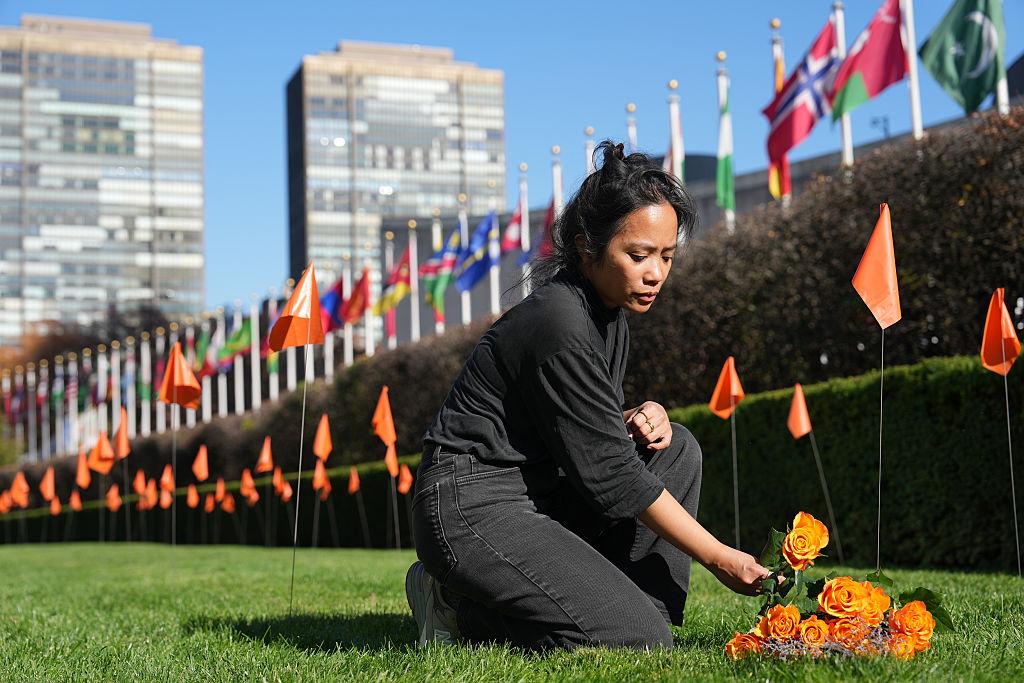
At United Nations Headquarters in New York, an installation featuring 129 orange flags has been used to represent the average daily number of women and girls killed by intimate partners or family members. The display draws attention to the individual lives represented by global statistics and highlights the continuing urgency of efforts to prevent fatal domestic violence.
The international campaign also provides an opportunity to examine whether governments are allocating sufficient resources to institutions responsible for protecting survivors. Legislative commitments can establish important legal foundations, but their effectiveness ultimately depends on implementation, institutional capacity and the availability of services that individuals can access when their safety is threatened.
Improving the collection of information remains central to evaluating those efforts. In March 2022, the United Nations Statistical Commission approved an international framework developed by UN Women and UNODC to improve the measurement of gender-related killings. The framework seeks to establish more consistent methods for documenting the circumstances in which women and girls are intentionally killed.
More comprehensive reporting could help authorities establish whether victims had previously reported abuse, whether protection orders had been issued and whether opportunities for intervention were missed. Such information could assist governments in identifying weaknesses within criminal justice and social protection systems while evaluating the effectiveness of existing prevention policies.
Differences in national legal definitions continue to complicate the measurement of femicide. Some jurisdictions recognize gender-related killings through specific criminal legislation, while others investigate and prosecute such incidents under general homicide laws. International statistical frameworks can help improve comparisons without requiring every country to adopt identical criminal legislation.
Nevertheless, more accurate statistics alone cannot guarantee better outcomes. Information must be accompanied by practical investment in institutions capable of responding to violence, enforcing legal protections and assisting survivors who lack the resources to escape dangerous circumstances. Governments must also ensure that protection mechanisms remain accessible to individuals who face additional barriers related to poverty, disability, geographical isolation or migration status.
News organizations have an important responsibility when reporting incidents of femicide and domestic violence. Coverage that presents fatal abuse merely as a relationship disagreement can obscure the wider circumstances surrounding a killing, particularly when there is a documented history of threats or violence. Reporting should distinguish established facts from allegations while avoiding language that unnecessarily attributes responsibility to victims.
Responsible media coverage can also contribute to public understanding by examining institutional failures, explaining available protection mechanisms and highlighting documented patterns of violence. Such reporting can support informed discussions about prevention without exposing survivors or bereaved families to unnecessary intrusion or compromising the integrity of ongoing criminal investigations.
International efforts to address violence against women have produced significant developments in legal recognition and public awareness over several decades. However, the persistence of intimate-partner and family-related killings demonstrates that those achievements have not consistently translated into effective protection. The latest figures challenge governments to examine whether existing legislation, public institutions and community-based interventions are capable of addressing threats before they result in further loss of life.
The estimated 47,000 women and girls killed by intimate partners or relatives in 2025 represent more than a global statistical finding. Each death carries consequences for surviving children, relatives, friends and communities, while exposing the human cost of violence that prevention systems are intended to address. The continuing concentration of female homicide within intimate relationships and family environments underscores the importance of recognizing domestic violence as a serious public safety and human rights concern.
As governments and international organizations observe the 2026 campaign against gender-based violence, attention is increasingly focused on whether existing commitments will be accompanied by stronger enforcement, improved survivor protection and sustained investment in prevention. Although annual variations in reported deaths remain difficult to interpret because of limitations in national statistics, the broader pattern demonstrates that meaningful progress cannot be established through public declarations alone.
The next global assessment of femicide will provide another opportunity to evaluate whether countries are making measurable improvements, but the immediate responsibility lies with institutions capable of intervening when individuals report threats or abuse. For the millions of women and girls living in circumstances affected by domestic violence, the effectiveness of those institutions will ultimately be measured by their ability to provide safety, ensure accountability and prevent further killings within the relationships and households where protection should be assured.