U.S. AIRLINES STRUGGLE TO RECOVER AFTER HISTORIC FAA GROUND STOP CANCELS MORE THAN 6,600 FLIGHTS
U.S. airlines are working through major weekend disruption after the FAA lifted a nationwide ground stop triggered by overloaded switches and routers in the country’s aging air traffic communications system. More than 6,600 flights were cancelled and about 8,600 delayed, while officials said there was no evidence so far of a cyberattack, although the investigation remained active. Transportation Secretary Sean Duffy has called on Congress to provide $50 billion to modernise the system, warning that legacy infrastructure could produce further outages if it is not comprehensively replaced.
Airlines across the United States are struggling to restore normal operations after one of the most disruptive aviation shutdowns in modern American history forced the Federal Aviation Administration to halt departures nationwide for several hours on Friday, November 13, 2026. The unprecedented disruption was triggered by instability in the FAA’s aging air traffic communications network after overloaded switches and routers began producing inconsistent radar and communications information, prompting authorities to stop aircraft from taking off as a safety precaution. By the time the ground stop was lifted Friday evening, more than 6,600 flights had been cancelled and approximately 8,600 delayed, leaving passengers stranded across major airports and creating a cascade of aircraft and crew disruptions expected to continue through the weekend.
The nationwide halt began after air traffic control centers experienced serious communications and radar instability shortly after 3:30 p.m. Eastern Time. Transportation Secretary Sean Duffy said older components within the aviation network became overwhelmed by data, causing switches and routers to produce inconsistent information that controllers could not safely rely on. Authorities did not completely lose radar or communications throughout the system, but the inconsistencies were serious enough for the FAA to conclude that departures could no longer continue safely until the network was stabilised.
At the time the ground stop was ordered, more than 3,500 aircraft were already flying within U.S. airspace. Those aircraft were allowed to continue toward safe destinations or were diverted where necessary while new departures were prevented from taking off. Officials said thousands of aircraft were landed safely during the disruption, demonstrating that the emergency response was primarily designed to reduce the number of planes relying on an unstable communications environment rather than force aircraft already airborne into immediate emergency landings.
The FAA eventually lifted the nationwide restriction at approximately 8:15 p.m. Eastern Time after engineers stabilised and rebooted affected systems. Duffy cautioned immediately that reopening the airspace would not mean an instant return to normal operations because airlines had aircraft, pilots and cabin crews scattered across the country after hours of cancellations, diversions and ground delays. He warned that operations would resume slowly and that the disruption could continue affecting passengers for several days as carriers attempted to reposition equipment and rebuild schedules.
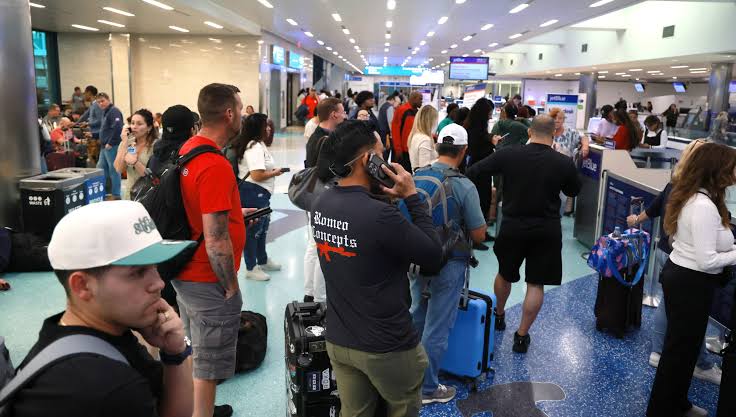
The scale of the disruption quickly became apparent at major hubs including Chicago O’Hare, Atlanta, New York, Boston, Seattle, Los Angeles, Miami and Washington. Departure boards filled with cancellations and delays while passengers crowded airline counters seeking new flights, hotel accommodations and information about when they might be able to continue their journeys. Some travellers remained aboard aircraft for hours while gates were occupied, while others learned that their flights had been cancelled after already arriving at airports.
Reuters reported that more than 6,600 flights had been cancelled and roughly 8,600 delayed, with additional cancellations already appearing on schedules for the following days. The numbers reflected the enormous knock-on effect created by a nationwide departure halt because an aircraft that fails to reach one airport cannot operate its next scheduled service from that location. Pilots and cabin crews can also exceed legally permitted working hours during extended delays, forcing airlines to find replacements before flights can resume.
The outage affected far more than passenger travel. Cargo operations were disrupted, sports teams faced difficulties reaching weekend games and international carriers were forced to adjust services to and from the United States. FedEx and other major cargo operators prepared contingency measures as aircraft schedules were thrown into uncertainty, while several college and professional sports teams considered buses or alternative travel arrangements after their flights were grounded.
The incident was particularly significant because nationwide ground stops are extraordinarily rare in the United States. Reuters described Friday’s event as the longest nationwide shutdown since the September 11, 2001 terrorist attacks, when U.S. authorities cleared the country’s airspace after hijacked aircraft struck the World Trade Center and Pentagon. The only other nationwide ground stop since 9/11 occurred in January 2023, when the FAA’s Notice to Air Missions system failed and domestic departures were halted for roughly 90 minutes.
Friday’s incident was different from both earlier shutdowns because it originated in the communications infrastructure connecting air traffic control centers rather than a security emergency or a problem with the pilot notification system. Officials said the immediate failure involved legacy telecommunications equipment that has remained in service despite years of warnings that significant portions of the U.S. air traffic network require replacement. Duffy described the affected systems as extremely old and said some components still rely on technology dating back several decades.
The transportation secretary said overloaded switches and routers began generating inconsistent data across the system, creating uncertainty for controllers who depend on precise and uninterrupted information about aircraft positions and communications. Aviation safety depends on controllers being able to reliably speak with pilots and monitor aircraft movements, meaning even partial instability can create unacceptable risk when thousands of flights are operating simultaneously. The FAA therefore chose to keep aircraft on the ground until officials were satisfied that the system was stable enough for normal operations to resume.
The incident immediately raised concerns that the nationwide failure could have resulted from a cyberattack, particularly because it occurred during a week in which other major technology systems had also experienced disruptions. Homeland Security Secretary Markwayne Mullin said investigators had found no evidence indicating that hackers or a rogue artificial intelligence system were responsible for the aviation outage. He described the available evidence as pointing toward a mechanical and legacy-network problem, while also making clear that federal agencies were continuing to investigate rather than declaring every cyber possibility permanently closed.
The National Security Agency and other federal agencies joined the investigation to determine whether any malicious activity contributed to the disruption. Officials said there were no digital footprints indicating that an outside actor had penetrated the FAA network, and the failure appeared consistent with aging infrastructure becoming overloaded. The distinction is important because the absence of evidence of a cyberattack at this stage is not the same as a final investigative conclusion, and authorities are expected to continue examining system logs and network activity.
Duffy also rejected suggestions that the FAA’s new artificial intelligence technology was responsible for the outage. He said the newer systems being introduced as part of the agency’s modernisation programme continued operating while older legacy equipment failed. According to the transportation secretary, the immediate problem illustrated the risk of adding modern technology to a network that still depends heavily on infrastructure designed decades ago.
That broader infrastructure problem has been documented repeatedly by aviation officials and government watchdogs. FAA Administrator Bryan Bedford previously said more than 300 air traffic facilities operate with systems that often function as separate technological islands, some of them relying on old computers and communications equipment that cannot communicate seamlessly with other parts of the network. In some cases, obsolete components are reportedly so difficult to replace that officials have had to obtain spare parts through online marketplaces or manufacture them using specialised equipment.
The FAA has already begun replacing sections of its old telecommunications network and says significant progress has been made converting legacy copper lines to modern fibre-optic connections. The agency has also installed new radio systems and other technology intended to improve reliability and reduce the likelihood that individual failures will spread through the national network. However, aviation experts have warned that replacing cables alone will not solve the problem if the architecture connecting the country’s air traffic control facilities remains fragmented and dependent on outdated equipment.
Congress approved approximately $12.5 billion in 2025 for air traffic control modernisation, including improvements to telecommunications and radar infrastructure. The administration has argued that substantially more funding is required to complete the overhaul, particularly because the current system combines new technology with equipment that can date back to the 1980s or earlier. The Department of Transportation has said the transition must occur while the existing network remains operational around the clock, making the project technically complicated and expensive.
Following Friday’s shutdown, Duffy dramatically increased pressure on lawmakers by calling for $50 billion in funding to modernise the system. Speaking after the ground stop was lifted, he described the condition of the network as an emergency and argued that Congress must provide enough money to replace aging equipment comprehensively rather than continue addressing failures piece by piece. Earlier on Friday, before the nationwide shutdown, the White House and Department of Transportation had separately urged Congress to approve $30.1 billion for broader aviation infrastructure improvements.
The $30.1 billion proposal included funding for air traffic control automation, new controller workstations, cloud computing infrastructure and replacement or improvement of FAA towers. It also contained billions of dollars for airport projects and aging terminals. The ground stop hours later gave the administration a dramatic example of why it believes a larger investment is urgently needed, although Congress will ultimately determine how much additional money is approved and how quickly it can be spent.
Government watchdogs have also warned that funding alone will not solve the FAA’s modernisation difficulties. The Government Accountability Office has raised concerns about the agency’s planning process, saying the programme has lacked a reliable overall cost estimate and integrated master schedule. Reuters reported that as of May the FAA had more than 11,000 separate project schedules that were not fully coordinated, creating a risk of duplicated work, delays and cost overruns.
The FAA aims to complete the first major phase of its current modernisation programme by December 2028. That timeline could now face greater political scrutiny after Friday’s outage exposed how quickly a failure in underlying infrastructure can affect the entire country. Airlines and aviation industry groups are likely to intensify lobbying for faster improvements because even short outages can generate enormous financial losses and leave carriers dealing with operational disruption for days.
The financial impact was already visible in airline markets after the shutdown. Shares of American Airlines, United Airlines and Delta Air Lines fell in after-hours trading, while JetBlue also declined as investors considered the cost of thousands of cancellations and the operational problems likely to continue through the weekend. Airlines must absorb the expense of repositioning aircraft, finding replacement crews and accommodating passengers even when the original disruption is caused by the FAA rather than the carrier itself.
Passenger compensation rules also make the situation complicated. Airlines generally must refund travellers when flights are cancelled and passengers choose not to travel, but carriers may not be required to provide additional compensation for disruptions caused by the federal air traffic control system. That means many stranded passengers could receive refunds or free rebooking without necessarily receiving broader compensation for hotels, meals or other costs unless individual airlines voluntarily provide assistance.
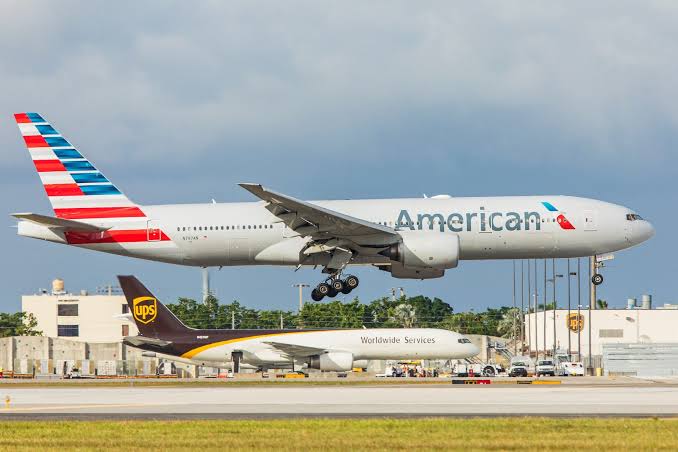
American Airlines said it was prioritising services to smaller cities and international destinations as it attempted to rebuild its network. Such decisions are necessary because cancelling flights into smaller airports can leave aircraft and passengers stranded with fewer alternatives, while international operations involve additional slot, crew and customs considerations. Other major carriers were also expected to operate reduced or modified schedules while aircraft and personnel were moved back into position.
The recovery challenge is particularly difficult because the disruption occurred immediately before a busy weekend and less than two weeks before the Thanksgiving travel period. Thanksgiving is traditionally one of the busiest aviation periods in the United States, putting pressure on airlines and the FAA to ensure that Friday’s technical problems do not reappear when traffic volumes increase. Duffy said he expected the system to be operating normally before the holiday rush but acknowledged that further outages could not be completely guaranteed.
The transportation secretary’s warning reflected the reality that the immediate failure was repaired without eliminating the wider vulnerability that caused it. Engineers were able to stabilise and reboot the network, but the same legacy infrastructure remains part of the national air traffic system. Duffy said the incident demonstrated why continuing to rely on old equipment creates unacceptable risk even if individual failures can be repaired.
The nationwide disruption also renewed attention on a series of earlier communications problems affecting the FAA. In September, an air traffic communications failure disrupted thousands of flights in the northeastern United States after problems involving telecommunications infrastructure were compounded when a construction crew cut a backup fibre-optic line. That incident affected roughly 9,500 flights and illustrated how insufficient redundancy can allow an equipment failure to spread rapidly through the system.
Newark Liberty International Airport has also experienced radar and communications problems linked to aging technology, while earlier FAA failures have affected pilot safety notification systems and regional control facilities. Each incident has reinforced concerns that the country’s aviation infrastructure has not been modernised as quickly as increases in passenger traffic and technological complexity require. Friday’s nationwide shutdown brought those concerns to a much larger scale by affecting the entire national network at once.
The FAA’s challenge is particularly serious because the United States operates one of the busiest aviation systems in the world. Tens of thousands of flights move through U.S. airspace every day, requiring controllers to coordinate aircraft across hundreds of airports and control facilities. Even brief interruptions can create cascading delays because major hubs operate on tightly coordinated arrival and departure schedules with limited spare capacity.
Safety officials emphasised that the ground stop itself demonstrated the system working as intended once the communications instability was detected. Rather than continue operating in an environment where controllers could not be certain that every piece of radar and communications information was reliable, the FAA reduced traffic until engineers could confirm that the network was stable. Officials said there was no indication that passengers or aircraft were placed in immediate danger as a result of the decision.
The broader concern is that such a drastic safety measure became necessary because aging technology could no longer reliably handle the data moving through the system. Modern aviation depends on constant communication among controllers, pilots, radar systems, navigation infrastructure and airline operations centers. Failure in the telecommunications layer connecting those systems can therefore become a nationwide problem even when individual aircraft and airport equipment continue functioning normally.
Investigators will now attempt to determine exactly why the switches and routers became overloaded and whether changes made as part of the ongoing modernisation programme contributed to the instability. Officials have said newer equipment itself did not fail, but integrating modern technology with older infrastructure can create new pressures on legacy systems. Understanding that interaction will be important before additional upgrades are introduced.
The review will also examine the resilience of backup systems. A modern national air traffic network requires enough redundancy that failure of one telecommunications path does not force controllers to shut down departures across the entire country. Aviation experts have argued that the United States needs a more integrated architecture capable of automatically rerouting information when individual components fail.
For travellers, however, those technical debates provide little immediate relief. Airports entered Saturday with large numbers of passengers still attempting to reach destinations after Friday’s cancellations, while airlines continued adjusting schedules. Aircraft remained out of position, crews needed legally required rest and some passengers were rebooked onto flights already operating near capacity.
The disruption could therefore remain visible long after the network itself has been repaired. Airlines generally build schedules around aircraft making multiple trips each day, meaning one cancelled flight can affect several later services involving the same plane. When thousands of flights are cancelled simultaneously, rebuilding the network becomes a complex logistical exercise involving aircraft, pilots, cabin crews, maintenance staff and airport gate availability.
International travel may also take longer to normalise because aircraft arriving from overseas must fit into revised U.S. airport schedules while carriers manage connections for passengers who missed onward flights. Foreign airlines operating long-haul services may face additional crew-rest and slot restrictions if flights are significantly delayed. The disruption therefore has consequences extending well beyond U.S. domestic passengers.
The aviation industry will now be watching Congress closely as the administration seeks emergency modernisation money. Duffy’s demand for $50 billion represents one of the strongest calls yet for lawmakers to accelerate replacement of the FAA’s aging infrastructure. Support for modernisation has historically been bipartisan because both parties recognise the importance of air traffic safety, although disagreements can emerge over spending levels, contracting and implementation.
Friday’s shutdown may strengthen the argument for faster investment because it demonstrated the economic consequences of infrastructure failure in a way that technical reports and congressional hearings often cannot. Thousands of passengers saw the problem directly when their flights disappeared from departure boards, while airlines, cargo companies and businesses were forced to reorganise operations at short notice.
The incident will also intensify scrutiny of how the FAA has spent earlier modernisation funds. Lawmakers are likely to ask why major legacy vulnerabilities remain after years of investment and whether the agency has a realistic plan for replacing critical systems without causing additional disruption. The GAO’s concerns about project coordination and scheduling are therefore likely to become an important part of any congressional debate over new funding.
The federal government must now balance urgency with oversight. Moving too slowly risks leaving the aviation system dependent on fragile technology, but spending tens of billions of dollars without a coordinated architecture could create new delays and cost overruns. The scale of the network means successful modernisation will require long-term planning, stable funding and close cooperation among the FAA, technology contractors, airlines and airport authorities.
For now, the immediate focus remains restoring normal travel. The FAA says the system is safe for flights to operate after engineers stabilised the network, while airlines are gradually rebuilding schedules and repositioning aircraft. Passengers travelling during the weekend are being urged to check directly with their airlines before heading to airports because cancellations and delays may continue even though the nationwide ground stop has ended.
The historic disruption has also provided a stark warning about the condition of the infrastructure responsible for managing the world’s busiest aviation market. The failure did not involve a terrorist attack, and investigators have found no evidence so far that hackers caused it. Instead, the shutdown appears to have originated inside an air traffic network struggling to combine modern aviation demands with technology that in some cases dates back several decades.
That reality may prove to be the most consequential part of Friday’s crisis. The nationwide grounding demonstrated that even without malicious interference, aging infrastructure can create a disruption large enough to halt departures across the United States and strand hundreds of thousands of passengers. Duffy’s $50 billion appeal now places the question directly before Congress, where lawmakers will have to decide how quickly and comprehensively to rebuild a system that the transportation secretary says can no longer afford incremental repairs.
As airlines continue recovering through the weekend, the aviation system itself is also entering a period of heightened scrutiny. Engineers must determine exactly what caused the overload, regulators must ensure that temporary fixes are reliable and lawmakers must decide whether to accelerate one of the largest air traffic infrastructure modernisation programmes in American history. The immediate crisis may have ended when departures resumed Friday night, but the deeper problem exposed by the shutdown remains unresolved, leaving the United States with a clear warning that the technology directing aircraft across its skies must be modernised before another failure produces an even more serious disruption.