
US AND CHINA OPEN FRESH TALKS ON AI TRADE AND CRITICAL MINERALS
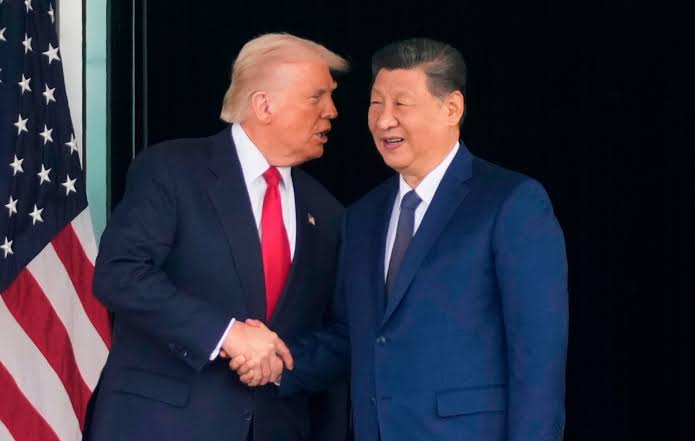
US Treasury Secretary Scott Bessent and Chinese Vice Premier He Lifeng are set for fresh talks in New York covering artificial intelligence, trade and critical minerals. The negotiations come ahead of a planned Trump Xi meeting and as the current US China trade truce approaches expiration.
The United States and China are preparing for a new round of high level economic talks focused on artificial intelligence, trade and critical minerals as Washington and Beijing seek progress on some of their most sensitive disputes ahead of a meeting between Presidents Donald Trump and Xi Jinping.
US Treasury Secretary Scott Bessent and Chinese Vice Premier He Lifeng are set to meet in New York as the world's two largest economies attempt to manage tensions over technology, tariffs and strategically important mineral supplies.
The talks come ahead of Trump's planned meeting with Xi in Washington on September 24.
They also take place as the current US China trade truce approaches expiration, increasing pressure on negotiators to find common ground on unresolved economic disputes.
AI EMERGES AS MAJOR ISSUE
Artificial intelligence is expected to feature prominently in the discussions.
The United States and China are the two leading global competitors in the development of advanced AI systems.
Both countries are increasingly concerned about the economic, national security and military implications of increasingly powerful AI technology.
The discussions are expected to examine potential safeguards surrounding advanced artificial intelligence and ways of reducing the risks posed by powerful AI systems.
However, competition between American and Chinese technology companies remains intense.
Washington has imposed restrictions intended to limit China's access to some advanced semiconductor technology used to develop powerful AI systems.
Beijing has simultaneously invested heavily in domestic semiconductor production and artificial intelligence development.
RARE EARTH SUPPLIES REMAIN MAJOR DISPUTE
Critical minerals will also be a central part of the negotiations.
The United States has repeatedly raised concerns about access to Chinese rare earth supplies.
Rare earth elements are essential for products ranging from electric vehicles and electronics to advanced weapons and other defence technologies.
China dominates significant parts of the global rare earth processing and supply chain.
Washington has been trying to reduce its dependence on Chinese supplies while simultaneously pressing Beijing to improve access for American companies.
The issue has become increasingly important as both countries treat critical minerals as a matter of economic and national security.
TRADE TRUCE APPROACHES EXPIRATION
Bessent and He are also expected to discuss the future of the temporary trade arrangements between Washington and Beijing.
The current truce has prevented another major escalation in tariffs while negotiators attempt to resolve broader economic disagreements.
Among the issues still under discussion are potential tariff reductions, Chinese purchases of American goods and US restrictions affecting Chinese companies and technology.
Washington has pushed China to increase purchases of American agricultural products and other goods.
Potential purchases of Boeing aircraft have also featured in negotiations.
Beijing, meanwhile, has sought reductions in American trade and technology restrictions.
TRUMP AND XI PREPARE FOR SUMMIT
The Bessent and He talks are expected to help prepare the ground for Trump's meeting with Xi.
The two presidents are scheduled to meet in Washington on September 24.
Their discussions are expected to extend beyond trade.
Artificial intelligence, critical minerals, Taiwan, fentanyl precursor chemicals and wider geopolitical tensions are among the issues expected to feature.
The summit will be closely watched by financial markets and businesses because decisions made by the two countries can affect global trade and technology supply chains.
CRITICAL MINERALS BECOME STRATEGIC WEAPON
The dispute over rare earths demonstrates how international trade has increasingly become connected to national security.
Advanced technologies require specialized minerals that are difficult to replace quickly.
China has developed a dominant position in several stages of the rare earth supply chain, giving Beijing considerable influence over industries that depend on those materials.
The United States has responded by investing in domestic production and developing alternative supply chains with allied countries.
Washington is also pursuing international agreements intended to strengthen critical mineral markets outside China.
AI COMPETITION ADDS NEW DIMENSION
Artificial intelligence adds another strategic dimension to the relationship.
American technology companies currently operate some of the world's most advanced AI systems, while Chinese companies are rapidly developing competing models.
Both governments increasingly view leadership in artificial intelligence as important to future economic and military power.
The New York discussions could therefore become an important test of whether Washington and Beijing can establish limited areas of cooperation on AI safety while remaining fierce competitors in the technology itself.
EXPECTATIONS REMAIN CAUTIOUS
Despite the high level nature of the talks, expectations for a sweeping agreement remain limited.
Reuters reports that analysts expect negotiators may seek smaller agreements demonstrating that diplomatic engagement remains active ahead of the Trump Xi meeting.
Major disagreements over technology restrictions, tariffs and strategic supply chains remain unresolved.
Any progress on rare earth exports or the extension of the trade truce could nevertheless provide greater certainty to businesses dependent on US China trade.
With artificial intelligence and critical minerals increasingly central to economic and national security, the outcome of the New York negotiations could also influence technology and manufacturing supply chains well beyond the United States and China.