U.S. INTELLIGENCE SAYS IRAN STILL HOLDS UP TO 2,500 MISSILES AS TEHRAN CLAIMS NEW STRIKE ON BAHRAIN BASE
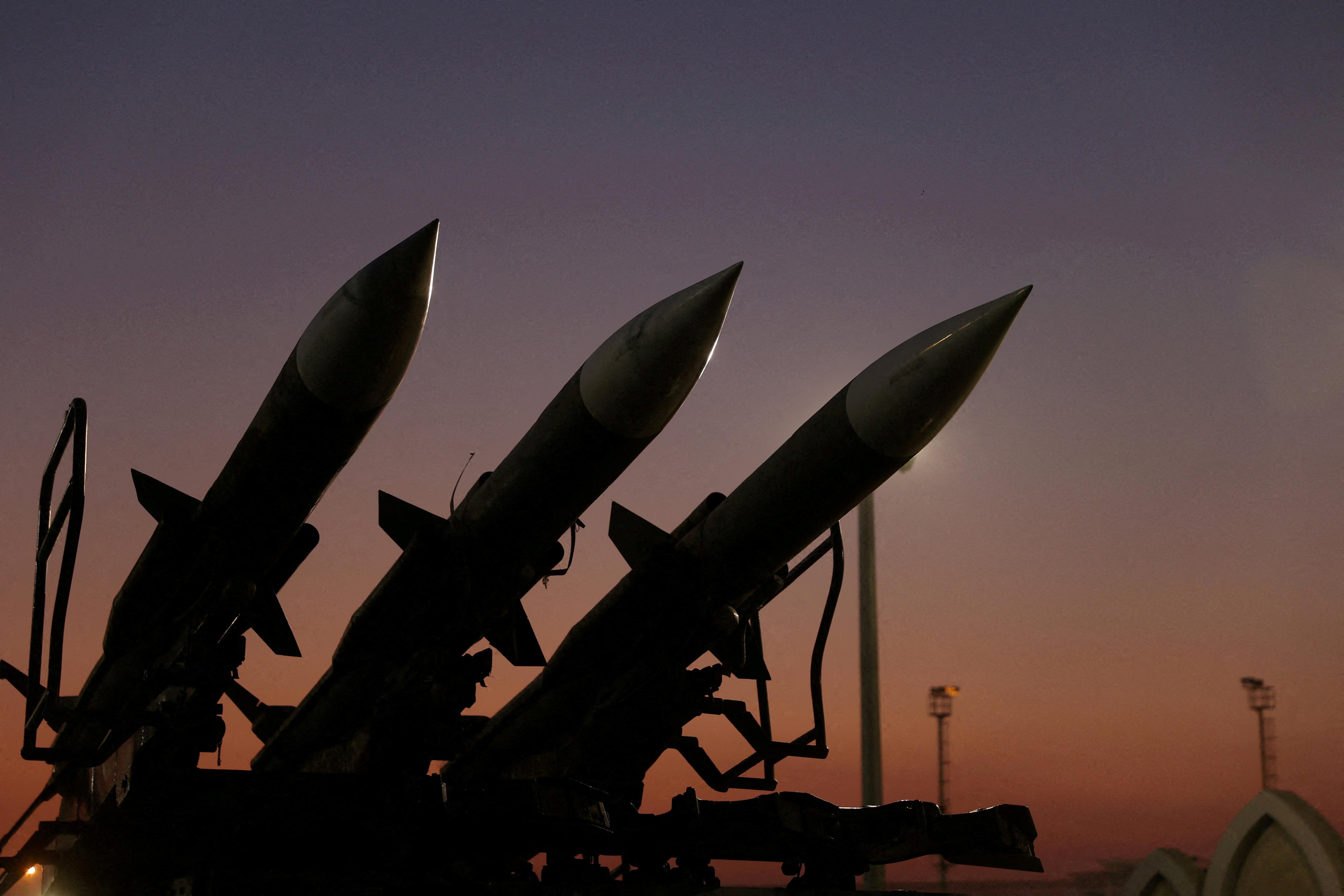
U.S. intelligence agencies estimate that Iran retains between 1,500 and 2,500 missiles, according to U.S. officials cited by The Wall Street Journal. Officials describe the estimate as low confidence because of the difficulty of determining how many Iranian missiles are operational, stored underground or being rebuilt, but they say Tehran clearly retains a substantial strike capability. Iran is also believed to retain large numbers of drones and shorter-range weapons.
WASHINGTON/TEHRAN — Iran may still possess between 1,500 and 2,500 missiles despite months of American and Israeli attacks aimed at crippling its missile infrastructure, according to a new U.S. intelligence assessment that challenges repeated claims that Tehran’s long-range strike capability has been largely destroyed. The assessment emerged as Iran’s Islamic Revolutionary Guard Corps claimed on Sunday that six drones had targeted a U.S. air-defense radar at Bahrain’s Al-Riffa Helicopter Base, underscoring the continuing ability of Iranian forces to threaten American and allied military infrastructure across the Gulf even after one of the most sustained campaigns against Iran’s military capabilities in decades.
The Wall Street Journal, citing U.S. officials familiar with intelligence assessments, reported that American agencies believe Iran retains between 1,500 and 2,500 missiles, leaving the country with enough weapons to launch substantial attacks against U.S. military installations, Israel and other regional targets if large-scale hostilities resume. Officials cautioned that the estimate carries a low degree of confidence because intelligence agencies cannot determine precisely how many Iranian missiles are stored underground, how many are operationally ready, how many have been damaged and how quickly Iran can assemble additional weapons from components preserved before the conflict.
That uncertainty is critical. Iran built a missile force designed in part around concealment, mobility and hardened underground infrastructure, making precise inventories difficult even with extensive satellite surveillance and classified intelligence collection. Some missiles may be stored in tunnel complexes that have been struck but not penetrated, while others may be dispersed among mobile launch units or held in facilities whose entrances were temporarily blocked by bombing. U.S. and Israeli strikes damaged production plants and missile infrastructure, but the new assessment suggests those attacks did not eliminate the stockpile already accumulated by Tehran.
American officials quoted in the report said Iran has continued rebuilding its missile inventory, although at a slower pace than before the current conflict. Much of that recovery is believed to involve components manufactured and stockpiled before production facilities were hit, allowing Iranian forces to assemble weapons even where the industrial network required to produce new components at previous rates has suffered significant disruption. Iran also retains large numbers of attack drones and shorter-range missiles, giving the military additional ways to strike targets without relying exclusively on its longer-range ballistic inventory.
Israeli military assessments reportedly point in a similar direction, with Israeli officials believing Iran retains more than 1,500 ballistic missiles. Estimates vary considerably because neither the United States nor Israel has complete visibility into Iran’s underground facilities or operational reserves, but the overlap between the assessments suggests that Tehran’s remaining arsenal is considerably larger than some public statements following earlier U.S. and Israeli strikes implied.
The new figures are particularly important because destroying or severely reducing Iran’s ballistic missile capability was one of the principal objectives of the military campaign launched against Tehran. U.S. Central Command says Operation Epic Fury began on February 28 and involved thousands of strikes against Iranian command centers, ballistic missile sites, weapons-production facilities, naval assets, air-defense systems and military communications. CENTCOM has said the integrated U.S. and allied air-defense network intercepted more than 1,500 ballistic missiles and over 6,000 one-way attack drones during the operation, illustrating both the extraordinary volume of Iranian fire and the scale of the resources required to defend against it.
Senior U.S. officials have repeatedly portrayed the campaign as devastating to Iran’s military-industrial base. Defense Secretary Pete Hegseth said this month that the Iranian defense-industrial base had effectively been destroyed, while President Donald Trump has repeatedly argued that the country’s military capability was severely diminished. The latest intelligence estimate does not mean those strikes had no effect, but it suggests that Iran retained a much larger residual missile force than the strongest public descriptions of the campaign might indicate.
The distinction between destroying production capacity and eliminating existing weapons is central to understanding the current threat. A missile factory can be rendered inoperable while hundreds of completed missiles remain safely stored elsewhere. Similarly, entrances to underground depots can be collapsed without necessarily destroying the weapons inside. Satellite imagery reviewed after earlier strikes showed Iranian crews excavating some blocked entrances, raising the possibility that missiles believed temporarily inaccessible could eventually be recovered.
That process appears to have become part of Tehran’s rearmament effort. U.S. officials told the Journal that Iran has continued rebuilding with stockpiled components, though more slowly than it could before the war. If the upper intelligence estimate of 2,500 missiles is correct, Iran would still possess one of the largest missile arsenals in the Middle East despite months of intensive military pressure.
The estimate has direct implications for U.S. strategic calculations because military bases across the Gulf remain within range of multiple Iranian systems. American forces maintain significant facilities in Bahrain, Qatar, Kuwait, the United Arab Emirates, Saudi Arabia, Iraq and elsewhere in the region, many of which have been targeted or threatened during the fighting. Iran has increasingly focused on radar, communications and air-defense installations, apparently seeking to degrade the systems responsible for detecting and intercepting incoming missiles and drones before launching or threatening larger attacks.
Sunday’s claimed strike in Bahrain fits that pattern. Iran’s Revolutionary Guard said six drones belonging to its Aerospace Force targeted a U.S. air-defense radar system at the Al-Riffa Helicopter Base. The IRGC described the operation as part of a response to what it calls American military aggression and claimed that the drones reached their intended target.
The claim has not been independently verified. Bahrain issued two public security alerts on Sunday morning, instructing residents to remain calm, seek safe locations and rely on official information, while journalists in the kingdom reported hearing alert sirens. At the time of publication, Bahraini authorities had not released a detailed damage assessment confirming whether the Al-Riffa installation was struck.
The Sunday incident should also be distinguished from a separate confrontation two days earlier. On Friday, the IRGC claimed it had successfully attacked and destroyed a U.S. early-warning radar elsewhere in Bahrain in retaliation for what Iran described as an American strike on a telecommunications facility in Sirik, a coastal area in Iran’s Hormozgan province. U.S. Central Command directly rejected that version, saying American forces had intercepted two Iranian one-way attack drones headed toward Bahrain and that there were no injuries or damage.
The competing accounts illustrate one of the major difficulties in covering the continuing conflict. Tehran frequently announces successful strikes against American facilities, while Washington often reports that the incoming weapons were intercepted or that damage was limited. Without independent access to military bases or high-resolution commercial satellite imagery immediately after each incident, some claims cannot be resolved in real time.
There is nevertheless significant evidence that Iranian attacks have caused damage to U.S. and allied installations during the broader conflict. Independent analyses of satellite imagery have documented damage to military buildings, radar systems, communications equipment and other infrastructure across several Middle Eastern bases. That history means Iranian claims cannot automatically be dismissed, but each individual allegation requires separate verification rather than being treated as established fact solely because similar strikes succeeded elsewhere.
Bahrain is particularly sensitive because of its strategic importance to the United States. The small Gulf kingdom hosts the headquarters of the U.S. Navy’s Fifth Fleet and has long served as one of Washington’s principal military hubs for operations in the Arabian Gulf, the Red Sea and surrounding waters. Its proximity to Iran makes it both strategically valuable and exposed to Iranian missiles and drones.
The Fifth Fleet’s responsibilities include protecting commercial shipping, maintaining naval presence around the Strait of Hormuz and supporting broader U.S. operations throughout the region. Those missions have become increasingly dangerous since hostilities with Iran intensified, particularly as Tehran has attempted to restrict shipping through Hormuz and retaliate against military facilities associated with U.S. operations.
The Strait of Hormuz remains one of the most strategically important waterways in the world because a substantial share of globally traded oil and liquefied natural gas passes through it. Any sustained Iranian campaign against shipping or the military infrastructure protecting the route can therefore affect energy prices and insurance costs far beyond the Middle East.
Iran has repeatedly warned that U.S. military action against its territory will produce retaliation against American facilities and potentially against infrastructure in regional states that host U.S. forces. Gulf governments have consequently found themselves in a difficult position: many rely on Washington for defense while also attempting to avoid becoming direct participants in a war with Iran.
That tension helps explain why several Gulf states have urged Washington to avoid another large-scale offensive. Their cities, oil facilities, airports, desalination plants and military installations all sit within reach of Iranian missiles and drones. Even where sophisticated Patriot, THAAD and other air-defense systems are deployed, no defensive network can guarantee interception of every weapon during a prolonged high-volume attack.
The United States and its partners have built a more integrated regional air-defense architecture partly in response to that challenge. CENTCOM says Operation Epic Fury demonstrated the effectiveness of linking U.S. and partner radar networks, air-defense systems and command centers, allowing countries to share warning data and coordinate interceptions more efficiently. The command says that system prevented far greater damage during mass Iranian attacks.
But the large number of interceptions also exposes a strategic problem. Defensive missiles are expensive and finite. Patriot and THAAD interceptors can cost millions of dollars each, while Iran can produce or deploy some drones and shorter-range missiles at substantially lower cost. A prolonged exchange can therefore become a contest not merely of technology but of inventories, manufacturing capacity and the ability to replace expended weapons.
Iran appears to understand that dynamic. Its forces have increasingly combined drones and missiles in layered attacks intended to complicate defensive decision-making. Cheap drones can force defenders to reveal radar positions or expend interceptors, while faster ballistic missiles arrive later against potentially stressed or partially depleted defenses.
The targeting of radar systems is particularly important because radars form the sensory backbone of air and missile defense. Destroying or disabling an early-warning radar can create gaps through which later weapons may pass with less warning, while damage to communications links can reduce the ability of separate systems to coordinate.
The IRGC has repeatedly emphasized those types of targets during its operations. Earlier in the conflict, it claimed strikes on radar and Patriot installations in Bahrain, Kuwait and Jordan. Some Iranian claims were not independently confirmed, while other regional attacks caused documented damage. The pattern indicates that Tehran sees air-defense infrastructure as a priority target rather than merely focusing on runways, aircraft and personnel.
That strategy helps explain why the alleged Al-Riffa strike matters even if the six-drone attack ultimately caused limited damage. The target itself suggests an effort to pressure or degrade the defensive network protecting American facilities in Bahrain and nearby Gulf states. If successful radar attacks accumulate over time, they could alter how U.S. commanders position assets and how much defensive redundancy is required.
U.S. officials have already moved some military equipment and personnel in response to the threat environment. The Wall Street Journal reported that certain American assets have been repositioned toward Israel, which U.S. and Israeli officials view as having a more developed and layered air-defense architecture than some exposed Gulf locations.
Iran’s ability to improve targeting has also concerned Western officials. Tehran has spent years developing reconnaissance drones, satellite access, human intelligence networks and other systems capable of locating military facilities. Reports also suggest that Iran has benefited from cooperation with outside partners, including Russia, as it refines targeting and operational tactics.
The remaining missile inventory therefore cannot be evaluated simply by counting launchers or weapons. Accuracy, intelligence, coordination and the ability to penetrate defenses can make a smaller arsenal more dangerous than a larger but poorly targeted one. Iran’s evolving combination of ballistic missiles, cruise missiles and one-way drones gives commanders multiple options for attacking different types of targets.
At the same time, Iran’s capabilities have unquestionably suffered. Months of strikes have damaged missile factories, storage facilities, air-defense networks, command structures and other military infrastructure. Rebuilding sophisticated production systems requires specialized machinery, materials and personnel that cannot always be replaced quickly, particularly under sanctions and wartime pressure.
The key question for U.S. intelligence is how quickly Tehran can turn existing component stocks into completed missiles and whether it can eventually restore mass production. If the answer is months rather than years, the strategic benefit of previous strikes could diminish relatively quickly. If major manufacturing bottlenecks remain, Iran may have to conserve the missiles it currently possesses.
That uncertainty is now shaping debate inside the Trump administration over whether further large-scale attacks are necessary. The Journal reported that the scale of Iran’s remaining arsenal has become one consideration in discussions over renewed military operations. Some Israeli officials continue pressing for additional action, arguing that allowing Tehran time to rebuild would restore the threat that earlier campaigns were intended to eliminate.
President Trump has so far emphasized continued economic pressure, sanctions and maritime restrictions rather than immediately authorizing another broad offensive. Secretary of State Marco Rubio said Friday that further U.S. military action was not currently necessary because economic pressure had significantly weakened Iran, although he said the ultimate objective remained preventing Tehran from obtaining a nuclear weapon.
That position does not rule out limited strikes. U.S. forces have continued responding to Iranian actions and threats around the Gulf, while the broader confrontation remains active despite statements suggesting the largest phase of fighting has ended.
Iran, meanwhile, has warned that renewed attacks would receive a direct response against the source of aggression. Its deputy U.N. ambassador told the Security Council on Friday that any future military action would be met with retaliation wherever the attacks originate. Tehran has also argued that previous U.S. and Israeli strikes destroyed trust needed for renewed diplomatic negotiations.
The nuclear question remains intertwined with the missile conflict. Iran has restricted access by International Atomic Energy Agency inspectors to sites damaged in earlier attacks and argues that monitoring cannot proceed normally while its facilities remain under military threat. Washington and Israel remain concerned that Iran could exploit reduced inspection access to rebuild nuclear capabilities alongside its missile force.
Ballistic missiles matter in that context because they provide the principal delivery system that could theoretically carry a nuclear warhead if Iran ever developed one. Tehran insists its nuclear program is peaceful and denies seeking nuclear weapons, while the United States and Israel argue that its enrichment activities and missile capabilities create an unacceptable strategic risk.
The new intelligence assessment therefore has implications beyond conventional warfare. A country believed to retain as many as 2,500 missiles and substantial underground infrastructure will remain a central national-security concern even if its nuclear program has suffered severe physical damage.
There is also a regional proliferation dimension. Iran’s missile program has influenced military planning in Saudi Arabia, the United Arab Emirates, Israel and other states, encouraging enormous investments in air defense and long-range strike capabilities. Continued Iranian rearmament is likely to accelerate those trends.
For Bahrain, Sunday’s attack claim reinforces its exposure as a host of major U.S. forces. The kingdom has faced several Iranian threats and attacks during the war, including previous claims of strikes against military and civilian infrastructure. Authorities have repeatedly activated warning systems and urged residents to follow official instructions during periods of heightened risk.
Bahrain’s air defenses include U.S.-made Patriot systems, while the country also benefits from American and allied radar coverage. Earlier this year, a Patriot missile was implicated in an explosion during an attempted interception of an Iranian drone, illustrating that even successful or attempted defensive operations can create dangers for nearby civilian areas.
The latest IRGC claim therefore adds another layer to a conflict in which the distinction between frontline and rear areas has increasingly disappeared. Military radar sites, naval installations, airports, ports and commercial infrastructure across the Gulf can all become targets because of their relationship to American military operations.
For global markets, the immediate concern remains whether confrontation will again threaten major energy flows. A renewed cycle of attacks on Gulf bases could prompt American retaliation inside Iran, which could in turn provoke stronger attempts by Tehran to disrupt the Strait of Hormuz. Even limited interference with shipping through the strait can quickly raise oil prices and shipping insurance premiums.
The United Nations has already documented a sharp rise in incidents affecting commercial vessels during the conflict. By November 11, the International Maritime Organization had recorded roughly 134 incidents across the Strait of Hormuz and the wider regional maritime area, with dozens of seafarers killed, injured or missing.
That maritime instability gives Gulf governments strong incentives to discourage another broad U.S.-Iran confrontation. They may support American defensive deployments while simultaneously urging restraint, a balancing act that has become increasingly difficult as Iranian weapons target facilities located on their territory.
Israel’s calculations differ. Israeli leaders have repeatedly argued that Iranian military recovery should be disrupted before Tehran restores the industrial and operational capabilities damaged by earlier strikes. Israeli officials cited by the Journal say Iran is rebuilding and preparing for the possibility of another serious round of fighting.
The divergence creates a strategic debate between those who believe Iran remains weakened enough that sanctions and containment can manage the threat and those who believe its remaining missile inventory proves that further military action is required. Neither position can be evaluated solely through the headline figure of 1,500 to 2,500 missiles because the readiness, ranges, accuracy and production status of those weapons remain uncertain.
U.S. officials themselves stress that the figure is a low-confidence estimate. That phrase is significant in intelligence terminology. It means analysts believe the assessment is plausible and supported by available information but acknowledge substantial gaps or uncertainty that prevent stronger confidence. It should therefore not be reported as a precise inventory.
The lower and upper ends of the estimate are themselves separated by 1,000 missiles, a margin that demonstrates how difficult the intelligence problem remains. What officials appear more confident about is the broader conclusion: Iran retains a formidable missile force and continues working to regenerate it.
That conclusion is strategically more important than the exact number. Even 1,500 missiles would represent enough firepower to sustain repeated attacks and impose severe defensive demands on American and allied forces. At the upper estimate of 2,500, Tehran could retain considerable capacity even after another major exchange.
Iran’s drone inventory further complicates the calculation. One-way attack drones can be launched in large numbers at relatively low cost, forcing defenders to decide which threats require expensive interceptors and which can be engaged by aircraft, guns, electronic warfare or other systems.
Sunday’s claimed six-drone operation against Al-Riffa demonstrates that Iran can also use small numbers of drones against highly specific targets rather than relying exclusively on mass salvos. Whether those drones actually struck the radar remains unconfirmed, but the tactic itself requires defenders to remain continuously alert even outside major attack waves.
The coming days are likely to provide more information about the Bahrain incident. Satellite imagery, Bahraini statements or U.S. military releases may clarify whether any radar or supporting infrastructure was damaged. Until such evidence emerges, the IRGC’s claim should remain clearly attributed rather than presented as confirmed.
The Friday incident provides an important caution. Iran claimed success against a U.S. radar, while CENTCOM said both attacking drones were intercepted and that no damage occurred. That direct contradiction has not produced independent evidence overturning the U.S. account.
Sunday’s attack is newer and involves a different claim: six drones against the Al-Riffa Helicopter Base. Bahrain’s warning sirens indicate that authorities were responding to a real aerial threat, but alerts alone do not establish that the radar was hit.
The two incidents nevertheless illustrate the persistence of Iranian military pressure. Even as Washington says Tehran has been significantly weakened, Iranian forces continue attempting or claiming attacks on strategically important sites hundreds of kilometers from Iranian territory.
For U.S. planners, that combination of surviving missiles, abundant drones and improving targeting creates an enduring force-protection challenge. Defensive networks must remain deployed and supplied even during periods when leaders describe the war as winding down, because a sudden salvo can impose immediate consequences.
For Iran, keeping those systems operational serves both military and political purposes. The ability to demonstrate that it can still threaten U.S. bases undermines narratives that its armed forces have been rendered incapable of meaningful retaliation and gives Tehran leverage in any future negotiations.
For Israel, the same capability reinforces arguments that temporary damage is insufficient if Iran can rebuild faster than expected. Israeli intelligence will continue watching production sites, underground depots and launch infrastructure for signs of accelerated recovery.
For Gulf states, the assessment is less abstract. Every surviving Iranian missile potentially reinforces the vulnerability of military bases, energy infrastructure and urban areas on the western side of the Gulf. Their preference for de-escalation reflects geography as much as diplomacy.
The Wall Street Journal’s reporting therefore represents more than an updated weapons count. It suggests that months of warfare have not produced a clean strategic endpoint. Iran has suffered substantial damage but retains significant offensive power, while the United States and its allies have demonstrated formidable defensive capacity without eliminating Tehran’s ability to impose costs.
Sunday’s Al-Riffa claim captures that unresolved balance. Iran says its drones struck the radar protecting a U.S.-linked military facility in Bahrain. Washington and Bahrain had not confirmed that claim at the time of publication, and previous Iranian assertions about Bahrain have sometimes been disputed by U.S. officials. What is not disputed is that Iranian drones continue flying toward American and allied targets and that regional defenses remain on active alert.
The central strategic question is therefore no longer whether Iran’s missile force was damaged. It clearly was. The question is whether the remaining force is still large enough, dispersed enough and recoverable enough to deter another major attack on Iran or sustain another prolonged regional confrontation. The latest U.S. intelligence estimate suggests the answer may be yes.
That assessment will now weigh heavily on decisions in Washington, Jerusalem, Tehran and Gulf capitals. A renewed offensive could further damage Iran’s missile infrastructure but would almost certainly invite another wave of retaliation against bases and regional infrastructure. Continued containment avoids that immediate escalation but gives Tehran more time to rebuild.
For now, the United States appears to be balancing those risks while maintaining sanctions, maritime pressure and defensive deployments. Iran, meanwhile, continues to signal that its missile and drone forces remain active despite the punishment they have absorbed.
As investigators assess what happened at Al-Riffa and intelligence agencies continue refining their estimates, one conclusion is becoming increasingly difficult to dismiss: the months-long campaign has reduced Iran’s military capacity without eliminating its ability to strike across the Middle East. Whether Tehran holds closer to 1,500 missiles or 2,500, U.S. officials believe the remaining arsenal is still large enough to shape the next phase of the conflict, making Iran’s missile force one of the decisive factors determining whether the region moves toward renewed war or an uneasy period of deterrence.