
US NAVY AWARDS RAYTHEON MASSIVE $24.4 BILLION MISSILE CONTRACT
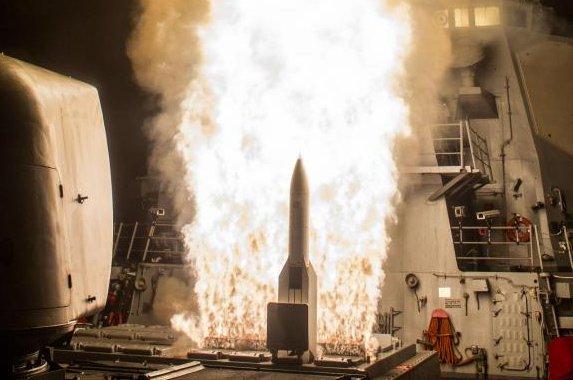
The United States Navy has awarded Raytheon a multiyear contract valued at up to $24.4 billion to significantly increase production of Standard Missile 6 interceptors. The five year agreement includes options for two additional years and comes as the Pentagon moves to rebuild and expand stocks of high demand missiles following heavy weapons expenditure during conflicts in the Middle East. The SM 6 is one of the US Navy's most versatile missiles, capable of defending ships against aircraft and missiles while also being used against surface targets and certain ballistic missile threats.
The United States Navy has awarded Raytheon one of its largest missile production contracts in recent years, committing up to $24.4 billion to dramatically increase production of the Standard Missile 6 as Washington moves to strengthen depleted weapons inventories and prepare for future conflicts.
Raytheon, the defense business of RTX, will manufacture SM 6 interceptors under a five year multiyear agreement announced on Thursday, October 1.
The contract also contains options that could extend production for another two years.
The maximum potential value of the agreement is $24.4 billion.
That figure does not mean the entire amount will immediately be paid to Raytheon. The ultimate value will depend on orders, options and other contractual requirements over the life of the programmed.
The scale of the agreement nevertheless demonstrates how aggressively the Pentagon is moving to increase production of some of its most important precision weapons.
WHAT IS THE STANDARD MISSILE 6?
The Standard Missile 6, commonly known as the SM 6, is unusual because it is not designed for only one type of target.
It was originally developed primarily as a naval air defense weapon.
The missile can be launched from US Navy surface warships equipped with the Aegis combat system and Mk 41 Vertical Launch System.
Its missions have since expanded considerably.
The SM 6 can be used to intercept aircraft and cruise missiles, contribute to defense against ballistic missiles in their terminal phase and strike enemy surface vessels.
That combination gives commanders the ability to use the same missile family against several different categories of threat.
Raytheon describes the SM 6 as a weapon capable of performing anti air warfare, anti surface warfare and ballistic missile defense missions.
For a warship with a limited number of missile cells, that flexibility can be particularly valuable.
WHY THE US WANTS MORE OF THEM
The contract comes as the United States military confronts a problem that has become increasingly important during recent conflicts.
Modern warfare can consume sophisticated missiles much faster than manufacturers can replace them.
US Navy warships have fired significant numbers of air defense weapons during operations in the Middle East, where American forces have faced drones, cruise missiles and other threats.
At the same time, the United States has supplied large quantities of weapons to allies and partners while attempting to maintain sufficient inventories for its own forces.
The result has placed additional pressure on America's defense industrial base.
The Pentagon is now trying to move away from relatively small annual orders for some critical weapons and towards longer term agreements that give manufacturers greater certainty about future demand.
CONTRACT COULD PUSH PRODUCTION ABOVE 500 A YEAR
One of the most significant elements of the new agreement is its expected effect on production capacity.
Raytheon says the programmed will support annual production of more than 500 SM 6 interceptors.
Achieving that rate would represent a major industrial expansion compared with earlier production levels.
Increasing missile output is more complicated than simply operating an assembly line for additional hours.
Modern interceptors contain sophisticated seekers, propulsion systems, electronics, explosives and specialized materials supplied by networks of manufacturers.
If a single critical component cannot be produced quickly enough, the entire missile production line can slow down.
Raytheon says it has been expanding facilities, increasing its skilled workforce, strengthening supplier relationships and introducing additional automation to remove production constraints.
$115 MILLION FACILITY EXPANSION
RTX has also completed a $115 million expansion at a facility in Alabama involved in integrating missile components into completed weapons.
The investment supports production associated with the SM 6 and Standard Missile 3 programmed.
Expanding physical production infrastructure is becoming an increasingly important part of the Pentagon's attempt to increase weapons output.
For decades after the Cold War, many US defense production lines were structured around comparatively predictable peacetime procurement.
Recent conflicts have exposed the difficulty of rapidly increasing production when demand suddenly rises.
The Pentagon increasingly wants manufacturers to maintain enough capacity to respond to a much higher rate of weapons consumption.
THE MISSILE COMBINES EXISTING TECHNOLOGIES
Part of the SM 6's design comes from combining technologies developed for earlier weapons.
The missile uses propulsion and other elements derived from the Standard Missile family while incorporating an active radar seeker related to technology used in the AIM 120 AMRAAM air to air missile.
An active seeker allows the missile to independently search for and track a target during the final stages of an engagement.
That capability can provide greater flexibility when attacking targets at extended ranges.
The missile can also receive targeting information from sensors beyond the ship that launches it, allowing the broader naval force to use aircraft and other platforms to help detect threats.
This networked approach is increasingly important as modern missiles and aircraft operate at distances beyond the radar horizon of individual warships.
MORE THAN A DEFENSIVE INTERCEPTOR
Although the SM 6 is often described as an interceptor, its role has expanded beyond defensive missions.
The missile can also be employed against enemy ships.
That gives US surface warships an additional offensive capability without requiring an entirely separate launcher.
The Navy has also been developing newer variants intended to provide increased range and performance.
The Block IB programmed introduces significant changes designed to increase the missile's speed and reach.
Those improvements are intended to strengthen the Navy's ability to engage increasingly sophisticated threats at greater distances.
MIDDLE EAST OPERATIONS HAVE CHANGED THE CALCULATION
The urgency surrounding missile production cannot be separated from recent American military operations.
US naval forces operating in and around the Middle East have repeatedly had to defend ships and other targets from missiles and unmanned aircraft.
Such engagements can create an economic and industrial challenge.
A comparatively inexpensive attack drone may require a much more sophisticated interceptor to destroy it if cheaper defensive options cannot engage the threat.
Repeated attacks can therefore consume valuable missile inventories quickly.
The issue is not simply whether the United States possesses advanced weapons.
Military planners must also consider how many missiles are available, how quickly they can be replaced and how long inventories could sustain operations during a prolonged conflict.
PENTAGON IS SIGNING OTHER HUGE MISSILE DEALS
The SM 6 award is part of a much broader American effort to increase munitions production.
It follows other major agreements involving some of the most important weapons in the US arsenal.
Raytheon recently secured a provisional multiyear agreement valued at up to $20.7 billion involving AIM 120 AMRAAM missiles.
The Pentagon has also pursued a major Patriot interceptor agreement with Lockheed Martin valued at tens of billions of dollars.
Taken together, the programmed show that Washington is moving towards longer production commitments rather than relying solely on smaller annual purchases.
For defense companies, multiyear agreements provide greater confidence to invest in factories, workers and suppliers.
For the Pentagon, the objective is to obtain more weapons faster while reducing the risk that production lines cannot respond during a crisis.
THE INDO PACIFIC ALSO LOOMS OVER US PLANNING
Although recent Middle East operations have increased immediate pressure on American missile stocks, US military planning also focuses heavily on the Indo Pacific.
A potential high intensity conflict involving advanced aircraft, ships and large numbers of missiles could require enormous quantities of precision weapons.
The SM 6 would potentially be important in such an environment because of its ability to perform several missions.
American destroyers and cruisers could use the missile to defend naval formations against aircraft and cruise missiles while retaining the ability to attack enemy surface vessels.
The same flexibility that makes the missile valuable also means demand for it can increase quickly during sustained operations.
WHY MULTIYEAR CONTRACTS MATTER
The length of the new agreement is almost as important as its headline value.
Weapons manufacturers are often reluctant to spend heavily on new factories or hire large numbers of specialized workers when they cannot be certain that government orders will continue.
A five year commitment, potentially extending to seven years, changes that calculation.
Suppliers can invest in equipment and workforce expansion knowing that substantial demand is expected over a longer period.
The Navy also gains greater predictability over future deliveries.
The strategy does carry financial risk.
Large long term defense contracts require careful oversight to ensure production targets are met, costs remain controlled and taxpayers receive the quantities and capabilities promised.
The success of the programmed will therefore depend not simply on the contract's dollar value but on how many missiles are ultimately produced and how quickly they reach the fleet.
A $24.4 BILLION BET ON INDUSTRIAL CAPACITY
The contract illustrates a broader change taking place inside the American defense establishment.
For years, discussions about military strength often concentrated on advanced technology and the capabilities of individual weapons.
Recent conflicts have renewed attention on something more basic: production capacity.
A sophisticated missile provides limited strategic value if inventories are exhausted faster than factories can replace them.
The Pentagon is therefore increasingly treating manufacturing capacity, supply chains and skilled labor as elements of national security.
The SM 6 agreement represents one of the clearest examples of that approach.
WHAT HAPPENS NEXT
Raytheon will now face the challenge of translating the enormous contract ceiling into sustained production.
The company will need suppliers to deliver critical components at higher rates while maintaining the reliability standards required for naval weapons.
The Navy will meanwhile monitor production schedules, costs and deliveries as it attempts to rebuild inventories.
If the programmed reaches the production levels envisioned by Raytheon, more than 500 SM 6 interceptors could eventually be produced annually.
The $24.4 billion headline is therefore only one measure of the contract.
The more important question for the US Navy will be whether the agreement can deliver what the Pentagon increasingly says it needs: a large and reliable supply of sophisticated missiles that can be replenished as quickly as modern conflicts consume them.