US TREASURY SECRETARY SCOTT BESSENT MOVED TO MILITARY BASE AFTER IRAN LINKED THREATS
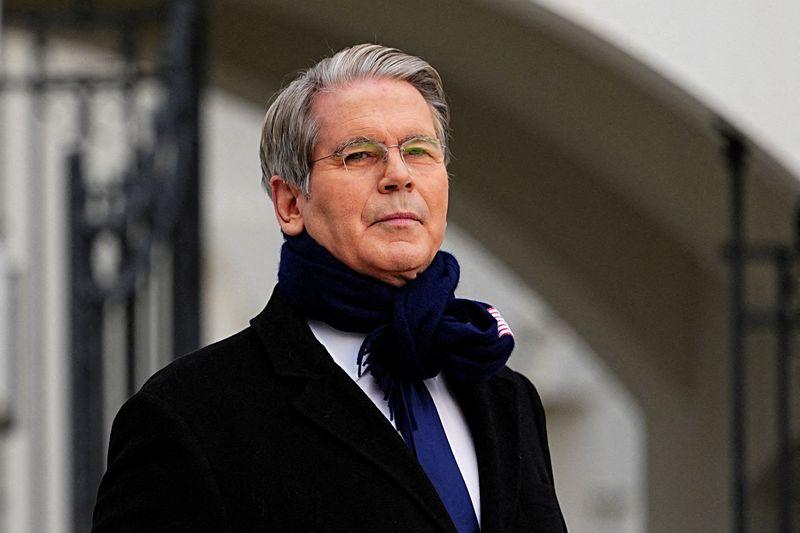
U.S. Treasury Secretary Scott Bessent has been moved from his Washington residence to an undisclosed military base after threats linked to Iran raised serious security concerns. Bessent leads Operation Economic Outcast, the Trump administration’s financial pressure campaign aimed at isolating Tehran and restricting its access to international banking and trade. U.S. officials say the precise severity of the threat remains classified, while the Treasury Department insists Bessent will continue directing the sanctions campaign.
U.S. Treasury Secretary Scott Bessent has been moved from his private Washington residence to a secure military installation following threats linked to Iran, placing one of President Donald Trump’s most senior economic officials under heightened protection as tensions between Washington and Tehran continue to spill beyond the battlefield into sanctions, intelligence operations and concerns about possible retaliation against American officials. The relocation was confirmed by people familiar with the security arrangements and later acknowledged by the Treasury Department, which said Bessent would not be intimidated and would continue overseeing the administration’s aggressive financial campaign against Iran. The military base where Bessent is now staying has not been publicly identified, a decision officials appear to have made deliberately because of the sensitivity surrounding his security.
Bessent has become one of the most visible figures in the Trump administration’s confrontation with Iran because of his role in leading a sweeping economic pressure strategy designed to restrict Tehran’s remaining access to international finance, shipping, banking and energy revenue. The campaign, known inside the administration as Operation Economic Outcast, has been in place since August and has targeted banks, financial services companies, trading networks, aviation connections and other channels that Washington says allow Iran to continue earning foreign currency and financing military activity. The Treasury Department has said the campaign is intended to isolate Tehran economically while supporting wider U.S. efforts to force changes in Iranian behavior.
The security concerns around Bessent became serious enough for authorities to conclude that remaining at his private residence presented an unacceptable risk. Officials have not publicly described the nature of the alleged plot in detail, whether an attack was considered imminent or whether suspects have been identified. However, a senior Trump administration intelligence official warned in a recent internal memorandum reviewed by Reuters that Iranian plots against American personnel and citizens had reached an advanced stage. That broader warning has increased concern that Tehran or individuals acting on its behalf could attempt attacks outside the Middle East in response to U.S. military and economic pressure.
Iran has previously denied plotting attacks against American officials or civilians on U.S. soil. Tehran has repeatedly accused Washington of using security allegations to justify sanctions, military pressure and intelligence operations directed against the Iranian government. U.S. officials, however, have continued to warn that Iran has shown both intent and historical willingness to target individuals it considers responsible for actions against the Islamic Republic, including former officials, diplomats and security personnel.
The relocation of Bessent also reflects concerns about the exposure of his private home. A person familiar with the matter told Reuters that security worries increased after a media report published an aerial photograph of his Georgetown residence, a property valued at approximately $12.5 million. Officials believed the photograph made the location easier to identify and potentially exposed the Treasury secretary and his family to additional risk. The concern became more serious as U.S. intelligence agencies monitored what they described as escalating Iranian interest in targeting American officials.
The Treasury Department has responded publicly by insisting that the threats will not change Bessent’s approach. A department spokesperson said the secretary would not be deterred by what the administration described as threats from the Iranian regime and would remain committed to carrying out Operation Economic Outcast and supporting the broader blockade against Iran. The administration says those measures are putting enormous pressure on the Iranian economy by cutting access to international financial systems and restricting revenue from trade.
Bessent’s role in the Iran strategy is unusual because he is not primarily a military or intelligence official. As Treasury secretary, his most powerful weapons are financial. Treasury sanctions can freeze assets, block transactions through the U.S. financial system, threaten foreign banks with penalties and force companies around the world to decide whether continuing business with Iran is worth the risk of losing access to American markets and the dollar based financial system.
That leverage has made the Treasury Department central to Washington’s pressure campaign against Tehran. Rather than relying only on military strikes, the administration has attempted to weaken Iran by attacking its ability to finance government operations, military procurement, shipping networks and international trade. U.S. officials say the objective is to make it increasingly difficult for Iran to obtain foreign currency, pay suppliers and maintain access to financial intermediaries willing to process transactions on its behalf.
Operation Economic Outcast has targeted companies and banks across the Middle East and beyond that Washington accuses of facilitating Iranian transactions. The campaign has also placed pressure on governments that continue to maintain commercial relationships with Tehran. U.S. officials have warned that banks and businesses dealing with sanctioned Iranian entities could face secondary sanctions or lose access to American financial institutions.
The administration has described the strategy as part of a larger effort to force Iran to end attacks on commercial shipping and reopen the Strait of Hormuz. The strategic waterway has faced severe disruption since the United States and Israel launched major military operations against Iran earlier this year. The closure and repeated attacks around the strait have affected energy markets and shipping routes because a significant share of the world’s oil and liquefied natural gas normally passes through the waterway.
Bessent has become the public face of the financial component of that strategy. He has repeatedly warned foreign institutions that Washington intends to close remaining loopholes that allow Iran to move money internationally. Treasury officials have described the campaign as an effort to cut Iran off from revenue sources one by one rather than relying on a single sanctions announcement.
The economic pressure is being coordinated with a wider U.S. naval blockade and restrictions on Iranian ports. Washington says the combination is designed to reduce Tehran’s access to oil revenue and prevent military related shipments from moving freely through regional trade networks. Critics of the strategy argue that broad economic pressure can harm ordinary Iranians while failing to change government behavior, but the Trump administration says the sanctions are deliberately designed to target revenue channels used by the state and military.
Bessent’s relocation demonstrates that those economic measures are increasingly being treated by U.S. officials as part of the same national security conflict as conventional military operations. Treasury sanctions may be issued through financial regulations and executive orders, but they can inflict substantial economic damage on a government and on individuals connected to it. That has made senior economic officials potential targets in ways that were once more commonly associated with military commanders, intelligence chiefs or diplomats.
The broader security environment around Trump administration officials has also become more restrictive. Secretary of State Marco Rubio and Defense Secretary Pete Hegseth are among senior officials reported to be living on military property because of security concerns. Other administration figures have also moved into protected housing at various points, reflecting the increasingly tense atmosphere surrounding senior U.S. officials responsible for national security and foreign policy decisions.
Fort McNair in Washington has become particularly prominent in those reports, although officials have not confirmed that Bessent is staying there. Rubio and Hegseth have reportedly occupied military housing at the installation, which traditionally housed senior uniformed officers rather than large numbers of civilian political leaders. The growing use of military bases for civilian officials has prompted questions about security resources, housing availability and whether current threat levels justify extraordinary arrangements.
The administration argues that the measures are necessary because threats against officials have increased significantly. Iranian retaliation remains one of the most serious concerns. U.S. intelligence agencies have warned for years that Iran may seek revenge against officials involved in previous military operations, sanctions and the killing of senior Iranian figures.
The current conflict has intensified those concerns. U.S. and Israeli attacks on Iran have killed senior officials and caused extensive damage, while Iranian attacks have targeted regional military and commercial infrastructure. The conflict has also displaced large numbers of civilians and contributed to significant instability across the Middle East.
The death of Iran’s former Supreme Leader Ayatollah Ali Khamenei during the conflict dramatically escalated the confrontation and increased fears that Tehran could pursue retaliatory operations far beyond the immediate war zone. Iranian officials have repeatedly threatened consequences for countries and individuals they hold responsible for attacks on Iranian leadership and military infrastructure.
U.S. officials say they have seen evidence of Iranian networks examining possible targets outside the region. The administration has not publicly released detailed intelligence supporting every individual threat, partly because officials argue that doing so could compromise investigations or expose sources and methods. Iran has rejected many of those allegations and has accused Washington of exaggerating the danger.
The security situation surrounding Bessent is therefore being handled with limited public disclosure. Officials have not identified the military base where he is staying and have not provided details about how long the relocation will last. The arrangement has been described as temporary, but no timeline has been announced for when he might return to his private residence.
That uncertainty reflects the difficulty of determining when a threat has fully passed. If intelligence indicates that Iranian operatives or affiliated groups have obtained information about an official’s home, security agencies may continue treating the location as compromised even after the immediate threat declines.
The reported publication of an aerial image of Bessent’s residence has added another dimension to the debate. Officials close to the matter have argued that media organizations must consider the security implications of publishing detailed images or information that could help hostile actors identify the homes of senior government officials. News organizations generally maintain that publicly available information can be reported when it serves legitimate public interest, but the incident has renewed questions about how that principle applies during periods of heightened security threats.
Bessent’s responsibilities make his protection particularly important to the administration. Beyond Iran, he oversees American fiscal policy, Treasury markets, sanctions policy, tax administration and international economic negotiations. A security threat that disrupts his ability to work could therefore affect multiple areas of government at the same time.
His role in the Iran campaign, however, appears to be the main reason officials believe he has become a target. Since August, Bessent has repeatedly announced sanctions against companies, financial institutions and individuals accused of helping Iran maintain access to the international financial system. The Treasury Department has also pressured foreign governments to restrict Iranian banks and airlines.
The administration says those measures are beginning to produce results. Some foreign institutions have reduced or ended transactions involving Iranian companies, while regional governments have imposed new restrictions on banks and transportation companies linked to Tehran. Washington argues that those changes demonstrate the ability of U.S. financial pressure to isolate Iran even where direct military action is limited.
The United Arab Emirates and Turkey have reportedly taken steps restricting some Iranian banking activity under pressure from Washington. Iranian airlines have also faced reduced access to regional destinations, while companies involved in shipping and energy transactions have been placed under increasingly close scrutiny.
Iran argues that the campaign amounts to economic warfare and says sanctions hurt civilians by restricting access to trade and international financial services. Tehran has also accused the United States of attempting to force political concessions through economic punishment after military operations failed to produce a decisive outcome.
The Trump administration rejects that characterization and says Iran can reduce the pressure by changing its behavior, including ending attacks on commercial shipping and meeting U.S. demands related to its nuclear and military activities. Bessent has repeatedly argued that Washington will continue increasing financial pressure until those objectives are met.
That stance may explain why Treasury officials were quick to say the relocation would not change policy. The department appears determined to avoid creating the impression that threats against its secretary can influence sanctions decisions. Publicly signaling that Bessent remains in charge also serves a deterrent purpose by suggesting that intimidation will not weaken the economic campaign.
The situation also carries symbolic importance. A Treasury secretary being forced to leave his home for military protection illustrates how deeply economic policy has become integrated into modern national security conflicts. Financial sanctions can freeze billions of dollars, disrupt trade routes and isolate governments without a conventional battlefield confrontation.
That power also creates risks for the officials responsible for administering it. Sanctions chiefs and Treasury officials involved in sensitive programs have long received security protection, but moving a Cabinet secretary and his family onto a military base represents a much more visible level of concern.
The administration has not disclosed whether additional Treasury officials are receiving heightened protection. It is also unclear whether officials involved in designing or implementing Operation Economic Outcast have received specific threats. Security procedures for senior officials are generally not made public in detail.
The relocation comes as Washington continues debating the future of its Iran strategy. President Trump has suggested that the major military phase of the conflict is effectively over, but the administration has maintained intense economic pressure and naval restrictions. That combination allows the White House to reduce direct bombing while continuing to impose substantial costs on Tehran.
Critics in Congress have questioned whether the administration has clearly defined what would constitute an acceptable end to the confrontation. Some lawmakers argue that sanctions and blockades can continue indefinitely without producing a political settlement, while administration officials insist pressure is necessary to prevent Iran from rebuilding military and financial capabilities.
The danger to individual officials adds another layer to that debate. If Iran or Iranian linked actors are increasingly targeting people responsible for implementing U.S. policy, Washington may respond with additional security measures, sanctions or military threats. That could create a cycle in which economic pressure produces retaliation, which then leads to even greater pressure.
Iran’s ability to conduct large scale attacks inside the United States remains limited, according to U.S. assessments cited in reporting on the Bessent case. However, officials remain concerned about smaller operations, targeted assassination attempts, surveillance of individuals or attacks carried out through proxies.
Such plots can require relatively few people and can be difficult to detect early. That is one reason authorities may relocate a threatened official even when there is no evidence of an imminent large scale attack. The objective is to reduce vulnerability before a potential attacker has an opportunity to act.
Bessent’s case also highlights the importance of protecting family members. Security decisions involving senior officials are not limited to the individual holding office. Threats can extend to spouses, children or relatives, particularly when their residence has become publicly identifiable.
The decision to use military housing provides several advantages. Bases have controlled entrances, armed security, surveillance systems and restrictions on public access that would be difficult to replicate around a private home in a densely populated Washington neighborhood. They also allow officials to continue travelling to government offices while reducing the number of exposed locations security teams must protect.
The arrangement is nevertheless unusual. Cabinet secretaries normally live in private residences protected through security details rather than relocating onto military installations. The fact that several senior officials have now reportedly done so demonstrates the exceptional security environment surrounding the current administration.
The United States has experienced a rise in political violence and threats against public figures in recent years, including threats unrelated to Iran. That wider domestic environment means security agencies must assess foreign intelligence threats alongside risks from individuals or groups inside the country.
Officials have not said whether the threats against Bessent involved only Iran linked actors or whether other concerns contributed to the decision. The public information available so far establishes that Iranian threats were a significant factor and that the exposure of his home location increased concern.
For now, Bessent continues performing his duties as Treasury secretary. There has been no indication that the relocation has prevented him from attending meetings, announcing sanctions or participating in economic policy discussions. The administration is presenting the move as a protective measure rather than a change in his official responsibilities.
The Treasury Department’s message has been deliberately firm. Officials say Bessent will continue directing Operation Economic Outcast and that sanctions enforcement will not slow because of threats against him. The department also says the economic campaign is already placing severe strain on Tehran’s ability to operate internationally.
Iran continues to dispute the American narrative. It has denied allegations of plotting attacks against officials in the United States and argues that Washington is responsible for escalating the conflict through military strikes, sanctions and the blockade.
Those competing claims will remain difficult to independently evaluate because intelligence surrounding assassination plots and foreign operations is rarely made public in full. What is established is that American authorities considered the risk serious enough to move one of the country’s most senior Cabinet officials out of his home and into protected military accommodation.
The decision therefore represents one of the clearest indications yet that the U.S. Iran conflict is affecting personal security far beyond the Middle East. The confrontation is no longer limited to missiles, ships, sanctions and diplomatic negotiations. It is now influencing where senior American officials and their families can safely live.
Whether Bessent eventually returns to his Georgetown residence will depend on future security assessments. Officials have not announced how long the arrangement will remain in place, and the location of his military accommodation has deliberately been withheld.
The immediate facts are clear. Scott Bessent, the United States Treasury Secretary and the senior official overseeing Washington’s economic pressure campaign against Iran, has been relocated to a military base after threats linked to Tehran raised concerns for his safety. U.S. officials say those threats will not alter the sanctions campaign, while Iran continues to deny plotting attacks against American officials.
The episode underscores how far the U.S. Iran confrontation has expanded and how economic warfare can carry personal consequences for the officials directing it. Bessent may be leading a financial campaign rather than commanding troops, but the decision to move him into military protection shows that Washington increasingly views the Treasury front of the conflict as inseparable from the wider national security struggle with Tehran.