VERYDARKMAN SAYS HE NEARLY DIED OF SEVERE MALARIA IN CHINA AFTER IGNORING MEDICAL ADVICE, NIGERIA'S FIERCEST CRITIC NOW CONFRONTS THE DEADLY HABIT MILLIONS SHARE
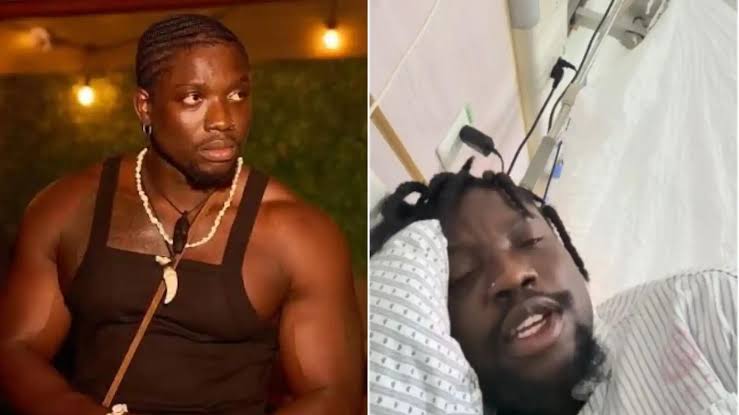
Nigerian social media activist VeryDarkMan, whose real name is Martins Otse, says he nearly lost his life to a severe form of malaria while in China, where he is now receiving hospital treatment. In a video shared on Thursday, the 32-year-old said he had spent four days in hospital after doctors diagnosed him with a potentially fatal form of the disease. He said it was the first time in his life that he had spent nights in a hospital. He also admitted that his condition worsened after he disregarded medical advice and took oral malaria medication. The details come from his own account. No statement from the hospital or his medical team has been made public, and the exact clinical details of his diagnosis have not been independently confirmed. His story nonetheless touches a raw nerve. Nigeria carries the world's heaviest malaria burden, and self-medication is a deeply rooted habit. Many adults also believe that a lifetime of exposure makes them immune to serious illness. VeryDarkMan built his reputation by calling out others. His admission that he ignored doctors now offers one of the most powerful public health warnings a Nigerian influencer has delivered in years, whether he intended it or not.
For a man who has built a national following by refusing to back down, the admission was striking. VeryDarkMan, the combative Nigerian social media activist whose videos have rattled celebrities, businesses, regulators and politicians, appeared online on Thursday with a message that had nothing to do with exposing anyone else. This time, the subject was his own near-fatal mistake.
The activist, whose real name is Martins Otse, said he had been hospitalized in China after developing a severe form of malaria. He said he had already spent four days in hospital after doctors diagnosed him with a potentially fatal form of the disease. He described the experience as the first time in his 32 years that he had spent nights on a hospital bed. Then came the detail that has drawn the most attention. By his own account, his condition worsened after he disregarded medical advice and took oral malaria medication instead.
It was a rare moment of vulnerability from a public figure whose brand rests on certainty, confrontation and a refusal to be told what to do. It was also a moment that millions of Nigerians are likely to recognize, because the choice he described is one that is made every day in homes, offices and roadside chemist shops across the country.
The full facts of his medical situation have not been independently verified. The account comes from VeryDarkMan himself. There has been no public statement from the hospital treating him, no released medical report and no confirmation of the specific type of malaria parasite involved or the complications he suffered. Nor did the initial report explain in detail why he is in China or how long he has been there. Those gaps matter, and responsible coverage must respect them. What can be examined with confidence is the medical reality of severe malaria, the dangers of the decision he says he made, and why his experience carries significance well beyond one man's hospital room.
To understand why his story resonates so strongly, it helps to understand who VeryDarkMan is and why so many Nigerians listen to him. He rose to prominence through social media videos marked by blunt language, a distinctive appearance and an appetite for confrontation. Over the years, he has taken on celebrities, influencers, product makers, charities and public institutions, often accusing them of dishonesty, exploitation or hypocrisy. His supporters see him as a fearless voice for ordinary people, someone willing to say what others are afraid to say. His critics see him as reckless, divisive and too quick to accuse without proof. He has faced arrests, legal battles and repeated online feuds. Through all of it, he has cultivated an image of toughness. He does not apologize easily. He does not retreat.
That image is part of what makes his health confession so unusual. Public figures in Nigeria rarely discuss illness openly. Many hide hospital visits entirely, fearing that any sign of weakness could damage their reputation or invite ridicule. When a man known for being unbreakable stands before his audience and says he nearly died, and that it was partly his own fault, the message lands differently. It cuts through the noise in a way a government health campaign rarely does.
Malaria is so common in Nigeria that it is often treated as little more than a nuisance. Many Nigerian adults have had it repeatedly since childhood. They know the familiar pattern of fever, chills, headache, body aches and fatigue. Many have learned to treat it themselves, buying tablets from a pharmacy or patent medicine store at the first sign of symptoms and carrying on with their lives. In ordinary conversation, "I have malaria" is said with the same casualness as "I have a cold."
That familiarity hides a brutal truth. Malaria is one of the deadliest diseases in human history, and it remains a leading killer today. Hundreds of thousands of people die from it every year worldwide, most of them in Africa. Nigeria bears the single largest share of that burden. According to the World Health Organization, the country accounts for roughly a quarter of all malaria cases globally and close to a third of all malaria deaths. No other country comes close. In a nation where the disease is part of everyday life, it is also one of the most common causes of preventable death, especially among young children and pregnant women.
Most malaria episodes are what doctors call uncomplicated malaria. The patient feels very unwell, but vital organs are not yet under serious threat. When the infection is diagnosed correctly and treated promptly with the right medicine, most of these cases resolve well. The standard treatment for uncomplicated malaria caused by Plasmodium falciparum, the parasite responsible for most infections and deaths in Africa, is a course of artemisinin-based combination therapy, commonly known as ACT. These are the oral tablets that many Nigerians recognize by brand name and buy over the counter.
Severe malaria is something else entirely. It is a medical emergency. It occurs when the infection begins to overwhelm the body and damage vital systems. The signs can include confusion, drowsiness or loss of consciousness, seizures, extreme weakness or an inability to sit or stand, difficulty breathing, severe anemia, kidney failure, jaundice, very low blood sugar, abnormal bleeding and shock. In some cases, a very high proportion of red blood cells becomes infected with parasites. One of the most feared complications is cerebral malaria, in which the infection affects the brain. Even with good hospital care, severe malaria carries a significant risk of death. Without proper treatment, it is frequently fatal.
The treatment for severe malaria is also fundamentally different. Doctors do not rely on tablets. International guidelines recommend injectable artesunate, given into a vein or a muscle, as the first-line treatment. The drug is given in carefully timed doses, usually for at least 24 hours, until the patient is stable enough to take medicine by mouth. Only then is the patient moved to a full course of oral combination therapy to finish clearing the infection. Alongside the drug treatment, patients may need intensive supportive care. This can include fluids, blood transfusions, treatment for seizures, monitoring of blood sugar, kidney support and, in the worst cases, admission to an intensive care unit.
The reasons for this approach are straightforward. In severe malaria, time is everything. The parasites are multiplying rapidly and causing damage with every hour that passes. Injectable artesunate reaches the bloodstream quickly and reliably and begins killing parasites fast. Oral medication, by contrast, must first be absorbed through the gut. In a very sick patient, that absorption can be slow and unpredictable. Patients with severe malaria often vomit, which means tablets may never be properly absorbed at all. A patient who is drowsy or confused may not be able to swallow safely. Giving oral tablets to someone with severe malaria is like trying to put out a house fire with a garden hose when a fire truck is parked outside.
This is the context in which VeryDarkMan's admission should be understood. He said his condition worsened after he disregarded medical advice and took oral malaria medication. He did not, in the initial report, give a detailed account of exactly what doctors recommended or what drug he took. It is not clear whether he took tablets before seeking care, or whether he resisted a recommended injection or admission after being seen by doctors. But the broad shape of the story fits a pattern that physicians in Nigeria and abroad know well. A patient who feels confident, has treated malaria at home many times before and dislikes hospitals chooses the familiar option. The familiar option is not enough. By the time the patient accepts proper care, the disease has advanced.
There are several reasons why intelligent, capable adults make this choice. The first is experience. Many Nigerians have successfully treated mild malaria with tablets dozens of times. Each successful episode reinforces the belief that tablets always work. The second is cost. Hospital care can be expensive, and many Nigerians pay for healthcare out of their own pockets, with no insurance to cushion the bill. A pack of tablets is far cheaper than an admission. The third is time. Hospitals can mean long queues, crowded waiting rooms and lost working days. The fourth is distrust. Many Nigerians have had poor experiences in health facilities, from rude staff to misdiagnosis to demands for payment before treatment. The fifth is pride. In a culture that often prizes endurance, admitting that you are too sick to manage on your own can feel like weakness.
VeryDarkMan's own words captured that last factor. By noting that this was the first time in 32 years that he had spent nights in a hospital, he was describing something many Nigerian men in particular can relate to. A long record of never being admitted becomes a point of identity. It feeds the belief that you are too strong to need the hospital. That belief can be deadly, because severe malaria does not care about anyone's record.
There is also a widespread misunderstanding about immunity. Adults who grow up in places where malaria is common often develop what scientists call partial immunity. Repeated exposure over many years trains the immune system to control the parasite better, so that later infections are often milder. This is real, and it helps explain why many Nigerian adults recover from malaria with relatively mild symptoms. But partial immunity is exactly that: partial. It does not make anyone invincible. Adults in endemic areas still develop severe malaria and still die from it. Partial immunity also fades over time when a person lives away from an area with regular exposure. Nigerians who move abroad and later return home are a well-known high-risk group. They often assume they are still protected, skip preventive measures and are caught off guard by serious illness.
The location of VeryDarkMan's hospitalization adds another layer to this story. China was certified malaria-free by the World Health Organization in 2021, after decades of national effort. The country reduced its malaria burden from tens of millions of cases a year in the mid-twentieth century to zero locally transmitted cases. It is one of the great public health success stories of modern times. That does not mean malaria never appears there. China still records imported cases every year, mostly among people who acquired the infection abroad, often in Africa, and fell ill after arriving.
This raises a reasonable question about the initial report's description of him developing malaria "while in China." That wording describes where he fell sick, not necessarily where he was infected. Given China's malaria-free status, it is plausible that the infection was acquired before he traveled, perhaps in Nigeria, and that symptoms appeared after he arrived. The incubation period for falciparum malaria, the time between a mosquito bite and the first symptoms, is usually about one to four weeks. A person can therefore board a flight feeling perfectly well and fall seriously ill days or weeks later in another country. Without further details from VeryDarkMan or his doctors, this cannot be stated as fact. But it is an important point for every traveler to understand. Leaving a malaria area does not mean leaving the risk behind.
There is a striking irony in the setting too. Artemisinin, the compound at the heart of the world's most effective malaria treatments, including the injectable artesunate used for severe cases, was discovered by Chinese scientists. The pharmaceutical chemist Tu Youyou, who led much of that work, was awarded the Nobel Prize in Physiology or Medicine in 2015. The medicines that have saved millions of lives across Africa trace their origins to Chinese research. A Nigerian patient receiving treatment for severe malaria in a Chinese hospital is, in a sense, closing a circle that links the two countries' medical histories.
Being treated in a country where malaria is rare also carries specific risks. In non-endemic countries, doctors may see few malaria cases and may not immediately suspect it when a patient presents with fever. Delays in diagnosis are a recognized problem in many parts of the world where malaria is uncommon, and such delays are one reason imported malaria can be particularly dangerous. Language barriers can complicate communication between patient and doctor. Some hospitals may also need time to obtain specific drugs. None of this is known to have happened in VeryDarkMan's case. By his account, doctors did diagnose him with a serious form of the disease and gave him medical advice. His own account places the critical misstep on his decision to disregard that advice. Still, his experience is a reminder that Nigerians traveling abroad should tell doctors clearly and early that they have recently come from a malaria-endemic country. That single piece of information can change how quickly a fever is investigated.
The broader relationship between Nigeria and China gives this story added relevance. China is one of Nigeria's largest trading partners. Every year, large numbers of Nigerians travel there for business, study and work. Traders have long sourced goods from Chinese manufacturing hubs, especially in Guangzhou and Yiwu, to sell in markets across Nigeria. Students attend Chinese universities on scholarships and private funding. Business owners attend trade fairs and negotiate with suppliers. Chinese companies are deeply involved in Nigerian infrastructure, from railways to ports and power projects, and their staff move back and forth between the two countries.
That traffic means the question of malaria and travel is not academic. Nigerians who travel to China, or to any non-endemic country, carry the risk of falling ill abroad with an infection picked up at home. They may face unfamiliar health systems, high medical costs, language challenges and the stress of managing illness far from family. Those who are uninsured abroad can face crippling bills. The relationship between Nigerian travelers and Chinese institutions has also seen moments of tension in the past, including reports of discrimination against Africans in Guangzhou during the COVID-19 pandemic in 2020. That episode left some Nigerians wary of how they might be treated if they fell sick in China. VeryDarkMan's account does not suggest any mistreatment by his hospital, and it would be wrong to imply otherwise. But his story may prompt more Nigerians to think seriously about travel health insurance, pre-departure planning and how to seek care quickly if they become ill overseas.
At the center of this story sits the issue that may matter most to Nigerian audiences: self-medication. In Nigeria, the line between professional care and self-treatment is often blurred. Patent medicine vendors, small neighborhood drug shops that are licensed to sell certain medicines, are often the first stop for people who feel unwell. In many communities, they are more accessible, cheaper and quicker than clinics. Pharmacies are also widely used, and many medicines that would require a prescription in other countries can be bought without one. Herbal remedies, popularly known as agbo, are widely consumed for fever and malaria-like symptoms. Many families keep a stock of antimalarial tablets at home, ready for the next episode.
This system meets a real need. In a country where many people live far from hospitals and cannot easily afford a consultation, local drug shops fill a gap. But it also carries serious risks. The first is misdiagnosis. Not every fever is malaria. Typhoid, viral infections, urinary tract infections, dengue, Lassa fever and many other illnesses can begin with similar symptoms. When every fever is treated as malaria without a test, other conditions go undiagnosed. Health experts have long warned that malaria is overdiagnosed in Nigeria precisely because testing is skipped. The opposite problem also occurs. A person who has genuine severe malaria may keep treating it as an ordinary case and lose precious hours.
The second risk is incomplete treatment. Many people stop taking their tablets as soon as they feel better, without finishing the full course. Others take the wrong dose, combine medicines incorrectly or switch between drugs. This not only reduces the chance of a cure. It also helps drive drug resistance.
Drug resistance is one of the most serious long-term threats in the fight against malaria. Over the past century, the malaria parasite has repeatedly developed resistance to the drugs used against it. Chloroquine, once the backbone of malaria treatment in Nigeria, lost its effectiveness decades ago because of widespread resistance. Artemisinin-based therapies replaced it and have been enormously successful. In recent years, however, researchers have documented signs of partial resistance to artemisinin in several parts of Africa, particularly in East Africa and the Horn of Africa. If that resistance spreads widely, the medicines that form the foundation of malaria treatment could become less reliable. Misuse of antimalarials, including incomplete courses and the use of single drugs instead of combinations, increases the risk.
The third risk is poor-quality medicine. Substandard and falsified medicines have been a persistent problem in Nigeria and across sub-Saharan Africa. Antimalarials are among the most commonly faked or poorly made drugs, because demand is so high. Regulators, including Nigeria's National Agency for Food and Drug Administration and Control, have carried out raids and seizures over the years, but the problem has not disappeared. A patient who buys tablets from an unreliable source may be taking a drug with too little active ingredient, the wrong ingredient or none at all. In a mild case, that can mean a longer illness. In a serious case, it can be fatal.
The fourth risk is the one VeryDarkMan's story highlights most directly: using oral treatment when the illness has become severe. This is perhaps the most dangerous form of self-medication, because it gives the patient a false sense of security. They believe they are being treated. They may even feel slightly better for a short time. Meanwhile, the parasites continue to multiply and the damage spreads. By the time the patient collapses or becomes confused, the window for easy recovery may have closed.
Doctors and public health experts in Nigeria have been delivering these warnings for years. The message is simple: test before you treat, use the right medicine, finish the full course and go to a hospital immediately if symptoms become severe. Warning signs that require urgent care include persistent vomiting, inability to eat or drink, extreme weakness, confusion, drowsiness, convulsions, difficulty breathing, dark or reduced urine, yellowing of the eyes and unusual bleeding. Yet these warnings often struggle to compete with habit, cost and cultural attitudes. That is where a figure like VeryDarkMan can make a difference.
Influence is the currency of social media, and VeryDarkMan has plenty of it. His videos are watched, shared and debated by millions of people, many of them young Nigerians who rarely engage with traditional health messaging. They may scroll past a government poster about malaria testing. They are less likely to ignore their favorite activist describing how he almost died. If his experience persuades even a fraction of his audience to take malaria more seriously, to get tested, to follow doctors' advice and to seek hospital care when symptoms become severe, it could save lives.
That potential impact is one reason his decision to share the story publicly matters. He could have kept his illness private. Many public figures would have. He could also have told a story that cast him purely as a victim of circumstance. Instead, by the available account, he acknowledged that his own choice made things worse. In a culture where public figures often struggle to admit fault, that admission carries weight. It shows his audience that even someone who prides himself on knowing better can make a dangerous mistake.
There is, inevitably, a controversial dimension to the response. VeryDarkMan is a polarizing figure, and reactions to his illness will reflect that. His supporters have rallied with prayers and well wishes. Some of his critics may question his account or use the moment to mock him. Others have pointed out the irony of a man known for lecturing others now admitting that he refused to listen to experts. That criticism, while sharp, contains a point worth considering. Much of his public persona rests on challenging authority and questioning official claims. Skepticism can be a valuable trait in public life. In medicine, however, there are moments when expert advice must be followed, and the cost of getting it wrong can be measured in lives.
This tension is not unique to him. Across the world, distrust of institutions has grown, and social media has amplified voices that encourage people to question doctors, scientists and health authorities. Some of that questioning is healthy and has exposed real failures. But it can also lead people to reject sound medical advice. Nigeria has its own history of health misinformation, from vaccine rumors to miracle cures promoted online. A public figure who has built his reputation on skepticism admitting that skepticism nearly cost him his life is a powerful counterweight to that trend.
At the same time, fairness demands caution. It is not yet clear exactly what advice he was given, why he chose not to follow it or what other factors may have shaped his decision. It is possible that fear, discomfort with hospitals, unfamiliarity with the health system abroad or confusion about his diagnosis played a role. Patients make decisions under stress, often with incomplete information. Judging him harshly before the full story is known would be unfair. The value of his account lies less in blame and more in what it reveals about a common and dangerous pattern.
His experience also invites a wider reflection on Nigeria's health system. Many Nigerians who can afford to do so seek medical care abroad. The country has long faced criticism over underfunded hospitals, shortages of equipment and an exodus of doctors and nurses to countries offering better pay and working conditions. It is not clear whether VeryDarkMan's hospitalization in China reflects any choice about where to seek care or simply the fact that he fell ill while there. But his story arrives against a background in which many Nigerians lack confidence in their own health facilities. That lack of confidence is one of the reasons people delay going to hospital at home. When patients expect long waits, high bills and uncertain quality, they lean harder on self-treatment. Improving trust in the health system is therefore not separate from the fight against malaria. It is central to it.
Nigeria has made efforts to strengthen its malaria response. Government agencies and international partners have distributed millions of insecticide-treated mosquito nets, expanded access to rapid diagnostic tests, supported seasonal malaria chemoprevention for children in high-risk areas and promoted preventive treatment for pregnant women. New tools have also emerged. Malaria vaccines recommended by the World Health Organization have begun to be introduced in parts of Africa, including Nigeria, offering hope for better protection of young children. Yet progress has been uneven, and funding pressures have threatened some programs. Climate change, urbanization and drug resistance pose new challenges. The disease remains deeply embedded in daily life.
For adults like VeryDarkMan, prevention remains the first line of defense. Sleeping under treated mosquito nets, using repellents, wearing protective clothing in the evenings and keeping surroundings free of stagnant water all reduce the risk of infection. For travelers, the advice includes seeing a doctor before departure, considering preventive medication when traveling to malaria areas and seeking care immediately if a fever develops during or after travel. These measures are simple, but they are often neglected, especially by people who consider themselves seasoned in managing malaria.
His story also highlights the importance of following up after treatment. Patients who recover from severe malaria may face lingering effects, including fatigue, anemia and, in rare cases, longer-term complications. Doctors typically recommend rest, follow-up checks and careful attention to any returning symptoms. For a public figure with a demanding schedule and a habit of constant online activity, the temptation to return to work quickly may be strong. Recovery, however, takes time.
The response of his followers in the coming days may also prove revealing. Online communities can be powerful tools for spreading health information, but they can also spread rumors. Already, in cases involving public figures' illnesses, social media often fills with speculation, conspiracy theories and false claims. Some may question whether he is truly ill. Others may invent dramatic details. The responsible approach is to rely on what he himself has said and on any verified information from his representatives or doctors, and to avoid filling the gaps with guesswork.
For now, the core facts are limited but significant. VeryDarkMan says he developed a severe form of malaria while in China. He says he spent four days in hospital after doctors diagnosed a potentially fatal form of the disease. He says it was the first time in his 32 years that he had spent nights in a hospital. He says his condition worsened after he disregarded medical advice and took oral malaria medication. Each of those statements tells a story on its own. Together, they describe a man who believed he could manage a familiar illness on his own terms and discovered, almost too late, that he could not.
That lesson extends far beyond one activist. Every day in Nigeria, people make the same calculation he described. They feel feverish, assume it is ordinary malaria, buy tablets and carry on. Most recover. Some do not. The ones who do not are often the ones who waited too long, ignored warning signs or trusted habit over medical advice. Their stories rarely make headlines. They become quiet statistics in a country where malaria deaths are so common that they barely register as news.
VeryDarkMan's story has registered because of who he is. Its importance lies in what it represents. A man who has spent years telling Nigerians not to accept things at face value has, in his own way, delivered a message worth taking at face value: malaria can kill, severe malaria needs proper hospital treatment, and no amount of past experience makes anyone immune to a bad decision.
Whether he chooses to use his platform to spread that message further remains to be seen. He has the reach to do it. Few Nigerian influencers command the attention he does, especially among young people who distrust official voices. If he turns his own scare into a campaign for testing, proper treatment and respect for medical advice, he could achieve something more lasting than any of his online battles. If he simply recovers and moves on, the moment may still leave a mark on those who watched his video and recognized themselves in his story.
For the many Nigerians who wished him a swift recovery, the hope is simple. They want to see him back on his feet and back on their screens. For public health advocates, there is a second hope. They want his near-miss to become a turning point, not just for him but for the countless people who still believe that a pack of tablets and a strong will are enough to defeat one of the deadliest diseases on earth.
His first nights in a hospital bed, after 32 years, may prove to be the most important content he has ever shared.