VIROLOGIST WARNS BUNDIBUGYO EBOLA CAN REMAIN SYMPTOM-FREE FOR UP TO 21 DAYS AS NIGERIA MONITORS CONTACTS

UK-based virologist Muhammed Munir has warned that Bundibugyo Ebola infections may not produce symptoms until days or weeks after exposure, complicating contact tracing following Nigeria’s confirmed Abuja case. WHO says the incubation period ranges from two to 21 days but stresses that infected people are not contagious until symptoms begin. Nigeria had identified 53 contacts as of October 25, with no secondary confirmed infections reported in the latest official update. The 42-year-old index patient was medically evacuated to Switzerland on October 26 after significant clinical improvement, while Nigeria’s surveillance and contact-monitoring operations continue.
A virologist has warned that people infected with the Bundibugyo species of Ebola virus can remain without obvious symptoms for as long as three weeks, creating a major challenge for public-health teams trying to identify potentially exposed individuals following Nigeria’s first confirmed Ebola case in more than a decade. Professor Muhammed Munir, a UK-based virologist at Lancaster University, said during an appearance on Channels Television’s The Morning Brief on Monday, October 26, that the relatively long incubation period means an infected person may appear healthy for days or even weeks before fever and other clinical signs begin, making accurate travel histories and sustained contact monitoring critical to containing the virus.
Munir’s warning came as Nigeria continued monitoring people exposed to a 42-year-old woman who tested positive for Bundibugyo virus disease in Abuja after returning from Uganda through Addis Ababa earlier this month. The Nigeria Centre for Disease Control and Prevention said 53 contacts linked to the patient had been identified, categorised and followed up as of Sunday, October 25, expanding from an earlier figure of 44. Those contacts included healthcare workers, domestic staff and the patient’s spouse, with public-health teams monitoring them for symptoms during the internationally recognised 21-day observation period.
The key medical point behind Munir’s warning is supported by the World Health Organization. Bundibugyo virus disease, one of the recognised forms of Ebola disease, has an incubation period ranging from two to 21 days. During that interval, someone may carry the virus without feeling ill or displaying symptoms. Crucially, however, WHO says people infected with Ebola are not considered infectious until symptoms begin. That distinction means the long incubation period complicates contact tracing and surveillance but does not mean symptom-free people are silently spreading Ebola in the way that can occur with some respiratory viruses.
Munir explained that the delayed onset of illness can create confusion when investigators attempt to determine where an infection was acquired. A person may have travelled through an affected country or had a significant exposure several days earlier and still appear entirely well when questioned. Symptoms may not emerge until the second week after infection and, in some cases, may take close to the maximum 21-day incubation period to develop. For outbreak investigators, that means dismissing an exposure simply because several symptom-free days have passed could allow a genuine infection to be missed.
Nigeria’s confirmed patient returned from Uganda through Addis Ababa on October 3 and developed symptoms four days later, on October 7, according to the NCDC. Her reported symptoms included fever, diarrhoea, generalised body aches and sore throat. She first sought treatment at a private facility on October 10 and was admitted to another facility on October 11. The NCDC was formally notified on October 19, and laboratory testing at the agency’s National Reference Laboratory confirmed Bundibugyo virus disease on October 20.
The case immediately triggered a national public-health response because Ebola can cause severe illness and because infections can spread rapidly in healthcare environments when appropriate infection-prevention measures are not in place. Contact tracing was launched to identify anyone who may have had relevant exposure to the patient’s blood or other body fluids after she became symptomatic. The NCDC activated its incident-management system, strengthened surveillance and laboratory preparedness and began monitoring contacts for the full 21-day period following their last possible exposure.
By October 25, authorities had identified 53 primary contacts. The list included health workers who treated the patient, domestic contacts and her spouse. A suspected case reported in Rivers State subsequently tested negative, while Nigerian officials said that none of the monitored contacts had tested positive at the time of the latest official update. The NCDC has repeatedly stressed that being listed as a contact does not mean someone has Ebola; it means public-health officials believe that person may have had an exposure significant enough to justify monitoring.
That distinction is essential because unnecessary fear surrounding identified contacts can lead to stigma, secrecy and reluctance to cooperate with health authorities. During outbreaks, successful containment depends heavily on exposed people remaining reachable, reporting symptoms immediately and allowing health workers to monitor their condition. If people hide travel histories or avoid contact tracers because they fear being ostracised, a potentially manageable outbreak can become much more difficult to control.
Munir therefore urged people with relevant exposure histories not to conceal information or feel ashamed about reporting possible contact with Ebola. He argued that early identification allows health authorities to isolate suspected cases quickly, arrange testing and begin supportive treatment before complications become severe. Early detection also reduces the chance that a symptomatic patient will continue having close contact with relatives, healthcare workers or others without appropriate protective measures.
The virologist’s remarks should not be interpreted as meaning that an infected person remains contagious for three weeks before falling ill. WHO’s guidance is clear that people with Bundibugyo virus disease are not infectious during the incubation period before symptoms appear. Transmission generally occurs through direct contact with blood, vomit, diarrhoea, saliva, sweat or other body fluids of a symptomatic infected person, or through contaminated materials and surfaces. Exposure during unsafe burial practices can also carry a particularly high risk because viral concentrations can remain high after death.
That is one of the major differences between Ebola and diseases such as COVID-19, where people can spread infection before they realise they are ill. With Ebola, the public-health challenge is less about asymptomatic transmission and more about ensuring that someone who develops symptoms after a known exposure is identified before they have extensive contact with others.
The initial symptoms can nevertheless make diagnosis difficult because they resemble many more common illnesses. Fever, fatigue, muscle pain, headache and sore throat can also occur with malaria, typhoid fever and numerous other infections common across West Africa. Vomiting, diarrhoea and abdominal pain may develop later, while bleeding, contrary to popular perceptions of Ebola, does not occur in every patient. Laboratory testing is therefore necessary to confirm whether a suspected case is truly Ebola.
WHO has specifically warned that Bundibugyo virus disease can be difficult to distinguish clinically from malaria and other febrile illnesses during the early stages. That creates additional pressure on doctors and nurses to ask detailed questions about recent travel and possible exposure rather than rely on symptoms alone. Healthcare workers are particularly vulnerable because they may initially encounter a patient without knowing Ebola is part of the differential diagnosis.
Nigeria’s response has consequently placed heavy emphasis on infection prevention in hospitals. The NCDC has asked public and private facilities to strengthen screening and triage, ensure appropriate hand hygiene, use personal protective equipment when Ebola is suspected and implement safe waste-management procedures. Health workers have been advised not to wait for laboratory confirmation before taking precautions when a patient has symptoms and an epidemiological history that raises concern.
The confirmed patient’s own route through private healthcare facilities before the NCDC was notified demonstrates why those precautions matter. She had already sought care and been admitted before the national disease-control agency became involved. Every health worker, cleaner, caregiver or family member who had relevant contact after her symptoms began therefore had to be assessed to determine whether monitoring was necessary.
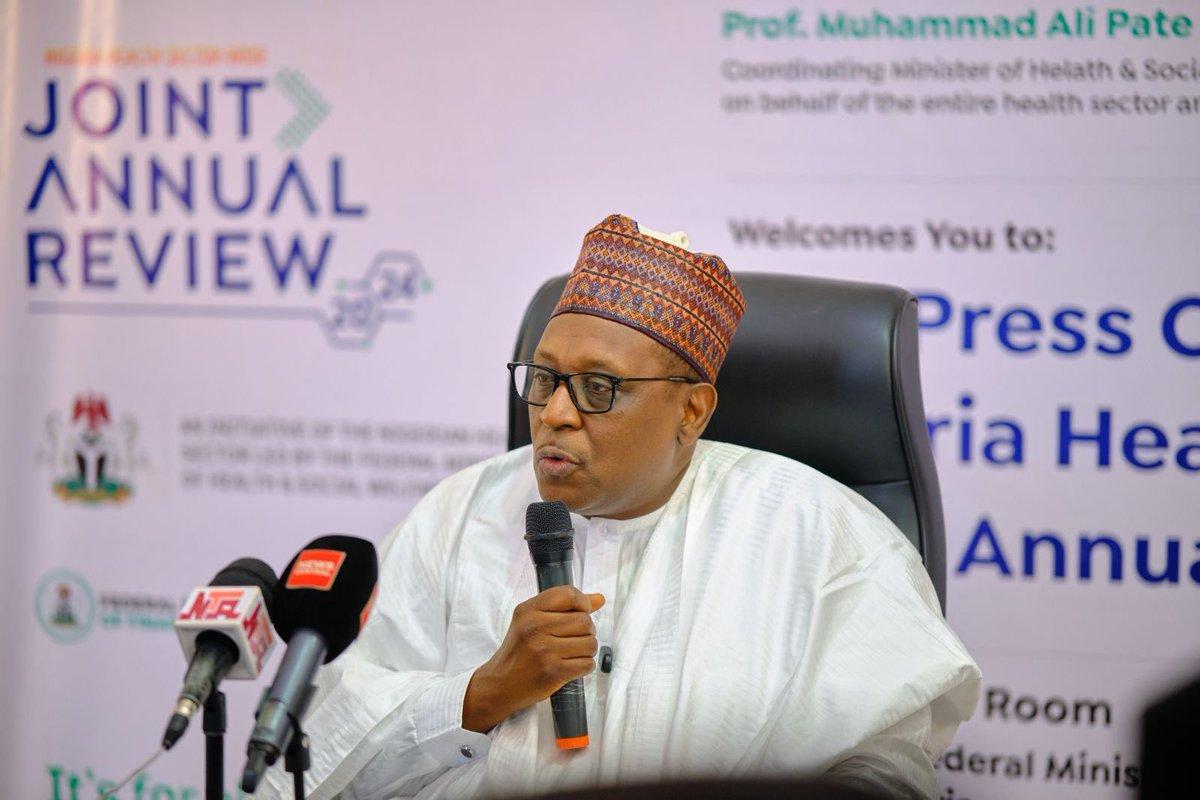
On Monday, the case entered a new phase when Health Minister Muhammad Ali Pate announced that the patient had been medically evacuated from Abuja to Switzerland. Pate said she had improved significantly, was stable, conscious and communicating, with laboratory results moving toward normal levels. Her husband, a Swiss diplomat who had remained asymptomatic, travelled with her. The minister cautioned that clinical improvement did not necessarily mean the patient was no longer infectious and said strict protocols were followed during the evacuation.
Nigeria’s public-health response continues despite the patient leaving the country. Because her husband was one of the original 53 identified contacts, his departure means Nigerian authorities are now directly monitoring the remaining contacts while Swiss authorities take over his observation and his wife’s treatment. The NCDC continues investigating whether any secondary transmission occurred before the patient was isolated.
Scientists are also trying to determine exactly where she acquired the virus. Nigerian authorities say she had returned from Uganda, while questions have emerged over whether she had travelled to the Democratic Republic of the Congo, where the current Bundibugyo outbreak began. Swiss officials and Africa CDC have said available travel information does not support claims that she visited the DRC, while investigators are examining whether infection may have occurred elsewhere during her journey.
One theory under investigation concerns her transit through Uganda’s Entebbe airport on October 3. Reuters reported that scientists are studying a possible epidemiological link between Nigeria’s patient and the first confirmed case detected in Kenya, another traveller who had been in the Democratic Republic of the Congo and also passed through Entebbe on October 3. At present, that possible connection remains under investigation and should not be reported as an established transmission chain.
The wider regional outbreak has already spread beyond the country where it was first detected. WHO reported that the current Bundibugyo virus disease outbreak began in the Democratic Republic of the Congo in May and subsequently produced cases in other countries, including Uganda, Kenya and Nigeria. The organisation has described the outbreak as geographically significant and has intensified cross-border coordination, surveillance and preparedness.
Bundibugyo virus is one of the Ebola virus species known to cause severe human disease. It was first identified during an outbreak in western Uganda in 2007 and has since caused additional outbreaks, including one in the Democratic Republic of the Congo. Previous outbreaks have recorded substantial fatality rates, although the outcome for an individual patient depends on factors including access to supportive care, underlying health and how quickly complications are managed.
Unlike the Zaire Ebola species responsible for the devastating 2014–2016 West African epidemic, there is currently no approved vaccine specifically available for Bundibugyo virus disease. WHO says no approved specific antiviral treatment exists for the strain either, although supportive care including hydration, management of symptoms and treatment of complications can significantly improve a patient’s chances of survival.
That absence of a strain-specific vaccine makes basic outbreak-control measures particularly important. Rapid identification of cases, isolation of symptomatic patients, contact tracing, appropriate use of protective equipment, safe burials and strong community communication remain the primary tools used to interrupt transmission.
Nigeria has significant experience in those measures because of its response to the 2014 Ebola outbreak. That outbreak began when an infected traveller arrived in Lagos from Liberia, but aggressive contact tracing, isolation and coordinated public-health action prevented sustained nationwide spread. Nigeria was internationally praised for containing the outbreak after recording 20 cases and eight deaths.
The 2026 case is different in several ways, including the virus species involved, but many of the same public-health principles apply. Authorities must identify every relevant exposure, monitor contacts through the complete incubation period and ensure any person who develops symptoms is tested and isolated immediately.
The increase from 44 to 53 identified contacts should therefore not automatically be interpreted as evidence that the virus is spreading. Contact lists often expand as investigators reconstruct a patient’s movements, interview healthcare workers and identify additional people who may have had relevant exposure. The important indicator is whether any of those contacts subsequently develop symptoms and test positive.
As of the latest official NCDC information reviewed by VNTV, no monitored contact had been confirmed infected. Two additional suspected cases were investigated, including one in Rivers State, and laboratory results reported so far were negative. Nigerian authorities say surveillance remains active and that the list of contacts can change as investigations continue.
The public should also avoid interpreting ordinary fever or diarrhoea as proof of Ebola. Those symptoms are common to many illnesses, particularly malaria and gastrointestinal infections. Someone who has not had a relevant exposure is far less likely to have Ebola than a person who has recently been in contact with a confirmed case or an affected transmission chain.
For people who believe they have had a possible exposure, however, public-health guidance is different. They should contact health authorities immediately if symptoms develop and should follow instructions before presenting unannounced at a busy clinic, where unnecessary exposure of healthcare workers and patients could occur if Ebola is ultimately confirmed.
The NCDC has urged Nigerians to practise regular hand hygiene, avoid direct contact with blood or body fluids of suspected cases and cooperate with contact-tracing teams. It has also appealed to the public not to spread unverified information or stigmatise individuals being monitored.
Misinformation is particularly dangerous during Ebola outbreaks because fear can spread faster than the virus itself. False claims that the infection is airborne, that asymptomatic contacts are contagious or that entire communities need to be avoided can undermine trust and make people less willing to cooperate with health officials.
WHO states that Ebola is transmitted primarily through direct contact with infected body fluids rather than casual proximity. Ordinary public interaction with a healthy person who has merely been identified as a contact does not carry the same risk as direct exposure to the body fluids of someone who is symptomatic.
Munir’s warning therefore needs to be understood in the correct context. The problem presented by the two-to-21-day incubation period is that public-health teams cannot immediately declare an exposed person free of infection simply because that person feels healthy today. They must continue monitoring until the full observation period has elapsed.
That is why 21 days has become such an important number in Ebola response. A person who remains symptom-free throughout the complete incubation period after their last exposure can generally be released from monitoring because the period during which illness would be expected to emerge has passed.
At the outbreak level, WHO uses an even longer benchmark before declaring transmission over. Countries typically complete a 42-day countdown, equivalent to twice the maximum 21-day incubation period, after the last confirmed patient tests negative or is safely buried before an Ebola outbreak is formally considered ended.
For Nigeria, the immediate focus remains much narrower: monitoring the identified contacts associated with the imported Abuja case and determining whether any secondary infections occurred. The fact that the index patient has now left for Switzerland does not end the domestic response because people exposed while she was symptomatic remain within their monitoring periods.
The coming days will therefore be important. If contacts continue completing their observation periods without symptoms, confidence will grow that the Abuja case was contained. If anyone develops suspicious symptoms, rapid testing will determine whether the virus spread further.
Nigeria’s health authorities have repeatedly urged calm rather than complacency. One imported case does not mean widespread community transmission, and there is currently no official evidence that Ebola is circulating broadly across Nigeria. At the same time, the potentially long incubation period makes rigorous surveillance essential until all relevant contacts have completed monitoring.
For the public, the most important message is straightforward. Bundibugyo Ebola can take as long as 21 days after infection before symptoms appear, which is why contact tracing must continue for weeks. But people are not considered infectious before symptoms begin. Early reporting, accurate exposure histories and cooperation with health authorities remain the strongest tools for ensuring that a single imported infection does not develop into a larger outbreak.