
WEIJA CHILDREN’S SPECIALIST HOSPITAL NOW OPERATIONAL WITH 120 BED CAPACITY
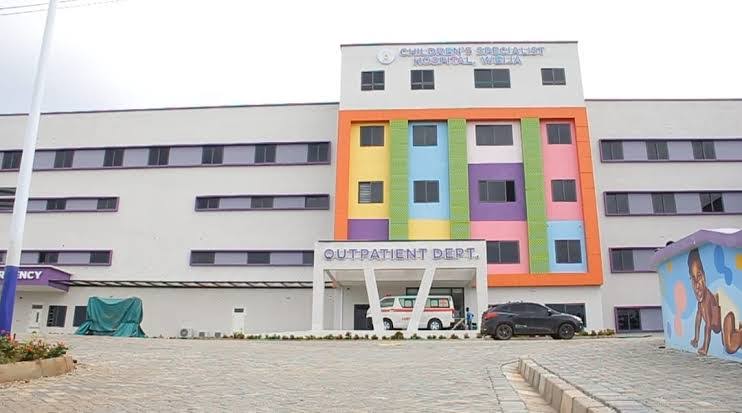
The Weija Children’s Specialist Hospital in Greater Accra is now operational, with the 120 bed facility providing outpatient and emergency services as preparations continue for the introduction of inpatient care. Health Minister Kwabena Mintah Akandoh announced the development following an inspection of the facility. He also directed the immediate deployment of 10 additional doctors and 30 nurses and midwives to strengthen staffing as the hospital expands its services. The government says almost all major equipment required at the facility has now been installed, with the hospital expected to develop into a specialist referral center for pediatric care.
The Weija Children’s Specialist Hospital has begun operations, with the 120 bed facility now providing outpatient and emergency services as Ghana moves to expand specialist pediatric care in Greater Accra.
Health Minister Kwabena Mintah Akandoh announced the development following an inspection of the hospital, saying the facility had entered an important stage in its transition toward full operations.
The hospital is now preparing to introduce inpatient services as staffing, equipment and clinical systems are strengthened.
OUTPATIENT AND EMERGENCY SERVICES ALREADY AVAILABLE
According to the Health Minister, patients are already being attended to through the outpatient department and emergency unit.
The next phase will involve expanding services to patients who require admission and longer term specialist care.
That phased approach allows the hospital to build staffing levels and operational capacity while beginning to serve patients immediately.
40 ADDITIONAL HEALTH WORKERS ORDERED DEPLOYED
Akandoh directed the Ghana Health Service and relevant authorities to deploy 40 additional health professionals to the facility without delay.
The group includes 10 medical doctors and 30 nurses and midwives.
The additional personnel are expected to strengthen the hospital’s ability to operate around the clock as more services are introduced.
Staffing will be particularly important once inpatient wards, intensive care services and specialist units begin admitting patients.
EQUIPMENT INSTALLATION NEARLY COMPLETE
The Health Minister said almost all equipment required for the facility has been installed.
A specialist children’s hospital requires more than beds and consultation rooms.
It needs pediatric diagnostic equipment, emergency care systems, surgical facilities, intensive care infrastructure, laboratory support and appropriately trained staff.
Completing equipment installation is therefore a major step toward full operations.
FACILITY HAS 120 BED CAPACITY
The hospital has a planned capacity of 120 beds.
That makes it one of the major dedicated pediatric facilities in the Greater Accra Region.
Its services are expected to support children requiring both general pediatric treatment and more specialized interventions.
Once fully operational, the hospital is expected to function as a referral center for complicated cases that cannot be managed at smaller facilities.
HOSPITAL DESIGNED FOR SPECIALIST PEDIATRIC CARE
Earlier project plans for the Weija facility included an emergency department, neonatal intensive care services, pediatric intensive care, recovery wards and surgical theaters.
The project also included imaging facilities, biomedical laboratories and an outpatient department.
These services are important because children often require equipment and clinical protocols specifically designed for their age and size.
A dedicated pediatric hospital allows health professionals to concentrate those services in one facility.
PRESSURE ON EXISTING CHILDREN’S HOSPITALS
The Weija project was originally developed partly to reduce pressure on existing pediatric services in Accra.
The Princess Marie Louise Children’s Hospital has historically carried a significant burden as one of the capital’s major public pediatric facilities.
Other hospitals, including Korle Bu Teaching Hospital and Greater Accra Regional Hospital, also handle large numbers of pediatric patients.
A functioning specialist facility at Weija could distribute that workload more effectively.
GREATER ACCRA CONTINUES TO GROW
The need for additional pediatric capacity has become more important as the population of Greater Accra continues to expand.
Communities around Weija, Kasoa, Ga South and neighboring areas have grown rapidly.
Families in those locations can face long journeys to reach major specialist hospitals in central Accra.
A pediatric referral hospital in Weija could reduce travel time for many patients in the western parts of the metropolitan area.
EMERGENCY CARE IS PARTICULARLY IMPORTANT
Children can deteriorate rapidly during medical emergencies.
Conditions such as severe infections, breathing difficulties, dehydration, trauma and complications affecting newborns may require immediate intervention.
Having a functioning emergency department means the hospital can begin addressing some of those cases even before every inpatient unit reaches full capacity.
INPATIENT SERVICES ARE NEXT
The hospital is not yet operating every service at full scale.
Government says inpatient care is the next major phase.
That will allow children requiring admission to remain under specialist medical supervision rather than being treated only on an outpatient basis or transferred elsewhere.
The timing of the inpatient rollout will depend on staffing, clinical readiness and completion of remaining operational requirements.
STAFFING WILL DETERMINE CAPACITY
Hospital infrastructure alone cannot provide health care.
Doctors, nurses, midwives, pharmacists, laboratory scientists, radiographers and other specialists will determine how much of the facility can actually be used.
Akandoh’s deployment order therefore addresses one of the most important operational challenges.
A 120 bed hospital cannot safely function at full capacity without enough trained personnel.
SPECIALIST TRAINING WILL ALSO MATTER
Some pediatric services require highly specialized professionals.
Neonatal and pediatric intensive care units need clinicians trained to manage critically ill children.
Surgical services require pediatric surgeons, anesthetists and theater staff.
Imaging and laboratory departments also require specialized technical personnel.
The hospital’s development into a full referral center will therefore depend not only on staff numbers but also on the right mix of expertise.
GOVERNMENT WANTS FACILITY TO BECOME REFERRAL CENTER
The Health Ministry says the long term objective is to develop Weija into an important specialist referral center.
That means hospitals and clinics elsewhere could send complex pediatric cases to the facility.
A referral role would require reliable emergency transport, communication between hospitals and clear procedures for accepting patients.
It would also require enough beds to handle both local demand and referrals.
PROJECT FACED EARLIER DELAYS
The hospital’s move into operation follows delays that prevented the facility from opening fully after construction had advanced.
The Health Ministry previously cited procurement problems and payment disputes as factors affecting operationalization.
Resolving those issues became necessary before equipment installation and service delivery could proceed.
The latest announcement indicates that the facility has now moved beyond the prolonged preparation stage and begun treating patients.
WHY PEDIATRIC SPECIALIST CARE MATTERS
Children are not simply smaller adults.
They require different medication doses, equipment sizes and clinical approaches.
Newborns and very young children can also deteriorate more quickly when seriously ill.
Dedicated pediatric facilities can improve outcomes by concentrating trained staff and specialized equipment in one location.
NEONATAL CARE COULD BE PARTICULARLY IMPORTANT
Ghana continues to face challenges involving newborn health.
Premature babies and newborns with serious complications often require intensive monitoring.
A properly equipped neonatal intensive care unit can provide respiratory support, temperature control, specialized feeding and continuous monitoring.
Expanding those services could reduce pressure on existing neonatal units in major Accra hospitals.
SURGICAL CAPACITY COULD REDUCE REFERRALS ABROAD
Specialist pediatric surgery is another area where capacity remains limited.
Some complicated cases require families to seek care at a small number of teaching hospitals or, in exceptional circumstances, outside Ghana.
Building stronger local pediatric surgical services can reduce those pressures.
The Weija facility’s planned operating theaters could therefore become an important part of its specialist role.
DIAGNOSTIC SERVICES ARE EQUALLY IMPORTANT
Modern pediatric care depends on rapid diagnosis.
Imaging, laboratory tests and other diagnostic services help clinicians identify infections, congenital conditions, injuries and other illnesses.
If those facilities are available within the hospital, children can receive diagnosis and treatment without being transported to another institution.
That improves efficiency and can shorten treatment delays.
HOSPITAL COULD SUPPORT MEDICAL TRAINING
Specialist hospitals can also serve as training centers.
Doctors specializing in pediatrics, nurses and other health professionals need practical exposure to complex cases.
A fully functioning Weija Children’s Specialist Hospital could eventually support postgraduate education and clinical training.
That could help Ghana build a larger pool of pediatric specialists over time.
ACCESS AND AFFORDABILITY WILL MATTER
One important issue will be how services are financed.
For many families, specialist health care can become expensive if significant services fall outside National Health Insurance Scheme coverage.
Government will therefore need to ensure that the hospital’s specialist role does not create financial barriers for families who need care.
Clear information about NHIS coverage and any additional charges will be important as services expand.
MAINTENANCE WILL BE CRITICAL
New medical equipment can deteriorate quickly if maintenance systems are weak.
Hospitals require biomedical engineers, maintenance contracts and reliable supplies of replacement parts.
Government investment therefore cannot end with equipment installation.
Long term maintenance will determine whether the facility remains functional years after opening.
POWER AND WATER SUPPLY MUST REMAIN RELIABLE
Specialist hospitals also depend on uninterrupted utilities.
Intensive care units, operating theaters, laboratories and imaging equipment require stable electricity.
Water is equally important for infection prevention and daily clinical operations.
Backup systems will therefore be essential if the hospital is expected to provide 24 hour specialist services.
STAFF RETENTION IS ANOTHER CHALLENGE
Ghana’s health system continues to face concerns over the migration of trained professionals.
The Health Minister has previously identified recruitment, deployment and retention as major health workforce challenges.
A specialist facility must therefore provide working conditions that encourage trained staff to remain.
That includes adequate equipment, professional development and manageable workloads.
OPERATIONALIZATION IS MORE IMPORTANT THAN CONSTRUCTION
The Weija hospital also reflects a broader challenge in public health infrastructure.
Completing a building does not automatically create a functioning hospital.
Facilities require equipment, staff, medicines, budgets, utilities and administrative systems.
The significance of the current announcement is therefore that the facility has moved from being primarily an infrastructure project to actually treating patients.
WHAT HAPPENS NEXT
The immediate priority is the introduction of inpatient services.
The newly ordered doctors, nurses and midwives are expected to strengthen the workforce as patient numbers increase.
Additional specialist services can then be introduced as clinical teams and equipment become fully operational.
Government will also need to monitor patient volumes, staffing levels and referrals to ensure the facility is functioning as intended.
For families in Greater Accra and surrounding communities, the opening provides another option for pediatric emergency and outpatient care.
The longer term test will be whether the 120 bed hospital develops into the specialist referral center government has promised and whether it can sustain high quality pediatric services over time.