WIKE MEETS FUBARA AS RIVERS ASSEMBLY RECALLS THREE PRO-GOVERNOR LAWMAKERS IN FRESH RECONCILIATION MOVE AHEAD OF 2027
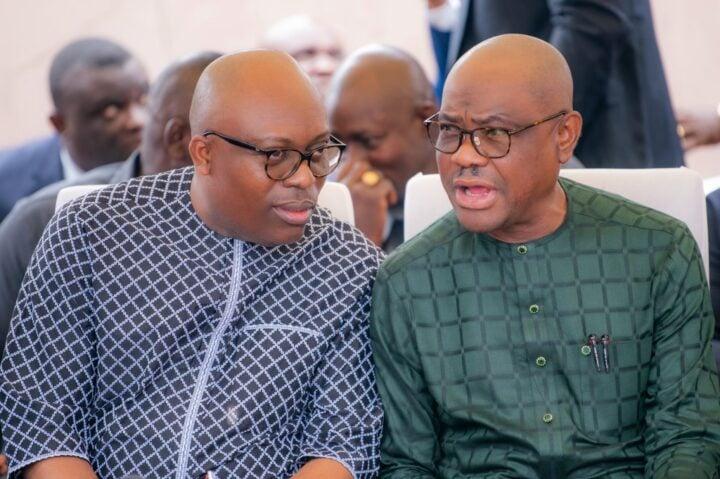
Federal Capital Territory Minister Nyesom Wike has held another reconciliation meeting with Rivers State Governor Siminalayi Fubara, alongside Speaker Martins Amaewhule, state lawmakers, all 23 local government chairmen and APC governorship candidate Kingsley Chinda. Less than a day later, the Rivers State House of Assembly reversed its earlier decision declaring the seats of three lawmakers loyal to Fubara vacant. Victor Oko-Jumbo, Adolphus Timothy Oruibienimigha and Sokari Goodboy Sokari have now been directed to resume their legislative duties after the House accepted their apology over their prolonged absence. The developments mark another concrete step in efforts to resolve the political crisis that has divided Rivers State since 2023, although details of any broader political arrangement ahead of 2027 remain undisclosed.
The political reconciliation process in Rivers State has taken another significant step after Federal Capital Territory Minister Nyesom Wike led senior political figures, state lawmakers and local government chairmen to meet Governor Siminalayi Fubara in Port Harcourt, followed hours later by the Rivers State House of Assembly reversing its earlier decision that had declared the seats of three lawmakers loyal to the governor vacant. The three legislators, Victor Oko-Jumbo of Bonny Constituency, Adolphus Timothy Oruibienimigha of Opobo/Nkoro and Sokari Goodboy Sokari of Ahoada West, have now been directed to resume their legislative duties after the Assembly accepted an apology contained in a letter presented during Monday’s plenary.
The development is one of the clearest signs yet that the long-running political crisis that divided Rivers State into competing camps loyal to Fubara and Wike is entering a new phase. The crisis, which began in late 2023 and at different stages involved impeachment moves, rival legislative factions, court battles, defections and the declaration of a state of emergency, has remained one of Nigeria’s most complicated state-level political conflicts. Although relations between the two sides have improved in recent months, the latest meeting and the Assembly’s decision to restore the three lawmakers show that efforts are still under way to address the unresolved consequences of that confrontation.
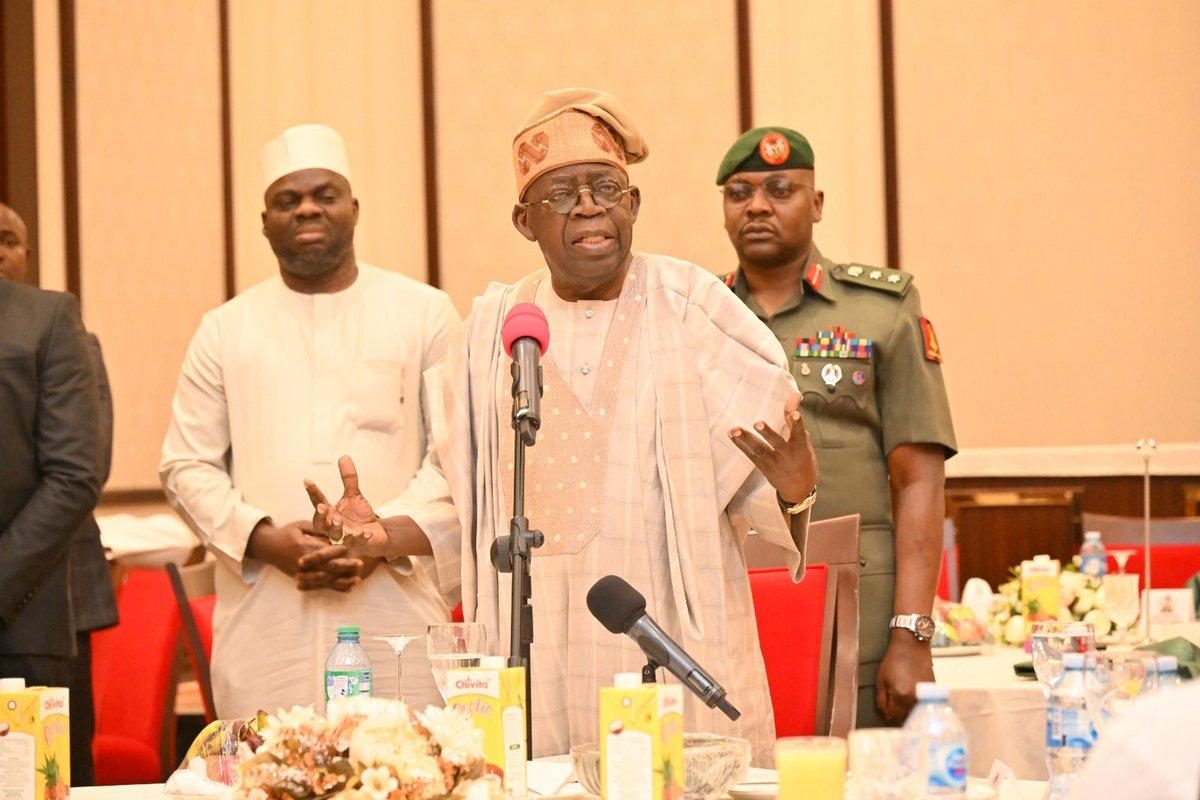
Wike met Fubara at the governor’s private residence in Port Harcourt on Sunday in a gathering that brought together many of the central figures in the Rivers political struggle. The FCT minister arrived with members of the Rivers State House of Assembly, including Speaker Martins Amaewhule, the chairmen of all 23 local government areas and Kingsley Chinda, the All Progressives Congress governorship candidate for the 2027 election. The meeting was held behind closed doors and neither side publicly released a detailed agreement afterwards, but multiple reports said the discussions were intended to strengthen reconciliation and explore ways of accommodating political actors associated with Fubara within the emerging arrangement ahead of 2027.
The Sunday engagement followed an earlier meeting about two weeks before, when Wike led members of what has been described as the Rainbow Coalition to meet Fubara and his supporters. That earlier encounter lasted several hours and was itself regarded as a major development because it brought together people who had spent years on opposite sides of an increasingly bitter political confrontation. The October 18 meeting broadened that process by bringing in the state’s legislative leadership and local government chairmen, many of whom are regarded as closely aligned with Wike.
The participation of Speaker Amaewhule was particularly important because the House of Assembly had been one of the principal battlegrounds of the crisis. Fubara and the Amaewhule-led Assembly spent much of the dispute in open conflict, with disagreements over legislative authority, budget presentation, commissioner nominations and efforts to impeach the governor. The rivalry became so severe that Rivers at one point effectively had competing legislative camps, each claiming legitimacy and each aligned with a different side of the broader political fight.
The three lawmakers now recalled by the Assembly were among Fubara’s strongest legislative allies during that period. Victor Oko-Jumbo became the leading figure in the faction of lawmakers that supported the governor, while Sokari Goodboy and Adolphus Timothy Oruibienimigha also remained identified with the pro-Fubara camp. Their relationship with the Amaewhule-led majority deteriorated sharply as the crisis intensified, and in October 2024 the House declared their seats vacant over prolonged absence from sittings.
The earlier decision was based on the Assembly’s argument that the lawmakers had failed to attend plenary for a period exceeding the constitutional limit without permission or adequate explanation. At the time, the House also declared the seat of Edison Ehie vacant, although Ehie had already resigned from the legislature and later became Fubara’s Chief of Staff. The remaining three lawmakers continued to operate politically with the governor’s camp while the wider legal and political battle over control of the Assembly continued.
On Monday, however, the House formally reconsidered that position. During plenary, lawmakers read a letter from Oko-Jumbo, Oruibienimigha and Goodboy in which the three explained that they did not receive the correspondence directing them to resume legislative duties following presidential intervention in the Rivers crisis. They apologised to the House over their absence, and the Assembly accepted the explanation before directing them to return to their seats.
The reversal is politically significant because it addresses one of the most visible outstanding grievances from the crisis. Even after tensions between Fubara and Wike began easing, the exclusion of the three lawmakers remained a symbol of the incomplete nature of the reconciliation. Their return means the House will once again include legislators who were openly associated with the governor’s camp during the confrontation.
The timing of the decision has also attracted attention because it came immediately after the latest Wike-Fubara meeting. No public statement has confirmed that restoring the lawmakers was a specific condition agreed during Sunday’s talks, and it would therefore be inaccurate to present the Assembly’s action as a formally disclosed deal between Wike and Fubara. The sequence of events, however, has reinforced the perception that political concessions are gradually being made as part of the broader reconciliation process.
The Guardian reported earlier on Monday that there were indications Oko-Jumbo and the other two lawmakers might be allowed to resume sitting as discussions around the reconciliation continued. That expectation was then confirmed when the Assembly formally reversed its earlier declaration and directed all three to return.
The latest developments mark another attempt to close divisions that have persisted for almost three years. The original political crisis erupted after relations deteriorated between Fubara and Wike, his predecessor as Rivers governor and one of the most influential political figures in the state. Wike had played a major role in Fubara’s emergence as governor, but the relationship broke down soon after Fubara took office, dividing the state’s political establishment between the two men.
That division quickly spread into the House of Assembly. Most legislators aligned themselves with Wike, while a much smaller group remained with the governor. The crisis escalated in October 2023 when a section of the Assembly complex was damaged in an explosion and lawmakers began an attempt to impeach Fubara. The governor’s supporters later formed a rival legislative bloc, deepening the constitutional and legal dispute.
The conflict eventually produced multiple court cases over which lawmakers had authority to act on behalf of the House. Questions over defections between the Peoples Democratic Party and the All Progressives Congress added another layer of complexity, with rival camps arguing that opposing lawmakers had automatically lost their seats. The disputes moved repeatedly between state and federal courts while political negotiations continued in parallel.
President Bola Tinubu intervened more than once as the situation deteriorated. The president initially brought Fubara, Wike and other Rivers political figures together in an attempt to broker peace, but the agreement did not permanently resolve the conflict. The crisis later intensified again, leading to renewed impeachment threats and disputes over the state budget.
In March 2025, Tinubu declared a state of emergency in Rivers State, suspending Fubara, his deputy and members of the House of Assembly for six months. Vice Admiral Ibok-Ete Ibas was appointed administrator during the emergency period, an intervention that temporarily removed both the executive and legislative sides of the political dispute from office.
The emergency rule was lifted in September 2025, allowing Fubara and the elected lawmakers to resume their positions. Their return did not immediately eliminate political tension, however. Questions remained over control of local government structures, commissioner appointments, party leadership and the political future of figures aligned with the governor.
Another major confrontation emerged in early 2026 when lawmakers again began impeachment proceedings against Fubara and his deputy. The Assembly accused the governor of financial and constitutional violations, while the governor’s allies described the move as part of the continuing political struggle for control of the state.
Those proceedings were eventually halted in February after another high-level intervention involving President Tinubu, Fubara, Wike and Speaker Amaewhule. The Assembly said consultations and court proceedings would continue, but the immediate impeachment push was suspended.
Since then, the political language surrounding the Rivers crisis has gradually shifted from confrontation towards reconciliation. Both sides have attended meetings, and officials close to the governor have repeatedly said relations with the legislature are improving. The state government in August denied reports of a fresh feud between Fubara and lawmakers over the 2026 budget, insisting that the executive and legislature were working together.
Despite those statements, significant political disagreements remained beneath the surface. Fubara’s supporters have complained that they have not received adequate representation within the political structure taking shape around Wike, particularly in relation to the APC and the 2027 elections.
The governor himself joined the APC after previously belonging to the PDP, placing him in the same national party as many of the lawmakers involved in the dispute. That change did not automatically resolve the rivalry because party membership is only one part of Rivers politics, where personal alliances and control of local structures can be as important as formal party affiliation.
The three lawmakers restored on Monday had already faced difficulties within the APC. During party screening earlier in 2026, Oko-Jumbo, Goodboy and Oruibienimigha were among several aspirants linked to Fubara who failed to make the final list of candidates cleared for the House of Assembly primaries. By contrast, most serving legislators associated with Wike were cleared.
That episode fuelled accusations from Fubara’s allies that the party’s internal process was being used to exclude them from the 2027 political arrangement. The Rivers APC rejected those claims and said screening decisions were based on documentation and party rules rather than political loyalty.
Because the three recalled lawmakers were not cleared to contest the next Assembly election under the APC process, their reinstatement is primarily significant for the remainder of the current legislative term. Unless party decisions change or they pursue another political route, their return does not automatically guarantee them a place in the Assembly after the 2027 elections.
The broader reconciliation therefore remains closely connected to negotiations over political inclusion. Sources cited in reporting on Sunday’s meeting said one objective was to explore ways to accommodate figures loyal to Fubara within the state’s evolving political structure.
That issue may prove more difficult than simply restoring three legislative seats. Political positions in Rivers include commissioner appointments, local government structures, party offices and candidacies for the 2027 elections. Different camps will be competing for influence over those positions, and any lasting agreement would need to address more than personal relations between Wike and Fubara.
The presence of all 23 local government chairmen at Sunday’s meeting is relevant in that context. Local councils are critical political structures because chairmen influence grassroots organisation, patronage and mobilisation ahead of elections. Wike’s camp has been widely perceived as dominant across those councils, raising questions about how Fubara’s supporters might be incorporated.
Kingsley Chinda’s participation also highlights the 2027 dimension. He is the APC governorship candidate in Rivers and is therefore central to the succession question as Fubara approaches the end of his current term. The extent to which the governor will support Chinda and how his own loyalists will be treated in return could become one of the most important issues in the coming political negotiations.
Neither Sunday’s meeting nor the Assembly’s Monday decision provides a complete answer to those questions. The specific terms of any agreement remain undisclosed, and the public has not been told whether power-sharing arrangements have been finalised.
For that reason, the latest developments should be viewed as evidence of an active reconciliation process rather than proof that every dispute has been resolved. Wike and Fubara are talking, key lawmakers are being brought back into the legislative structure and the confrontational atmosphere has eased, but the underlying questions of political control and 2027 succession remain important.
The return of Oko-Jumbo is particularly symbolic because he had served as the leading legislative figure in Fubara’s camp during the height of the confrontation. His reinstatement within an Assembly controlled by Amaewhule represents a reversal of the factional arrangement that once divided the legislature.
During the crisis, Oko-Jumbo and his allies maintained that the lawmakers aligned with Wike had lost their seats after defecting from the PDP to the APC. The Amaewhule camp rejected that argument and continued to exercise legislative authority, leading to conflicting court rulings and considerable constitutional uncertainty.
The legal disputes became intertwined with political strategy. Both camps used court judgments, legislative resolutions and party rules to support competing claims, while the wider public struggled to determine which decisions carried final authority.
The eventual interventions by the Supreme Court, presidency and political leaders helped reduce some of those uncertainties, but the personal and institutional relationships remained damaged.
Monday’s recall can therefore be seen as part of an effort to normalise the Assembly after years of factional politics. Bringing all currently recognised members back into one legislative process may help reduce the possibility of renewed parallel sittings or competing resolutions.
The Assembly still faces important legislative responsibilities, including budgets, commissioner confirmations and oversight of the state government. A more complete House could make those processes more credible and reduce accusations that one political camp is being excluded.
For Fubara, the return of his loyalists may provide a modest political gain because it restores direct allies to the legislature. However, they remain a small minority in a House where most members have historically aligned with Wike.
For Wike and Amaewhule, accepting their return could help demonstrate that reconciliation includes practical concessions rather than only private meetings and public statements.
The decision may also reduce criticism that the peace process has been one-sided. Some Rivers stakeholders had argued that although Fubara was participating in talks, his supporters continued to face exclusion from positions and political structures. The reinstatement of the three lawmakers provides at least one visible response to that concern.
Whether further concessions follow remains uncertain. The governor’s cabinet is still incomplete, with some commissioner positions unfilled, and there have been reports that political negotiations are affecting nominations.
Local government politics could also become a source of renewed disagreement if the two camps cannot agree on how power should be shared. Council chairmen and local party structures will be important to candidate mobilisation during the 2027 election cycle.
The Rivers political crisis has already demonstrated how quickly apparent peace can collapse when deeper disagreements remain unresolved. Previous presidential interventions produced temporary calm before new disputes emerged.
That history is why the latest meetings are being watched carefully. A lasting reconciliation would require not only personal understanding between Wike and Fubara but also workable relationships between the governor, legislature, local government leaders and party structures.
The participation of such a broad group on Sunday suggests negotiators recognise that reality. Bringing lawmakers and council chairmen into the same process reduces the risk that an agreement reached only between the two senior figures is rejected by their supporters.
There is also an economic dimension to stabilising Rivers politics. Rivers is one of Nigeria’s most important oil-producing states and plays a major role in national energy production, maritime activity and government revenue.
The prolonged crisis created uncertainty around government decisions and raised concerns that political confrontation could affect development projects and security. At different points, militant groups and political supporters made threats connected to oil infrastructure, increasing national concern about the dispute.
A more stable relationship between the executive and legislature could therefore benefit governance beyond party politics. Budgets, appointments and major projects can be processed more efficiently when government institutions are not constantly involved in constitutional battles.
However, political stability should not eliminate legislative independence. The Assembly still has a constitutional duty to scrutinise the governor and government spending even if lawmakers are participating in reconciliation.
Likewise, the governor is entitled to perform executive functions without unlawful interference from political figures who do not hold elected state office.
The challenge is to separate legitimate checks and balances from the personal rivalry that helped produce the crisis in the first place.
Wike remains a powerful figure in Rivers despite serving as FCT minister in Abuja. His political network includes lawmakers, council chairmen and other influential actors across the state, making him an unavoidable participant in discussions about Rivers politics.
Fubara, as the elected governor, holds executive authority and his own political following. Any lasting political arrangement therefore requires both camps to accept limits on confrontation and find a workable accommodation.
The 2027 election adds urgency to that process. Candidate nominations, campaign structures and alliances will increasingly dominate political activity as the election approaches.
If reconciliation fails before those decisions are finalised, old tensions could easily return. If the camps reach a durable agreement, Rivers could enter the election cycle with considerably less institutional conflict than it experienced between 2023 and early 2026.
The recall of Oko-Jumbo, Goodboy and Oruibienimigha is therefore important not because three seats alone determine the political direction of the state, but because the decision indicates that positions once considered irreversible can be reconsidered through negotiation.
The House had previously taken the formal step of declaring the seats vacant and requesting replacement elections. Reversing that decision required legislators to accept the three lawmakers’ explanation and restore them to the chamber.
That is a meaningful institutional change.
It also allows their constituencies to regain representation through the lawmakers originally elected to serve them rather than continuing to operate with unresolved questions surrounding the seats.
The Assembly’s acceptance of the lawmakers’ apology appears designed to provide a procedural basis for their return. Rather than simply erasing the earlier decision without explanation, the House relied on their claim that they did not receive the correspondence directing them to resume sittings after presidential intervention.
That approach may help lawmakers present the recall as a legislative resolution rather than an entirely political concession.
Nevertheless, the political context is impossible to ignore. The decision came immediately after another high-level reconciliation meeting and after weeks of discussion about bringing Fubara’s supporters into the political arrangement.
The relationship between those developments will continue to be discussed even if no participant publicly confirms that the recall formed part of a negotiated package.
For now, the strongest conclusion supported by the available facts is that the reconciliation process is producing concrete changes.
Wike and Fubara have continued meeting.
The legislative leadership has participated directly in those discussions.
Local government chairmen have been brought into the process.
And the Assembly has restored three lawmakers who had remained outside the chamber for nearly three years.
Those developments represent substantial movement compared with the period when the camps were pursuing impeachment, rival legislative sessions and court battles.
The situation is still fluid, however, and the 2027 election could test whether the new understanding is strong enough to survive competition over candidates and political offices.
The next developments to watch will include whether Oko-Jumbo, Goodboy and Oruibienimigha physically resume sitting with the Amaewhule-led House, whether additional Fubara loyalists are given political roles and whether the two camps release any clearer account of the agreement guiding their reconciliation.
Until then, Monday’s decision stands as one of the clearest institutional outcomes of the renewed peace process.
After almost three years of exclusion, three lawmakers closely associated with Governor Fubara have been told to return to the Rivers State House of Assembly, less than a day after Wike, Amaewhule, council chairmen and other political leaders met the governor in Port Harcourt.
The political crisis is not necessarily over, but the confrontation that once threatened to paralyse the state is increasingly being replaced by negotiation. Whether that negotiation produces a durable political settlement or merely a temporary truce ahead of 2027 will depend on what both camps do with the concessions now being made.