WIKE PROMISES ₦10 MILLION TO COUNCILLORS WHO DELIVER WARDS FOR TINUBU IN 2027
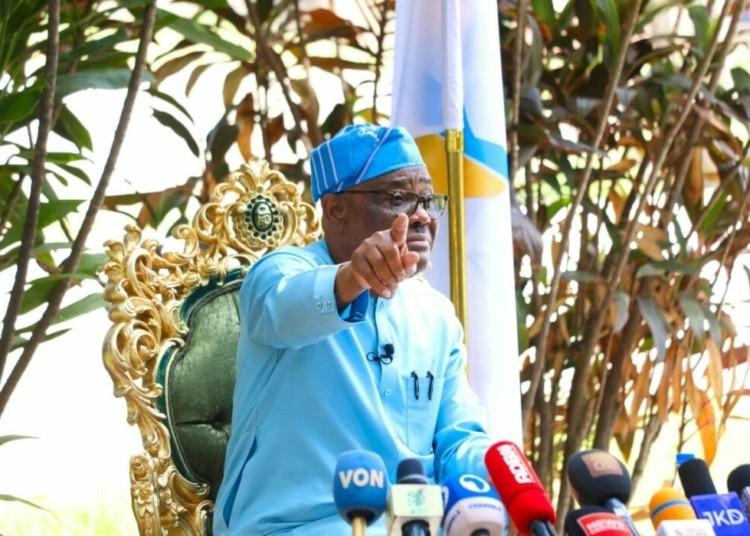
FCT Minister Nyesom Wike has promised ₦10 million to every councillor who delivers his or her ward for President Bola Tinubu and other APC candidates in the 2027 elections. Wike made the pledge during a Rainbow Coalition stakeholders’ meeting in Kwali Area Council and urged councillors to mobilize community leaders, youths and associations. Nigeria’s Electoral Act prohibits corrupt gifts or promises intended to procure a candidate’s election or voters’ support, but no court or electoral authority has ruled that Wike’s pledge itself constitutes an offense.
Federal Capital Territory Minister Nyesom Wike has promised a ₦10 million reward to councillors who successfully deliver their political wards for President Bola Tinubu and other All Progressives Congress candidates in the 2027 general elections, intensifying his grassroots mobilization effort for the president’s re-election and raising fresh questions over the line between political campaign incentives and inducement under Nigeria’s electoral laws. Wike made the pledge on Monday during a Rainbow Coalition stakeholders’ meeting in Kwali Area Council, where traditional rulers, political stakeholders, councillors and residents gathered as part of an expanding cross-party political structure backing Tinubu ahead of the next election.
Addressing councillors at the meeting, Wike told them directly that electoral performance in their wards would be rewarded financially. “Any councillor that delivers his ward will get N10 million reward,” he said, before urging them to return to their communities, meet political leaders, engage youth groups and consult associations in order to mobilize support for the president. His remarks were reported independently by multiple Nigerian news organizations, including Channels Television, Punch, Nigerian Tribune and Voice of Nigeria, and represent one of the clearest public declarations yet of the financial incentives being attached to grassroots political mobilization in the FCT ahead of 2027.
Wike did not limit his appeal to Tinubu alone. He also backed APC candidates seeking other offices and used the Kwali meeting to endorse Senator Philip Aduda for the FCT Senate seat and Danladi Chiya for the Abuja South Federal Constituency. His message was that councillors and community leaders should treat the coming election as an organized grassroots contest in which ward-level performance would determine the strength of the wider coalition supporting the president.
The ₦10 million pledge is politically significant because councillors occupy one of the most immediate levels of elected representation in Nigeria. They are embedded in local communities, interact directly with residents and often play important roles in ward-level mobilization during elections. By tying a large financial reward to whether a ward is “delivered,” Wike has effectively placed measurable electoral performance at the center of his political strategy.
The statement is also notable because of the scale of the proposed reward relative to the salaries of councillors themselves. At the same meeting, Gambo Hamza, Chairman of the National Councillors Forum of Nigeria in the FCT, told Wike that councillors were receiving approximately ₦260,000 monthly and appealed for an intervention over their pay. Wike responded that he would look into the issue. Against that background, a ₦10 million reward represents a very substantial sum for an individual councillor and is likely to attract scrutiny over what precisely councillors are being expected to do to qualify.
Wike framed the pledge as an incentive for political mobilization rather than a direct payment to voters. He urged councillors to meet leaders, youth groups and community associations and persuade residents to support Tinubu and other candidates. No evidence has been presented that he instructed councillors to give money directly to voters, and no electoral authority or court has ruled that the statement itself constitutes vote-buying or another electoral offense. That distinction is important because Nigerian electoral law criminalizes certain forms of inducement but requires proof of the elements of the offense.
Section 121 of the Electoral Act 2022 addresses bribery and conspiracy. It prohibits anyone from corruptly making a gift, loan, offer, promise or agreement in order to induce another person to procure the election of a candidate or the vote of a voter. It also prohibits the payment of money intended to be spent on bribery at an election. Conviction can attract a fine of up to ₦500,000, imprisonment for up to 12 months or both. Allegations under the section are criminal in nature and must be proved to the required legal standard.
That legal framework means the wording and purpose of Wike’s pledge may draw attention from election-law experts and civil society organizations, but it would be inaccurate to state as established fact that the minister has committed an electoral offense simply by making the promise. The law turns on whether an offer is made corruptly and for the purpose of procuring a candidate’s return or the vote of a voter, and any determination would depend on evidence, context and the interpretation of the relevant authorities or courts.
The political context is equally unusual because Wike remains a member of the Peoples Democratic Party while serving as a minister in Tinubu’s APC-led federal government. He has repeatedly said he is not an APC member, but he has openly committed himself to supporting Tinubu’s re-election and has built the Rainbow Coalition as a cross-party structure to mobilize support for the president in the FCT, Rivers State and elsewhere.
Wike’s relationship with the PDP and Tinubu has been one of the most distinctive features of Nigerian politics since the 2023 election. As governor of Rivers State, he was one of the most influential figures in the PDP but broke with the party’s presidential leadership before the 2023 vote after opposing Atiku Abubakar’s candidacy and arguing that the party’s internal zoning arrangements had been disregarded. Wike and several other governors later withheld support from Atiku while Tinubu won the presidency.
Tinubu subsequently appointed Wike as FCT minister, making him one of the most prominent opposition-party figures serving in the APC administration. Wike has continued to insist that his ministerial role and support for Tinubu do not make him a member of the ruling party. As recently as 2026, he has publicly described himself as a PDP member while simultaneously pledging to work for Tinubu’s re-election.
The Rainbow Coalition has become the vehicle through which Wike is attempting to reconcile those apparently contradictory positions. He presents it as a platform that allows politicians from different parties to support Tinubu without formally defecting to the APC. At the Kwali meeting, Wike praised the coalition for bringing together political actors from different backgrounds and argued that cooperation around Tinubu’s candidacy should be based on the president’s record in office rather than strict party loyalty.
Wike told residents that Tinubu had changed the political and administrative position of the FCT in ways previous governments had failed to do. He cited the creation of the FCT Civil Service Commission, the appointment of a Head of Service for the territory, financial autonomy for area councils and infrastructure development in satellite towns as evidence of what he described as greater recognition of Abuja residents under the administration.
He also argued that ongoing road projects across the satellite towns were close to completion and would be commissioned in December. Infrastructure has become one of the main pillars of Wike’s case for Tinubu’s re-election in the FCT, with the minister repeatedly presenting road construction, rehabilitation and institutional reforms as reasons voters should support the president again.
At the Kwali gathering, he contrasted Tinubu’s record with what he described as decades of neglect. Wike said FCT residents had historically been marginalized despite the territory’s large population and limited representation in the National Assembly. Abuja has one Senate seat and two House of Representatives seats, a structure that has long generated debate about whether residents of the federal capital enjoy adequate political representation.
Wike argued that Tinubu had begun addressing some of those long-standing concerns by strengthening FCT institutions and expanding infrastructure outside Abuja’s central districts. He told residents they should not “make a mistake” in 2027 and linked continued development to supporting the president’s second-term bid.
That language places the ₦10 million pledge within a broader political message built around rewards for loyalty and performance. Wike’s argument is effectively that political actors who can demonstrate measurable support for Tinubu at ward level should be recognized, while communities that back the administration can expect continued attention to development.
Critics are likely to examine that message from a different perspective, particularly because Wike is a serving federal minister with access to public office and significant influence over FCT resources. At the time of the reports, there was no public clarification from Wike about whether the proposed ₦10 million rewards would come from his personal funds, political donations, coalition resources or another source. That unanswered question is important because any use of public funds for partisan electoral rewards would raise a separate set of legal and ethical concerns.
No evidence has been presented that FCT government funds have been allocated for the rewards, and it would be wrong to imply otherwise without documentation. The safest and most accurate interpretation is that Wike made the promise in a political setting and did not publicly specify the funding source in the reports available on Monday.
The language of “delivering” wards is common in Nigerian political organization and generally refers to ensuring that a candidate wins the highest number of votes in a particular ward. Political leaders are often judged internally by whether they can win their own local governments, wards or states. Wike himself has repeatedly emphasized that political influence should be measured by the ability to win elections in one’s home territory rather than by titles in campaign organizations.
In August, Wike said he did not need a formal role in the APC presidential campaign council to work for Tinubu, arguing that his real political value would be determined by whether he could deliver Rivers State and the FCT. He criticized the tendency to place politicians in prominent campaign positions when they were unable to win their own states, saying electoral results matter more than titles.
The ₦10 million ward incentive is therefore consistent with a political philosophy Wike has been articulating for months: campaign influence should be measured through concrete electoral results. What is new is the explicit attachment of a financial reward to those results.
The development will likely generate debate because Nigeria has struggled for years with allegations of vote-buying and financial inducement during elections. INEC, civil society organizations and election observers have repeatedly warned that the exchange of money or gifts for votes damages electoral credibility and weakens the principle that voters should make choices freely.
Vote-buying has been documented in different forms, from direct cash payments near polling units to the distribution of food, household goods and other material benefits during campaigns. Election authorities have repeatedly described the practice as a serious threat to democratic integrity, particularly in communities where poverty makes voters more vulnerable to financial pressure.
Wike’s statement is not identical to the most common form of vote-buying because the promised money is directed toward councillors after their wards produce a favorable result rather than being offered directly to individual voters. Whether that distinction is sufficient to remove the promise from the scope of electoral bribery provisions is ultimately a legal question, not one VNTV should resolve independently.
Section 121 is broad enough to cover certain offers or promises made to induce someone to procure another person’s election, but the statute includes the word “corruptly,” which would need to be established. It also requires a connection between the promise and efforts to procure the return of a candidate or voter support. Those are issues that could become important if any formal complaint were made.
At the time of publication, there was no confirmed announcement from INEC, the police, EFCC, ICPC or another enforcement body that Wike was under investigation over the statement. There was also no court ruling addressing whether the pledge violates the Electoral Act. Any article describing it outright as illegal, bribery or vote-buying would therefore go beyond the evidence currently available.
What can be reported confidently is what Wike said and the context in which he said it. He publicly promised ₦10 million to councillors who deliver their wards, linked the reward directly to Tinubu and other APC candidates winning in those wards, and encouraged local politicians to mobilize leaders, youth organizations and associations in support of that objective.
The reaction from political actors at the meeting was largely supportive. APC FCT chairman Ishaku Yamawo praised Wike for uniting stakeholders across party lines, while Mohammed Dogara, representing the PDP leadership in the FCT, thanked the minister for his work and pledged support for Tinubu’s re-election. Aliyu Baka, speaking on behalf of Rainbow Coalition stakeholders, said the group regretted what he characterized as electoral mistakes made in 2023 and was prepared to work for its preferred candidates in 2027.
That cross-party backing is central to Wike’s strategy. Rather than relying solely on the APC structure, he is attempting to build a parallel alliance that includes local politicians, traditional leaders and members of opposition parties who support Tinubu personally even when they remain formally outside the APC.
The approach reflects a broader pattern in Nigerian politics, where personal alliances frequently cut across party lines and where politicians may support candidates from rival parties in different races. Wike has said openly that his support for Tinubu does not require the PDP to withdraw from other elections, including National Assembly and other contests.
The result is a political arrangement in which Wike can campaign for an APC president while supporting PDP or other candidates in selected legislative races. His endorsement of Philip Aduda, a long-standing FCT politician associated with the PDP, alongside his support for Tinubu demonstrates how the Rainbow Coalition is designed to operate outside a conventional single-party structure.
Such arrangements may be tactically useful but can also blur party accountability. Voters may find themselves confronted with politicians who belong to one party, serve in an administration led by another and campaign selectively for candidates across several political organizations. That fluidity has become increasingly common in Nigerian politics, where defections and cross-party alliances frequently reshape electoral coalitions.
Wike’s own political career reflects that reality. He remains a PDP member but serves as one of the most powerful ministers in an APC government. He insists he has not defected and has said he does not need to join the APC in order to support Tinubu.
The Kwali meeting suggests that he intends to turn that position into a formal grassroots machine rather than leave it as a personal endorsement. The promise of ₦10 million to councillors gives ward-level politicians a clear financial incentive to demonstrate their effectiveness within that structure.
The unresolved question is how the pledge will be implemented and financed. Reports from the event do not explain who will verify whether a councillor has “delivered” a ward, whether the reward will be based solely on presidential votes or also on other APC candidates, when payments would be made or from what account the money would come.
Those details matter because election-linked financial promises are likely to receive close scrutiny as the campaign intensifies. Transparency over funding will be especially important given Wike’s position as a serving minister responsible for a territory with a substantial public budget.
If the money is private or campaign-funded, the legal questions will center on campaign finance and electoral inducement. If public funds were ever involved, different public-finance and anti-corruption issues could arise. At present, however, there is no evidence in the available reports establishing either scenario.
For Tinubu’s campaign, the political value of Wike’s operation is clear. The FCT has historically been a difficult electoral territory for the APC, and Tinubu did not dominate Abuja in the 2023 presidential election. Building a stronger grassroots structure there ahead of 2027 would therefore be strategically important.
Wike has spent much of his tenure arguing that infrastructure and administrative reforms will change how FCT residents view the federal government. His electoral strategy appears designed to translate those projects into votes by tying local political organizers directly to the president’s record.
Whether voters respond positively will ultimately be decided at the ballot box. Wike can mobilize councillors and political leaders, but individual voters retain the legal right to support whichever candidate they choose.
The political significance of Monday’s statement is therefore not that it guarantees Tinubu victory, but that it reveals the intensity of Wike’s campaign machinery and the methods he intends to use to measure grassroots performance. A ₦10 million reward is a substantial incentive, particularly at councillor level, and the explicit link to ward results is likely to keep the statement under scrutiny.
As the 2027 campaign progresses, civil society groups and election authorities may face increasing pressure to clarify where legitimate campaign incentives end and prohibited inducement begins. Nigeria’s Electoral Act already contains broad provisions against bribery, but enforcement has historically been difficult, particularly when financial influence operates through political structures rather than direct payments at polling units.
Wike’s statement sits squarely within that unresolved area. He has openly offered a financial reward to elected local politicians based on their ability to produce electoral victories for specific candidates, but no competent authority has yet ruled on the legality of that promise.
For now, the factual position is straightforward. Wike told councillors in Kwali that anyone who delivers a ward for Tinubu and other APC candidates will receive ₦10 million, urged them to mobilize community networks and reaffirmed his commitment to the president’s re-election. The legal and ethical implications remain matters for electoral authorities, courts and public debate rather than conclusions that can be assumed from the statement alone.
The next significant development will be whether Wike provides details about the source and mechanism of the promised rewards or whether INEC, civil society groups or legal practitioners formally challenge the arrangement. Until then, the pledge stands as one of the most explicit examples yet of how ward-level political performance is being financially incentivized ahead of the 2027 election, while the question of whether it crosses the boundary established by Nigeria’s anti-bribery provisions remains unresolved.