

ANOTHER BLOODY ATTACK IN ADAMAWA AS SUSPECTED BOKO HARAM FIGHTERS KILL THREE IN HONG
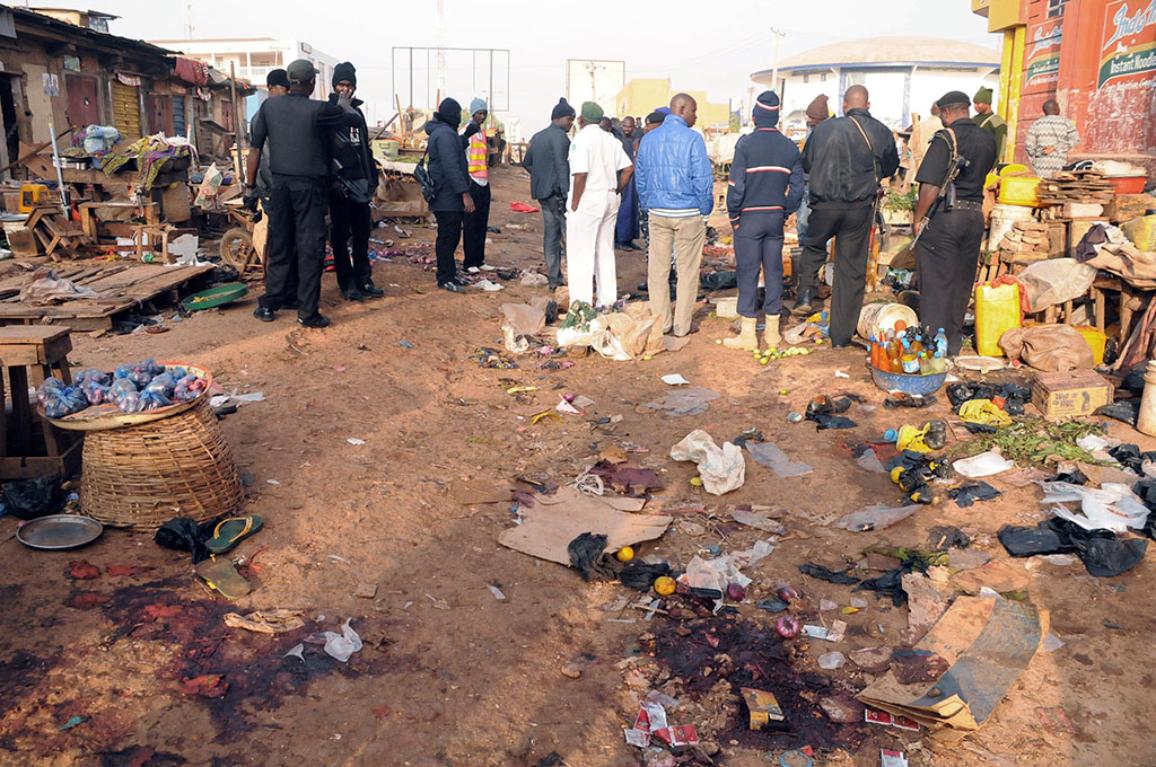
Three people have been killed and two others injured after suspected Boko Haram fighters attacked communities in Hong Local Government Area of Adamawa State. Police say the bodies were recovered and taken to the Federal Medical Centre in Hong, while joint security operatives are pursuing the attackers. The latest killings add to a disturbing series of attacks in Hong and neighbouring communities in recent weeks.
At least three people have been killed and two others injured after suspected Boko Haram fighters launched another attack on communities in Hong Local Government Area of Adamawa State, adding to growing concerns over repeated insurgent violence in the area.
The Nigeria Police Force confirmed that security personnel responded to reports of the latest attack and carried out an on-the-spot assessment.
According to a police operational summary for September 26, three victims were recovered dead and transported to the Federal Medical Centre in Hong for post-mortem examination.
Two other victims who sustained injuries were evacuated to the medical facility for treatment.
Force Public Relations Officer CSP Ani Iniedu said joint security operatives were pursuing the perpetrators.
Police did not immediately disclose the identities of those killed or provide a detailed account of precisely how the attack unfolded.
The attackers are being described in reports as suspected Boko Haram fighters. No independently verified claim of responsibility from the insurgent group had been established at the time of publication.
But the latest violence is particularly concerning because Hong has suffered several attacks in recent weeks.
HONG UNDER REPEATED ATTACK
The September 26 killings are the latest in a series of deadly incidents reported across Hong and neighbouring parts of Adamawa.
In August, suspected Boko Haram insurgents attacked the Gaya-Dlang community in Hong LGA.
The local government chairman said a police inspector and seven civilians were killed, although the initial police count was lower while authorities awaited further information.
Security personnel, including military troops, police, hunters and other local security forces, were deployed following that attack.
Then in September, violence returned.
On September 14, suspected insurgents attacked Bitirhuya community in Hong LGA, killing four residents and setting several houses ablaze.
Local government chairman Aliyu Sa'ad Yerima confirmed that incident and visited the affected community.
Reports said the attackers arrived on motorcycles and opened fire before burning property.
The September 26 attack means residents of Hong are again confronting killings barely two weeks later.
NEIGHBOURING GOMBI ALSO HIT
The violence has not been confined to Hong.
On September 7, attackers struck Nzangola village in neighbouring Gombi Local Government Area.
Gombi council chairman Markus Ishaya said 12 people were killed and two others injured.
A woman was also abducted.
An EYN church, three houses and two shops were reportedly attacked during the assault.
The attack came shortly before the killings in Bitirhuya and has added to concerns that insurgent activity is intensifying across parts of Adamawa.
The pattern is increasingly difficult to dismiss as isolated violence.
Within weeks, communities across Hong and Gombi have repeatedly reported killings, burned buildings and abductions.
SECURITY FORCES PURSUE ATTACKERS
Police say joint security operatives are now trailing those responsible for the latest Hong killings.
No arrests had been announced when this report was prepared.
Authorities also had not disclosed whether the attackers escaped towards forest areas or whether weapons or other materials were recovered from the scene.
The immediate security operation will focus on finding the perpetrators and preventing another assault on surrounding communities.
But for residents, the repeated attacks are likely to raise a much larger question.
Why do the attackers keep getting through?
Hong's proximity to areas historically used by insurgents creates a difficult security environment.
Boko Haram and other insurgent factions operating in Nigeria's North-East have repeatedly used motorcycles and small groups of fighters to raid vulnerable rural communities before retreating.
That type of attack presents a different challenge from the period when insurgents attempted to seize and openly administer towns.
Security forces may control major population centres, but protecting numerous smaller settlements spread across difficult terrain requires intelligence, rapid-response capability and sustained local security presence.
THE INSURGENCY IS NOT OVER
Nigeria has spent more than a decade fighting Boko Haram and its splinter groups.
Military operations have substantially reduced the territory openly controlled by insurgents compared with the height of the conflict.
But attacks across Borno, Yobe and Adamawa continue to demonstrate that armed groups retain the capacity to kill civilians and strike security forces.
Adamawa has experienced several such attacks in 2026.
Earlier reporting has documented violence in other communities in the state, while neighbouring Borno remains the centre of sustained counter-insurgency operations.
The latest killings therefore underline an uncomfortable reality.
Losing territorial control does not necessarily mean an insurgent organisation has lost the ability to terrorise rural communities.
THREE MORE LIVES LOST
For families in Hong, the broader debate over Nigeria's counter-insurgency strategy now comes down to three more deaths.
Three bodies have been recovered.
Two people are injured.
And security forces are again searching for attackers after another community has been hit.
Police say the perpetrators are being pursued.
But after successive attacks across Hong and neighbouring areas, residents will be looking for more than another manhunt after people have already been killed.
They will be looking for evidence that the next attack can be prevented.