BARCELONA AND REAL MADRID SET FOR BLOCKBUSTER EL CLÁSICO AS YAMAL AND MBAPPÉ TAKE CENTER STAGE
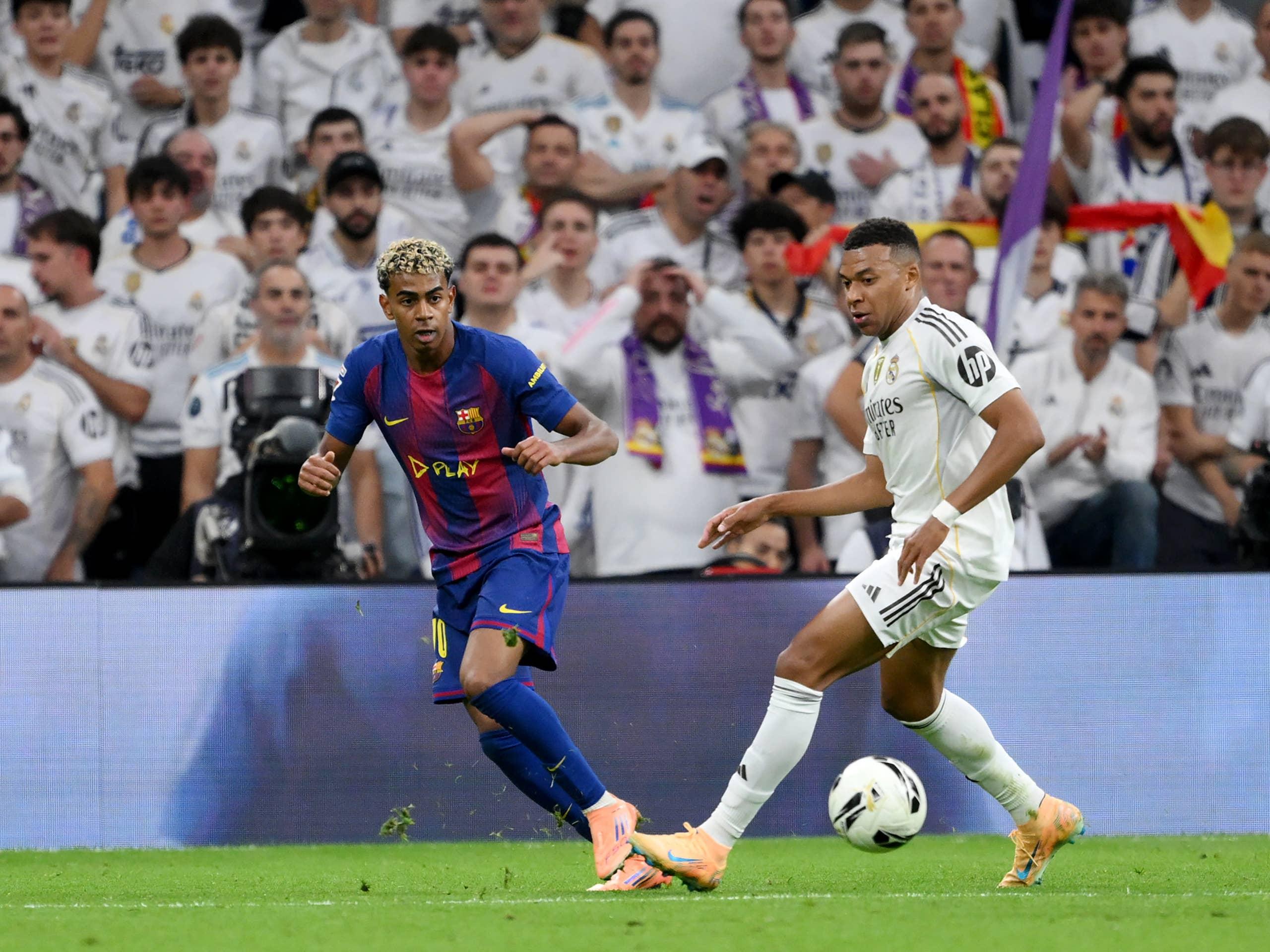
Barcelona and Real Madrid face each other at the Spotify Camp Nou on Sunday night in the first El Clásico of the 2026-27 La Liga season. Barcelona lead the league with 27 points, six ahead of third-placed Madrid, meaning victory would stretch the gap between the rivals to nine points while a Real win would cut it to three. Lamine Yamal and Kylian Mbappé headline the attacking talent on display, while José Mourinho returns to one of football’s most famous rivalries during his second spell as Real Madrid manager. Madrid will be without goalkeeper Thibaut Courtois because of flu, while Barcelona enter the game with defensive injury concerns.
Barcelona and Real Madrid meet at the Spotify Camp Nou on Sunday night in the first El Clásico of the 2026-27 La Liga season, with Spain’s two biggest clubs entering a contest carrying implications far beyond the traditional rivalry. Barcelona begin the night at the top of the league with 27 points from their opening nine matches, six points ahead of third-placed Real Madrid, meaning victory for Hansi Flick’s side would stretch the gap between the rivals to nine points while a Real Madrid win would cut it to three and dramatically tighten the early title race. Kickoff is scheduled for 9 p.m. in Barcelona, corresponding to 8 p.m. GMT, with football audiences across Europe, Africa and the rest of the world preparing for one of the most watched fixtures in the sport.
Much of the international attention is focused on the attacking duel between Barcelona’s Lamine Yamal and Real Madrid’s Kylian Mbappé, two players who now represent the newest generation of stars carrying a rivalry once defined by Lionel Messi and Cristiano Ronaldo. Yamal has become central to Barcelona’s attacking identity despite still being only 19, combining creativity, close control and an ability to produce decisive moments from the right side, while Mbappé enters the match in strong goalscoring form after scoring twice in Real Madrid’s 4-1 league victory over Sevilla last weekend and continuing his influence in the Champions League. Their presence gives this edition of El Clásico another global storyline, but the contest involves far more than a simple comparison between two headline forwards.
Barcelona enter the match as the only team to have won all nine of their opening La Liga fixtures, a perfect domestic start that has given Flick’s side a clear advantage at the top of the table. They have scored freely, controlled games aggressively and carried the confidence of defending champions into the new campaign, but their preparations for Real Madrid have been complicated by a demanding European week and a defensive injury crisis. Barcelona suffered their first defeat of the season on Tuesday when Paris Saint-Germain beat them 4-2 in the Champions League, exposing some of the vulnerabilities created by injuries to several defenders and reminding the Catalans that their strong domestic start does not make them invulnerable.
That defeat in Paris places additional importance on Barcelona’s response. Flick has repeatedly emphasized that his team must maintain intensity, defensive discipline and emotional control against elite opponents, and Real Madrid arrive at Camp Nou with the attacking quality to punish mistakes quickly. Barcelona’s defensive options have been stretched by injuries to Jules Koundé and Eric García, while Dani Olmo and other squad members have also dealt with fitness problems during a difficult run of fixtures. Flick has had to rely increasingly on younger players and academy graduates, continuing a pattern that has become one of the defining features of his Barcelona project.
Among those younger players is Xavi Espart, who has emerged from Barcelona’s academy into first-team contention and could be among several players making a first appearance in El Clásico. Reuters reported that as many as 14 players across the two squads could make their first appearance in Spain’s most famous club fixture, reflecting the significant changes both Barcelona and Real Madrid made during the summer. Barcelona signed Brazilian forward Gabriel Jesus from Arsenal in September, while also promoting academy talent into a squad already built around Yamal, Pedri and other technically gifted players.
Jesus has openly described appearing in El Clásico as a personal ambition after previously facing Real Madrid several times in Champions League competition while playing for Manchester City. His potential involvement gives Barcelona another attacking option capable of pressing Madrid’s back line, combining centrally with midfield runners and creating space for Yamal and Raphinha. The Brazilian’s experience could prove particularly valuable in a fixture where emotional control and decision-making are often as important as technical ability.
Real Madrid arrive in Barcelona with a very different emotional trajectory. José Mourinho’s side endured two defeats in their opening nine league matches and came under heavy criticism during the early weeks of the season, with supporters at the Santiago Bernabéu expressing frustration over performances that often appeared disjointed despite the quality available in the squad. The situation has improved substantially since the international break, however, with Madrid winning four consecutive matches in all competitions and beginning to produce the type of attacking football Mourinho has been demanding.
The 4-1 victory over Sevilla represented one of Madrid’s strongest performances of the season. Arda Güler dictated much of the attacking rhythm, Mbappé scored twice, Amadou Diomande contributed another goal and Federico Valverde provided defensive stability after being deployed at right-back. The result gave Mourinho encouragement that his team is beginning to find balance between defensive organization and the freedom required to maximize its attacking talent.
Mbappé remains central to that improvement. Against Sevilla, he scored with a composed finish after breaking through the defense and later converted a penalty, showing both the explosive acceleration and ruthless finishing that have made him one of world football’s defining players. Real Madrid will need that quality at Camp Nou because Barcelona’s high defensive line can leave space behind when pressure is broken, an area Mbappé is uniquely equipped to exploit.
Madrid’s preparations suffered an important setback on Sunday when the club confirmed that goalkeeper Thibaut Courtois would miss El Clásico because of influenza. Courtois has been one of Madrid’s most reliable performers over several seasons, particularly in matches where the team has faced sustained pressure, and his absence forces Mourinho to rely on an alternative goalkeeper in an environment where Barcelona are likely to generate significant attacking volume. The timing is particularly difficult because Madrid already enter the match needing to improve a recent record against their greatest rivals.
Barcelona have won six of the last seven Clásicos between the two clubs, a sequence that has given the Catalans a psychological advantage despite Madrid’s broader European pedigree. That record includes several high-profile victories and has increased the pressure on Mourinho to change the dynamic. A victory at Camp Nou would not only reduce the league gap but also provide evidence that his second spell in Madrid is beginning to take shape.
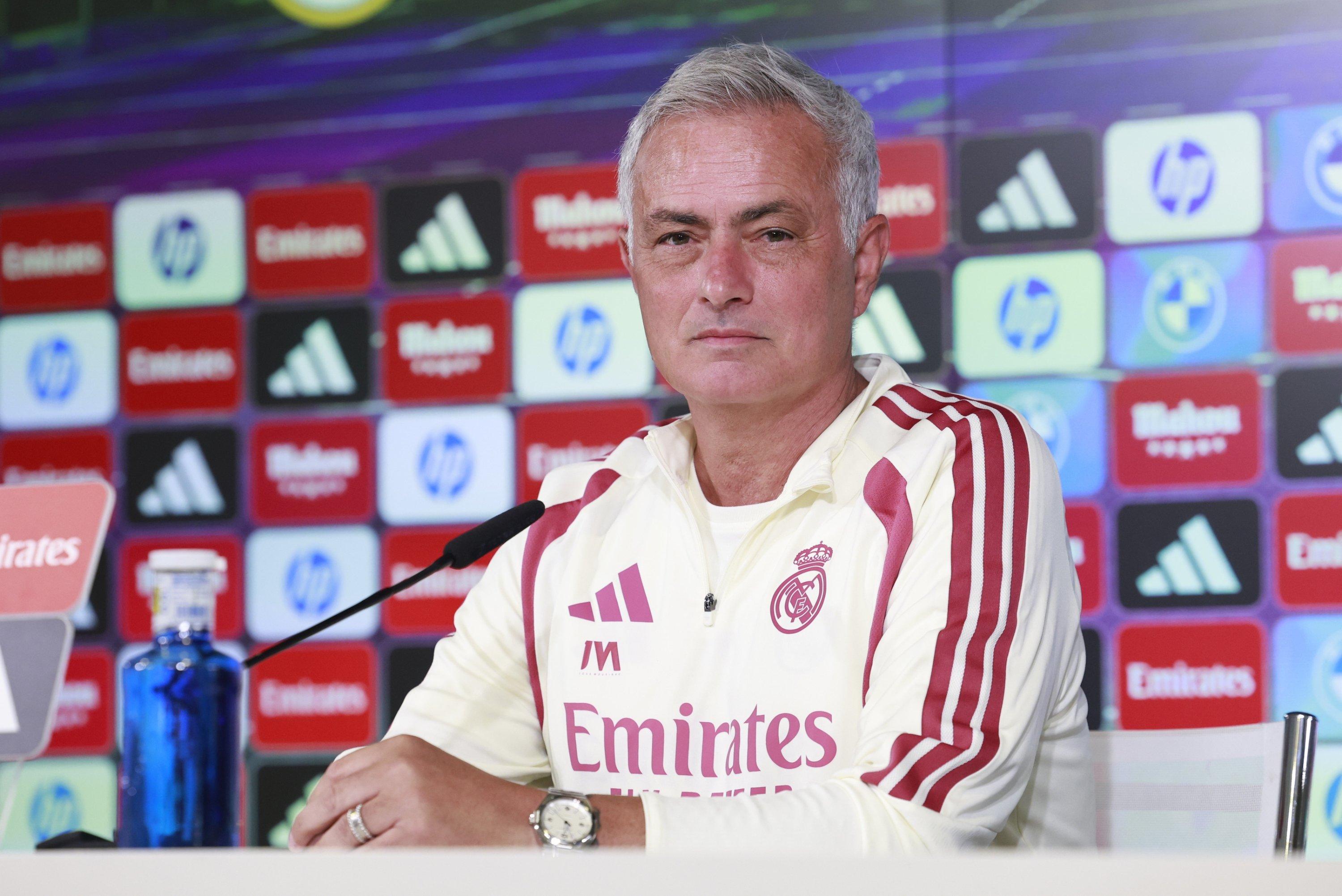
Mourinho’s presence adds another layer of history to the contest. The Portuguese coach previously managed Real Madrid between 2010 and 2013 during one of the most intense periods of the rivalry, when his team repeatedly faced Pep Guardiola’s Barcelona in league, cup and European competition. Mourinho coached Madrid in 17 Clásicos during that first spell and endured a difficult start, winning only once in his first 10 meetings, but he eventually went unbeaten in his final five encounters with Barcelona and secured three victories during that closing run.
His return to Camp Nou therefore carries symbolism beyond the current standings. The rivalry between Mourinho and Barcelona was one of the defining football narratives of the early 2010s, and his renewed presence on the touchline is likely to revive memories of confrontational matches, tactical battles and enormous emotional pressure. The current teams are different, but the atmosphere around the fixture remains capable of turning tactical decisions into moments of major national debate.
For Barcelona, the key tactical question will be how aggressively they maintain their usual high line against Mbappé. Flick’s system depends on pressing high, squeezing the pitch and keeping opponents away from Barcelona’s penalty area, but the approach carries obvious risks against forwards capable of attacking space at elite speed. If Madrid’s midfielders can escape Barcelona’s first press and release Mbappé early, the French captain could repeatedly threaten the space behind the home defense.
Barcelona’s answer will likely depend on possession control. Pedri remains essential to the team’s ability to slow or accelerate matches, while Yamal provides the unpredictable final-third quality that can turn sustained possession into chances. When Barcelona dominate the ball effectively, opponents can become pinned back and unable to exploit the space that exists behind Flick’s defensive line. When possession is lost carelessly, however, the entire structure can become exposed.
Yamal’s individual duel on Barcelona’s right side could therefore become one of the decisive battles of the evening. His ability to isolate defenders, move inside onto his stronger foot and create shooting or passing angles gives Barcelona a constant threat even against compact defenses. Real Madrid will likely attempt to deny him one-on-one situations by providing additional midfield cover and forcing him toward areas where his influence can be reduced.
Madrid must also decide how much freedom to give Arda Güler. The Turkish midfielder has become increasingly important as the creative connection between midfield and attack, and his performance against Sevilla demonstrated his ability to dictate play when given time on the ball. Barcelona’s press will be designed to prevent him from receiving comfortably between the lines, meaning his positioning and ability to play quickly could be central to Madrid’s counterattacking threat.
The midfield battle will carry enormous importance because both teams prefer to control matches through the ball rather than simply defend deep. Barcelona are likely to seek prolonged possession and positional superiority, while Mourinho has increasingly encouraged Madrid to combine vertical transitions with greater technical control. Whoever dominates the central areas could determine whether the match becomes a structured tactical contest or an open end-to-end game.
The fixture also arrives at a critical early point in the title race. Atletico Madrid moved onto 25 points after beating Deportivo La Coruña 1-0 on Saturday, leaving them only two points behind Barcelona before El Clásico. Real Madrid are third on 21 points, so the champions could find themselves under immediate pressure from Atletico even before considering the significance of their rivalry with Madrid. A Barcelona victory would restore distance at the top while pushing Real nine points behind; a Real Madrid victory would bring Mourinho’s side back within three points and leave the top three separated by a narrow margin.
That context prevents the game from being treated merely as an entertainment spectacle. El Clásico always carries historical significance, but this edition could materially alter the balance of the championship before the season reaches its halfway point. A nine-point advantage over Real Madrid would be significant even with many matches remaining, while a three-point gap would transform the conversation around a Madrid team that looked vulnerable only weeks ago.
Barcelona also have an opportunity to show that the Champions League defeat in Paris was an interruption rather than the beginning of a decline. Flick’s team entered that match unbeaten in all competitions before losing 4-2, and the coach praised elements of the performance despite the result. Facing Real Madrid only days later offers little recovery time, but it also gives Barcelona an immediate chance to respond in the most emotionally significant domestic fixture available.
Madrid, by contrast, arrive with momentum. Their four-match winning run has helped calm criticism around Mourinho and raised confidence that the team’s summer changes are beginning to produce results. A victory at Camp Nou would turn that improving form into a major statement and could become the defining moment of Mourinho’s early second spell at the club.
The matchup also reflects the changing identity of both squads. Barcelona continue leaning heavily on La Masia graduates and younger players, while Real Madrid have rebuilt portions of their team around new signings designed to complement established stars. Reuters reported that both clubs made six summer signings, creating the possibility that numerous players will experience El Clásico for the first time despite already competing at the highest level elsewhere.
That fresh generation enters a rivalry carrying enormous historical weight. Barcelona and Real Madrid have spent decades competing not only for Spanish titles but for global commercial influence, European trophies and cultural prestige. Every Clásico therefore becomes a reference point used by supporters to compare eras, players and managers, often long after the immediate league consequences have passed.
Yamal and Mbappé now sit at the center of that storytelling. Yamal represents Barcelona’s academy tradition and the belief that the club can continue producing world-class players internally, while Mbappé represents Real Madrid’s long-standing ability to attract the most prominent established superstars in world football. Their duel is not a direct recreation of Messi versus Ronaldo, and neither player should be burdened with replicating that era, but the contrast is already becoming one of the defining images of the modern rivalry.
The television and commercial audience reflects that significance. La Liga and DAZN organized a three-day El Clásico fan zone in Barcelona from October 23 to October 25, with interactive activities, appearances and entertainment building toward the match. The league has also introduced a special Puma match ball specifically for this season’s two Clásicos, further emphasizing the event’s status as a global product distinct from an ordinary league fixture.
Around Camp Nou, anticipation has been building throughout the weekend. Barcelona supporters return to their home stadium expecting a team that has dominated the domestic season so far, while Madrid fans travel knowing their side has an opportunity to change both the standings and the psychological direction of the rivalry. The atmosphere is expected to be intense from kickoff, particularly because the league table gives both groups of supporters an immediate reason to view the result as more than bragging rights.
For Flick, emotional discipline will be essential. El Clásico has historically produced red cards, confrontations and moments where players lose tactical focus because of the atmosphere. Barcelona’s ability to maintain their structure and avoid being pulled into a chaotic match could be especially important given their defensive injury problems.
Mourinho is equally experienced in managing emotionally charged fixtures, but his teams have sometimes embraced confrontation as a tactical weapon. Whether he chooses to lower the tempo, protect Madrid’s replacement goalkeeper and counterattack through Mbappé, or challenge Barcelona with a higher press will reveal how much confidence he has gained from the club’s recent performances.
Set pieces may also become important. Barcelona’s depleted defensive options could make physical situations around their penalty area more difficult, while Madrid must protect an inexperienced goalkeeper from pressure at corners and free kicks. In matches where both sides possess enormous open-play quality, a single dead-ball situation can still decide the result.
The absence of Courtois adds uncertainty to that battle. Madrid’s defenders will need to provide greater protection, particularly against Barcelona’s tendency to overload wide areas before delivering cutbacks or crosses into crowded spaces. Any hesitation between goalkeeper and defense could become costly in an atmosphere where mistakes are magnified.
Barcelona have their own problems to solve in transition. The Champions League defeat to PSG demonstrated that elite teams can attack them when their pressure becomes disconnected. Madrid possess the pace and technical quality to exploit exactly those moments, especially if Güler, Jude Bellingham or other midfielders can release Mbappé before Barcelona recover their shape.
The contest therefore appears to offer several possible versions of itself. Barcelona could dominate possession and force Madrid deep, producing a game centered on Yamal’s creativity and Barcelona’s positional play. Madrid could break the press and turn the match into a transition battle designed for Mbappé. Or both teams could produce a high-risk attacking game in which defensive injuries and pressure create chances at both ends.
Whatever tactical shape emerges, the result will be watched far beyond Spain. El Clásico remains one of the few domestic league fixtures capable of commanding simultaneous attention across Africa, Asia, Europe, the Americas and the Middle East, and the presence of stars such as Yamal and Mbappé ensures that younger audiences remain heavily invested in the rivalry.
For African football supporters in particular, Barcelona and Real Madrid have enormous fan bases, making El Clásico a major cultural event in countries including Ghana, Nigeria and across the wider continent. Viewing centers, sports bars and homes routinely fill for the fixture, turning a Spanish domestic game into a social event thousands of kilometers from Barcelona.
The first whistle will finally move attention away from transfer debates, injury reports, historical records and managerial narratives and onto the contest itself. Barcelona have the league lead, home advantage and an excellent recent Clásico record, while Madrid bring improving form, Mbappé’s goals and Mourinho’s experience. Neither factor guarantees the result, but together they create one of the most compelling meetings between the rivals in recent seasons.
For Barcelona, victory would extend their advantage over Real Madrid to nine points and reinforce their control of the title race despite the midweek setback in Paris. For Madrid, victory would reduce the gap to three points, end a damaging recent sequence against Barcelona and give Mourinho the strongest evidence yet that his rebuilding project can compete directly with the champions.
That is why this El Clásico carries such weight before a ball has even been kicked. It is a rivalry match, a tactical battle, a test of two different squad-building philosophies and an early-season title confrontation wrapped into one night at Camp Nou. With Lamine Yamal and Kylian Mbappé expected to command much of the spotlight, Barcelona and Real Madrid once again have the football world watching as Spain’s most famous rivalry prepares for another chapter.