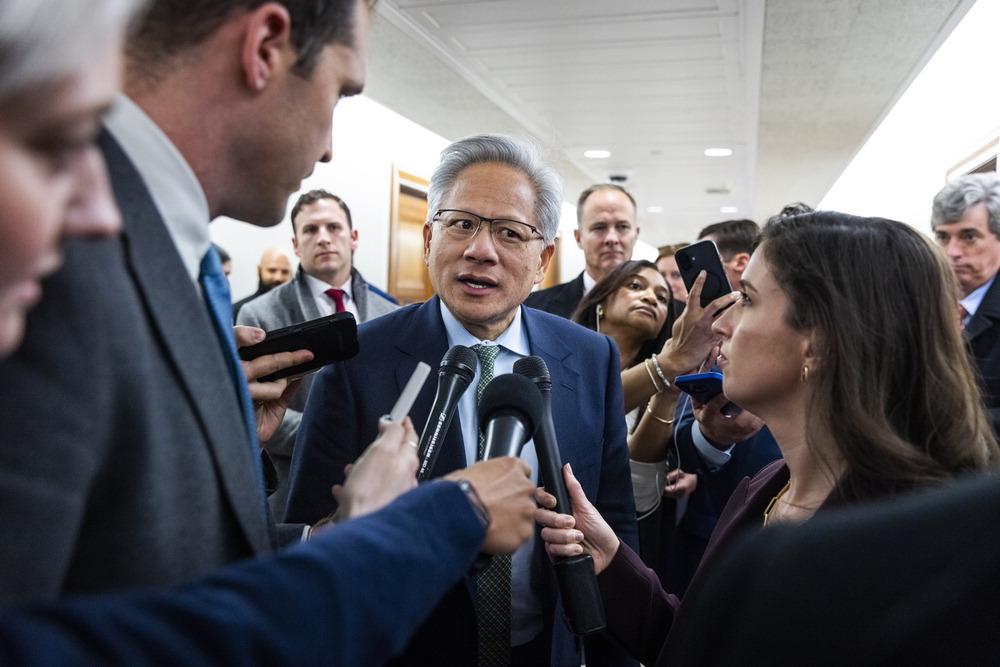
ELON MUSK SAYS IT WOULD BE AN HONOR TO HIRE JENSEN HUANG AS NVIDIA BOARD WEIGHS CEO’S FUTURE
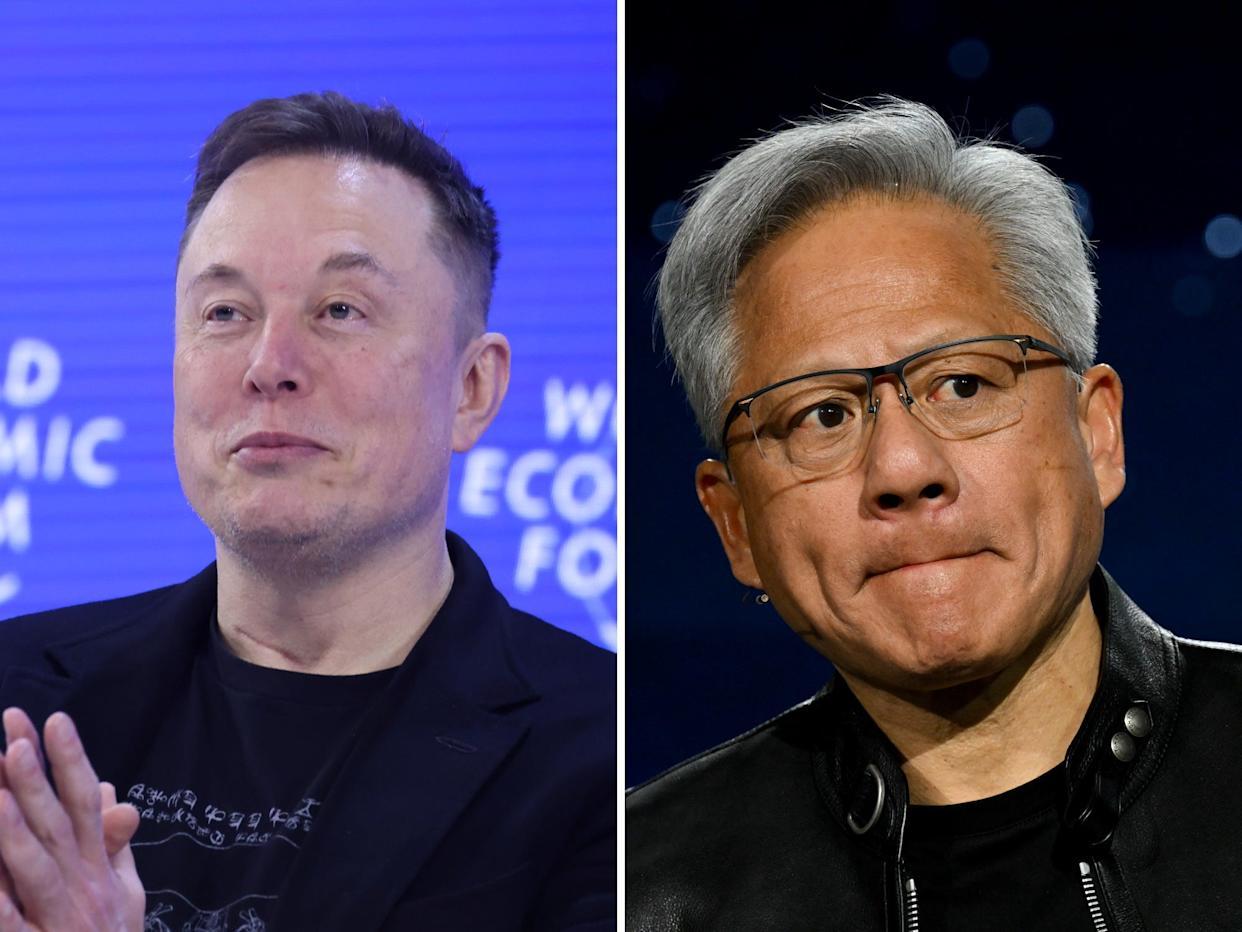
Elon Musk has said it would be an “honor” to hire Nvidia founder Jensen Huang after an X user urged him to recruit the embattled technology executive. The remark comes as Nvidia’s board reportedly weighs Huang’s future amid scrutiny over alleged extramarital relationships, conflict of interest concerns and a broader controversy involving reported Chinese intelligence links. Musk’s statement was an expression of interest rather than a formal job offer, and Nvidia has not announced a final leadership decision.
Elon Musk has publicly expressed support for Nvidia founder and chief executive Jensen Huang as the chipmaker’s board reportedly considers whether to remove or retain the longtime leader following a widening corporate and personal controversy. Musk’s intervention came after an X user urged him to hire Huang, prompting the Tesla and SpaceX chief to reply that doing so would be “an honor.” The brief exchange immediately attracted attention because it came at a moment when Huang’s future at Nvidia is under serious scrutiny and the company’s directors are reportedly examining whether the leadership structure that helped build the world’s most important artificial intelligence chipmaker can continue unchanged.
Musk’s remark does not amount to a formal employment offer, and there is no evidence that Huang has entered negotiations to join Tesla, SpaceX, xAI or any other Musk controlled company. It does, however, signal the depth of respect between two of the technology industry’s most influential executives at a time when Huang is facing one of the most difficult periods of his career. Musk and Huang have worked closely across the AI infrastructure ecosystem, with Musk’s companies relying heavily on Nvidia hardware for large scale computing and training systems, while Huang has repeatedly praised the speed and ambition of Musk’s technical projects.
The timing of Musk’s message is significant because Nvidia’s board is reportedly meeting to discuss Huang’s position after a series of revelations involving his private life and the company’s handling of potential conflicts of interest. The board has broad authority under Nvidia’s bylaws and could remove the chief executive with or without cause if a majority of directors chooses to do so. That possibility represents an extraordinary moment for a company that has been led by the same founder since its creation in 1993 and whose identity has become deeply tied to Huang’s public image, technical leadership and strategic judgment.
The controversy intensified after reports emerged that Huang had an extramarital relationship with Alice Huang, a business executive with links to the technology sector. U.S. intelligence officials reportedly believe she may have been recruited by Chinese intelligence, an allegation that has added a national security dimension to what might otherwise have remained a personal and corporate governance matter. Jensen Huang has acknowledged the relationship, but that acknowledgment does not by itself prove that he knew of any alleged intelligence connection or that he intentionally compromised Nvidia’s security obligations.
Reuters has reported that the situation has raised questions about whether Huang, Nvidia or members of the board could face legal exposure if material risks were not properly disclosed to investors. The issue is particularly sensitive because Nvidia sits at the centre of the global contest over advanced artificial intelligence chips, export controls and access to computing power. Any suggestion that its chief executive may have had a personal relationship with someone suspected of intelligence activity is therefore likely to attract scrutiny from regulators, lawmakers and national security officials far beyond a conventional corporate scandal.
The controversy widened further following reports of a second alleged extramarital relationship involving another woman connected to Nvidia. Those reports have intensified concerns about whether Huang violated company rules governing conflicts of interest and personal relationships within the workplace. Nvidia’s corporate code requires employees and executives to avoid situations that could create conflicts or undermine professional decision making, making the internal governance questions potentially as important as the personal allegations themselves.
None of this means Huang has been found guilty of criminal misconduct. The allegations involving his personal relationships, internal disclosure obligations and possible security exposure remain subject to investigation and corporate review. That distinction is essential because the current issue is not simply whether affairs occurred, but whether those relationships created undisclosed risks for Nvidia, shareholders, employees or U.S. national security interests.
The board’s deliberations therefore involve far more than reputational management. Huang has become one of the most valuable executives in the global technology industry, and his leadership has been central to Nvidia’s transformation from a graphics chip company into the dominant supplier of processors used to train and run advanced artificial intelligence systems. Removing him would create enormous uncertainty around strategy, succession, investor confidence and the company’s relationships with governments and major customers.
At the same time, retaining Huang without addressing the controversy could create its own risks. Directors have fiduciary responsibilities to shareholders and must determine whether the chief executive’s continued leadership presents legal, regulatory, ethical or operational problems. That obligation becomes especially serious when the company is already operating under intense government scrutiny over chip exports, China policy and the strategic importance of its technology.
Nvidia’s rise has been one of the defining business stories of the AI era. Demand for its graphics processing units has surged as companies including Microsoft, Meta, Amazon, Google, OpenAI partners and a wide range of technology firms have invested heavily in artificial intelligence infrastructure. Huang’s ability to anticipate the importance of accelerated computing and position Nvidia around that trend turned him into one of the most influential executives in the world.
His personal leadership style has also become inseparable from the brand. Huang’s black leather jackets, lengthy technical presentations and highly detailed product announcements have become a familiar part of Nvidia’s identity. Investors, developers and customers often treat his appearances as signals about the direction of the broader AI industry, making any discussion about succession unusually consequential.
That dependence on one individual is precisely what worries some analysts. Nvidia has built an enormous organisation with tens of thousands of employees and a powerful executive team, yet Huang remains the public face and strategic centre of the company. If he were suddenly removed, the board would need to demonstrate that there is a credible succession plan capable of preserving relationships with customers, governments and key suppliers.
Investor concern has already been visible in Nvidia’s share price. Reports about the board reviewing Huang’s future triggered sharp volatility as traders tried to assess how damaging his departure could be. Some technology analysts have described him as unusually difficult to replace because he combines engineering knowledge, industry credibility, government access and long term strategic control in a way few executives can match.
That is part of the reason Musk’s comment generated such attention. Musk is not an outside observer with little connection to Nvidia. His companies are major consumers of advanced computing power, and he has been building some of the largest AI infrastructure projects in the world through xAI, Tesla and other ventures. A leader with Huang’s expertise would theoretically be extraordinarily valuable inside any Musk company, particularly as the race for AI chips, supercomputers and data centres intensifies.
Musk has previously spoken warmly about Huang, and the two executives have appeared together publicly on multiple occasions. Huang has likewise praised Musk’s ability to execute ambitious engineering projects and has described some of his manufacturing and computing plans as uniquely bold. Their relationship has therefore been characterised more by strategic cooperation than by direct rivalry, even though their companies operate in overlapping parts of the AI ecosystem.
The possibility of Huang joining a Musk company remains speculative. There is no evidence that Nvidia has formally removed him, that Huang wants to leave, or that Musk has presented him with a specific position. The X exchange is best understood as a public expression of admiration at a moment of intense uncertainty rather than as confirmation of an employment negotiation.
The corporate implications nevertheless remain serious because Nvidia is facing questions from investors and lawmakers about whether the board acted quickly enough after learning about the alleged relationships. Directors are expected to investigate potential conflicts involving senior executives, particularly where personal relationships may intersect with sensitive company information or government policy.
The China dimension has made the matter even more sensitive. Nvidia’s business has long been caught between enormous commercial demand from Chinese customers and increasingly strict U.S. export restrictions designed to prevent advanced chips from contributing to China’s military or intelligence capabilities. Huang has repeatedly lobbied for policies that allow Nvidia to maintain some level of access to the Chinese market while complying with U.S. law.
That balancing act has already made him a closely watched figure in Washington. Reports that one of his personal relationships may have involved a woman suspected of intelligence links therefore raised immediate questions about whether national security considerations were adequately managed. Those concerns do not establish wrongdoing, but they significantly increase the stakes of the board’s investigation.
U.S. lawmakers have responded sharply. Several members of Congress have publicly questioned whether Huang should remain in his role while the allegations are examined, arguing that the potential security and corporate governance risks are too significant to ignore. Others have cautioned against reaching conclusions before investigations are complete, particularly because allegations involving intelligence activity can be difficult to verify publicly.
Nvidia has attempted to maintain normal operations while the controversy develops. The company continues to execute product launches, customer contracts and AI infrastructure plans, while management has not announced any immediate change in Huang’s responsibilities. That business continuity is important because Nvidia’s customers depend on long term hardware roadmaps and supply commitments that cannot simply pause during a leadership dispute.
The board’s decision will therefore need to balance continuity with accountability. If directors conclude that Huang violated company rules or exposed Nvidia to unacceptable risk, they may determine that his position has become untenable despite his extraordinary commercial record. If they conclude that the allegations do not justify removal, they will still face pressure to explain what governance reforms or safeguards will be introduced to prevent similar controversies.
Succession planning will remain central regardless of the outcome. Even if Huang stays, the crisis has exposed how much Nvidia depends on its founder. Investors are likely to demand clearer information about who could eventually lead the company and how major strategic decisions would be handled without him.
That issue matters because Nvidia is entering a period of growing competition. AMD, Google, Amazon, Microsoft and a wide range of specialised chip companies are developing alternatives to Nvidia’s products, while governments around the world are investing heavily in domestic semiconductor capacity. Nvidia’s lead remains substantial, but the market is evolving rapidly and leadership disruption could create opportunities for competitors.
The company also faces pressure over supply constraints, export controls and the enormous capital requirements associated with AI infrastructure. Customers increasingly want complete computing systems rather than individual chips, forcing Nvidia to expand deeper into networking, software, servers and data centre architecture. Huang has personally driven much of that strategy, making any transition potentially complex.
Musk’s own companies are deeply involved in the same competition for computing capacity. xAI has built massive GPU clusters to train its Grok models, Tesla continues developing autonomous driving and robotics systems, and SpaceX is increasingly integrated into global communications and computing infrastructure. Nvidia hardware has played an important role across many of these projects.
That background explains why Huang would be attractive to Musk from a purely technical and strategic perspective. Few executives understand the economics, supply chains and engineering demands of large scale AI computing as deeply as Nvidia’s founder. If Huang ever became available, many of the world’s largest technology companies would likely be interested in his expertise.
The idea of Huang joining Musk also carries symbolic weight because both men represent founder led technology companies built around aggressive long term bets. Musk has led Tesla and SpaceX through periods of intense controversy while maintaining control, while Huang has spent more than three decades building Nvidia through multiple technological cycles. Their leadership styles differ, but both are closely associated with their companies’ identities.
The immediate question, however, is not where Huang might work next. It is whether Nvidia’s directors believe he can continue leading the company while preserving the trust of shareholders, regulators, employees and government partners. That decision could become one of the most consequential boardroom judgments in modern technology because of Nvidia’s importance to the global AI economy.
A decision to remove Huang could trigger significant short term market instability. Investors would immediately focus on the identity of an interim chief executive, the strength of Nvidia’s existing management team and whether major customers remained confident in the company’s roadmap. The board would also need to reassure governments that export compliance and national security procedures remained intact.
A decision to keep him would create a different challenge. Nvidia would likely need to provide greater transparency around the investigation, strengthen internal conflict rules and address concerns about whether executives are subject to the same standards as other employees. Without such steps, the company could face continuing criticism even if Huang survives the immediate board review.
Huang’s legal exposure is also still developing. Shareholder lawsuits have already been filed alleging disclosure failures connected to the controversy, and regulators may examine whether investors were given sufficient information about potentially material risks. The outcome of those cases could depend heavily on what Nvidia’s board knew, when it knew it and how it responded.
The controversy may also affect Nvidia’s political relationships. The company has become a central participant in U.S. technology policy because its chips are critical to both commercial AI development and national security debates. Huang has personally met presidents, ministers and senior officials around the world, giving him a diplomatic role unusual for a corporate executive.
Any weakening of his credibility could therefore affect more than Nvidia’s internal management. It could influence how policymakers view the company’s lobbying on export controls, China access and semiconductor regulation. That makes the board’s response important not only to shareholders but also to governments.
For Musk, his public message appears designed primarily as a statement of respect. He has not criticised Nvidia’s board or declared Huang innocent of the allegations. Instead, he simply indicated that working with the Nvidia founder would be an honor if circumstances ever made that possible.
That carefully limited wording allows Musk to support Huang personally without committing himself to a formal employment arrangement or taking a detailed position on the controversy. It also creates a striking contrast with politicians and investors who are openly calling for Huang’s removal.
The situation remains fluid, and Nvidia has not announced a final board decision. Until directors act, Huang remains chief executive and continues to lead the company he co-founded more than three decades ago. Reports that the board is considering a future without him should therefore be treated as evidence of serious internal deliberations rather than proof that his removal has already been decided.
The allegations surrounding Huang’s personal life should also remain clearly attributed. Reports of extramarital relationships come from major news organisations and sources familiar with the matter, while the claim that Alice Huang may have been connected to Chinese intelligence is based on information reportedly held by U.S. authorities. These are significant allegations, but responsible reporting should distinguish them from established criminal findings.
What is established is that Nvidia’s board is under intense pressure, Huang’s future has become uncertain and Musk has publicly indicated that he would welcome the opportunity to work with him. That combination has turned a corporate governance crisis into one of the biggest stories in the technology industry.
The outcome could reshape both Nvidia and the wider AI sector. If Huang remains, the company will need to rebuild confidence while continuing to execute one of the most demanding growth strategies in global business. If he leaves, Nvidia will confront the challenge of proving that the institution he built can continue operating at the same level without the founder who has guided it since 1993.
Musk’s comment does not answer that question, but it shows how highly Huang remains regarded among some of the world’s most powerful technology leaders despite the controversy. For now, Nvidia’s board holds the most important decision. The directors must determine whether the executive who turned the company into the dominant force in artificial intelligence remains the person they trust to lead it through the crisis now surrounding his leadership.