FEARS GROW IN SENEGAL AS MORE THAN 170 MIGRANTS DISAPPEAR DURING DANGEROUS SEA JOURNEY TO EUROPE
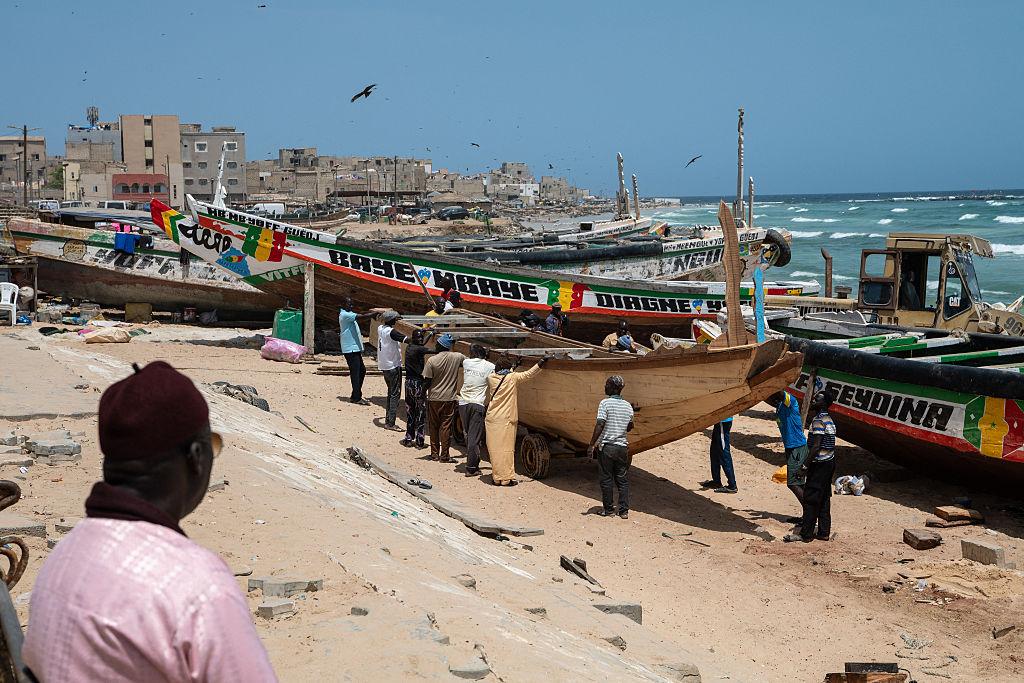
Families across Senegal’s coastal communities of Yoff, Ngor, Ouakam and Cambérène are desperately awaiting information about more than 170 migrants who disappeared after departing Dakar aboard a wooden vessel bound for Europe between November 9 and 10, 2026. Yoff Mayor Seydina Issa Laye Sambe estimates that approximately 175 passengers were aboard, while a human rights organization has identified 172 people believed missing and called for intensified rescue efforts. Fisheries Minister Amy Mara has dispatched a government delegation to meet affected families as the disappearance raises renewed concerns about economic hardship, declining fishing opportunities and the dangers of Atlantic migration toward Spain’s Canary Islands. No shipwreck or deaths have been officially confirmed in connection with the missing vessel.
More than 170 people are missing after a boat carrying migrants from Senegal disappeared during an attempted journey to Europe, leaving families across several coastal communities in Dakar desperate for information about relatives who have not been heard from for more than two weeks. The wooden vessel, locally known as a pirogue, reportedly departed from the coastal community of Yoff between November 9 and 10, 2026, carrying predominantly young fishermen and other passengers hoping to reach Europe in search of better economic opportunities. Local authorities estimate that approximately 175 people were aboard the vessel, while the human rights organization Action for Human Rights and Friendship has identified 172 people believed to be missing and has called for intensified search-and-rescue efforts. As of Tuesday, November 24, the whereabouts of the boat remained unknown, with no confirmed information establishing whether the passengers had reached another country, become stranded at sea or encountered difficulties during the crossing. The disappearance has renewed concerns over the increasingly dangerous Atlantic migration route connecting West Africa with Spain’s Canary Islands, particularly as thousands of people continue to undertake the journey despite repeated maritime emergencies.
The uncertainty has devastated families in Yoff, Ngor, Ouakam and Cambérène, four coastal communities where fishing has traditionally provided employment, income and a means of survival for generations. Yoff Mayor Seydina Issa Laye Sambe raised the alarm after relatives began reporting that they had received no communication from passengers who were expected to have reached their destination several days earlier. Speaking to local media, the mayor explained that many of those aboard were young fishermen from neighboring communities who had come together before departing Senegal. Despite the length of time that has passed without contact, he expressed hope that the vessel might have reached the coast of Senegal, Mauritania, Morocco or Spain without the families being immediately informed. The mayor’s appeal reflects the extraordinary difficulty of establishing the whereabouts of migrants traveling outside formal transportation systems, particularly when vessels operate without reliable communication equipment or publicly available passenger records.
The Senegalese government has responded to the growing anxiety by sending representatives to meet affected families and assess their concerns. According to the Senegalese Press Agency, Minister of Fisheries and Maritime Economy Amy Mara dispatched a delegation to communities where relatives have been waiting for information since the boat departed on November 9. The intervention represents an acknowledgment of the humanitarian emergency confronting the families, although the reports available have not established whether a dedicated international search operation for this particular vessel has been launched or whether maritime authorities have identified a possible location for it. Community representatives and human rights advocates have urged the government to intensify efforts to determine what happened, emphasizing that the absence of communication should not automatically lead authorities to presume that everyone aboard has died.
For the relatives of those missing, the prolonged silence has created an agonizing situation in which hope and fear exist simultaneously. Baye Ngagne Diene, whose son was reportedly among the passengers, told Viory in an interview carried by TVC News that his family had been unable to determine whether their loved one was still alive. He explained that the journey should ordinarily have been completed by the time families began publicly raising concerns, but the continued absence of information had left them struggling to sleep and eat. His experience illustrates the emotional burden carried by families when migration journeys end in disappearance rather than a confirmed arrival or documented tragedy. Without reliable information, relatives cannot establish whether they should continue expecting a telephone call, seek assistance from foreign authorities or prepare themselves for the possibility of an irreversible loss.
The disappearance has also prompted calls from residents for coastal communities to become more directly involved in efforts to locate the missing passengers. Some residents interviewed by Viory expressed frustration over the lack of answers and argued that local communities should mobilize their resources while continuing to seek assistance from the government. Their appeals demonstrate the strong connections between the missing fishermen and the communities from which they departed, where families often know one another through generations of shared fishing activities and neighborhood relationships. However, any independent maritime search would need to be carefully coordinated with professional rescue authorities, given the considerable risks associated with entering the Atlantic Ocean without appropriate equipment, trained personnel and reliable information about a missing vessel’s position.
The latest disappearance comes amid a significant increase in migration from West Africa toward Spain’s Canary Islands, an Atlantic archipelago that has become one of the principal entry points into European territory for migrants departing Senegal and other countries along the western coast of Africa. Reuters reported, citing the United Nations refugee agency, that more than 8,000 people arrived in the Canary Islands during the first 12 days of November alone. Separate figures from Spain’s Interior Ministry indicated that more than 11,000 arrivals were recorded during the first half of the month. These numbers represent an extraordinary concentration of arrivals within a relatively short period and have placed additional pressure on maritime rescue services, immigration authorities, humanitarian organizations and reception facilities responsible for accommodating newly arrived migrants.
Senegalese authorities have also increased maritime enforcement and rescue operations in response to the surge in departures. The Senegalese Navy announced that it rescued 974 migrants traveling aboard five separate pirogues on Monday, November 23, according to Reuters. Navy statements indicate that more than 5,200 migrants have been rescued, intercepted or prevented from departing Senegal since the beginning of November, reflecting the scale of activity along the country’s coastline. Those figures, however, relate to different operations and should not be interpreted as evidence that the missing Yoff passengers were among those rescued. Authorities have yet to publicly establish any connection between the five vessels intercepted on Monday and the boat that reportedly departed Yoff approximately two weeks earlier.
The disappearance is particularly alarming because it follows several maritime emergencies involving migrants attempting to leave Senegal for Europe. On November 19, the Associated Press reported that another migrant vessel capsized off the Senegalese coast, leaving at least one person dead and others missing. That accident occurred separately from the disappearance involving Yoff and should not be confused with the current search for the more than 170 passengers. Nevertheless, the succession of maritime incidents within a short period has heightened concerns about the safety of vessels being used for irregular migration and the ability of regional authorities to respond to emergencies across a vast stretch of the Atlantic Ocean.
The Atlantic route is considered particularly dangerous because migrants often travel aboard traditional wooden fishing vessels designed primarily for commercial fishing rather than long-distance passenger transportation. Although experienced fishermen may be familiar with local maritime conditions, the demands of an extended ocean crossing differ considerably from those of routine fishing activities. Mechanical breakdowns, deteriorating weather, shortages of drinking water and difficulties communicating with rescue authorities can rapidly transform a voyage into a humanitarian emergency. The consequences become especially severe when large numbers of passengers are aboard a single vessel, leaving limited space, supplies and options for responding to unexpected problems.
No reliable information has yet emerged regarding the condition of the missing Yoff vessel, the equipment available aboard it or the circumstances in which communication with its passengers ceased. There has been no confirmed distress message establishing that the boat experienced an engine failure, encountered severe weather or suffered any other specific emergency. While such possibilities remain relevant to search-and-rescue authorities, presenting any of them as the established explanation for the disappearance would go beyond the available evidence. The central fact remains that the passengers departed Senegal intending to reach Europe and that their families have subsequently been unable to establish their whereabouts.
Behind the immediate humanitarian emergency lies a wider economic crisis affecting Senegal’s coastal fishing communities. Fishing has traditionally been more than an occupation for many families living around Dakar; it has been an economic foundation supporting boat owners, fishermen, fish processors, traders, transport workers and numerous small businesses. When fishing incomes decline, the consequences can extend across entire communities rather than affecting only the individuals working aboard vessels. Residents interviewed about the disappearance have linked the growing willingness of young fishermen to undertake dangerous migration journeys to declining economic opportunities, increasing competition for marine resources and the difficulty of supporting families through traditional fishing activities.
Community leader Tanor Sarr told Viory that competition from larger fishing vessels had made it increasingly difficult for local fishermen to maintain sustainable livelihoods. He explained that young fishermen were being forced to travel farther in search of adequate catches, while others had concluded that leaving Senegal offered a better prospect of improving their circumstances. His comments reflect a perspective frequently expressed in West African coastal communities, where the expansion of industrial fishing, changing marine conditions and pressure on fish stocks have generated concerns about the future of artisanal fishing. Although these factors cannot independently explain the individual decisions of every passenger aboard the missing vessel, they provide important context for understanding why fishing communities have become significant departure points for irregular migration.
The economic importance of artisanal fishing also means that declining catches can have consequences extending beyond employment. Fish is an important source of nutrition in Senegal, and disruptions to local supply can increase prices while reducing the earnings of women and families involved in processing and selling seafood. Younger residents entering the workforce may find themselves competing for fewer opportunities in an industry that previously offered a relatively accessible means of earning an income. For individuals who have grown up around fishing boats and possess maritime experience but limited alternative employment prospects, migration can appear to offer a way out of economic insecurity, even when the risks associated with crossing the Atlantic are widely understood.
Perhaps the most disturbing indication of the depth of that frustration is that the disappearance of more than 170 people has not necessarily discouraged other young fishermen from considering similar journeys. Alassane Ndoye, a fisherman interviewed in Yoff, told Viory that he would still consider boarding a boat bound for Spain if an opportunity arose, despite the uncertainty surrounding the missing passengers. He described economic conditions as so difficult that even meeting basic daily needs had become a struggle. His remarks illustrate a central challenge facing migration policy: warnings about the dangers of irregular sea crossings may have limited influence when prospective migrants believe remaining at home offers few realistic opportunities to improve their lives.
That tension has complicated efforts by Senegalese authorities and European governments to reduce irregular migration. Maritime patrols, interceptions and restrictions on departures can prevent individual voyages and save lives, but they do not necessarily resolve the economic and social pressures that influence decisions to leave. Humanitarian and development organizations have repeatedly emphasized that effective migration policy requires attention to employment, access to education, vocational training, sustainable livelihoods and lawful migration opportunities alongside border enforcement. The situation in Yoff demonstrates why those issues cannot easily be separated, particularly in communities where the same boats traditionally used to generate income are increasingly associated with attempts to leave the country.
Senegal occupies a strategically important position in West African migration patterns because of its extensive Atlantic coastline and proximity to maritime routes leading toward the Canary Islands. The archipelago lies considerably closer to the African continent than mainland Spain, making it a destination for people attempting to enter European territory by sea. Arriving in the Canary Islands, however, does not automatically guarantee permanent residence, employment or unrestricted movement elsewhere in Europe. Migrants may face identity checks, asylum assessments, immigration proceedings, reception-center accommodation and possible return to their countries of origin, depending on their circumstances and the legal decisions made by Spanish authorities.
Despite those uncertainties, stories of successful migration continue to influence aspirations in communities where opportunities are limited. Remittances sent home by relatives working abroad can support household consumption, education, healthcare, housing construction and small businesses, making migration economically significant for families that remain in Senegal. The visible success of some migrants can also create expectations among younger residents who believe moving abroad could allow them to earn incomes unavailable locally. Those expectations exist alongside the less visible experiences of migrants who encounter exploitation, detention, unemployment or dangerous journeys, producing an incomplete picture of the opportunities and difficulties associated with migration.
The human consequences of unsuccessful crossings can be especially difficult to measure because not every vessel carries a complete passenger manifest and not every disappearance is officially recorded. Families may report missing relatives to community leaders, humanitarian organizations or authorities at different times, creating discrepancies in passenger estimates. In the Yoff case, the mayor’s estimate of approximately 175 passengers and the human rights organization’s figure of 172 appear to reflect this broader challenge. Neither figure has been established through a publicly released, independently verified passenger manifest, meaning the exact number of people aboard may remain uncertain until authorities and community representatives complete a more comprehensive identification process.
For maritime rescue agencies, establishing reliable information about a missing vessel is essential because the Atlantic Ocean covers an enormous area and weather conditions can significantly influence the movement of boats. Authorities generally need information about a vessel’s description, departure time, communications, last known position and other relevant details before conducting a targeted search. Coordination between coastal governments and maritime rescue services can become particularly important when a vessel may have traveled beyond the territorial waters of the country from which it departed. The publicly available information about the Yoff boat does not yet establish which maritime authorities are actively coordinating the search or whether any credible sightings have been reported.
The disappearance therefore raises questions about regional communication systems and the procedures available to families attempting to trace missing migrants across national borders. Relatives in Senegal may depend on information from authorities in other West African countries, Spain, humanitarian organizations and migrant reception centers to determine whether their loved ones have been located. Delays in identifying rescued passengers or sharing information can prolong uncertainty, particularly when migrants do not have identification documents or when families lack official channels through which to submit inquiries. Strengthening these systems could help authorities establish the identities of people rescued at sea while ensuring that relatives receive accurate information rather than relying primarily on rumors circulating through social media.
Human rights organizations have also drawn attention to the broader difficulty of accounting for migrants who disappear while attempting maritime crossings. Walking Borders, a migrant rights organization that monitors dangerous migration routes, has documented substantial losses of life along routes toward Spain, including hundreds of deaths during the first five months of 2026, according to figures reported by Reuters. Such estimates underscore the severity of the humanitarian situation, although the total number of deaths and disappearances is likely to remain difficult to establish because some vessels are lost without survivors, recovered bodies or reliable passenger records. Different organizations may consequently publish different figures depending on the routes covered and the methods used to collect information.
For the families in Yoff, these broader statistics cannot provide the individual answers they urgently need. Their immediate priority is establishing whether the boat carrying their relatives remains afloat, has reached another coastline or has encountered an emergency requiring assistance. The longer the disappearance continues, the more difficult it becomes for relatives to maintain confidence that the passengers are safe, particularly given the limited supplies normally available aboard wooden vessels undertaking extended journeys. Nevertheless, the passage of time alone does not establish that a vessel has sunk, and authorities have not released evidence confirming the fate of the missing passengers.
The government delegation sent by Fisheries Minister Amy Mara has placed the concerns of the affected communities on the national agenda, but the families will ultimately judge the response by whether it produces reliable information and meaningful assistance. Beyond any immediate search efforts, authorities may need to establish a coordinated system for collecting names, communicating with foreign governments and supporting relatives throughout the identification process. Families confronting a prolonged disappearance can experience considerable psychological distress, financial difficulties and uncertainty over responsibilities previously carried by missing relatives. Humanitarian assistance therefore remains important even while authorities continue attempting to establish what happened at sea.
The disappearance has also reignited discussion about the responsibility of governments and commercial operators to protect the livelihoods of Senegal’s fishing communities. Residents who attribute migration pressures to declining fishing opportunities are calling attention to an economic problem that cannot be addressed solely through restrictions on boat departures. Sustainable management of marine resources, effective enforcement of fishing regulations and investment in alternative employment could form part of a broader response, although the causes of declining catches and the distribution of fishing opportunities require careful assessment rather than blanket accusations against every industrial operator. The experiences described by Yoff residents nevertheless indicate that communities believe their traditional sources of income are becoming increasingly difficult to sustain.
European governments face their own policy challenges as rising arrivals place pressure on immigration systems and reception facilities. Spain must balance its border-management responsibilities with maritime rescue obligations and the protection of people who may qualify for asylum or other forms of humanitarian assistance. Cooperation with Senegal and other West African countries has become an important component of European efforts to manage migration, with discussions frequently covering border security, trafficking networks, development assistance and lawful migration opportunities. The effectiveness of these arrangements remains a subject of debate, particularly among humanitarian organizations concerned that stronger enforcement must not come at the expense of rescuing people in distress.
The distinction between irregular migration and criminal exploitation is particularly important in reporting on incidents such as the Yoff disappearance. While some maritime journeys are organized by individuals or networks that profit from transporting migrants, the passengers themselves may be motivated by economic hardship, family responsibilities, insecurity or the desire for improved opportunities. There has been no verified announcement identifying the organizers of the missing Yoff voyage or establishing whether criminal charges have been brought in connection with it. Any investigation into the arrangements behind the departure would need to establish the relevant facts independently rather than assuming that every person involved belonged to an organized trafficking network.
As Senegal confronts the consequences of another large-scale maritime disappearance, the events in Yoff expose the difficult relationship between economic opportunity, migration policy and human safety. The authorities’ efforts to intercept dangerous departures have reportedly prevented thousands of people from continuing risky journeys during November, but the growing number of arrivals in the Canary Islands indicates that the underlying demand for migration remains substantial. Addressing that demand will require more than temporary enforcement measures, particularly in communities where residents openly describe an inability to earn enough through traditional livelihoods and continue considering dangerous journeys even after neighbors and relatives have disappeared.
For the affected communities, however, the wider policy discussion remains inseparable from an immediate and deeply personal emergency. Families have spent more than two weeks waiting for news, local leaders have appealed for greater assistance, and government representatives have begun engaging with relatives whose loved ones remain unaccounted for. The missing passengers should not be described as confirmed victims of a shipwreck unless evidence emerges establishing that the vessel was lost, and no official announcement has yet resolved the uncertainty surrounding their fate. Until authorities are able to locate the boat or account for its passengers, the disappearance will remain an unresolved humanitarian crisis for Senegal and a painful reminder of the dangers facing people who attempt to reach Europe across the Atlantic.
The urgency of the situation is heightened by the fact that many of the missing passengers came from communities already confronting significant economic challenges, where the departure of a young fisherman can have consequences for an entire household. Whether the boat is eventually located or its passengers are identified through rescue and reception systems elsewhere, the families deserve timely, accurate information and sustained support rather than speculation. For Senegal, the disappearance represents another pressing test of maritime rescue coordination and the government's ability to address the economic pressures driving young citizens toward irregular migration. For the families of the more than 170 people missing from Yoff and neighboring communities, the most important outcome remains the one they have been waiting for since early November: reliable confirmation that their loved ones have been found.