
GREECE EMERGES AS AN UNLIKELY EUROPEAN INVESTMENT HAVEN AFTER A DECADE OF MARKET RECOVERY
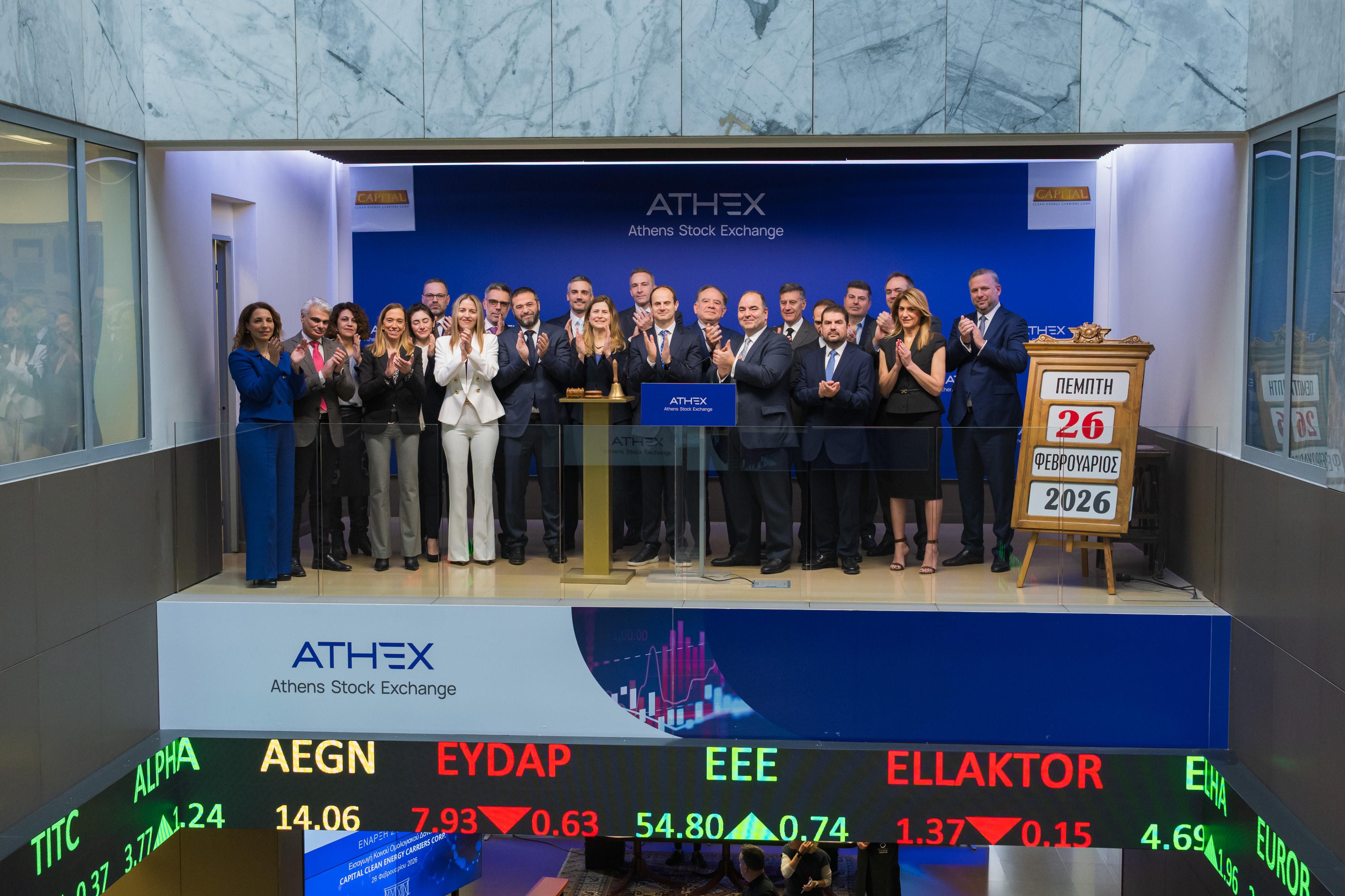
Greece has emerged as one of Europe’s most striking investment turnarounds, with its stock market, banking system, credit ratings and public finances all recovering dramatically from the sovereign-debt crisis. MSCI’s Greece Index now contains 10 companies with a market capitalization of nearly $70 billion, while the Athens Composite has risen about 25 per cent in 2026 and almost 29 per cent over the past year. Greece is also returning to developed-market status across major index providers, with MSCI’s reclassification taking effect in May 2027, while Euronext’s acquisition of the Athens exchange is deepening its integration into European capital markets. The investment case is supported by declining debt, budget surpluses, profitable banks and relatively inexpensive equity valuations, but important risks remain, including high public debt, elevated inflation, a large current-account deficit, demographic pressures and heavy market concentration in financial stocks.
A country that little more than a decade ago stood at the centre of Europe’s sovereign-debt crisis has emerged as one of the continent’s more unexpected investment success stories, with Greek shares climbing sharply, government borrowing conditions improving, major international index providers restoring developed-market status and foreign investors once again treating Athens as a credible destination for capital. The transformation is striking because Greece was once regarded as the symbol of everything investors feared about the euro area: unsustainable debt, repeated bailouts, capital controls, recession, collapsing banks and intense uncertainty over whether the country would remain inside the single currency. Today, while much of Europe faces political turbulence, difficult elections, large debt burdens and weak growth, Greece is increasingly being discussed as a relative island of stability, prompting a new question for investors who have already watched Greek assets rise substantially: after such a dramatic recovery, is there still enough value left for the rally to continue?
That question was raised prominently by the Financial Times’ Lex column, which argued that Greece has become an unlikely haven at a moment when investors across Europe are navigating protests, electoral uncertainty and fiscal pressures in several of the region’s largest economies. The column’s central argument is not that Greece has suddenly become risk-free, nor that its economy has solved every structural problem left by the crisis, but that the relative comparison has changed dramatically. Countries once considered much safer now face their own political and fiscal strains, while Greece has spent more than a decade repairing public finances, reducing bad loans, restructuring its banking sector, improving market infrastructure and rebuilding credibility with international investors. The reversal is so dramatic that Greece is now preparing to return to the developed-market classifications from which it was demoted during the darkest years of the crisis.
The scale of the equity-market recovery is one of the clearest measures of that change. At the low point surrounding the 2013 downgrade, Greece’s presence in global indices had been reduced to a shadow of its former self. Lex described MSCI’s Greece index as containing only two companies with a combined market value of less than €3 billion, while MSCI’s own retrospective analysis describes a roughly $5 billion market with two securities and no banks represented in the developed-market benchmark structure of that period. The difference reflects timing, currency conversion and methodological distinctions, but both measures tell essentially the same story: the Greek market had shrunk to an extraordinarily small and distressed invest-able universe. By October 30, 2026, MSCI’s Greece Index contained 10 constituents and carried a market capitalization of $69.73 billion, with its largest constituent valued at $14.46 billion. The index covers roughly 85 per cent of the country’s large- and mid-cap equity universe, demonstrating how far the market has moved from the almost instability crisis that characterized 2013.
Share-price performance has been similarly impressive. The Athens Composite Index closed around 2,650 points on November 16 and was up roughly 25 per cent since the beginning of 2026, almost 29 per cent over the previous 12 months and more than 110 per cent over three years. Over five years, the benchmark had risen close to 190 per cent, a remarkable run for a market that spent much of the previous decade associated with bank recapitalization, recession and investor flight. The exchange’s own October statistics showed the Composite Index up 23.5 per cent for the year at the end of that month, while the FTSE/ATHEX Large Cap Index had gained more than 25 per cent. Those returns do not guarantee further gains, but they help explain why Greece has moved from a contrarian recovery trade to a market that global institutions can no longer easily dismiss.
The most symbolically important milestone has been the restoration of developed-market recognition. Greece was the first and remains the only country in MSCI’s classification history to have fallen from developed to emerging-market status and then worked its way back. MSCI announced in March 2026 that Greece would be restored to developed-market classification at the May 2027 index review after investors concluded that its market infrastructure had converged sufficiently with standards elsewhere in developed Europe. FTSE Russell had already announced an upgrade, effective from September 2026, while STOXX and S&P Dow Jones also moved to recognise Greece as developed. That sequence represents more than a change in label. Developed-market status affects which funds can hold Greek securities, how global asset managers benchmark portfolios and how much attention companies listed in Athens receive from investors that previously considered the country outside their mandate.
MSCI’s reasoning is particularly important because the upgrade reflects structural change rather than simply higher share prices. The index provider said Greece had restored market accessibility, invest ability and infrastructure to levels comparable with developed European markets. The main obstacle in previous reviews had been the requirement that at least five companies consistently meet developed-market size and liquidity thresholds across several index reviews. Because Greece is a relatively small market and global benchmarks are increasingly dominated by enormous U.S. technology companies, the country periodically struggled to satisfy that size test even when trading infrastructure and investor access had improved materially. MSCI ultimately decided, after consulting institutional investors, that the Greek market should be evaluated within the integrated context of developed Europe, paving the way for the May 2027 reclassification.
The integration of the Athens exchange into Euronext adds another layer to the investment case. Euronext acquired a majority stake in the Athens Stock Exchange in November 2025 and has since rebranded the platform as Euronext Athens, bringing Greece into the same market infrastructure network that includes Paris, Amsterdam, Milan, Dublin, Brussels, Oslo and Lisbon. Euronext says the Greek market will eventually migrate onto its Optiq trading platform and integrate more fully with its pan-European technology and liquidity structure. For investors, that potentially means deeper liquidity, easier access and a more familiar trading environment; for Greek companies, it creates a larger international audience and potentially cheaper pathways to raise capital. The symbolic effect is also important because an exchange that once stood at the edge of Europe’s financial system is now being incorporated directly into the region’s largest integrated capital-market infrastructure.
The economic backdrop helps explain why that market recovery has been possible. Greece’s economy expanded by 2.1 per cent in 2025, and both the European Commission and IMF expect growth of roughly 1.8 per cent in 2026, faster than several larger euro-area economies even as energy costs and weaker household purchasing power create headwinds. Investment remains a major support because Greece continues to absorb substantial funds from the European Union’s Recovery and Resilience Facility, financing projects in energy, digital infrastructure, transport and public services. The Commission expects growth to moderate toward 1.6 per cent in 2027 as the EU funding impulse fades, but the broader picture remains one of expansion rather than the contraction that dominated the crisis years.
The government’s fiscal position has also changed fundamentally. Greece still carries one of the highest public-debt ratios in the European Union, but the direction of travel has been sharply downward. Eurostat data showed debt at 146.1 per cent of GDP in 2025, while the Greek government’s latest budget projections envisage a decline toward roughly 136.7 per cent in 2026 and 128.8 per cent in 2027. The European Commission’s spring forecast was slightly more conservative but pointed in the same direction, projecting debt at 140.7 per cent this year and 134.4 per cent next year. The difference between forecasts is less important than the trend: sustained primary surpluses, nominal growth and early debt repayments are reducing a ratio that once threatened the country’s membership in the euro.
That improvement has been recognized by credit-rating agencies. Standard & Poor’s and Fitch currently rate Greece at BBB with stable outlooks, Moody’s assigns Baa3 with a positive outlook, DBRS places the country at BBB with a positive outlook and Scope upgraded Greece to BBB+ in September. These are investment-grade ratings, a major reversal from the years when Greek government bonds were classified as speculative and depended heavily on official European support. Greece’s Public Debt Management Agency also reports a substantial cash reserve, while the country has continued early repayments of bailout-era debt, reducing refinancing risks and helping reassure bond investors that Athens has more financial flexibility than the headline debt ratio alone would suggest.
The debt structure itself is one reason investors increasingly view Greece differently from countries with lower but potentially more dangerous debt burdens. Much of Greece’s government debt is owed to European official institutions under long maturities and relatively favorable terms established during the bailout years, meaning the government is less exposed to sudden refinancing shocks than the raw debt-to-GDP number might imply. The country also holds large liquidity reserves and has repeatedly repaid official loans ahead of schedule. That does not make the debt irrelevant — Greece still has the highest ratio in the European Union and must maintain fiscal discipline — but it helps explain why bond markets are no longer pricing the country as an imminent solvency threat.
The banking system has been another essential part of the transformation. Greek banks were effectively at the centre of the sovereign crisis, burdened with enormous volumes of non-performing loans, dependent on emergency liquidity and subjected to repeated recapitalization. Today, lenders such as National Bank of Greece, Piraeus, Eurobank and Alpha Bank have dramatically reduced bad loans, restored profitability and resumed returning capital to shareholders. Foreign institutions are also showing renewed interest. UniCredit has built a meaningful relationship with Alpha Bank, while other Greek lenders have been discussed as potential targets or partners in cross-border consolidation. Alpha Bank recently said it expects profits to rise by more than 50 per cent by 2030 and plans billions of euros in shareholder distributions, illustrating the confidence now being expressed by institutions that only years ago were primarily focused on survival.
That banking strength is one reason Greece’s equity rally has been so powerful, but it is also one of the market’s vulnerabilities. MSCI noted earlier this year that financial companies accounted for roughly three-quarters of the invest-able Greek developed-market simulation, making the index heavily dependent on banks and interest-rate-sensitive financial activity. Greece does not offer the deep technology, semiconductor, software or artificial-intelligence exposure available in the United States or even in some larger European markets. Instead, its listed universe is concentrated around banks, utilities, telecommunications, infrastructure, energy, consumer businesses and shipping-related activity. That can be attractive to investors seeking value, dividends and exposure to domestic growth, but it also means Greece may struggle to attract investors whose mandates are focused on high-growth technology themes.
Valuations nevertheless remain one of the strongest arguments made by those who believe the market has further room to run. MSCI data as of October 30 showed the Greece Index trading at roughly 11.7 times earnings and about 10.2 times forward earnings, with a price-to-book ratio of 1.62 and dividend yield just above 3 per cent. Those multiples remain relatively modest compared with many large developed markets, particularly the technology-heavy U.S. benchmarks where valuations have been supported by expectations of continued artificial-intelligence-driven earnings growth. Greece therefore offers a very different proposition: less structural growth, fewer global technology champions and greater concentration, but also lower valuations and potentially higher sensitivity to improvements in domestic credit, investment and consumption.
The reclassification to developed-market status could create both opportunities and short-term complications. When Greece leaves emerging-market benchmarks, funds that track those indices may be forced to sell Greek securities because the country will no longer be included. At the same time, developed-market funds will gain eligibility to buy them, but Greece will be an extremely small part of broad developed-Europe indices. That creates a risk that automatic passive inflows may be smaller than some investors expect, particularly because Greece’s weight in developed-market benchmarks will be tiny relative to the United Kingdom, France, Germany, Switzerland and the Netherlands. Lex notes that this paradox could reduce the amount of benchmark-linked money automatically allocated to Greek shares even as the developed classification increases visibility among active investors.
That is why the next stage of Greece’s market story may depend less on index mechanics and more on corporate expansion, cross-border transactions and new listings. Several internationally oriented businesses have already explored or added Athens listings, including shipping companies that historically preferred New York or other global financial centres. The Euronext integration could make Athens more attractive for companies seeking access to European capital while maintaining a Greek identity, potentially deepening a market that remains small by global standards. More companies, greater free float and increased trading liquidity would help reduce the concentration risk that still differentiates Greece from larger developed markets.
Greece’s recovery has also benefited from political continuity. Prime Minister Kyriakos Mitsotakis and his New Democracy government have pursued a broadly market-friendly agenda centred on investment, privatization, tax reform, digitization and fiscal discipline, providing investors with a degree of policy predictability that is currently less obvious in several larger European economies. That stability does not mean Greek politics is without controversy or social tension, but from a market perspective the absence of repeated government collapses and euro-exit scares represents a dramatic change from the 2010s. Investors who once demanded a significant political-risk premium to hold Greek assets now have a much clearer picture of the country’s policy direction.
Yet describing Greece as a “haven” should not obscure significant weaknesses that remain. Inflation has re-emerged as a serious concern in 2026, fueled in part by energy costs, and the European Commission expects average inflation of 3.7 per cent this year before easing to 2.4 per cent in 2027. The IMF’s October projections are slightly higher, putting average inflation around 4.2 per cent in 2026. Persistent price pressures can erode household income, weaken consumer demand and force the European Central Bank to maintain tighter monetary conditions than highly indebted economies would prefer.
The country also continues to run a large current-account deficit. The Commission projects a deficit of around 7.1 per cent of GDP in 2026 before improvement next year, while the IMF estimates roughly 6.6 per cent. Greece imports significant quantities of energy and goods, meaning strong domestic demand and high energy prices can quickly widen the external imbalance. Tourism and shipping generate substantial foreign income, but the current-account deficit remains a reminder that the economy still depends heavily on imported capital and external financing.
Demographics present another longer-term challenge. Greece has an ageing population and a shrinking working-age base, conditions that can limit potential growth, increase pension costs and make it more difficult for businesses to find workers. The country also lost large numbers of highly educated young people during the crisis years, although improved employment and wages have encouraged some to return. Unemployment has fallen sharply compared with its crisis-era peak and is now around 8 per cent, but productivity and labor-force participation will become increasingly important as Greece attempts to sustain growth after European recovery funding begins to fade.
The dependence on tourism creates another source of vulnerability. Greece has benefited enormously from strong international travel demand, with tourism supporting employment, investment and foreign-exchange earnings, but reliance on visitors leaves the economy exposed to recessions abroad, geopolitical shocks, climate events and extreme summer temperatures. Shipping provides another global revenue stream but is equally sensitive to world trade, energy markets and geopolitical instability. Investors buying Greek equities therefore gain exposure to a recovering domestic economy but also to sectors whose fortunes can change rapidly when global conditions deteriorate.
Climate risk is becoming increasingly important as well. Wildfires, drought, extreme heat and pressure on water resources pose direct risks to tourism, agriculture, infrastructure and property values. Greece has invested heavily in renewable energy and grid upgrades, with more than 7.5 gigawatts of additional renewable capacity supported through its recovery programmer, but adapting the broader economy to climate change will require sustained investment long after current EU financing programmed expire.
The prospect of reduced EU support after 2026 and 2027 is therefore one of the most important tests for the Greek recovery. The Recovery and Resilience Facility has provided a powerful source of investment, financing projects that might otherwise have been delayed or abandoned. As that programmer winds down, private-sector investment will need to take a larger role if Greece is to maintain growth rates above the euro-area average. The European Commission already expects growth to moderate from 1.8 per cent in 2026 to 1.6 per cent in 2027 partly for that reason.
Investors must also consider how much of the good news is already reflected in share prices. A market that has risen about 25 per cent this year, close to 29 per cent over 12 months and more than doubled over three years is no longer an undiscovered recovery trade. Greek banks, utilities and industrial companies have been related as investors recognized improving profitability and lower sovereign risk. The debate is therefore shifting from whether Greece is recovering to whether earnings growth can continue strongly enough to justify further gains.
That distinction is crucial. During the first phase of a recovery, markets can rise simply because the probability of disaster falls. Investors demand a smaller risk premium, bond yields decline and valuations expand even before corporate earnings fully recover. Greece has already benefited enormously from that process. The next phase is harder because share prices increasingly depend on actual profit growth, productivity, credit expansion and sustainable investment rather than the disappearance of crisis-era fears.
The government’s fiscal achievements similarly create both confidence and constraints. Maintaining primary surpluses has helped reduce debt and restore investment-grade ratings, but excessive austerity would risk weakening domestic demand and reviving the political pressures that defined the crisis era. Athens therefore has to balance debt reduction with investment in infrastructure, defense, public services and household income. The Commission expects the budget to remain in surplus over the medium term, which supports the debt outlook, but maintaining that performance during weaker global growth or another energy shock would be more challenging.
The comparison with the rest of Europe is nevertheless increasingly favorable. Investors have become more concerned about public finances in several larger economies, while political fragmentation has complicated reforms and budget negotiations across the continent. Greece, once considered Europe’s fiscal problem child, now posts budget surpluses while reducing its debt ratio at a rapid pace. That reversal explains why commentators can plausibly describe the country as a haven even though its absolute debt level remains extremely high.
The bond market reflects that transformation. Greek government bond spreads over German Bunds have narrowed dramatically from crisis-era levels, and the Hellenic Bank Association reported a 10-year spread of around 96 basis points in late October. That was below Italy’s spread at the time and far removed from the extraordinary yields investors demanded during the sovereign crisis. Rating upgrades and the government’s large cash buffer have helped reduce concerns about refinancing, giving Greece greater flexibility to manage debt repayments and market issuance.
The re-emergence of foreign strategic investors offers another vote of confidence. UniCredit’s involvement with Alpha Bank, Euronext’s acquisition of the Athens exchange and growing international interest in Greek infrastructure, energy and financial services suggest that investors increasingly see opportunities beyond simply buying government bonds or tourism assets. Cross-border ownership can also introduce new technology, governance practices and distribution networks, potentially raising the productivity and competitiveness of Greek companies over time.
Greece’s market also benefits from the fact that many of its listed businesses are directly exposed to sectors where investment needs remain substantial. Electricity grids, renewable energy, telecommunications infrastructure, construction, ports, airports and logistics all require large amounts of capital as the country modernizes. Banks can benefit from financing that investment, while industrial and utility companies can participate directly in the projects. This makes Greece less dependent on speculative technology narratives and more tied to physical investment in the domestic and regional economy.
The absence of major technology companies, however, remains a limitation. Investors seeking exposure to artificial intelligence, semiconductors, cloud computing or software platforms are unlikely to find Greece compelling on that basis. The market is closer to Spain, Portugal or Italy in sector composition, with a heavy weighting toward banks, infrastructure, utilities and consumer-oriented businesses. That could prove advantageous if investors rotate away from highly valued technology stocks, but it could equally leave Greece behind if global markets remain dominated by AI-related earnings growth.
There is also a structural question about liquidity. Even after the dramatic recovery, MSCI’s Greece Index remains tiny relative to major developed markets. Ten constituents and less than $70 billion of index market capitalization mean large global funds may struggle to build substantial positions without affecting prices. Euronext integration, additional listings and developed-market status could improve liquidity, but Greece will remain a small market by international standards for the foreseeable future.
That small size can work in both directions. New inflows can move prices sharply higher because the supply of investable shares is limited, but withdrawals can have the opposite effect during periods of global risk aversion. Investors attracted by recent performance therefore need to recognize that Greece may behave more like a concentrated regional market than the broad developed-market label suggests.
The market’s strong run in 2026 also demonstrates that volatility has not disappeared. The Athens Composite fell more than 4 per cent in October after reaching a 2026 high of roughly 2,746, despite remaining strongly positive for the year. Such moves are normal in equity markets, but they reinforce the point that developed-market status does not eliminate sensitivity to global energy prices, European interest rates, banking sentiment or geopolitical shocks.
For investors considering whether Greece still has gains ahead, the strongest bullish case rests on four interconnected arguments. Economic growth remains relatively solid, government debt is falling rapidly, banks are profitable and better capitalized, and the market is becoming more deeply integrated into Europe’s financial infrastructure. Developed-market reclassification and Euronext membership could broaden the pool of investors willing to consider Greek securities, while valuations remain modest compared with many international markets.
The more cautious case is equally clear. Much of the recovery has already been recognized by markets, the economy remains exposed to tourism and external demand, inflation is elevated, the current-account deficit is wide, demographics are unfavorable and the equity index is concentrated heavily in financials. A slowdown in Europe, renewed energy shock or deterioration in global risk appetite could therefore test the idea that Greece has become a genuine haven.
That tension is precisely what makes the Greek market unusual in 2026. Investors are no longer debating whether the country can survive. They are debating how much premium should be paid for stability, fiscal repair and improving corporate profitability. That is an extraordinary change from the period when discussions centred on bank closures, emergency bailout negotiations and possible exit from the euro.
The story is also a reminder that sovereign and equity-market reputations can change much faster than political memory. Greece spent years carrying the stigma of crisis even after its underlying finances began improving, allowing investors willing to look beyond that reputation to benefit from a prolonged rerating. As the country returns fully to developed-market status, that stigma is disappearing, but so too may some of the valuation discount that made the original recovery trade so attractive.
The transition in May 2027 will therefore be watched closely. MSCI’s move will mark the formal end of a 14-year period in which Greece occupied the unusual position of being a euro-area member classified as an emerging equity market. It will also complete one of the most dramatic market-status reversals ever recorded by a major index provider.
For Greece itself, the significance extends beyond share prices. Developed-market status can lower the cost of capital, attract a wider range of institutional investors and strengthen confidence among companies considering listings or investment. Combined with Euronext integration, it gives Athens an opportunity to build a deeper capital market capable of financing businesses that historically relied heavily on bank lending.
Whether Greece converts that opportunity into another decade of gains will depend on reforms that receive less attention than market classification. Improving productivity, accelerating the justice system, reducing bureaucracy, attracting skilled workers, supporting innovation and maintaining fiscal discipline will matter more over the long term than any single index announcement.
Investors also need to distinguish between Greece’s relative attractiveness and absolute safety. The country can look stable compared with politically turbulent neighbors while still carrying substantial debt, economic concentration and demographic risks. A haven in relative terms is not the same thing as a low-risk asset in absolute terms.
That is ultimately why the Lex question — whether there are still gains to come — does not have a simple answer. Greece’s transformation is real, measurable and supported by economic, fiscal and market data. The equity market is larger, banks are healthier, debt is declining, ratings have improved and developed-market status is returning. Those are not speculative narratives; they are documented changes.
But markets anticipate rather than merely record improvement, and the Athens rally has already priced in much of that progress. Investors buying now are no longer betting that Greece will escape crisis. They are betting that it can continue growing, improve productivity, maintain political and fiscal stability and create enough corporate earnings to justify valuations after an extraordinary multi-year rise.
The most striking fact may therefore be not that Greece has become Europe’s safest investment destination, but that serious investors can now debate that proposition at all. Thirteen years after the country was downgraded to emerging-market status amid one of the deepest financial crises in modern European history, Athens is returning to the developed-market club with stronger banks, improving public finances, deeper European financial integration and an equity market worth many times what it was at its lowest point.
That turnaround does not guarantee another 20-fold increase, and investors expecting the next decade to resemble the last may be disappointed. Greece’s future returns will probably depend less on the dramatic removal of crisis risk and more on ordinary fundamentals: profits, investment, productivity, interest rates and economic growth.
Yet that itself is a remarkable achievement. Greece has moved from being treated as an existential risk to the euro area to being analyses as a conventional European investment market. As political uncertainty and debt concerns rise elsewhere in Europe, the country once viewed as the continent’s most obvious source of instability has become, unexpectedly, one of the places investors are looking for stability instead.