

GUNMEN ABDUCT CRIN WORKERS IN IBADAN, DEMAND ₦120 MILLION RANSOM AS SECURITY FEARS DEEPEN
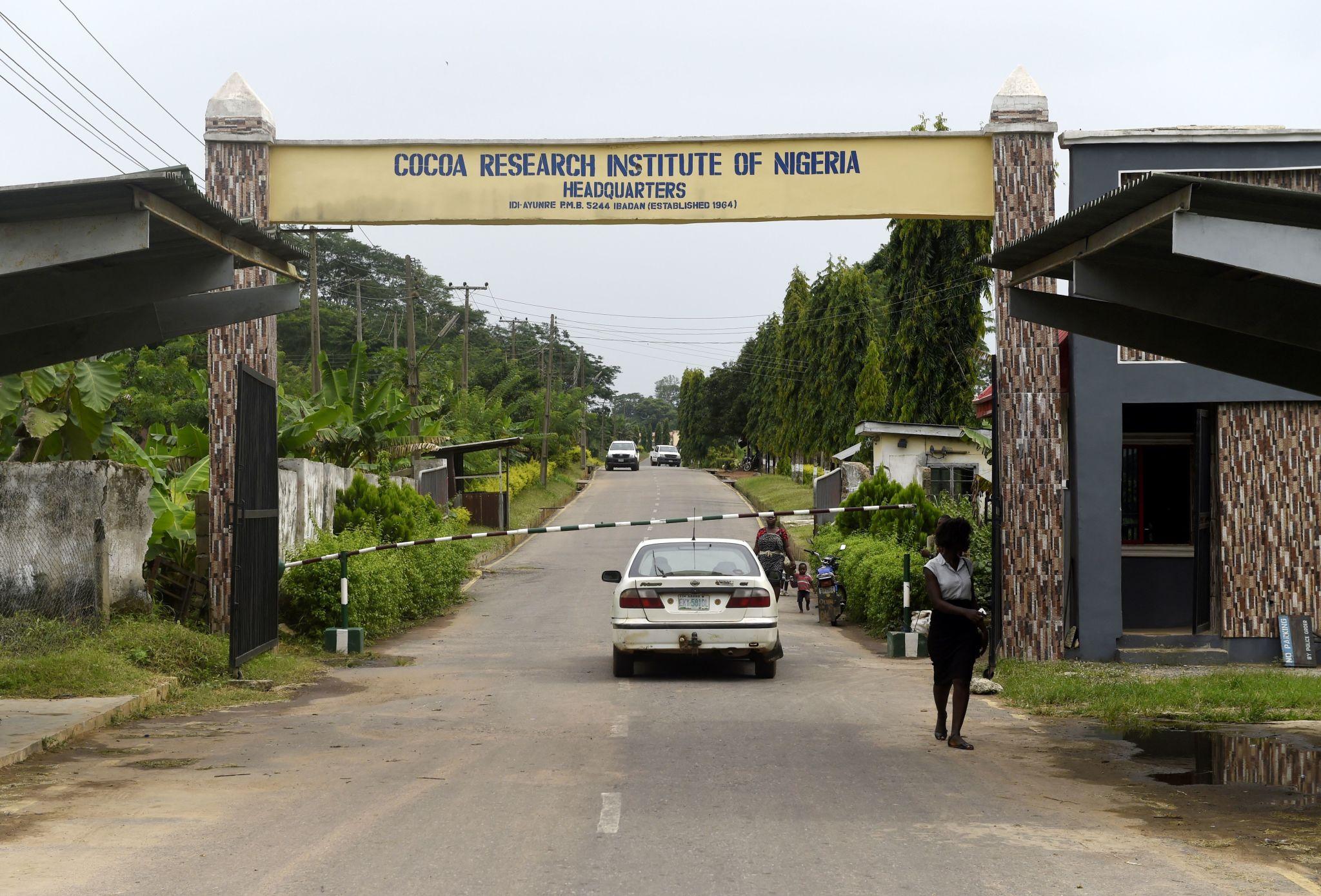
Gunmen have abducted two Cocoa Research Institute of Nigeria employees and another resident at CRIN’s Idi-Ayunre facility in Oyo State. The abductors reportedly demanded ₦120 million for the three victims, while police have launched a manhunt. Staff later protested the kidnapping, which follows earlier abductions around the research institute this year and has renewed concern over security at agricultural and research facilities.
Gunmen have abducted three people inside the Cocoa Research Institute of Nigeria in Idi-Ayunre, Oluyole Local Government Area of Oyo State, including two identified members of staff, and are reportedly demanding ₦120 million for their release, in another attack that has intensified concern over the security of workers at one of Nigeria’s most important agricultural research institutions. The victims have been identified as Mrs Eunice Babalola, head of CRIN’s Central Nursery, and Kehinde Gbalajobi, an agricultural superintendent, alongside a third man who lives in the institute’s Senior Staff Quarters but is not believed to be an employee. The Oyo State Police Command has confirmed the abduction and says a manhunt is underway, while CRIN workers have protested the attack and demanded urgent action to secure their colleagues’ release.
The abduction occurred during working hours on Thursday, October 8, within the institute’s sprawling research premises on the outskirts of Ibadan. Accounts from people familiar with the incident say Babalola and Gbalajobi were moving from the Central Nursery toward the Senior Staff Quarters, where Babalola intended to collect an item from her residence, when the gunmen seized them. A driver was reportedly expected to pick them up later and return them to the main office with other nursery staff. The third victim, a resident of the Senior Staff Quarters, was taken separately during the same attack.
The Oyo State Police Command confirmed the incident on Friday but gave a slightly different description of the circumstances, saying the victims were abducted while inspecting crops on a farm within the CRIN premises. Police spokesperson DSP Olayinka Ayanlade said security operatives had launched a manhunt and that operational efforts were ongoing to rescue the victims safely and apprehend those responsible. The command urged anyone with useful information to contact the nearest police station or use established emergency channels, but it did not publicly confirm the reported ransom demand.
The ₦120 million figure has instead emerged from people close to the victims and CRIN representatives who say the abductors have contacted relatives and demanded payment for the release of the three captives. Multiple Nigerian outlets reported the same amount on Friday, citing institute and community sources. At this stage, the ransom demand should therefore be treated as a reported demand from the kidnappers rather than an amount independently verified by police, and there has been no public indication that negotiations have produced an agreement.
The attack became even more alarming after reports that the gunmen attempted to seize additional people from the Central Nursery before being driven back by security personnel stationed at the institute. Sources said an exchange of gunfire broke out when the attackers moved toward the nursery in search of more victims, forcing them to retreat before they could abduct anyone else. If that account is confirmed in full, it would suggest the gunmen were prepared for a larger operation and may have entered the institute with the intention of taking multiple hostages rather than carrying out a spontaneous kidnapping.
The incident has already triggered anger among CRIN workers. Staff members blocked part of the Ibadan-Ijebu-Ode Road on Friday in protest, demanding stronger protection for employees and urgent action from authorities. The protest reflects growing frustration within the institute because the latest kidnapping is not the first security incident reported around CRIN this year. Workers say repeated attacks are creating fear among researchers, nursery employees, agricultural technicians and other personnel who routinely move around farms and research plots that are more exposed than conventional office buildings.
CRIN occupies a particularly important place in Nigeria’s agricultural system. Established in 1964, the institute conducts research into cocoa, kola, coffee, cashew and tea, develops improved crop varieties, supports farmers and plays a role in efforts to strengthen Nigeria’s agricultural exports and food economy. Its headquarters at Idi-Ayunre includes offices, nurseries, laboratories, staff housing and extensive agricultural land, which means many workers regularly move through open farm areas as part of their duties. That physical layout can create security vulnerabilities if perimeter protection, patrols and intelligence are inadequate.
Those vulnerabilities are becoming harder to ignore. In May, two CRIN staff members were reportedly abducted after gunmen entered the institute’s premises, and police later announced arrests connected to that incident. Earlier in March, four members of the Cocoa Farmers Association of Nigeria were also reportedly kidnapped from the institute’s nursery area while visiting to collect cocoa seedlings before they were eventually released. The recurrence of these incidents has raised questions about whether security arrangements around the institute have been strengthened sufficiently after previous attacks.
The latest kidnapping therefore goes beyond the fate of three individuals. It is becoming part of a broader pattern in which researchers, agricultural workers, farmers and visitors at semi-rural institutions are increasingly exposed to criminal networks operating around major cities and transport corridors. Oyo State does not experience the scale of banditry seen in parts of Nigeria’s northwest, but kidnapping for ransom has become a persistent concern across several southwestern states, particularly along highways, forested areas and communities where armed groups can move quickly before security forces arrive.
The location of CRIN contributes to that concern. Idi-Ayunre lies south of Ibadan along the busy Ibadan-Ijebu-Ode axis, an area surrounded by agricultural land, settlements and stretches of vegetation that can make surveillance difficult. Criminal groups operating in such environments often exploit forest routes and isolated tracks, allowing them to seize victims and move them away from populated areas before law-enforcement teams can establish a cordon. That geography makes rapid intelligence gathering particularly important in the first hours after an abduction.
For the victims’ families, the reported ₦120 million demand creates enormous pressure. Kidnapping gangs frequently impose high initial ransom figures before negotiations begin, and relatives can face threats intended to force quick payment. Nigerian authorities officially discourage ransom payments because they fund criminal networks and encourage further abductions, but families often find themselves trapped between that policy and the immediate desire to keep loved ones alive.
The economic consequences of kidnapping extend well beyond individual ransom payments. Agricultural institutes depend on scientists, technicians, extension personnel and support staff being able to move between laboratories, fields, nurseries and surrounding communities. When those workers begin to fear abduction during routine duties, research programs can slow, field inspections may be reduced and institutions can struggle to retain qualified staff. Farmers who depend on CRIN for improved seedlings, training and technical advice can ultimately feel the consequences as well.
That is why the security of agricultural institutions deserves greater attention in Nigeria’s wider insecurity debate. Public discussion often focuses on schools, highways, villages and urban crime, but research farms and agricultural stations can be equally exposed because of their large land areas and relatively low population density. They may also contain staff housing and valuable equipment while lacking the hardened security infrastructure associated with military or government complexes.
The CRIN attack is especially troubling because Nigeria is simultaneously trying to increase agricultural productivity and reduce dependence on imported food and non-oil revenue. Cocoa in particular remains one of the country’s most important agricultural exports, and the federal government has recently promoted programs aimed at distributing improved cocoa seedlings and revitalizing production. CRIN plays a direct role in that effort, meaning repeated insecurity around its headquarters risks undermining national agricultural objectives.
In July, the federal government launched a program involving one million improved cocoa seedlings as part of a broader attempt to strengthen Nigeria’s cocoa industry. The success of such programs depends on research institutions being able to maintain nurseries, conduct field trials, train farmers and distribute planting materials efficiently. If staff begin avoiding isolated research plots or if kidnapping repeatedly disrupts normal operations, the impact can spread far beyond the immediate institution.
The latest attack also raises questions about the level of coordination between CRIN’s internal security personnel and the Oyo State Police Command. Reports that security guards exchanged fire with the kidnappers suggest the institute has armed or otherwise active protective personnel, but the attackers were still able to seize three people and escape. Investigators will now need to determine how the gunmen entered the premises, whether they had prior knowledge of staff movement and whether any security gaps made the operation easier.
The possibility of insider knowledge cannot be assumed without evidence, but it is one avenue investigators are likely to consider because the victims appear to have been taken during routine internal movement rather than while traveling on a public highway. Kidnappers who know the layout of an institution, staff schedules or the location of residences can operate with greater precision. Police will therefore likely examine phone records, access points, witness accounts and any available surveillance footage as they reconstruct the attack.
The institute itself may also face pressure to review its internal transport system. If staff members routinely walk between nurseries, offices and residential quarters across isolated sections of the property, management may need to consider escorted movement, dedicated vehicles, increased patrols and tighter access controls. Such measures can be expensive, but repeated abductions create an even greater operational and human cost.
Workers’ protest on Friday underscores how seriously staff now view the threat. Blocking part of a major road is a significant step and suggests employees believe previous warnings have not produced enough protection. Labour representatives are likely to demand not only the rescue of the current victims but also a permanent security plan that reduces the risk of another attack once the immediate crisis is over.
Oyo State authorities will similarly face pressure to demonstrate that security forces can operate effectively beyond central Ibadan. The state capital is one of Nigeria’s largest cities, but surrounding semi-rural communities can be more difficult to police because of distance, terrain and limited manpower. Kidnapping networks exploit those gaps by moving between local government areas and using forest routes that cut across administrative boundaries.
The federal nature of CRIN adds another dimension to responsibility. As a federal agricultural research institute, its operations fall under national structures, but policing and community security require cooperation with state authorities, local governments and host communities. That can create coordination problems if each institution assumes another agency is responsible for perimeter protection, intelligence or rapid response.
Community participation will therefore be important. Residents living around Idi-Ayunre and nearby settlements may possess information about unfamiliar vehicles, suspicious movements or forest camps that formal security agencies lack. Police have explicitly appealed for credible information, and successful kidnapping investigations frequently depend on local intelligence rather than force alone.
The immediate priority remains the safe recovery of Babalola, Gbalajobi and the third abducted man. Authorities have not disclosed whether officers have established the kidnappers’ location, whether contact is being monitored or whether specialised anti-kidnapping units have been deployed. Operational secrecy is common during active rescue efforts, particularly where releasing details could endanger hostages or compromise surveillance.
There has also been no confirmed report that any of the three victims has been injured. The absence of such information should not be interpreted as proof they are safe, but there is currently no verified public evidence of fatalities associated with the abduction. Responsible reporting should therefore avoid speculation about their condition while rescue operations continue.
The conflicting descriptions of the victims also require care. Some police reporting initially described all three as CRIN staff members, while more detailed accounts from the institute identify only Babalola and Gbalajobi as employees and describe the third person as a resident of the Senior Staff Quarters who does not work for CRIN. Until authorities issue a fuller identification, the clearest formulation is that two confirmed CRIN employees and one other person were abducted.
That distinction matters because inaccurate descriptions can easily become embedded in later reporting, particularly during fast-moving security incidents. The same caution applies to the ₦120 million ransom demand, which is widely reported but has not been formally confirmed by the police command. The most reliable current account is therefore that kidnappers are reported by institute-linked sources to have demanded ₦120 million for all three captives.
If the three victims are rescued, attention will quickly move to whether arrests follow. Previous kidnapping cases have sometimes ended with victims returning while the perpetrators remain at large, allowing the same criminal groups to strike again. A successful security response therefore requires not only recovery of the hostages but identification of the network, dismantling of its support system and prosecution of those responsible.
For CRIN management, that outcome will be crucial to rebuilding confidence. Staff members cannot reasonably be expected to carry out fieldwork under constant fear that routine movement between a nursery and staff quarters could result in abduction. Research institutions need an environment where scientists and agricultural workers can focus on their work without organising their daily activities around armed threats.
The broader message from the attack is equally troubling for Nigeria’s agricultural sector. Food security and export growth depend not only on fertilizer, financing, seedlings and infrastructure but also on physical safety. A country cannot expect researchers, farmers and extension workers to increase production if criminal groups can operate around farms and research stations with relative freedom.
The October 8 abduction has therefore become a test for both Oyo State security authorities and the federal agencies responsible for CRIN. Police say a manhunt is active, workers are demanding immediate action and families are reportedly facing a massive ransom demand. Until the victims return safely, the institute will remain under intense pressure, and the recurring pattern of abductions around its Ibadan headquarters will continue to raise difficult questions about whether enough was done after earlier attacks to prevent another one.