
PROMISED A WAY ABROAD BUT ENDED UP IN NIGERIA AS MORE GHANAIANS ALLEGEDLY FALL VICTIM TO TRAVEL SCHEME
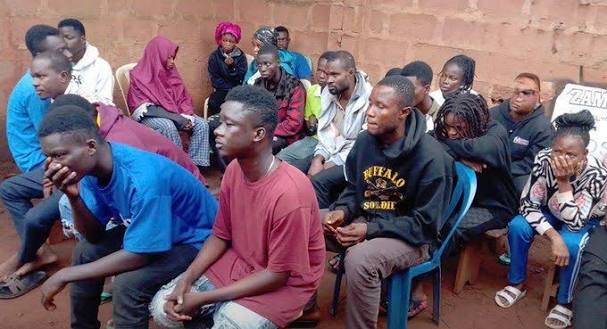
Several Ghanaians have reportedly been lured to Nigeria after being promised opportunities that could eventually help them travel overseas. The latest allegations involve an e-commerce-related operation and come amid repeated warnings from Ghanaian authorities about recruitment and travel schemes targeting young people with promises of jobs, business opportunities and visas abroad.
Several Ghanaians have reportedly been taken to Nigeria after being enticed by an e-commerce-related operation with promises of opportunities that could eventually help them travel abroad, raising fresh concerns about recruitment and suspected trafficking schemes targeting people desperate for opportunities outside Ghana.
According to a report published by GhanaWeb on Saturday, the individuals were allegedly recruited with promises connected to overseas travel but subsequently found themselves housed in Nigeria.
The full number of people involved in the latest case, the circumstances under which each person travelled and the identities of everyone responsible have not yet been independently established.
The allegations should therefore be treated carefully pending further information from Ghanaian and Nigerian authorities.
But the pattern described in the latest report is not new.
Ghana's Ministry of Foreign Affairs has already warned the public about networks associated with QNET and similar operations that allegedly lure Ghanaians outside the country using promises of employment, business opportunities and assistance in securing visas.
PROMISES OF A BETTER LIFE ABROAD
The attraction is easy to understand.
For young people struggling to find jobs or hoping to build a better life overseas, an offer promising employment or a pathway to countries such as South Africa, Canada, Europe or elsewhere can appear life-changing.
But Ghanaian authorities say fraudulent recruiters increasingly exploit those ambitions.
The Ghana Immigration Service has warned that some victims are approached by relatives, friends or acquaintances who present what appear to be legitimate overseas opportunities.
Some recruiters allegedly use photographs and other material to convince potential victims that people recruited before them are already enjoying successful lives abroad.
Authorities say victims can then be asked to make payments or travel through neighboring countries, including Nigeria, as part of the supposed process.
Instead of reaching the promised destination, some find themselves stranded or exposed to exploitative conditions.
44 GHANAIANS WERE BROUGHT HOME FROM NIGERIA IN MARCH
The latest allegations come only months after Ghanaian authorities dealt with another major case involving citizens in Nigeria.
In March, the Ministry of Foreign Affairs facilitated the repatriation of 44 Ghanaians who had reportedly been lured to Nigeria through opportunities linked to a QNET scheme.
The group consisted of 27 men and 17 women.
They were rescued from suspected human-trafficking camps in Akwa Ibom State before returning to Ghana.
Some had travelled to Nigeria months earlier believing they were pursuing opportunities that would eventually take them elsewhere.
One woman told Graphic Online she had been promised assistance to travel to South Africa for work.
She said she paid GH¢16,000.
Instead, after arriving in Nigeria, she said she was given health products to sell on commission.
Another returnee reportedly paid GH¢10,000 for similar arrangements.
Those accounts demonstrated how expensive the schemes can become for victims and their families.
For some, losing thousands of cedis is only the beginning.
Victims can also become stranded outside Ghana with limited money, restricted movement or no clear way home.
FOREIGN AFFAIRS MINISTRY HAS ALREADY SOUNDED THE ALARM
In March, Ghana's Ministry of Foreign Affairs issued a public warning specifically addressing the growing problem.
The ministry said it had observed increasing incidents involving Ghanaian nationals being lured outside the country under false pretenses.
The promises included employment opportunities, business prospects and assistance obtaining European visas.
According to the ministry, some victims subsequently became stranded, were detained by foreign immigration authorities or found themselves in exploitative circumstances.
The government urged Ghanaians to verify travel, recruitment and business opportunities through official channels before paying money or leaving the country.
The warning specifically referenced networks associated with QNET and similar schemes.
That official warning provides important context for the latest allegations.
However, it does not automatically establish that every e-commerce operation or person connected to the latest report has committed a crime.
Individual responsibility must be determined through investigation.
GHANA IMMIGRATION WARNS ABOUT NIGERIA ROUTE
The Ghana Immigration Service has issued similar warnings.
In August, Deputy Commissioner of Immigration Mark Asamoah-Boakye cautioned young people against accepting overseas employment offers without verifying them.
He said immigration authorities had encountered situations where victims were instructed to make payments through local mobile money accounts before being directed to travel through neighboring countries.
Nigeria was specifically identified as one of the countries sometimes used in that process.
The Immigration Service says prospective travelers should verify recruitment agencies and employment opportunities before paying money or beginning their journeys.
The warning is particularly important when an offer requires someone to travel first to another West African country before supposedly being sent to the final overseas destination.
RECRUITMENT CAN BEGIN WITH SOMEONE YOU TRUST
One of the most difficult aspects of suspected trafficking and fraudulent recruitment schemes is that the first approach does not always come from a stranger.
Authorities have warned that potential victims may receive information through relatives, friends or acquaintances.
That relationship can make an opportunity appear legitimate.
A person may believe that because someone they know introduced the business or travel opportunity, it must be genuine.
But Ghanaian authorities say every offer should still be independently verified.
People should know exactly which company is recruiting them, what job they are being offered, where that job is located, what visa they require and which licensed agency is facilitating the process.
Promises that someone will travel to one country before being moved later to another destination deserve particularly careful scrutiny.
AUTHORITIES NEED TO ESTABLISH WHAT HAPPENED IN THE LATEST CASE
The latest allegations now raise several questions.
How many Ghanaians are currently involved?
Who recruited them?
What exactly were they promised before leaving Ghana?
Did they pay money?
Were they told Nigeria was their final destination or merely a transit point?
Are they free to leave?
And have Ghanaian or Nigerian security authorities begun investigating?
Those details will determine whether the latest situation involves fraudulent recruitment, human trafficking, another form of exploitation or a different type of business dispute.
Until authorities provide fuller information, responsibility should not be assigned to individuals without evidence.
VERIFY BEFORE YOU TRAVEL
The broader warning from Ghanaian authorities is already clear.
An overseas opportunity should be verified before money changes hands and before anyone crosses the border.
The Foreign Affairs Ministry says suspicious recruitment, visa and travel offers should be reported to the appropriate authorities.
The Ghana Immigration Service similarly advises prospective migrants to check whether recruitment agencies are legitimate and whether employment offers are genuine.
For families considering paying thousands of cedis for a relative to travel, that verification can make the difference between an overseas opportunity and an ordeal.
The latest reports from Nigeria are another reminder of the risk.
For people desperate to leave Ghana in search of a better future, the promise of travelling abroad can be powerful.
It can also be exactly what fraudulent recruiters use to draw them in.