
PUTIN ENVOY AND AFD LEADERS PREPARE TALKS ON RESTORING RUSSIAN GAS TO GERMANY
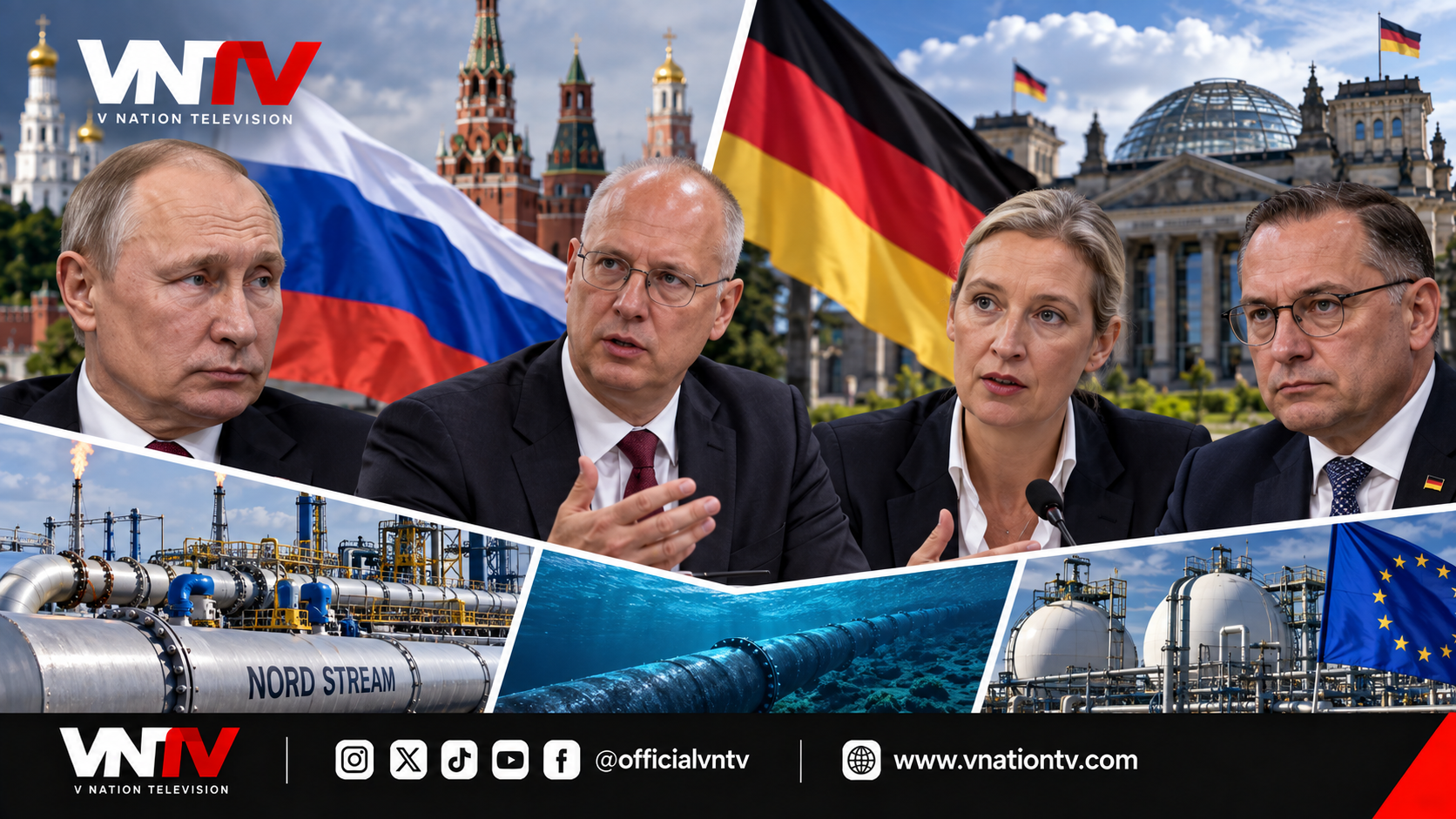
Russian President Vladimir Putin's senior economic envoy and leaders of Germany's Alternative for Germany party are preparing for possible talks aimed at restarting Russian gas supplies to Germany, according to people familiar with the plans.
The proposed meeting could take place as early as March 2027 and would bring together Kirill Dmitriev, a close adviser to Putin and head of Russia's sovereign wealth fund, with AfD co leaders Alice Weidel and Tino Chrupalla.
The preparations could reopen one of the most politically sensitive energy debates in Europe following the collapse of Germany's dependence on Russian gas after Moscow's full scale invasion of Ukraine in 2022.
The AfD and a representative for Dmitriev declined to comment on the reported preparations.
TALKS COULD TAKE PLACE IN 2027
According to Reuters, the proposed meeting would only proceed if Russia and Ukraine first agree on a framework for peace.
Possible locations being considered include Israel, the United Arab Emirates and India.
Organisers reportedly hope representatives from Russia, the AfD and the United States could participate.
The discussions could include the possibility of restarting Russian gas deliveries through the Nord Stream pipeline system.
However, a senior US official told Reuters that US representatives Steve Witkoff and Jared Kushner had neither been informed about the proposed meeting nor invited to participate.
AFD WANTS RUSSIAN ENERGY TO RETURN
The AfD has openly advocated restoring energy ties between Germany and Russia.
Weidel previously called for an end to restrictions on Russian oil and gas, arguing that access to cheaper Russian energy would strengthen Germany's struggling economy.
The party has made high energy costs and Germany's economic difficulties important parts of its political message.
Germany was heavily dependent on Russian energy before the war in Ukraine transformed Europe's energy relationship with Moscow.
Before sanctions and the disruption of supplies following Russia's 2022 invasion, Russia provided more than half of Germany's natural gas imports and more than a third of its crude oil imports.
ENERGY PRICES PUT PRESSURE ON GERMANY
The reported preparations come as Germany and other European countries face renewed pressure from high energy prices.
European gas storage levels are below their five year seasonal average while international oil and gas prices have risen sharply amid wider geopolitical instability.
Germany is particularly exposed because of the importance of energy intensive manufacturing to Europe's largest economy.
Supporters of restoring Russian supplies argue that cheaper gas could reduce costs for German households and industry.
Opponents argue that returning to Russian gas would risk recreating the energy dependence that Germany and the European Union have spent years trying to reduce.
AFD DOES NOT CONTROL GERMAN ENERGY POLICY
Any meeting between the AfD leadership and Russian officials would not by itself change German energy policy.
The AfD is not part of Germany's federal government and therefore does not have authority to restart Russian gas imports.
Decisions concerning Germany's foreign energy relations remain the responsibility of the federal government and are also affected by European Union sanctions and energy policies.
The proposed talks would therefore initially carry more political and diplomatic significance than immediate policymaking authority.
RUSSIAN GAS REMAINS DIVISIVE ISSUE
Germany dramatically reduced its reliance on Russian pipeline gas following the invasion of Ukraine and subsequently expanded alternative energy supplies, including liquefied natural gas imports.
Restoring Russian supplies would represent a major shift in the country's post 2022 energy strategy.
It could also generate wider debate inside the European Union, where reducing dependence on Russian fossil fuels has become an important part of the bloc's response to the war.
The reported preparations show that the future of Russian energy supplies to Europe remains an active political issue as governments confront high energy costs and uncertainty surrounding the war in Ukraine.
Whether the proposed meeting takes place will depend partly on developments in negotiations between Moscow and Kyiv.