RUBIO SAYS US OPEN TO IRAN DIPLOMACY AS HORMUZ OIL FLOWS MOVE CLOSER TO PREWAR LEVELS
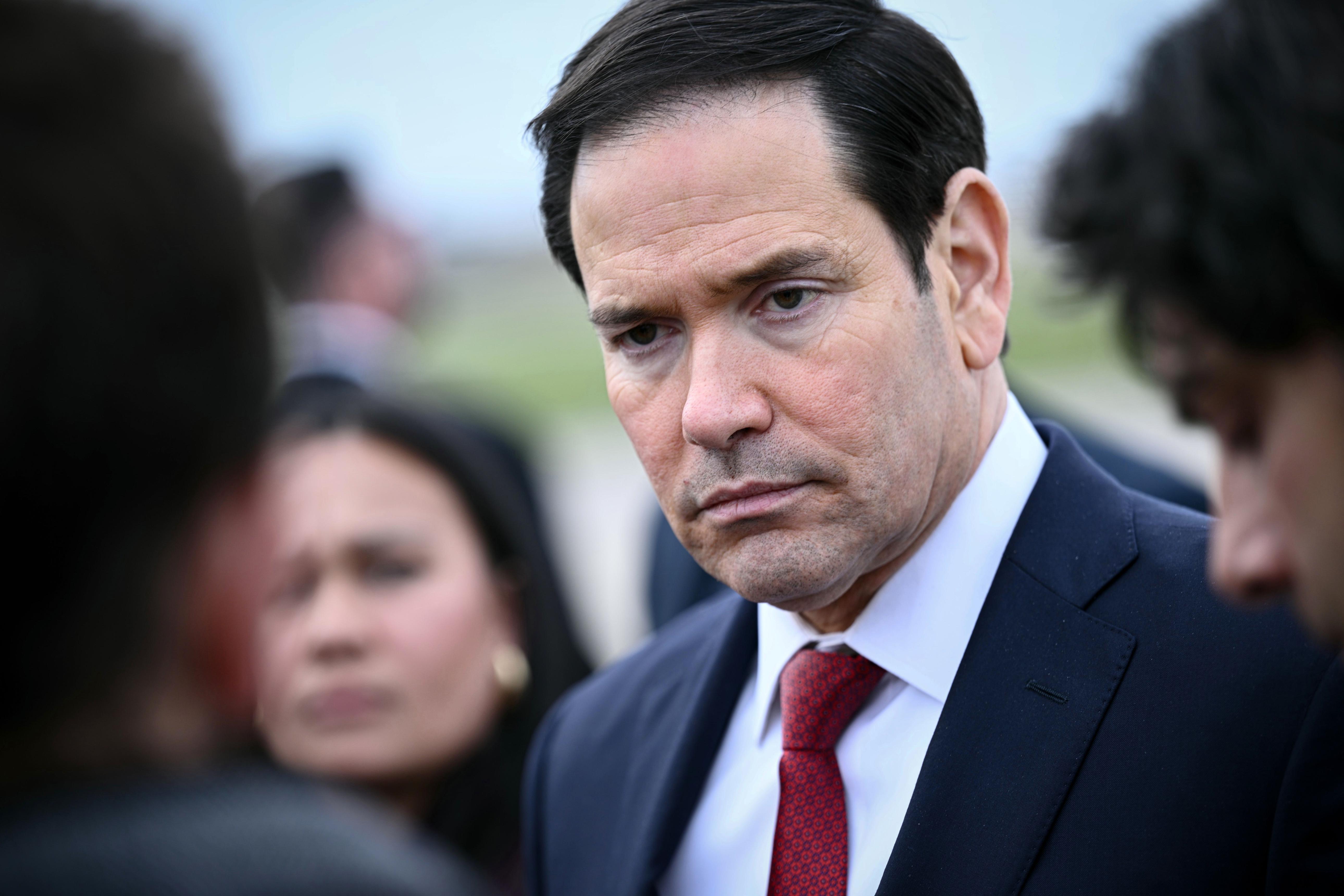
US Secretary of State Marco Rubio says Washington remains open to diplomacy with Iran and sees no immediate need for another major military campaign if sanctions and the naval blockade continue achieving American objectives. Speaking after G7 meetings in Paris, Rubio said oil traffic through the Strait of Hormuz has approached prewar levels on some days, while Reuters estimates Gulf oil flows have recovered to about 80 percent of normal levels. The improvement has eased pressure on energy markets, but the United States and Iran remain divided over sanctions, the blockade, Tehran’s nuclear program and the conditions for a wider peace agreement.
United States Secretary of State Marco Rubio has said Washington remains open to a diplomatic settlement with Iran and may not need to carry out further major military strikes if economic pressure continues producing the results President Donald Trump is seeking, as oil exports through the Strait of Hormuz recover from the severe disruption caused by more than eight months of conflict. Speaking in Paris during meetings with foreign ministers from the Group of Seven, Rubio said American sanctions, restrictions on Iranian energy exports and the continuing naval blockade were placing growing pressure on Tehran, while oil shipments through the Strait of Hormuz had on some days moved close to levels recorded before the conflict. His comments marked one of the clearest explanations yet of Washington’s current strategy, which appears to combine economic pressure with renewed diplomacy rather than immediate large scale military escalation.
Rubio told reporters that the United States did not see further major strikes as necessary if economic measures were capable of achieving the same strategic objectives. He argued that sanctions and maritime restrictions were already making it more difficult for Iran to earn revenue from oil exports and obtain resources that Washington believes could support military operations. The secretary of state also insisted that the administration remained open to negotiations, signaling that the Trump administration sees economic pressure as a tool that can create leverage for diplomacy rather than as an alternative to diplomacy itself. His message was that Washington is prepared to maintain pressure on Tehran while giving mediators and diplomatic channels more time to determine whether a wider settlement can be reached.
“We don’t need to conduct military strikes if we’re achieving the same objective through economic means and economic pressure,” Rubio said after the Paris meetings. He added that Washington remained “open to diplomacy,” language that reflected President Trump’s recent decision to hold off on another major round of strikes as regional governments push both sides toward negotiations. The remarks came as Qatar and other Gulf states continue efforts to prevent another escalation, with officials increasingly focused on whether the United States and Iran can find a formula for easing restrictions in the Strait of Hormuz while addressing broader disagreements over sanctions, Iran’s nuclear program and regional security.
The improving flow of oil through Hormuz has become one of the most important developments in the conflict because the waterway is central to the global energy system. The strait connects the Persian Gulf with the Gulf of Oman and the Arabian Sea and serves as the main export route for major oil and gas producers including Saudi Arabia, Iraq, Kuwait, Qatar and the United Arab Emirates. Before the conflict, roughly one fifth of global oil consumption moved through the narrow passage, meaning any serious disruption could quickly affect international crude prices, shipping costs, insurance premiums and inflation far beyond the Middle East. When fighting intensified, tanker traffic fell sharply as shipping companies and insurers became concerned about missile attacks, drones, mines and the possibility of vessels being caught between American and Iranian military forces.
Rubio’s claim that oil shipments are approaching prewar levels on some days is consistent with broader evidence that the route has partially recovered, although normal commercial conditions have not fully returned. Reuters reported that Gulf oil flows through the Strait of Hormuz had recovered to around 80 percent of prewar levels, but daily volumes remain uneven and some operators continue to treat the route as high risk. That distinction is important because an improvement in traffic does not mean the conflict is over or that shipping companies have regained full confidence. The United States and Iran remain locked in a military and political confrontation, insurance costs remain elevated and tanker operators still face the possibility that restrictions could tighten again if diplomacy collapses.
The partial recovery has nevertheless eased some of the pressure that had built across global energy markets. Earlier in the conflict, disruption through Hormuz drove crude prices sharply higher and forced governments, refiners and traders to consider whether alternative pipelines and export terminals could compensate for reduced shipping through the Gulf. Those alternatives helped but could not fully replace the enormous volumes normally transported through the strait. The result was higher fuel costs in many countries, increased transportation expenses and additional inflationary pressure at a time when several economies were already struggling with elevated living costs. The recent improvement in oil flows has therefore been welcomed by governments and markets, even though officials remain cautious about describing the situation as stable.
Rubio used the G7 meeting to argue that protecting the Strait of Hormuz should be treated as an international responsibility rather than solely an American military obligation. He said countries that depend heavily on Gulf oil should contribute more to protecting commercial shipping because disruption to the waterway affects economies across Europe and Asia as much as it affects the United States. Washington imports a relatively small proportion of its oil directly through Hormuz compared with major Asian economies, but American consumers are still exposed to any disruption because crude oil is traded globally and a major supply shock can drive prices higher everywhere.
Several American allies have been more cautious about becoming directly involved in maritime security operations while the conflict remains unresolved. European governments generally support freedom of navigation and have condemned attacks on commercial shipping, but some have been reluctant to participate in military operations that could draw them more deeply into the confrontation with Iran. France and other governments have indicated greater willingness to provide maritime support once active hostilities decline, while Rubio has argued that waiting until the conflict fully ends before securing the waterway risks delaying the very conditions needed for trade and diplomacy to normalize.
Those differences formed part of the wider discussions in Paris, where G7 ministers were also dealing with Ukraine, global energy security and the economic consequences of the Iran conflict. Rubio sought to reassure allies that Washington was not preparing another major bombing campaign as a first response, while also making clear that the United States intends to keep sanctions and other forms of pressure in place. His remarks suggested that the administration believes it currently has enough leverage to continue negotiations without immediately returning to large scale combat, although he did not rule out future military action if Washington believes Iran changes course or threatens American forces.
President Trump has also adopted a more cautious public tone in recent days, saying there is positive momentum in efforts to end the conflict and indicating that additional large scale strikes may not be necessary for now. The shift does not amount to a formal ceasefire or peace agreement. American forces remain deployed across the region, the naval blockade remains in effect and Washington continues to carry out limited operations it says are necessary to enforce restrictions and protect military assets. Iran has also maintained its military posture and has warned that any new major American strikes could trigger retaliation across the region.
The conflict has already imposed substantial political and economic costs on both sides. In the United States, higher energy prices and the broader consequences of the war became significant domestic political issues, while the administration has faced questions about the duration and goals of the campaign. Trump has continued defending the decision to use force against Iran, arguing that the operation weakened Tehran’s military position and prevented it from advancing toward nuclear weapons. Critics have questioned whether the war was necessary and whether the economic consequences justified the strategy, while congressional disputes over presidential war powers have intensified.
For Iran, the conflict has added another layer of pressure to an economy already constrained by years of sanctions. Tehran has long relied heavily on oil exports for government revenue and foreign currency, making restrictions on energy sales particularly painful. Iran has developed complex methods for selling crude despite American sanctions, including the use of intermediaries, ship transfers and trading networks designed to obscure the origin of cargoes. China has historically been a major buyer of Iranian oil, and Tehran has worked to maintain commercial relationships outside the Western financial system. The current blockade and tighter enforcement have made those arrangements more difficult, but they have not completely stopped Iranian exports.
Rubio argued that the economic pressure is now reaching levels Tehran cannot easily ignore. He said Iran’s difficulty selling energy internationally was increasing and that the administration believed this pressure could produce concessions more effectively than another broad military campaign. From Washington’s perspective, economic pressure offers several advantages because it reduces the immediate risk to American troops, limits the political consequences of additional bombing and allows the administration to keep negotiating while preserving leverage. The uncertainty is whether sanctions and restrictions alone can compel Iran to accept conditions it has repeatedly rejected.
Iranian officials say they will not. Foreign Minister Abbas Araghchi has argued that the conflict cannot be resolved through additional sanctions or military pressure and says Washington must address Tehran’s demands through diplomacy. Iran has proposed reopening the Strait of Hormuz more fully within two days if the United States accepts a package of conditions that includes sanctions relief, an end to the blockade and other concessions. Washington has not accepted those terms and has described some of them as unrealistic, creating a gap between the two sides even as both governments continue publicly discussing negotiations.
That disagreement over sequencing has become one of the biggest obstacles in the diplomatic process. Iran wants the United States to ease economic and military pressure before broader negotiations move forward, while Washington argues that removing pressure first would give up the leverage needed to secure concessions from Tehran. Mediators are therefore trying to develop arrangements in which both sides take steps at roughly the same time, allowing Iran to loosen restrictions on Hormuz while the United States adjusts some sanctions or maritime measures. Such an approach could create enough confidence for broader negotiations without requiring either side to announce that it had surrendered its position.
Qatar has become one of the most important intermediaries in that effort. Qatari officials maintain working relationships with both Washington and Tehran and have repeatedly served as a communication channel during periods when direct talks were politically difficult. The Qatari prime minister has held discussions with Trump and other senior American officials while also maintaining contact with Iranian leaders, and Doha has pushed for a settlement that would reduce military tension and restore more predictable commercial traffic through the Gulf.
A broader settlement would have to address much more than oil exports and the Strait of Hormuz. Iran’s nuclear program remains one of the central disputes between Tehran and Washington, with the United States seeking restrictions and verification measures capable of preventing Iran from developing nuclear weapons. Tehran insists its nuclear activities are peaceful and says it will not accept arrangements that deny it what it considers legitimate civilian nuclear rights. The International Atomic Energy Agency and Western governments have raised concerns about Iran’s stockpiles of highly enriched uranium and the level of access available to international inspectors during parts of the conflict.
Regional security is another unresolved issue. Washington wants Iran to reduce support for armed groups that the United States and its allies consider destabilizing, while Tehran argues that its relationships across the region are part of its national defense strategy. Any lasting settlement would therefore have to deal with sanctions, nuclear inspections, armed groups, maritime security, oil exports and the future presence of American military forces in the Gulf. That makes the diplomatic task far more complicated than simply restoring tanker traffic through Hormuz.
The improving oil flows nevertheless provide a practical area where both sides have clear incentives to cooperate. Iran needs revenue from energy exports and wants relief from economic pressure, while Gulf Arab states want lower insurance costs, more predictable shipping and reduced risk to their own oil and gas facilities. The United States also benefits from more stable global energy prices because lower crude prices ease pressure on consumers and reduce the domestic economic impact of the conflict. Those shared interests help explain why commercial traffic has begun recovering even though no comprehensive political agreement has been signed.
Financial markets have responded quickly to signs of lower risk. Crude prices have fallen from some of the peaks reached earlier in the conflict, reflecting growing confidence that major volumes of Gulf oil will continue reaching world markets. That improvement remains fragile because inventories were heavily affected during the months of disruption and refined fuel exports from the Middle East have recovered more slowly than crude shipments. A single major military escalation could therefore reverse much of the progress and send energy prices sharply higher again.
The security environment also remains uncertain for shipowners. Even if tankers are moving in greater numbers, companies must still account for elevated insurance costs, the possibility of attacks and sudden changes in Iranian restrictions. Some vessels continue to require additional security arrangements before transiting the strait, while others remain cautious about entering the area at all. Full normalization would require more than higher traffic volumes. It would require confidence that the waterway will remain open and that the risk of military confrontation has fallen significantly.
Rubio’s remarks in Paris therefore captured both the improvement and the continuing uncertainty. Washington believes it can maintain enough pressure on Iran to avoid rushing back into major military operations, while Tehran continues using its control over Hormuz and its ability to disrupt regional trade as bargaining tools. Both sides have reasons to keep talking, but neither has publicly accepted the concessions demanded by the other.
The next phase of the conflict will depend heavily on whether economic pressure and diplomacy can reinforce each other rather than collapse into another round of escalation. If Iran continues allowing more oil traffic through Hormuz while negotiations move forward, Washington may see little reason to resume large scale strikes. If Tehran believes sanctions are becoming unbearable without meaningful concessions from the United States, it may decide that restricting the waterway again gives it greater leverage. That possibility is why the current recovery remains vulnerable.
For global energy markets, the fact that oil exports can approach prewar levels on some days is an encouraging development after months of severe disruption. It suggests that commercial traffic can recover even before the wider conflict is fully resolved, but it does not eliminate the underlying military and political risks. The Strait of Hormuz remains one of the most sensitive pressure points in the confrontation, and any breakdown in negotiations could quickly affect shipping, oil prices and economic conditions far beyond the region.
For now, the United States appears to believe it has found a strategy that allows it to maintain pressure on Iran without immediately expanding the war. Rubio’s message to the G7 was that Washington remains willing to negotiate and does not see further major strikes as necessary if sanctions and other economic measures are producing comparable results. Whether that approach can produce a durable agreement remains uncertain, but the recovery in Hormuz oil flows has given diplomacy more room to operate and reduced some of the immediate pressure for another major military confrontation.