Seven Dead, 40 Injured in Jordan Church Attack as Authorities Hunt Gunmen
Jordanian authorities say seven people were killed and 40 injured when gunmen opened fire during a funeral at Hamoud Church in Karak governorate on Friday. The latest figure from Health Minister Ibrahim Bdour raises the number of injured from an earlier official count of 34. Two patients remain in critical condition, security forces are continuing a manhunt for the attackers, and no group has claimed responsibility. Jordan has declared three days of national mourning.
Jordanian authorities have raised the number of people injured in Friday’s deadly attack on a church in Karak governorate to 40, while the death toll remains at seven, as security forces continue a nationwide search for the gunmen responsible for one of the country’s deadliest attacks on a Christian place of worship in recent years.
Health Minister Ibrahim Bdour announced the revised casualty figure late Friday, updating an earlier count of 34 injured given by Jordan’s Public Security Directorate. Two of those wounded remained in critical condition and were undergoing surgery, while other patients were being treated at hospitals in Karak and transferred to King Hussein Medical City for additional care.
The attack occurred during a funeral at the Greek Orthodox Hamoud Church in the village of Humud in Karak governorate, southern Jordan. Authorities said armed men opened fire on people gathered for the funeral, turning a religious ceremony into a scene of panic and mass casualties.
Jordanian officials have described the shooting as a terrorist attack and say an intensive security operation is underway to identify and apprehend those responsible. No group had claimed responsibility by Friday night, and authorities had not publicly announced any arrests.
The Public Security Directorate initially reported six deaths and 28 injuries before the toll rose as hospitals received additional victims. Later Friday, security chief Major General Obaidullah Al-Maaytah said seven people had died and 34 were injured. The Health Ministry subsequently raised the injury count to 40 after consolidating hospital records.
According to Bdour, 14 injured people were initially admitted to Karak Government Hospital and 26 to Prince Ali bin Al Hussein Military Hospital. Three patients were later transferred to the Italian Hospital in Karak. Nine patients from the military hospital and three from Karak Government Hospital were transferred to King Hussein Medical City for specialist treatment.
The health minister said two of the seven victims died at Karak Government Hospital and five died at Prince Ali bin Al Hussein Military Hospital. Two patients remained in critical condition and were undergoing surgery, while officials said the remaining cases were generally stable.
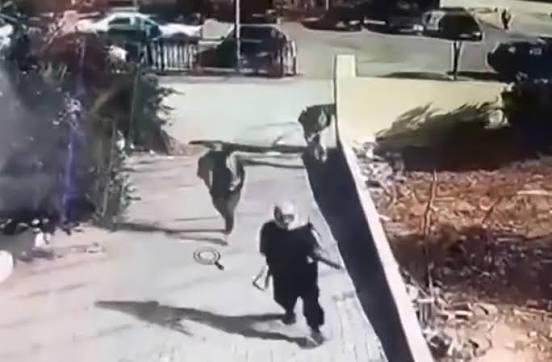
The attack unfolded during a funeral gathering at the church, where members of the local Christian community had assembled to mourn a woman who had died. Jordanian state television footage and security-camera images reportedly showed armed men approaching the church and firing toward the building and people outside.
Authorities have not provided a definitive number of attackers. Security footage cited in international reporting appeared to show three armed men, while some witnesses said they believed as many as four assailants may have been involved. Investigators have not publicly confirmed which figure is correct.
Interior Minister Mazen Al-Faraya said the attackers were extremists and characterized the shooting as a terrorist operation, but he cautioned that investigators had not yet established whether the perpetrators belonged to an organized militant group.
That distinction remains important because no organization has claimed responsibility and authorities have not publicly released evidence linking the gunmen to Islamic State, al-Qaeda or any other known extremist network.
Jordan’s government has therefore avoided assigning organizational responsibility while treating the shooting as an act of terrorism based on the nature of the attack and its targeting of civilians gathered at a church.
Public Security Directorate officials said security services were carrying out intensive field operations and expressed confidence that those responsible would be located and arrested. Authorities also urged the public not to circulate rumors or unverified information while the investigation remains active.
The Amman prosecutor general imposed restrictions on publication of details from the criminal investigation, a move intended to prevent the release of information that could interfere with security operations or judicial proceedings.
The gag order means that some operational details, including evidence collected from the scene, possible suspects and the direction of the manhunt, may remain undisclosed until prosecutors authorize their release.
King Abdullah II traveled to Karak following the attack and condemned the killings, saying those responsible would face the severest penalties available under Jordanian law. The monarch said efforts to create division within the country would fail and emphasized solidarity between Jordan’s Muslim and Christian communities.
Prime Minister Jafar Hassan also condemned the violence and convened security officials in Karak to oversee the government’s response. He described the attack as driven by terrorist ideology and extremism and said the state would act against those responsible.
Jordan later announced three days of national mourning beginning Friday. Flags at ministries, government departments and public institutions are to be flown at half-mast in honor of the victims.
The decision reflects the national significance authorities have attached to the attack, which struck a Christian community in a country where officials regularly emphasize Muslim-Christian coexistence as part of Jordan’s national identity.
Christians make up a small but historically established minority in Jordan and have long played important roles in the country’s political, economic and social life. Most belong to Greek Orthodox, Latin Catholic and other traditional Christian communities.
Jordanian leaders frequently point to the country’s relatively stable interfaith relations as a contrast with sectarian tensions elsewhere in the Middle East. That has made Friday’s attack particularly sensitive domestically.
Officials from across Jordan’s political and religious institutions issued statements condemning the shooting. Senate Speaker Faisal Al-Fayez described it as an assault on the country’s unity, while Lower House Speaker Mazen Qadi said the perpetrators were attacking Jordan’s security and social cohesion.
Jordan’s Grand Mufti and the minister responsible for Islamic affairs also condemned the killings, stressing that terrorism does not distinguish between Muslims and Christians.
The Jordan Press Association said the attack violated religious, humanitarian and national values and expressed solidarity with the families of those killed and injured.
International condemnations also began arriving Friday. United Nations Secretary-General Antonio Guterres condemned the attack and called for those responsible to be brought to justice.
Governments across the region, including Syria and other Arab states, issued messages of solidarity with Jordan and condemned the targeting of civilians at a religious gathering.
The attack is particularly alarming because Jordan has generally maintained a higher level of domestic stability than several neighboring states despite being located in a region affected by wars, extremist movements and political upheaval.
The kingdom has nevertheless faced militant threats in the past and has participated in international operations against extremist organizations.
Karak itself has previously experienced major militant violence. In December 2016, armed attackers linked to Islamic State carried out shootings in and around the city and took positions inside Karak Castle, leading to a prolonged confrontation with Jordanian security forces.
That attack killed security personnel, civilians and a Canadian tourist and reinforced concerns at the time about the ability of extremist networks to operate inside Jordan.
Friday’s church attack immediately revived memories of those earlier events, although authorities have not established any operational connection between the 2016 attack and the current shooting.
The location also adds symbolic weight. Karak is known for its historic Christian and Muslim communities and has long been associated with tribal networks and strong local identities.
The targeting of mourners during a funeral appears designed to maximize civilian casualties at a moment when people would be gathered closely together. Investigators are expected to examine whether the church itself was selected because of its Christian identity or whether other local factors influenced the choice of target.
Authorities had not released the names of the attackers or detailed information about their possible motives as of Friday night.
Security-camera footage will likely form a central part of the investigation. Images showing the gunmen approaching the church could help authorities identify their clothing, weapons, movements and possible escape route.
Police are also expected to examine vehicles, communications data and witness accounts from the surrounding area.
The reported increase from 34 to 40 injured reflects the evolving nature of casualty figures following mass-casualty attacks. Initial counts frequently change as hospitals receive patients separately, transfers occur and health authorities reconcile records from different medical facilities.
For VNTV, the current confirmed figure should therefore be reported as seven dead and 40 injured, replacing the earlier count of 34 wounded.
Two of the injured remained in critical condition late Friday, meaning the casualty toll could still change depending on their condition and any additional hospital updates.
Authorities have not indicated that additional people remain missing from the attack site.
The manhunt remains the central security development. Jordanian officials say the perpetrators will be pursued and arrested, but no arrests had been publicly announced at the time of the latest official briefing.
No group had claimed responsibility, and investigators had not established whether the attackers acted independently or as part of a larger organization.
That uncertainty means claims circulating online about the identity, nationality or affiliation of the gunmen should be treated cautiously unless confirmed by Jordanian authorities.
The government’s imposition of publication restrictions around the investigation will also limit the amount of verified operational information available in the immediate period.
For Jordan, the attack creates both a security challenge and a social one. Authorities are attempting to locate the perpetrators while preventing the violence from producing religious tension or fear among Christian communities.
The response from government and religious leaders has therefore repeatedly emphasized national unity alongside the criminal investigation.
The country’s security services have significant experience dealing with extremist threats and have previously announced the disruption of suspected militant cells and planned attacks. Friday’s shooting, however, demonstrates that even a state with extensive internal-security infrastructure can remain vulnerable to small groups of armed attackers.
The relatively simple method used in the Karak attack also complicates prevention. Gunmen using firearms against a civilian gathering require less logistical preparation than a sophisticated bombing operation, making advance detection more difficult if the perpetrators maintain a small operational footprint.
Investigators will now seek to determine whether the attackers had previously come to the attention of security services, how they obtained their weapons and whether anyone provided logistical assistance before or after the shooting.
The government will also likely review security around churches and other religious sites, particularly during large gatherings such as funerals, weddings and major religious celebrations.
There was no immediate announcement of nationwide church closures or broad restrictions on Christian worship, but increased police presence around sensitive locations would be consistent with previous Jordanian responses to major security incidents.
For the victims and their families, attention is now focused on medical treatment and burial arrangements while the country begins its three-day mourning period.
The revised figure of 40 injured also indicates that the attack affected a considerably larger number of families than first reported.
Several patients have already been transferred to larger medical centers, and health authorities say medical and surgical teams are continuing treatment for those with the most serious wounds.
The wider political response is expected to continue over the coming days as Jordanian authorities release further information about the perpetrators and any arrests.
The most important unanswered questions remain who carried out the shooting, whether the attackers belong to an organized extremist network and whether they received assistance from others.
Until those questions are resolved, the government’s characterization of the incident as terrorism reflects its assessment of the attack itself rather than a confirmed attribution to a named organization.
The confirmed position as of Friday night is that seven people were killed and 40 injured when gunmen attacked mourners at Hamoud Church in Karak governorate. Two injured patients remained in critical condition, security forces were continuing their search for the attackers, and no group had claimed responsibility.
Jordan’s declaration of national mourning and the visit by King Abdullah underscore the seriousness with which the government is treating the attack. The next major development will be whether security forces identify and capture the gunmen and whether investigators establish a clearer motive or organizational connection behind an assault that has shocked a country where such attacks on Christian worshippers remain rare.