TEXAS JURY CONVICTS BROTHERS IN $240 MILLION CATTLE INVESTMENT FRAUD THAT TARGETED MORE THAN 2,200 VICTIMS
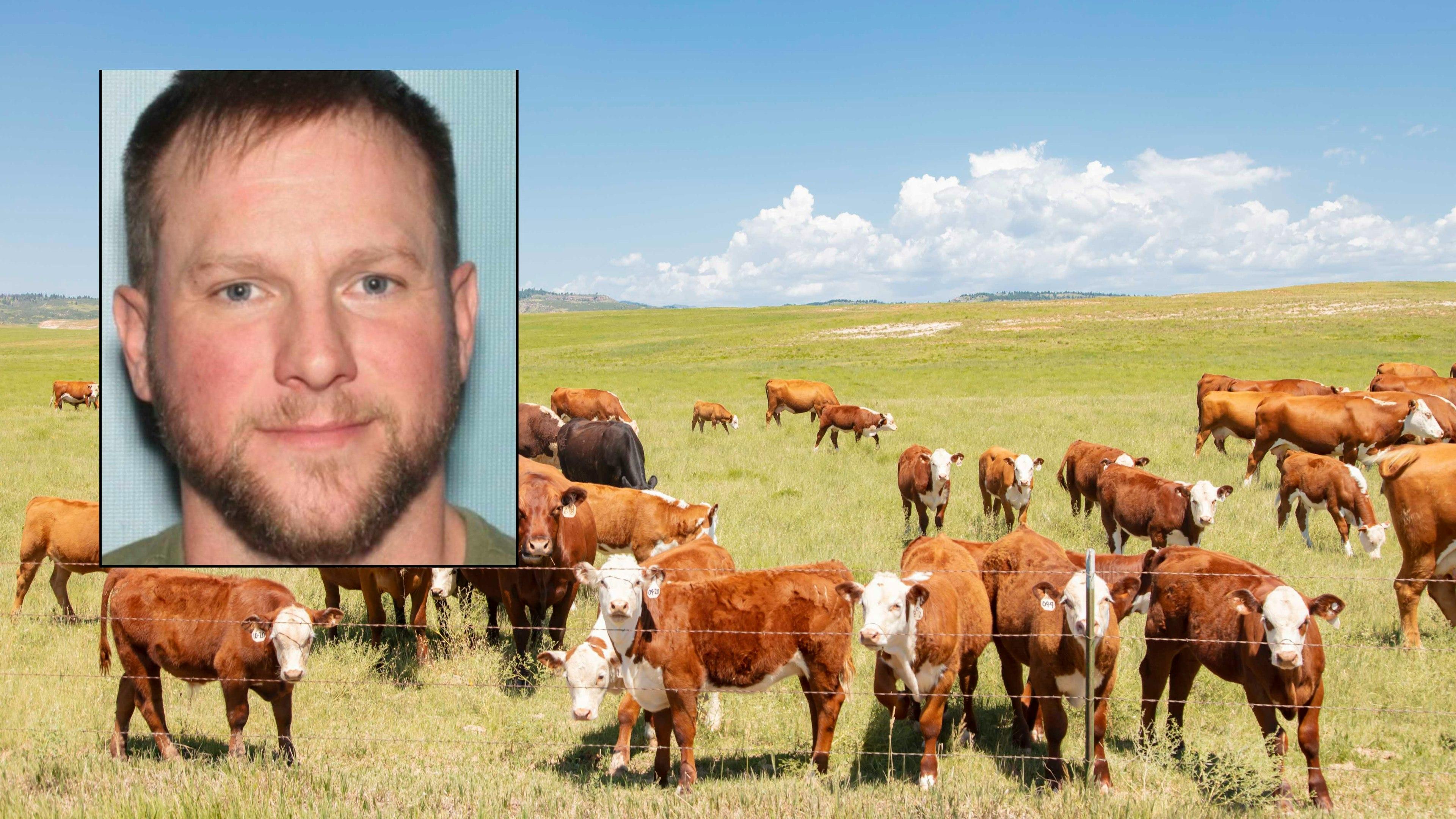
A federal jury in Fort Worth has convicted brothers Joshua Robert Link and Jason Allen Link for their roles in a $240 million cattle investment fraud operated through Agridime LLC. Prosecutors proved that the company collected money from more than 2,200 victims nationwide while selling contracts tied to roughly 60,000 more cattle than it actually controlled, and they said investor funds were used to pay earlier purchasers, company expenses, commissions and personal expenditures. The brothers were convicted of wire fraud, conspiracy and money laundering charges and are scheduled to be sentenced on March 4, 2027.
A federal jury in Texas has convicted two brothers for their roles in a sprawling $240 million cattle investment fraud that prosecutors say deceived more than 2,200 victims across the United States by selling investment contracts tied to cattle the company frequently did not own. Joshua Robert Link, formerly of Strafford, Missouri, and Jason Allen Link, of Herington, Kansas, were found guilty after a six-day trial in the Northern District of Texas involving Agridime LLC, a Fort Worth-based cattle and beef marketing company that promised investors they could earn substantial profits by purchasing individual cattle online while the company handled feeding, raising, processing and eventual meat sales. Prosecutors said the business instead became a high-tech Ponzi-style operation in which investor money was diverted to operating expenses, payments owed to earlier investors, commissions, personal expenditures and luxury purchases.
The verdict was returned on November 10 before U.S. District Judge Mark T. Pittman in Fort Worth. Joshua Link, who served as Agridime’s co-owner and executive director, was convicted of two counts of wire fraud conspiracy, two counts of wire fraud and two counts of money laundering. Jason Link, who owned Shady Brook Ranch LLC and worked as an Agridime livestock broker and meat chain director, was convicted of one count of wire fraud conspiracy, two counts of wire fraud and two counts of money laundering. Both men are scheduled to be sentenced on March 4, 2027, and each faces potentially decades in federal prison depending on how the court structures the sentences.
The case centered on a simple investment pitch that prosecutors said was designed to appear tangible, understandable and relatively safe. Agridime advertised an opportunity for ordinary investors to pay about $2,000 to purchase a steer or heifer, with the company promising to use the money to acquire a specific animal, care for and feed it, process it into meat and eventually sell that meat at a profit. Investors were told they could participate in the cattle business without needing land, livestock expertise or the physical infrastructure normally required to raise animals, making the investment attractive to people who wanted exposure to agriculture without becoming ranchers themselves.
Federal prosecutors said those representations were materially false because Agridime did not maintain enough cattle to support the enormous number of contracts it sold. Trial evidence showed that from January 2021 through December 2023, the company collected more than $240 million through public and private solicitations while selling contracts representing approximately 60,000 more head of cattle than it actually controlled in its inventory. That discrepancy became one of the most important pieces of evidence in demonstrating that the business could not operate as advertised because the company had promised investors ownership interests tied to animals that did not exist within its supply chain.
The structure described by prosecutors bore the core characteristics of a Ponzi scheme. Rather than consistently using new investor funds to purchase and raise the cattle promised in the contracts, Agridime used some of that money to cover company operating expenses, repay loans and satisfy obligations owed to earlier cattle purchasers. That meant money from newer participants helped support payments promised to people who had invested previously, creating the appearance that the business was generating successful returns even when its underlying cattle operations were insufficient to support the volume of contracts being sold.
The scheme had already attracted federal regulatory attention before the criminal convictions. In December 2023, the Securities and Exchange Commission filed an emergency civil action against Agridime, Joshua Link and Jed Wood, alleging that the company had raised at least $191 million from more than 2,100 investors in at least 15 states through what the regulator described as fraudulent and unregistered cattle investment contracts. The SEC said investors were promised annual returns ranging from approximately 15% to 32% and were told they could make money from cattle ownership without having to perform the work themselves.
The SEC alleged at the time that Agridime had used at least $58 million from newer investors to make payments to earlier participants and more than $11 million to pay commissions to sales representatives and insiders. Those allegations helped expose the scale of the financial imbalance inside the company and eventually led to deeper scrutiny of its books, investor records and cattle inventory. The later criminal prosecution went further by presenting evidence that prosecutors said showed intentional deception, misuse of investor money and additional embezzlement involving the Link brothers.
Federal investigators said Agridime’s executives also overstated the number of cattle the company actually owned when seeking loans or financing from banks, private lenders and feedlots. Those representations allowed the company to present itself as larger and more financially secure than prosecutors said it truly was. Inflating inventory can be especially significant in agricultural financing because lenders often rely on the number and value of livestock as collateral when deciding whether to extend credit.
The criminal case also included allegations that company insiders received unusually large salaries and commissions while investor money continued flowing into the business. Prosecutors said Joshua Link and Tia Link received more than $2.7 million in salaries and commissions between 2022 and 2023, while Jed Wood received more than $2.4 million. The government argued that these payments demonstrated how heavily investor funds were being used to enrich individuals connected to Agridime rather than simply financing the purchase and care of cattle as promised.
The jury also found that Joshua and Jason Link participated in a separate scheme to defraud Agridime itself. Prosecutors presented evidence that between November 2021 and January 2024, the brothers submitted fraudulent requests for so-called feed and yardage payments that caused Agridime to send more than $2.7 million to a business controlled by Jason Link. The government said those services had not actually been provided by Jason’s business because another company had already supplied and been paid for the same cattle feed and related services.
According to prosecutors, the duplicate billing effectively caused Agridime to pay twice for the same work. Bank records showed that some of the money was then used for personal and luxury expenditures rather than legitimate agricultural operations. One of the most striking purchases involved approximately $1.5 million paid to a construction company to build a five-bedroom, four-bathroom barndominium in Herington, Kansas, which prosecutors said was intended for recreational use by the brothers.
The government also traced $24,838 to the purchase of a 2006 Hummer H2, along with additional spending on solar panel installations and plumbing supplies. Those purchases became part of the prosecution’s effort to show how money associated with the scheme was converted into personal assets and lifestyle expenditures. The jury’s money laundering convictions indicate that prosecutors persuaded jurors beyond a reasonable doubt that particular financial transactions involved proceeds from criminal activity.
U.S. Attorney Ryan Raybould described the defendants as having preyed on ordinary Americans who believed they were participating in legitimate cattle investments. He said the brothers used what appeared to be a modern agricultural investment platform to attract people who trusted the company’s promises and believed their money was tied directly to livestock. Federal officials characterised the operation as a sophisticated fraud that combined traditional agricultural imagery with online investment marketing, allowing the company to reach thousands of people across the country.
The Federal Bureau of Investigation also said the convictions reflected deliberate efforts to attract investors and then divert their money. The FBI’s Fort Worth Resident Agency investigated the matter together with the U.S. Department of Agriculture’s Office of Inspector General, an important partnership because the case involved both financial fraud and the agricultural industry. Federal authorities have increasingly focused on schemes that use ordinary business sectors, including farming and food production, to make investment fraud appear more credible.
Joshua Link’s path to trial also included a period in which he was considered a fugitive. A federal grand jury indicted several Agridime figures in February 2026, and Joshua Link was initially wanted by the FBI on fraud-related charges before later being taken into custody. The indictment at that stage described a scheme worth more than $220 million, but subsequent evidence and trial records placed total collections above $240 million.
Four other people associated with Agridime pleaded guilty before the brothers went to trial. Jed Hansel Wood, the company’s operations director, pleaded guilty to wire fraud conspiracy, while Tia Makenzie Link, who served as marketing director, pleaded guilty to money laundering. Cattle broker Taylor Orris Bang and financial controller Royana Jane Thomas also entered guilty pleas to fraud-related conspiracy charges before the November trial.
Their guilty pleas strengthened the government’s broader case by establishing that several people occupying senior positions within Agridime had accepted criminal responsibility before the Link brothers faced a jury. Each defendant played a different role in the company, ranging from operations and marketing to cattle brokerage and financial administration. Sentencing for those defendants will be handled separately, with possible prison terms ranging from several years to decades depending on the conviction and individual circumstances.
For Joshua and Jason Link, the sentencing exposure is significant. Federal law allows up to 20 years in prison for each wire fraud and conspiracy conviction and up to 10 years for each money laundering conviction. The statutory maximum does not automatically determine the final sentence because federal judges also consider sentencing guidelines, financial loss, number of victims, criminal history, acceptance of responsibility, obstruction and other factors before determining the appropriate punishment.
Restitution is likely to become another major part of the case. More than 2,200 victims paid money into Agridime based on representations that their funds were tied to particular cattle, and many suffered significant financial losses when the operation collapsed. Federal courts can order defendants to repay victims where possible, although recovering the full amount lost in large Ponzi schemes is often difficult because substantial portions of investor money may already have been spent, transferred or paid to earlier participants.
Receivers and regulators have been working for years to identify assets, recover money and determine how funds should be distributed. Large fraud cases can involve complex disputes because not every investor loses the same amount and some participants may have received earlier payouts before the collapse. Courts may also have to determine which assets belong to the company, which belong to individuals and which can legally be seized or sold to compensate victims.
The scale of the Agridime operation helps explain why the case has attracted national attention. Cattle are physical assets with measurable market value, which can make investment contracts tied to livestock appear safer than purely digital or speculative investments. A prospective investor may reasonably assume that even if profits fall short, an actual animal still exists somewhere in the supply chain and retains some underlying value.
Prosecutors said Agridime exploited precisely that perception. Investors were led to believe their money corresponded to identifiable cattle that would be purchased, raised and sold on their behalf, but company records showed that the number of contracts dramatically exceeded the number of animals actually controlled. By linking the investment to something tangible and familiar, the company could attract people who might otherwise have avoided a high-return investment offer.
The promised returns should also have raised concerns. The SEC said Agridime marketed annual profits of approximately 15% to 32%, figures substantially higher than many conventional investments while being presented as relatively straightforward cattle ownership. High returns combined with claims of low effort and predictable profits are common warning signs in investment fraud, particularly when investors are told that a specialised business model makes unusually strong returns appear routine.
The company’s marketing reportedly emphasised that investors could profit from cattle without needing to handle the daily work themselves. That message appealed to people who wanted exposure to agriculture but did not have ranches, feedlots or livestock expertise. It also reduced investors’ direct visibility into whether the cattle supposedly associated with their contracts actually existed.
That lack of direct verification became a critical weakness. Investors generally did not take possession of the animals and instead relied on Agridime’s records, representations and internal supply chain. Prosecutors said the company was therefore able to sell far more contracts than its actual cattle inventory could support before regulators and investigators uncovered the discrepancy.
The case has broader implications for online alternative investments. Digital platforms increasingly allow people to invest in assets that traditionally required specialized knowledge, including farmland, livestock, real estate, art and private businesses. While many such platforms are legitimate, the Agridime case demonstrates how technology can also make old-fashioned Ponzi structures easier to market nationally by giving them the appearance of modern financial innovation.
The internet also allowed Agridime to reach investors far beyond Texas. Court records show victims were scattered across the United States, meaning people did not need any direct relationship with the ranches, cattle brokers or company executives to participate. Advertising, websites and online sales systems could create the appearance of a professional operation even for customers hundreds or thousands of miles away.
The fraud therefore depended heavily on trust in digital information. Investors relied on electronic contracts, online marketing and company representations rather than physically inspecting animals or visiting feedlots. Once that trust was established, large sums could move quickly through the company’s accounts while the underlying cattle inventory remained far smaller than promised.
Agricultural investment schemes can be particularly persuasive because farming is widely viewed as a traditional and productive part of the real economy. Unlike speculative cryptocurrencies or highly complex financial derivatives, cattle are easy for ordinary people to understand. That familiarity can make investors less suspicious when a company claims to have discovered a more efficient way to turn livestock into passive income.
The Agridime case also shows why regulators increasingly treat certain agricultural contracts as securities when investors contribute money and depend primarily on the efforts of others to generate profits. Although the contracts were framed as cattle purchases, the SEC argued that participants were effectively passive investors relying on Agridime to manage the entire process and produce the promised return. That legal classification was central to the regulator’s decision to intervene in 2023.
The convictions are significant because the case has now moved beyond regulatory allegations and civil enforcement into criminal accountability. A federal jury heard the evidence, considered the government’s case and found Joshua and Jason Link guilty of multiple offences. The presumption of innocence that applied before trial no longer applies to the counts on which the jury returned guilty verdicts, although the defendants retain rights to post-trial motions and appeals.
Sentencing will determine the immediate legal consequences, but the financial recovery process may continue much longer. Ponzi schemes frequently leave complicated receivership estates, unresolved creditor claims and disputes over property purchased with mixed funds. Victims can wait years before learning how much money, if any, they will ultimately recover.
The collapse of Agridime may also lead investors to scrutinize other agriculture-based investment platforms more carefully. People considering similar opportunities may increasingly demand independent verification of livestock inventories, audited financial statements, proof of insurance and confirmation that regulators have reviewed the offering. Promises of unusually high guaranteed returns are likely to receive particular attention.
Financial advisers often recommend that investors independently verify how an investment actually generates its returns rather than relying only on advertising or testimonials. In Agridime’s case, the basic economic question was whether the company had enough cattle and enough genuine meat sales to support the returns it promised to thousands of investors. Prosecutors ultimately showed jurors that the numbers did not match.
The case also demonstrates why internal controls matter in privately held companies that handle large amounts of investor money. Agridime had senior officials responsible for operations, marketing, finance and cattle brokerage, yet prosecutors said fraudulent billing, overstated inventory and large insider payments continued for years. Effective independent auditing might have identified those discrepancies earlier.
The federal investigation brought together expertise from financial crime and agricultural oversight agencies because the scheme crossed traditional regulatory boundaries. Fraud involving livestock can include securities law, banking, wire transactions, commodity issues and agricultural regulations, requiring investigators to examine both financial records and physical cattle inventories. That complexity may partly explain why the scheme was able to grow so large before being shut down.
For the victims, however, the legal complexity does not change the basic outcome. Thousands of people believed they were purchasing cattle under contracts that would generate predictable returns, and prosecutors said many instead became participants in a system that depended on continuously bringing in new money. Some invested retirement savings or other personal funds that may be difficult to recover.
The convictions therefore represent an important milestone, but they do not fully resolve the harm caused by the scheme. Sentencing, restitution, asset recovery and receivership proceedings remain ahead, and victims will continue watching closely to see how much money can ultimately be returned.
For federal prosecutors, the case also serves as a warning to operators of investment schemes built around familiar physical assets. The use of livestock, ranches and meat processing did not shield Agridime from securities enforcement or criminal investigation once authorities determined that investor funds were being misrepresented and redirected.
The verdict also reinforces a broader lesson about Ponzi schemes. The underlying asset can be cattle, real estate, cryptocurrency, commodities or almost anything else, but the structure becomes dangerous when returns to earlier investors depend substantially on money provided by newer participants rather than genuine business profits. Once new money slows or regulators intervene, those systems often collapse rapidly because the promised obligations exceed real assets.
Agridime’s case is particularly striking because of the gap between what investors believed they owned and what the company actually controlled. Selling contracts tied to approximately 60,000 more cattle than were available meant the business had created financial obligations that could not be fulfilled simply by raising and selling livestock.
The March 4, 2027 sentencing hearing will now determine how severely Joshua and Jason Link are punished for their respective roles. The judge will consider the jury’s verdicts, sentencing guidelines and the financial harm suffered by victims before imposing prison terms and other penalties. Restitution and forfeiture orders could also affect property and funds connected to the scheme.
Until then, the convictions stand as one of the most significant recent investment fraud cases tied to the American cattle industry. A company that presented itself as a modern platform allowing ordinary people to profit from livestock ultimately became the center of a federal prosecution involving hundreds of millions of dollars, thousands of victims and cattle contracts that prosecutors proved were backed by far fewer animals than investors had been promised.
The case is also a reminder that seemingly traditional businesses can be used to disguise highly sophisticated financial fraud. Investors saw cattle, ranches and meat sales, but federal authorities found a system in which money flowed between new and old participants while insiders collected millions and financed luxury assets. The jury’s verdict has now transformed those allegations into criminal convictions for the two brothers who chose to take their cases to trial, while the broader process of recovering money and compensating victims continues.