TRUMP CAME HOME FROM SHENZHEN WITH A PHOTO AND A "PEACE DECLARATION." HE DID NOT COME HOME WITH A WAY OUT OF IRAN, AND THAT WAR WILL DEFINE HIS PRESIDENCY
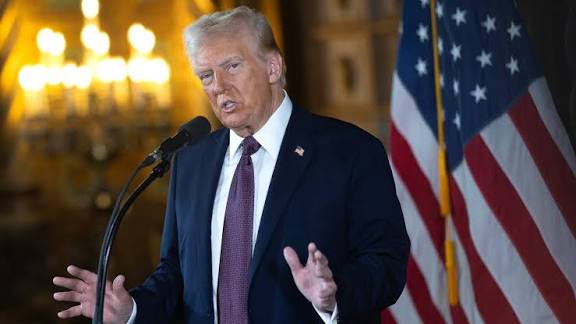
President Donald Trump has returned to Washington from his historic three-way meeting with China's Xi Jinping and Russia's Vladimir Putin at the APEC summit in Shenzhen. The talks lasted less than 90 minutes. They produced a symbolic "peace declaration" stating that nuclear war must never be fought, but no timeline for arms control talks and no visible progress on Iran, Ukraine, Taiwan, trade or artificial intelligence. Trump called the meeting "a 12" on a scale of zero to 10. German Chancellor Friedrich Merz called it "first and foremost a photo op," and several analysts said it strengthened Xi and Putin more than Trump. He now faces a Congress his Republican Party no longer controls, and a tense, unpopular stalemate in the war with Iran that has dragged down his approval ratings. That is why Iran is back at the center of Washington's foreign policy debate. For oil-dependent economies such as Nigeria and fuel-importing ones such as Ghana, what happens next could shape prices, currencies and budgets well into 2027.
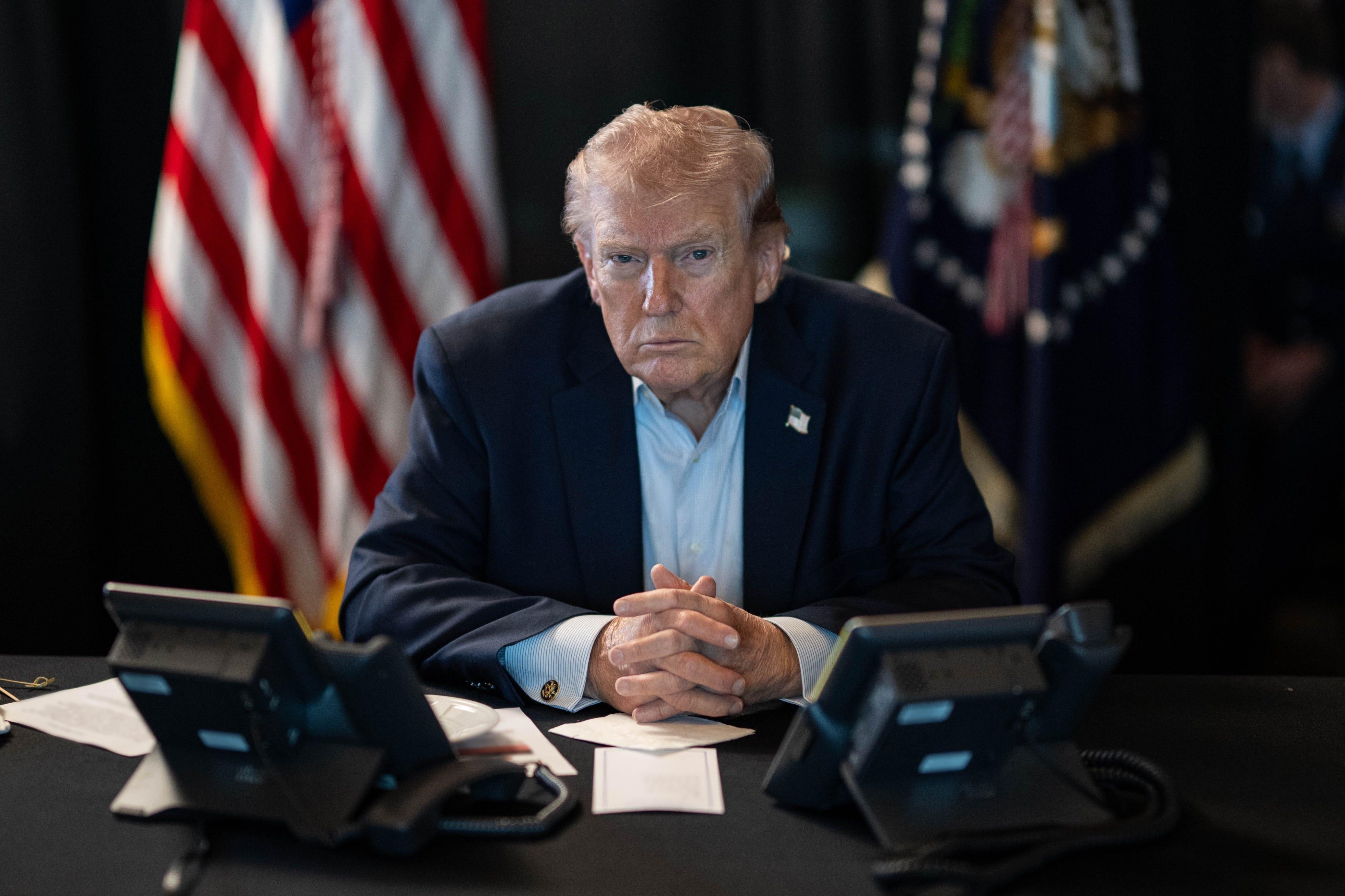
For about a day and a half, the pictures did the talking. Xi Jinping greeted Donald Trump personally at the airport in Shenzhen with an elaborate military welcome, a gesture with no precedent. The next day, the leaders of the world's three largest nuclear powers sat at the same table. In Russia, commentators compared it to Yalta, the 1945 conference where the victors of World War Two carved up the postwar world. Trump himself seemed thrilled. "On a scale of zero to 10, I think it was a 12," he told NBC News after the meeting.
Then the plane landed in Washington, and the pictures stopped mattering.
What Trump brought home was thin. The three leaders agreed on a "peace declaration" reaffirming that a nuclear war cannot be won and must never be fought. They agreed to hold a nuclear risk reduction dialogue, but set no date for it. They announced no arms control talks, which Trump has long said he wants. Speaking to Reuters by phone on the flight back, Trump admitted that a three-way deal to limit nuclear weapons would be "a very hard thing" to achieve. China has resisted the idea because its arsenal is much smaller than those of the United States and Russia.
On the issues that dominate the daily work of American foreign policy, the summit showed no visible progress at all. There was nothing new on Ukraine, where Russia's invasion is now in its fifth year. There was nothing new on Taiwan. There was no narrowing of the gaps on trade or artificial intelligence. And there was nothing on Iran, the war that is costing Trump the most at home.
That is why, within hours of his return, the conversation in Washington turned back to Tehran. The Shenzhen summit was supposed to show a president who could still shape the world. Instead, it highlighted the one problem he has not been able to shape, and the one that now threatens to define the rest of his time in office.
Start with the politics. Trump went to China weakened. His Republican Party lost control of Congress in this month's midterm elections, and the new balance of power takes effect in January. Polls show the war with Iran is deeply unpopular, and it has pulled down his approval ratings. Reuters reported that the conflict remains a "tense stalemate." In plain terms, it is a war that is neither being won nor ended, with costs that keep rising and no clear exit.
Presidents in that position often turn to foreign travel and big-stage diplomacy. Summits offer control of the story, at least for a while. Trump has used this approach throughout his career in politics, from his first-term meetings with North Korea's Kim Jong Un to his earlier encounters with Xi and Putin since returning to office. Those meetings produced memorable images. They rarely produced lasting agreements. Analysts quoted by Reuters said Shenzhen fit the same pattern.
"Trump has always loved the pageantry and the sense that he's sitting down with the most important people in the world, and he got that moment," said Christopher Preble, a senior fellow at the Stimson Center in Washington. "But as in other summits, it's hard to see any substantive progress made on any major issue."
Some analysts went further. They argued that the summit may have actually lowered Trump's standing while lifting his rivals. Xi got to play host to a great-power gathering on Chinese soil, polishing his image as a global statesman. Putin, leading a country with an economy far smaller than either China's or America's, got to appear as an equal of the world's two most powerful leaders without making any major concession. Trump got the photograph.
The White House rejected that reading. "After four years of weakness under Joe Biden, President Trump effectively restored American strength, and his events in Asia showcased the great respect and deference that world leaders bestow upon our country under this president's bold leadership," spokeswoman Anna Kelly told Reuters. "President Trump will meet with anyone in order to advance our country's interests."
America's allies were less impressed. European leaders met in Berlin on the same day to show support for Ukraine. They were angered that Trump called Putin a "friend" and that Europe had no seat at the Shenzhen table. "The meeting in Shenzhen was apparently first and foremost a photo op," said German Chancellor Friedrich Merz. On Capitol Hill, Senate Democratic leader Chuck Schumer called it "a historic embarrassment that people will remember long into the future." He added: "Trump keeps acting like he struck the diplomatic deal of the century, but he didn't secure any meaningful commitments from China or Russia that will last even a millisecond."
Not everyone was so dismissive. Daryl Kimball, executive director of the Arms Control Association, said it was "positive" that the three largest nuclear powers jointly restated that nuclear war must never be fought. In a period of rising nuclear risk, even a symbolic statement has some value. But Kimball was clear about its limits. "We need much more than rhetoric," he said.
The most useful verdict came from Josh Lipsky, vice president of international economics at the Atlantic Council. "Ultimately the proof of all of this is what is the resolution in Iran, what is resolution in Ukraine, if any," he said. "That's how this will be judged over history."
That sentence explains why Iran has jumped back to the top of Washington's agenda. Ukraine is a war Trump inherited and has long promised to end. Iran is different. It is the conflict most closely tied to his own decisions, his own political fortunes and his own claims of strength.
The road to this point is long. In 2018, during his first term, Trump pulled the United States out of the 2015 nuclear deal between Iran and world powers, calling it a terrible agreement. He replaced it with a "maximum pressure" campaign of sanctions. In January 2020, a US strike killed Qassem Soleimani, the commander of Iran's elite Quds Force, bringing the two countries close to open war. In June 2025, US forces struck Iranian nuclear sites during Israel's war with Iran. Each step was framed as a show of force that would bring Tehran to heel. Each step also deepened the hostility between the two countries and narrowed the space for a deal.
Today, by Reuters' account, the two sides are locked in a stalemate in a war that most Americans do not support. The details of the battlefield are less important to Washington's politics than the overall picture. The war is open-ended, it is expensive, and it shows no sign of producing the clear victory that would let the president declare success and move on.
This is where the failure in Shenzhen hurts most. If Trump wanted outside help to bring Iran to the table, Beijing and Moscow were the obvious places to look. China is the largest buyer of Iranian oil and one of the few major economies that has kept trading with Tehran despite American sanctions. Russia and Iran have grown much closer since the invasion of Ukraine. Iran has supplied Russia with drones, and the two countries signed a strategic partnership treaty in early 2025. Both Beijing and Moscow have influence in Tehran that Washington does not.
Neither appears to have offered to use it. Reuters reported no signs of progress on Iran in Shenzhen. Some reports said the three leaders agreed in general terms to support UN reforms, boost fuel supplies and continue dialogue. Those are words, not a plan. For Xi and Putin, a United States tied down in a costly, unpopular war in the Middle East is not obviously a problem to be solved. It drains American attention, money and military resources away from Asia and Europe, where China and Russia have their own ambitions. Helping Trump find a clean exit from Iran would mean giving up that advantage. It is hard to see what Trump could have offered in return that both leaders would accept.
So Trump returns to Washington facing the same war, with one fewer card to play.
The next few months will make that harder. In January, a Democratic-controlled Congress will take its seats. Lawmakers will have more power over war funding, more power to hold hearings and more power to put the administration's strategy under a public spotlight. War powers resolutions that once had little chance of passing may now gain real momentum, even if the president can still veto them. Every budget fight will now include a fight over the cost of the Iran conflict. A president who has entered the lame-duck phase of his term will find his room to maneuver shrinking.
There is also the calendar. In mid-December, Trump will host the Group of 20 summit at his golf resort in Florida, where he is expected to meet Xi again. Analysts say he could potentially see Putin too, though the Russian leader has not been formally invited. Florida will offer another stage and another set of photographs. The question is whether it will also offer substance. If the pattern of Shenzhen repeats, the G20 will produce warm words about cooperation while the Iran war grinds on.
With two years left in office and the broad foreign policy powers of the presidency still in his hands, Trump is unlikely to abandon his personal style of diplomacy. Analysts say he values unpredictability and believes his relationships with other leaders are a form of leverage. That belief has been tested many times. It has rarely delivered the results he promised.
For readers in Lagos, Abuja, Accra and Kumasi, all of this might sound like a distant contest among superpowers. It is not. Few foreign policy questions in the world reach African homes as quickly as conflict involving Iran, because few things move oil prices as fast.
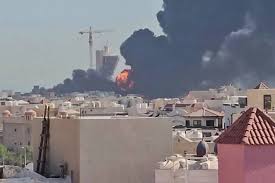
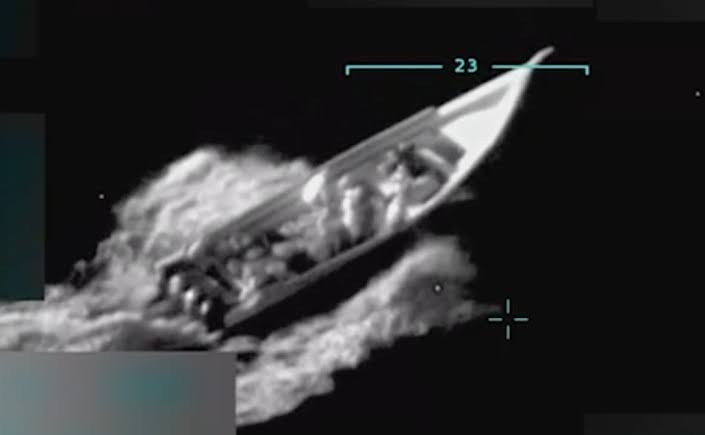
Iran sits beside the Strait of Hormuz, the narrow waterway between the Persian Gulf and the Gulf of Oman. Roughly a fifth of the world's oil supply passes through it, along with a large share of the world's liquefied natural gas. Any war involving Iran raises fears that shipping through the strait could be disrupted. Even without a closure, the risk alone can push up oil prices, insurance costs for tankers and freight charges for cargo. Markets price in fear as quickly as they price in actual shortages.
For Nigeria, that creates a familiar and uncomfortable double edge. Higher crude prices can increase government revenue and foreign exchange earnings, since oil still provides most of the country's export income and a large share of its budget. On paper, a costly war in the Gulf looks like a windfall. In practice, the gains are never that simple. Nigeria has struggled for years to produce its full oil quota because of pipeline vandalism, theft and underinvestment, so it often cannot pump more when prices rise. And since the removal of the petrol subsidy in 2023, global price spikes flow far more directly to the pump. Higher fuel prices raise transport costs, food prices and the cost of running generators for homes and small businesses. Nigerian households can end up paying more even as the government earns more. The growth of domestic refining, led by the Dangote refinery, helps reduce dependence on imported fuel, but local refiners still buy crude at prices set by world markets.
Ghana faces a different version of the same risk. The country produces crude oil, but it still relies heavily on imported refined products such as petrol and diesel. When global oil prices rise, Ghana's import bill rises with them. That increases demand for dollars and puts pressure on the cedi, which the Bank of Ghana reported had already depreciated by 10.6 percent this year by November. A weaker cedi makes imports more expensive still, feeding inflation. Producer prices have risen for four months in a row, and the central bank has warned that a strong El Niño could further affect food prices, cocoa output and the currency. An oil shock linked to Iran would land on an economy that is still recovering from its debt crisis and working within an IMF-backed program.
The rest of the continent is exposed too. Most African countries are net importers of refined fuel. Higher oil prices raise the cost of transport, farming, manufacturing and electricity generation. They widen trade deficits, weaken currencies and squeeze government budgets already strained by debt payments and falling foreign aid. Shipping disruptions in the Gulf region can also ripple through to the Red Sea and Suez Canal routes, affecting trade between Africa, Asia and Europe.
There is a political dimension for Africa as well. Shenzhen showed a world in which the three biggest powers meet to discuss global order with smaller nations watching from outside. A Reuters correspondent in Shenzhen quoted an old Korean saying: when whales fight, the shrimp's back gets broken. Middle powers such as Canada, South Korea and Japan responded by working more closely with each other. African governments face the same choice. The African Union now has a permanent seat at the G20, and Africa's voice in global forums is stronger than it has been in decades. Yet on the questions that most affect African economies, from oil prices to wars in the Middle East to great-power rivalry, decisions are still being made largely by others.
That same pattern appeared at COP31 in Antalya this week, where African negotiators accused rich countries of shifting goalposts and failing to keep promises. It appeared in Brussels, where Britain and the European Union reset their relationship with little thought for its effects on African trade and migration. And it appeared in Shenzhen, where the fate of conflicts that affect fuel prices in Lagos and Accra was discussed, if at all, without any African leader in the room.
None of this means a wider crisis is inevitable. Oil markets have absorbed many Middle East shocks in the past. Producers outside the Gulf, including the United States, Brazil and Guyana, have expanded output in recent years, giving the market more cushion than it once had. Diplomatic channels between Washington and Tehran have opened and closed many times over the decades, and a negotiated pause is always possible. A weakened president facing a hostile Congress may also have stronger reasons to seek a deal than to escalate.
But the opposite is possible too. Leaders under pressure at home sometimes reach for dramatic moves abroad, hoping to change the story. A stalemate can tempt either side to try to break it with force. That is the uncertainty now hanging over Washington, and over every economy that depends on the price of a barrel of oil.
Trump went to Shenzhen to prove he could still command the world stage. He got the stage. He did not get the outcome. Back home, the war with Iran is waiting for him, along with a Congress that will soon have the power to question every part of it. Josh Lipsky put the stakes plainly. History will not remember the airport welcome, the handshake or the "peace declaration." It will remember whether the wars ended.
For Nigerians watching petrol prices and Ghanaians watching the cedi, the measure is even simpler. The summit will matter if it makes their lives more stable. So far, nothing that came out of Shenzhen suggests it will.