UN DEPUTY SECRETARY-GENERAL AMINA MOHAMMED DEMANDS END TO VIOLENCE AGAINST WOMEN AS GLOBAL KILLINGS REACH ALARMING LEVELS
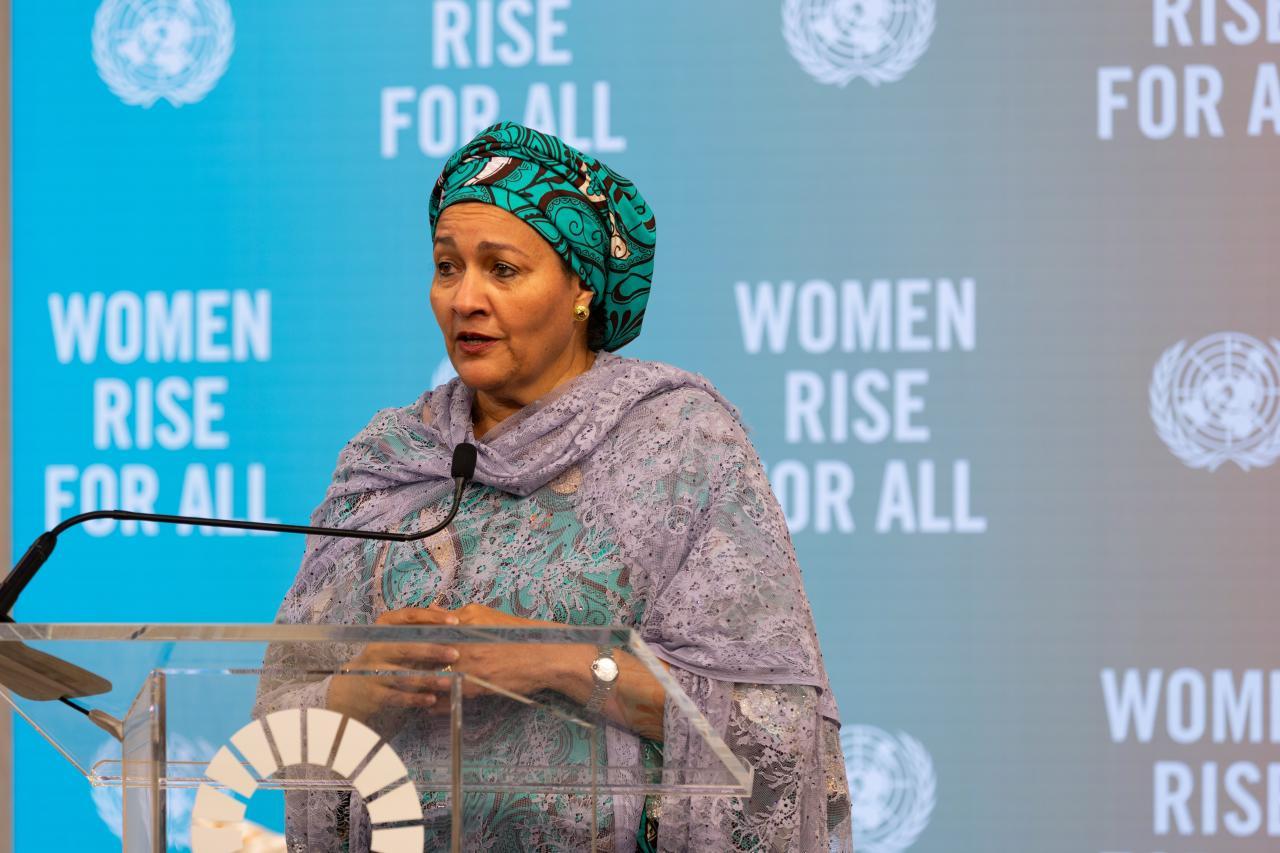
United Nations Deputy Secretary-General Amina Mohammed has called for urgent global action to eliminate violence against women and girls, demanding stronger legal protections, improved access to justice and meaningful accountability for perpetrators during her final commemoration of the International Day for the Elimination of Violence Against Women in office. Her appeal comes as new UN figures reveal that approximately 47,000 women and girls were killed by intimate partners or family members in 2025, equivalent to 129 victims every day. Mohammed urged governments to fulfill outstanding commitments, repeal discriminatory laws and address abuse occurring both offline and through digital platforms. The announcement coincides with the beginning of the annual 16 Days of Activism Against Gender-Based Violence campaign, running from November 25 to December 10.
United Nations Deputy Secretary-General Amina Mohammed has issued a powerful appeal for governments and international institutions to fulfill their outstanding commitments to eliminating violence against women and girls, warning that decades of promises, legislative reforms and international agreements have failed to provide adequate protection for millions of vulnerable individuals around the world. Speaking at the official commemoration of the International Day for the Elimination of Violence Against Women at the United Nations headquarters on Tuesday, November 24, 2026, Mohammed called for stronger legal protections, meaningful consequences for perpetrators and greater access to justice for survivors. The address, her final commemoration of the annual observance in her capacity as Deputy Secretary-General, came as new figures released by the United Nations revealed that approximately 47,000 women and girls were intentionally killed by intimate partners or family members in 2025. The findings have intensified concerns about the persistent global failure to prevent gender-based violence, particularly within households and relationships where victims should ordinarily expect to experience security, affection and protection.
Mohammed used the occasion to confront the disturbing frequency with which women and girls lose their lives at the hands of people they know, emphasizing that violence continues to occur even as international leaders gather to discuss measures intended to prevent it. Her address challenged governments to move beyond declarations of support for gender equality and demonstrate their commitments through effective legislation, properly funded public institutions and accessible mechanisms through which survivors can obtain assistance. The Deputy Secretary-General's intervention reflected growing concern within the United Nations that progress in developing international standards has not been accompanied by sufficiently effective implementation at the national and community levels. For many survivors, the existence of constitutional protections or legislation criminalizing abuse has not necessarily translated into a realistic opportunity to escape violence, receive appropriate support or secure accountability through the judicial system.
The gravity of the situation was illustrated through a display of 129 orange flags at the United Nations headquarters, each representing the estimated number of women and girls killed every day by intimate partners or relatives during 2025. The display transformed what might otherwise have remained an abstract statistical assessment into a visible representation of the scale of violence occurring within families and personal relationships. Orange has become internationally associated with campaigns seeking to eliminate gender-based violence, representing the possibility of a future in which women and girls can participate fully in society without fear of intimidation, exploitation or physical harm. However, the figures accompanying this year's commemoration demonstrate how distant that objective remains for millions of people, including women whose vulnerability is intensified by poverty, armed conflict, displacement and discriminatory social practices.
The latest global findings, published jointly by the United Nations Office on Drugs and Crime and UN Women, estimate that approximately 78,000 women and girls were intentionally killed worldwide in 2025. Of that number, around 47,000 were killed by intimate partners or family members, accounting for roughly 60 percent of all female victims of intentional homicide during the year. The figures translate into approximately five women or girls being killed every hour within relationships or family environments. Although the latest estimate is numerically lower than the approximately 50,000 intimate partner and family-related killings reported for 2024, variations in national reporting systems and the availability of reliable information mean that the difference cannot automatically be interpreted as evidence of a corresponding reduction in violence.
The findings reinforce longstanding concerns about the particular vulnerability of women within domestic environments. While homicide and other forms of violent crime affect individuals of different genders, women face a disproportionately significant risk of being killed by current or former intimate partners and other family members. Domestic violence can develop through patterns of intimidation, isolation, financial control, threats and physical aggression that intensify over time, although individual cases differ considerably in their circumstances. The ability of authorities to identify dangerous situations before they escalate into fatal incidents remains an important component of effective prevention, particularly where survivors have previously sought assistance or reported threats without receiving adequate protection.
Mohammed's appeal also addressed the continued existence of discriminatory laws and institutional practices that prevent women from exercising their rights on equal terms. In several parts of the world, legal frameworks governing marriage, divorce, inheritance, property ownership and family responsibilities can create circumstances in which women possess limited financial independence or face considerable difficulty leaving abusive relationships. Even where legislation formally recognizes their rights, social pressure, administrative obstacles and inadequate enforcement may prevent women from obtaining the protection theoretically available to them. Addressing gender-based violence consequently requires governments to examine not only laws directly criminalizing physical and sexual abuse but also broader legal arrangements capable of increasing women's vulnerability.
The Deputy Secretary-General emphasized the need for governments to investigate and prosecute violence occurring both in physical environments and through digital platforms. Her intervention reflects the growing recognition that technology-facilitated abuse can produce significant consequences for women's safety, emotional well-being, professional opportunities and participation in public life. Online harassment, threatening messages, unauthorized distribution of intimate material and other forms of digital intimidation have become increasingly prominent concerns as communication technologies expand. Women working in journalism, politics, human rights advocacy and entertainment may face particularly visible forms of harassment because their professional responsibilities frequently require them to maintain an active public presence.
The increasing sophistication of artificial intelligence technologies has introduced additional challenges for governments seeking to address digital abuse. Tools capable of creating manipulated photographs, videos and audio recordings can be misused to produce deceptive material intended to humiliate, intimidate or exploit individuals. Women and girls subjected to such conduct may experience reputational damage, emotional distress and difficulties persuading audiences that circulating material is false or misleading. Existing legal frameworks do not always provide clear or accessible remedies for these emerging forms of abuse, creating pressure on policymakers, technology companies and law enforcement agencies to develop responses capable of protecting individuals without unnecessarily restricting legitimate communication.
Digital violence can also intersect with abuse occurring within intimate relationships. Technology may be used to monitor communications, restrict access to financial resources, issue threats or maintain unwanted contact after a relationship has ended. These behaviors can make it more difficult for survivors to establish independence and may extend intimidation beyond the physical environment in which an abusive relationship originally developed. Effective protection therefore requires authorities to recognize that abuse conducted through electronic devices can carry serious consequences even when it does not initially involve direct physical violence. The growing importance of digital communication has made this issue relevant across geographical boundaries, income levels and cultural environments.
The scale of gender-based violence becomes even more apparent when fatal incidents are considered alongside the broader experiences of women who survive physical and sexual abuse. According to global prevalence estimates published by the World Health Organization in November 2025, approximately 840 million women have experienced physical or sexual violence from an intimate partner, sexual violence from someone other than a partner, or both during their lifetimes. The figure represents nearly one-third of women worldwide and reflects the findings of a comprehensive international assessment of available national and regional data. These estimates demonstrate that violence against women cannot be regarded as a problem affecting only a small number of households or particular societies, but rather as a widespread public health and human rights challenge requiring sustained intervention.
The consequences of such violence extend considerably beyond immediate physical injuries. Survivors may experience long-term psychological distress, depression, anxiety, reproductive health complications and difficulties maintaining employment or participating in education. Children growing up in households affected by violence may also experience emotional and developmental consequences, particularly where insecurity becomes a regular feature of their everyday environment. The resulting burden can affect healthcare systems, educational institutions, social services and national economies, illustrating why preventing gender-based violence has significance beyond the circumstances of individual criminal cases.
Adolescent girls remain among those requiring particular attention because violence experienced during formative years can affect their educational progress, physical health and future economic opportunities. The World Health Organization's assessment estimated that approximately 12.5 million girls between the ages of 15 and 19 had experienced physical or sexual violence from an intimate partner during the preceding year. Such experiences can be particularly difficult to address where young people have limited access to confidential healthcare, reliable information about their rights or trusted adults capable of providing assistance. Protecting adolescent girls consequently requires interventions involving families, schools, healthcare institutions, community organizations and law enforcement authorities.
One of the major obstacles confronting efforts to eliminate violence against women is the continuing gap between the prevalence of abuse and the number of incidents formally reported to authorities. Survivors may choose not to approach the police because they fear retaliation, financial insecurity, social exclusion or disbelief. In communities where family reputation is considered especially important, individuals who disclose abuse may encounter pressure to remain silent or accept informal reconciliation rather than seek legal assistance. Others may lack confidence in the ability of police officers and judicial institutions to protect them from further harm. These difficulties mean that official criminal records alone are unlikely to capture the full extent of gender-based violence.
Improving access to justice therefore requires more than encouraging survivors to report incidents. Women must also be able to approach institutions without encountering unnecessary administrative obstacles, discriminatory treatment or demands that expose them to additional danger. Accessible reporting mechanisms, trained investigators, appropriate medical services and timely judicial proceedings can all influence whether survivors receive meaningful protection. Where institutions fail to respond effectively, individuals may conclude that reporting violence creates additional risks without providing a realistic opportunity for accountability, further weakening public confidence in the systems intended to protect them.
Economic insecurity represents another significant barrier for women attempting to escape abusive relationships. A survivor who depends on an abusive partner for housing, food, transportation or access to financial resources may face substantial difficulties establishing an independent life. Those challenges can become more complicated where children are involved, particularly if alternative accommodation and childcare arrangements are unavailable. Financial assistance, safe housing, employment opportunities and access to legal representation can therefore become essential components of effective protection, rather than secondary considerations unrelated to the immediate experience of violence.
The situation is frequently more complicated in rural communities and economically disadvantaged regions, where specialized support services may be geographically inaccessible or insufficiently funded. Women living far from police stations, courts and healthcare facilities may encounter transportation costs and practical difficulties when attempting to report abuse or attend legal proceedings. Survivors with disabilities can face additional obstacles where institutions lack accessible infrastructure or appropriate communication support. Ensuring that protection is available to women across different social and economic circumstances requires governments to consider how services operate beyond major urban centers and established administrative institutions.
The United Nations' latest appeal also carries particular significance for populations affected by armed conflict and humanitarian emergencies. War, displacement and institutional breakdown can weaken the systems that ordinarily provide protection against abuse, leaving women and girls exposed to heightened risks of sexual violence, exploitation and forced marriage. Displacement camps and emergency shelters may struggle to maintain adequate security, sanitation and access to confidential medical services. Women separated from established family and community support networks can become especially vulnerable, particularly where economic hardship forces them to depend on unfamiliar individuals or organizations for essential resources.
Conflict-related sexual violence remains one of the most serious challenges confronting international humanitarian and human rights institutions. Such conduct can be used as a means of intimidation, punishment or control, creating consequences that extend far beyond individual victims and affect entire communities. Survivors frequently encounter considerable difficulties accessing medical assistance, psychological support and judicial remedies while conflicts remain active. The restoration of peace does not automatically resolve those difficulties, as survivors may continue facing stigma, financial hardship and unresolved trauma long after hostilities have ended. Effective post-conflict recovery therefore requires attention to the experiences and needs of women affected by violence.
United Nations Secretary-General António Guterres reinforced Mohammed's appeal through his own message marking the International Day for the Elimination of Violence Against Women on November 25. Guterres emphasized the continuing global prevalence of abuse and urged governments to strengthen prevention, justice and accountability. He also highlighted the importance of challenging social norms that encourage harmful behavior or discourage survivors from speaking publicly about their experiences. His message complemented the Deputy Secretary-General's emphasis on institutional responsibility, reinforcing the organization's position that ending gender-based violence requires sustained action across government, civil society and local communities.
The international observance also marks the beginning of the annual 16 Days of Activism Against Gender-Based Violence campaign, which runs from November 25 until Human Rights Day on December 10. The campaign brings together governments, international organizations, advocacy groups, educational institutions and community representatives in efforts to increase awareness and strengthen public commitments to eliminating violence. This year's activities place particular emphasis on securing justice for survivors and ending impunity for perpetrators across both physical and digital environments. The campaign provides an opportunity to examine the effectiveness of existing policies while encouraging institutions to address areas where legal protections and public services remain insufficient.
The history of the international observance reflects the experiences of women whose resistance to political oppression became associated with broader struggles for human rights. November 25 commemorates the Mirabal sisters, three Dominican political activists who were killed in 1960 during the dictatorship of Rafael Trujillo. Women's rights organizations subsequently adopted the date as an occasion to campaign against violence, and the United Nations General Assembly formally designated November 25 as the International Day for the Elimination of Violence Against Women in 1999. The observance has since developed into an international platform for examining the relationships between violence, discrimination, political authority and the protection of fundamental human rights.
Over the decades, international institutions have established numerous agreements and policy frameworks intended to strengthen women's rights and address discrimination. The Convention on the Elimination of All Forms of Discrimination Against Women, adopted in 1979, provides an important international framework for examining discriminatory laws and practices. The 1995 Beijing Declaration and Platform for Action subsequently identified violence against women as a critical area requiring coordinated intervention. More recently, the United Nations Sustainable Development Goals have incorporated explicit commitments to eliminating violence against women and girls as part of the wider objective of achieving gender equality by 2030.
Despite these commitments, progress has remained uneven across countries and regions. Governments differ substantially in the resources available to police services, judicial institutions, healthcare systems and organizations supporting survivors. Some countries have expanded legal protections and introduced specialized domestic violence legislation, while others continue struggling to implement existing laws consistently. Even within countries possessing relatively comprehensive legal frameworks, survivors may experience delays, inadequate investigations or difficulty obtaining protective orders. The resulting disparity between international commitments and everyday experiences remains central to the concerns Mohammed raised during her address.
With the 2030 deadline for achieving the Sustainable Development Goals approaching, the continued prevalence of gender-based violence has become an increasingly important measure of whether global development commitments are being fulfilled. Gender equality is closely connected to educational participation, access to employment, reproductive health, political representation and economic independence. Violence can undermine progress in each of those areas by restricting women's ability to pursue opportunities or participate freely in public life. Addressing abuse is therefore relevant not only to the specific goal concerning gender equality but also to broader efforts to reduce poverty, improve health and strengthen inclusive institutions.
Amina Mohammed's intervention carries additional significance because of her long involvement in shaping international development policy. Before assuming her position as United Nations Deputy Secretary-General in January 2017, the Nigerian diplomat served as Nigeria's Minister of Environment and worked as a special adviser to the UN Secretary-General on international development priorities. She played an important role in the processes that contributed to the adoption of the 2030 Agenda for Sustainable Development, establishing a professional association with international commitments to poverty reduction, gender equality and sustainable economic progress. Her final commemoration of the international day in her current capacity therefore provided an opportunity to reflect on the distance between those commitments and their implementation.
Throughout her tenure at the United Nations, Mohammed has repeatedly emphasized that development cannot be considered inclusive when women remain unable to exercise their rights safely. Her advocacy has addressed the interconnected nature of gender inequality, economic vulnerability, environmental challenges and conflict. Those issues are particularly relevant in developing countries, where limited public resources can complicate efforts to provide universal access to essential services. However, the persistence of gender-based violence in wealthier countries demonstrates that financial development alone does not eliminate discriminatory attitudes or guarantee effective institutional responses.
For African countries, the latest international appeal arrives amid ongoing efforts to strengthen regional protections against violence and discrimination. The African Union adopted a continental convention addressing the elimination of violence against women and girls in 2025, representing an additional regional commitment to improving legal protections and institutional cooperation. Such instruments can help establish shared standards and encourage governments to review domestic legislation, but their long-term importance will depend on ratification, implementation and the availability of resources required to enforce their provisions. International and regional agreements cannot independently protect survivors unless their commitments are translated into practical arrangements within national institutions.
In Nigeria, the issue continues to attract attention from women's rights organizations, legal practitioners, healthcare professionals and community leaders working to strengthen responses to domestic and sexual violence. The Violence Against Persons (Prohibition) Act of 2015 established an important legislative framework addressing several forms of harmful conduct, while individual states have adopted their own legislation and implementation arrangements. However, differences in enforcement capacity, public awareness and access to specialized services remain relevant to the experiences of survivors. The significance of legislative reform consequently depends on whether women can obtain meaningful assistance when they encounter violence, regardless of their financial circumstances or geographical location.
Similar challenges are relevant to Ghana and other West African countries, where governments have introduced domestic violence legislation and established institutions responsible for protecting vulnerable individuals. Community-based organizations frequently provide support through awareness programs, legal assistance and referrals to healthcare or social services. However, inadequate funding, social stigma and difficulties accessing specialized support can limit the effectiveness of these initiatives. The United Nations' appeal reinforces the importance of ensuring that protection mechanisms remain accessible beyond major cities and that survivors can seek assistance without encountering discriminatory attitudes or unnecessary procedural obstacles.
Religious and traditional institutions also occupy influential positions within many African communities, giving them an important role in discussions surrounding family relationships, social expectations and responses to abuse. Community leaders can help encourage responsible behavior, challenge harmful practices and direct survivors toward appropriate support. Conversely, where individuals are pressured to remain in dangerous circumstances for the sake of preserving family unity or avoiding public embarrassment, informal intervention can undermine their safety. Effective cooperation between community institutions and professional support services requires recognition that cultural and religious commitments do not remove an individual's entitlement to dignity, personal security and legal protection.
The importance of involving men and boys in prevention efforts has also received increasing attention. Programs addressing respectful relationships, consent, emotional communication and nonviolent conflict resolution can contribute to challenging harmful attitudes before they become established patterns of behavior. These initiatives recognize that efforts to eliminate violence should not place responsibility exclusively on women to protect themselves or identify potentially dangerous situations. Preventing abuse requires attention to the conduct of perpetrators, the social environments in which harmful behavior develops and the institutions responsible for responding when violence occurs.
Financial commitments remain another important measure of whether governments are prepared to translate their promises into practical outcomes. Specialized police units, shelters, healthcare programs, legal assistance services and public education initiatives require dependable funding and trained personnel. Organizations supporting survivors may struggle to maintain their operations when financial assistance is temporary or unpredictable, particularly during humanitarian emergencies and periods of economic uncertainty. Although governments frequently express support for eliminating gender-based violence during international commemorations, the sustainability of those commitments can be assessed through the resources devoted to prevention and survivor protection throughout the year.
Accurate information is equally important because effective public policy depends on understanding the scale, characteristics and circumstances of violence. Many countries continue experiencing difficulties collecting comparable data on domestic abuse, sexual violence and gender-related killings. Differences in reporting practices, legal definitions and the classification of homicide victims can complicate attempts to determine whether conditions are improving. Strengthening national statistical systems and improving coordination among police authorities, courts, healthcare institutions and social services could provide a clearer basis for identifying emerging risks and evaluating the effectiveness of prevention programs.
The latest estimate of 47,000 women and girls killed by intimate partners or family members should therefore be understood as an indication of the documented scale of the crisis rather than a complete account of every gender-related killing worldwide. Some countries lack comprehensive information, while certain deaths may be classified without sufficient details concerning the relationship between the victim and the perpetrator. The available data nevertheless establish that violence within intimate and family environments continues claiming tens of thousands of lives annually. The persistence of those killings demonstrates the need for authorities to strengthen prevention and protection long before a situation reaches a fatal conclusion.
As Mohammed approaches the conclusion of her tenure as Deputy Secretary-General, her final address marking the international observance has placed renewed emphasis on the unfinished responsibilities of governments and international institutions. Her appeal reflects the recognition that adopting international declarations and passing protective legislation are important achievements but cannot serve as substitutes for meaningful improvements in the lives of women and girls. The success of future initiatives will depend on whether survivors can access justice, whether institutions respond effectively to reports of abuse and whether prevention receives the sustained financial and political attention necessary to produce lasting results.
For the millions of women who have experienced violence, the international campaign represents an opportunity to draw attention to circumstances that frequently remain hidden within households, workplaces and communities. Yet the significance of the observance extends beyond the speeches, public demonstrations and symbolic displays taking place during the 16 Days of Activism. Its ultimate purpose is to encourage institutional and social changes capable of preventing violence throughout the year, ensuring that protection does not depend on an individual's wealth, influence or ability to attract public attention. Achieving that objective will require sustained cooperation among governments, civil society organizations, healthcare professionals, educators and communities.
The 129 orange flags displayed at the United Nations headquarters offered a powerful reminder of the human consequences associated with the failure to eliminate gender-based violence. Behind every statistical estimate are individual lives, families and communities confronting losses that cannot be reversed through subsequent declarations of concern. Mohammed's final commemoration as Deputy Secretary-General has consequently renewed attention to the gap between international promises and the protection available to women in their everyday lives. With the world approaching the 2030 development deadline, the challenge confronting governments is demonstrating that gender equality and the elimination of violence are enforceable commitments supported by effective institutions, rather than aspirations repeatedly expressed during annual commemorations while preventable suffering continues.