VETERAN ACTOR STACY KEACH DIES AT 85 AFTER LONG BATTLE WITH HEART DISEASE
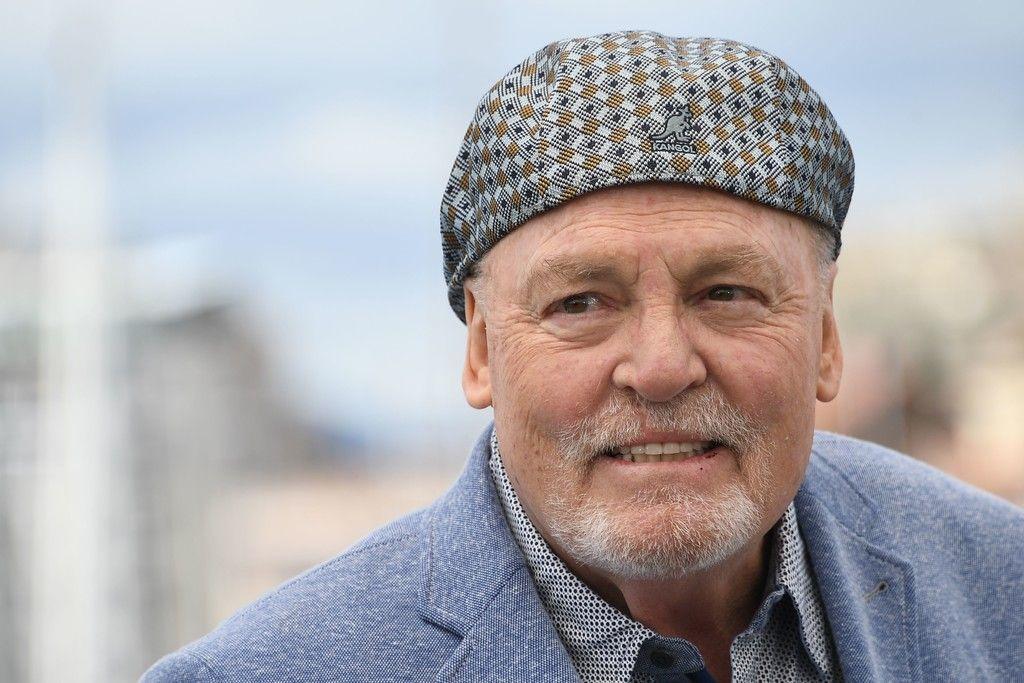
Veteran American actor Stacy Keach has died at the age of 85 at his family home in Magdalenka, Poland. His wife, Małgosia Tomassi Keach, said he died on November 10 after a long battle with a serious heart condition and heart failure. Keach was best known for playing private detective Mike Hammer and also appeared as Warden Henry Pope in Prison Break, Archbishop Kevin Kearns in Blue Bloods and Ken Titus in Titus. His career spanned more than six decades across theater, television and film.
Veteran American actor Stacy Keach, whose commanding voice and rugged screen presence carried him through more than six decades of work across film, television and the stage, has died at the age of 85 after a prolonged battle with a serious heart condition and heart failure. Keach died on Tuesday, November 10, at his family home in Magdalenka, Poland, according to his wife, Małgosia Tomassi Keach, who said he had fought his illness with extraordinary courage and determination before peacefully passing away. His death brings to an end a remarkably varied career that made him familiar to several generations of audiences, from his defining portrayal of private detective Mike Hammer to later roles in Prison Break, Blue Bloods, Titus, Nebraska, American History X and The Bourne Legacy.
Keach’s wife described him not only as a celebrated actor but as the center of their family, paying tribute to a man whose professional life stretched from Shakespearean theater to crime dramas, Hollywood films and television narration. She said his death had left an enormous void for those closest to him and remembered the resilience he showed throughout his illness. Keach had previously suffered a heart attack while performing onstage in Chicago in 2017, but he later returned to acting and continued appearing in film and television productions well into his eighties. His final years reflected the same persistence that characterized much of a career in which he repeatedly moved between demanding stage work and mainstream entertainment.
Although younger television viewers may remember Keach as Warden Henry Pope in the hit Fox drama Prison Break, his most enduring television association was with Mickey Spillane’s hard boiled private detective Mike Hammer, a role he played across several television productions beginning in the 1980s. Keach gave the character a forceful but charismatic presence and became so closely associated with Hammer that the role followed him through multiple revivals. His work in the series helped establish him as a familiar face on American television and gave him one of the most recognizable characters of his career.
His performance in Prison Break later introduced him to another generation. Keach appeared as Henry Pope, the warden of Fox River State Penitentiary, during the early seasons of the series. The role carried an unusual personal connection because Keach said he partly modeled Pope on the real life prison warden he encountered while serving time in Britain during the 1980s. He described that warden as a compassionate administrator who believed prisoners could be rehabilitated, an experience that shaped how Keach approached the fictional character decades later.
Keach’s acting career was considerably broader than either Mike Hammer or Prison Break. He was regarded as one of the most accomplished American stage actors of his generation and built a reputation as a powerful interpreter of Shakespeare. Over the course of his theatrical career, he played some of the most demanding roles in the classical repertoire, including Hamlet, Richard III, Macbeth and King Lear. His commitment to theater remained constant even as he became a recognizable television and film actor, and he repeatedly returned to the stage because he believed the range and challenge of classical roles were central to his craft.
He earned a Tony Award nomination for portraying Buffalo Bill in the Broadway production of Indians and later appeared in major stage productions including The Kentucky Cycle and Other Desert Cities. His Shakespearean work brought him acclaim from critics who regarded him as an unusually versatile performer capable of moving from commanding historical figures to troubled modern characters. Keach once said that his desire to play a wide range of roles may have cost him a more conventional Hollywood career, but he considered the opportunity to play characters such as Hamlet, Richard III and King Lear worth any professional sacrifice.
His film work was equally varied. Keach appeared in John Huston’s acclaimed boxing drama Fat City in 1972 and later worked again with Huston in The Life and Times of Judge Roy Bean. He played roles in The Ninth Configuration, American History X, The Long Riders, Roadgames, The Bourne Legacy and Alexander Payne’s Nebraska, among many others. His characters ranged from fighters and soldiers to lawmen, fathers, criminals and authority figures, and he developed a reputation for bringing intensity to supporting roles even when his screen time was limited.
Keach also won a Golden Globe for portraying Ernest Hemingway in a television miniseries, a performance that became another important milestone in his career. He reportedly gained significant weight for the role and approached Hemingway with the same seriousness he brought to his stage work. His fascination with Hemingway later returned in the one man play Pamplona, in which he portrayed the writer during a troubled period late in his life. It was during a 2017 performance of that production in Chicago that Keach suffered a heart attack onstage, forcing the run to be canceled while he recovered.
Television audiences also knew him from Titus, where he played Ken Titus, the difficult and often outrageous father of Christopher Titus. The performance allowed Keach to display a more comedic side and introduced him to viewers who may not have known his earlier dramatic work. He later appeared in Blue Bloods as Archbishop Kevin Kearns, a recurring role that placed him opposite Tom Selleck, and he also took on roles in The Blacklist and other major television productions.
Keach’s career was not without major setbacks. In 1984, while he was starring in Mike Hammer, he was arrested at London’s Heathrow Airport after authorities discovered cocaine hidden in his luggage. He was sentenced to nine months in prison and served six months before being released. Keach later described the experience as one of the lowest moments of his life and spoke openly about his cocaine addiction, eventually using his experience to warn others about substance abuse.
After leaving prison, he rebuilt his career rather than disappearing from public life. He narrated a documentary about drug addiction, testified before the United States Congress about his own experiences and spoke at colleges and rehabilitation centers. His return to acting was also surprisingly rapid. Television audiences welcomed him back, and the Mike Hammer franchise resumed, demonstrating that the scandal had not permanently destroyed the connection he had built with viewers.
Keach later reflected openly on the lessons of that period and spoke about the dangers of dependency. Rather than avoiding the subject, he incorporated it into his public life and used his own mistakes as part of his advocacy. That willingness to discuss failure became one of the more unusual chapters of his career and contributed to the image of an actor who had survived both professional and personal crises without abandoning his work.
He was born in Savannah, Georgia, in 1941 into a theatrical family. His father, Walter Stacy Keach Sr., was an actor, director and drama teacher, while his mother, Mary Cain Peckham, had also studied acting. Keach grew up surrounded by performance but later recalled that his parents initially did not want him to enter the profession because they understood how uncertain an acting career could be. He nevertheless pursued the stage with determination, studying English and dramatic art at the University of California, Berkeley before continuing at the Yale School of Drama and later the London Academy of Music and Dramatic Art as a Fulbright scholar.
His training gave him a foundation in classical theater that remained visible throughout his career. Even when he was working in television crime dramas or commercial films, Keach frequently returned to Shakespeare, touring productions and live theater because he considered stage acting an essential part of his identity. That commitment eventually earned him induction into the American Theatre Hall of Fame and helped establish his reputation as much more than a television character actor.
Keach was also widely recognized for his distinctive voice. He narrated documentaries, television programs and other productions over the years and became familiar to audiences who may not have immediately recognized his face. His voice work included narration for American Greed, where his deep delivery became closely associated with the series and contributed to its distinctive style.
His personal life included four marriages, with his final and longest marriage to Polish actress Małgosia Tomassi Keach beginning after they met through the Mike Hammer production. The couple built a family together and maintained strong ties to Poland, where Keach ultimately died at their home in Magdalenka. He is survived by his wife and their children, Shannon and Karolina. Public tributes following his death have focused not only on his acting but also on the generosity and professionalism colleagues said he brought to sets and stages over many decades.
Actors who worked with Keach remembered him as a performer with enormous presence who could also be warm and generous away from the camera. Lou Diamond Phillips, who played Keach’s son in the television movie Lone Rider, described him after his death as gracious, giving and exceptionally kind while also possessing the intensity of a great dramatic actor. Those tributes reflected the unusual balance Keach carried through much of his career, combining a formidable screen persona with a reputation for professionalism among colleagues.
His longevity was remarkable in an industry where careers often disappear after only a few successful years. Keach worked across more than half a century of American entertainment, beginning in an era dominated by classical stage training and studio filmmaking and continuing into the streaming age. He adapted to changing styles without abandoning the theatrical discipline that shaped him, appearing in serious dramas, television procedurals, comedies and large commercial productions while continuing to take on stage roles well into later life.
For Prison Break fans, Warden Pope will remain one of the performances most closely associated with him. For an earlier generation, he will always be Mike Hammer, the tough detective in the tilted hat. Theater audiences will remember a different Stacy Keach, an actor capable of carrying King Lear or Hamlet and holding a stage through the force of his voice and presence. Those different memories reflect the range that defined his professional life.
Keach once explained that he deliberately wanted as varied a collection of roles as possible, even if that choice made his career harder to categorize. That decision ultimately became one of his greatest strengths. He was never confined to a single type of character or medium and spent decades moving between theater, television and film with a freedom many performers never achieve.
His death closes a career that survived artistic risks, personal mistakes, imprisonment, illness and the constant uncertainty of acting. Through each period, Keach continued working and repeatedly found new audiences. The boy from a theatrical family in Georgia became a Shakespearean actor, television detective, Hollywood character performer, narrator and eventually a familiar face to viewers who encountered him through entirely different decades of popular culture.
For his family, the loss is more personal than the long list of credits and awards that will accompany his obituaries. His wife’s tribute emphasized that distinction, remembering him above all as a husband, father and companion whose presence shaped their lives away from the screen. For audiences, however, the legacy remains visible in an extraordinary body of work that stretched from Shakespeare and Hemingway to Mike Hammer, Prison Break and Blue Bloods, leaving behind performances that will continue introducing Stacy Keach to new generations long after his final appearance.