WHITE HOUSE FORCES KIMBERLY GUILFOYLE OUT AS U.S. AMBASSADOR TO GREECE AMID MISCONDUCT ALLEGATIONS
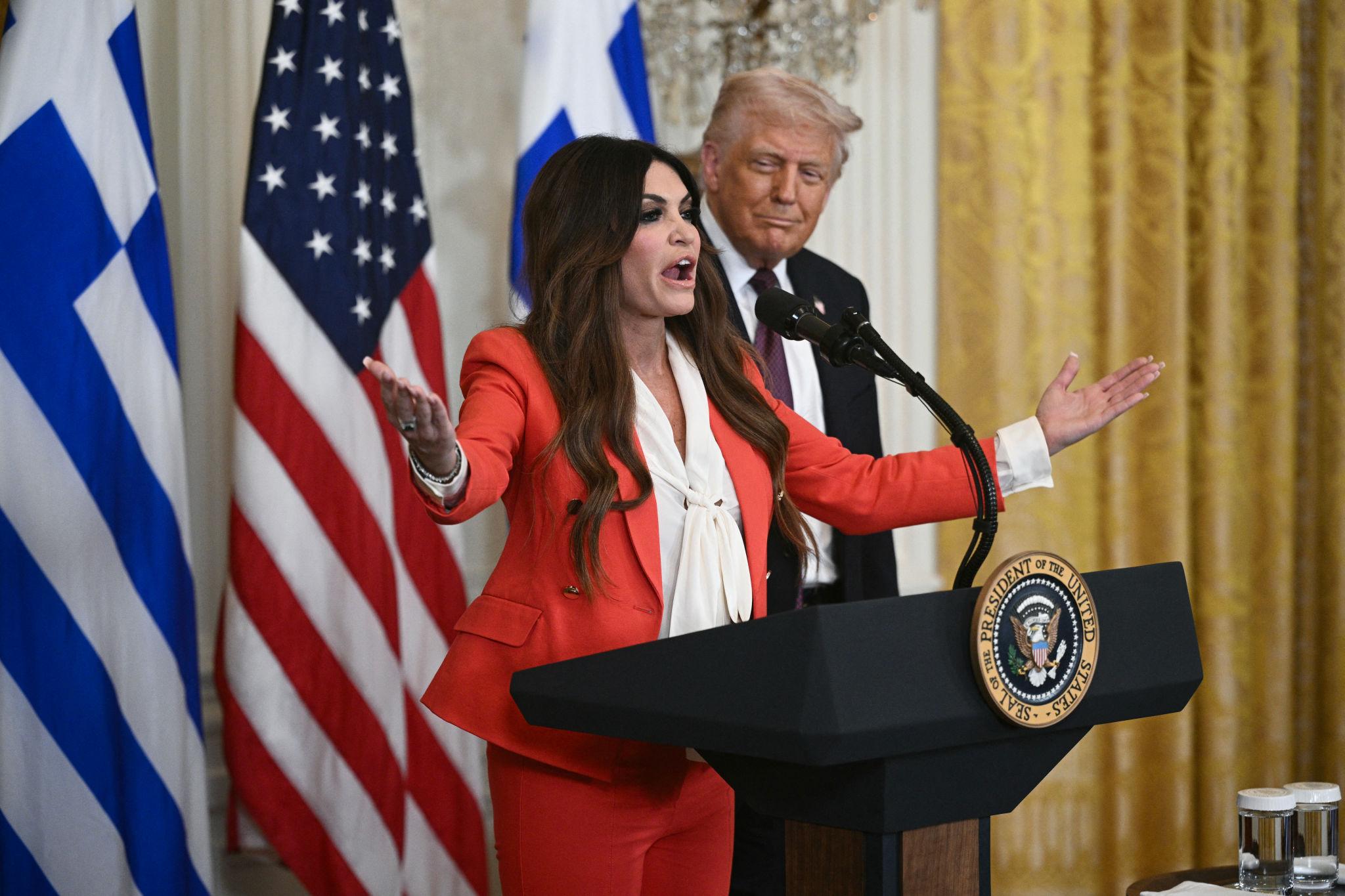
The White House has asked Kimberly Guilfoyle to resign as U.S. ambassador to Greece following reports alleging improper financial and ethical conduct, including claims that she sought money or favors from wealthy contacts while offering access or influence. Guilfoyle subsequently confirmed that her tenure was ending but denied wrongdoing and said she would defend herself. No criminal conviction or final public investigative finding has established the allegations against her.
The White House has asked Kimberly Guilfoyle to resign as U.S. ambassador to Greece after a series of reports raised allegations of improper conduct, ending the diplomatic tenure of one of President Donald Trump’s longtime political allies less than a year after she formally took up the post. Guilfoyle later confirmed that her time as ambassador was coming to an end, while denying wrongdoing and signaling that she intends to defend herself against the accusations that triggered one of the most high-profile personnel departures of Trump’s second administration.
The White House announced the decision on October 13, with Press Secretary Katie Zacharia saying the administration had asked Guilfoyle to step down and thanking her for her service. The statement was brief and did not lay out a detailed public case against her, but the resignation followed weeks of reporting about alleged financial and ethical misconduct involving wealthy donors, Greek business interests and her access to senior officials in Washington.
The most serious allegations concern claims that Guilfoyle sought substantial personal financial assistance from a Trump donor while discussing her ability to help with access to government officials or other matters. The Wall Street Journal reported that Guilfoyle had asked donor Eric Deters to help pay a roughly $100,000 American Express bill and, according to messages cited by the newspaper, suggested that the transfer should not be publicly traceable. Deters later described the request as improper and said he believed Guilfoyle had attempted to connect money with access or influence.
Guilfoyle disputes that characterization and, through her representatives, has challenged the authenticity or interpretation of some of the communications cited in the reports. She has maintained that she acted properly and has publicly emphasized her loyalty to Trump, Secretary of State Marco Rubio and the diplomatic personnel with whom she worked. Her position remains that the accusations do not fairly represent her conduct and that she intends to contest them rather than accept them as established fact.
Other reports have raised questions about whether Guilfoyle accepted improper gifts or services, promoted the interests of certain Greek business figures during official engagements and used her diplomatic position in ways that created potential conflicts of interest. The State Department has reportedly been examining aspects of her conduct, although no public criminal charge has been announced and the existence of an internal inquiry does not itself establish wrongdoing.
The White House decision is politically significant because Guilfoyle was not a career diplomat brought into the administration through the traditional Foreign Service. She was a prominent Trump ally, former Fox News personality, major Republican fundraiser and former fiancée of Donald Trump Jr. before being nominated to serve as ambassador to Greece. Her appointment drew considerable attention from the beginning because of her close relationship with the Trump political network and her high public profile in conservative politics.
Trump nominated Guilfoyle for the Athens post in late 2024, describing her at the time as a trusted ally who could advance American interests in Greece. After Senate confirmation, she assumed the position in 2025 and became one of the most visible political appointees in the administration’s diplomatic corps. Her tenure included a heavy focus on U.S.-Greek strategic relations, energy cooperation, regional security and investment.
Greece has become increasingly important to U.S. foreign policy in the eastern Mediterranean because of its role in NATO, its geographic position near the Balkans and Middle East, and its growing significance in energy transit and defense cooperation. The United States has strengthened military access arrangements with Athens, while American companies have pursued energy, infrastructure and technology opportunities in the country.
Guilfoyle made energy cooperation one of the central themes of her ambassadorship. She publicly promoted greater imports of U.S. liquefied natural gas into Europe and supported efforts to expand American commercial influence in sectors where Greece is positioning itself as a regional hub. Her public appearances regularly emphasized the strategic partnership between Washington and Athens and presented U.S. investment as an important part of Greece’s economic and security future.
Her tenure also generated diplomatic controversy. One of the most notable disputes involved comments she made regarding Chinese investment in the Port of Piraeus, where Chinese state-owned shipping company COSCO holds a major stake. Guilfoyle publicly suggested that Greece should consider reducing or eliminating Chinese control in the port, comments that drew criticism because of the sensitivity of the issue and the extent of Chinese investment in Greek infrastructure.
Greek officials have generally sought to balance close relations with Washington against significant economic ties with China, making public pressure over Piraeus diplomatically delicate. Guilfoyle’s comments therefore drew attention not only to her style but also to broader U.S.-China competition in southern Europe.
The allegations that ultimately contributed to her departure were more personal and more serious. Reports described communications with wealthy individuals in which Guilfoyle allegedly sought money or financial assistance while discussing access to Trump administration officials. Such conduct, if proven, could raise significant ethical questions because diplomats and other federal officials are subject to strict rules governing gifts, conflicts of interest and the use of public office for private benefit.
The White House did not publicly accuse Guilfoyle of a crime. Instead, it moved directly to request her resignation, an important distinction because presidential administrations have broad authority to remove political appointees from diplomatic posts even when no criminal case has been established. Ambassadors serve at the pleasure of the president and can be recalled or replaced whenever the administration loses confidence in them.
Trump himself had previously signaled that Guilfoyle’s position was under review after the allegations became public. He was reported to have expressed frustration with the controversy, while Secretary of State Marco Rubio was also said to be unhappy with the situation. The administration’s eventual decision to seek her resignation indicated that the White House concluded the controversy had become difficult to contain.
Guilfoyle responded by announcing that her service was ending while striking a loyal tone toward the administration. She described representing the United States as an honor and thanked Trump, American diplomats and military personnel. At the same time, she rejected the allegations surrounding her departure and indicated that she would continue defending her reputation.
The resignation ends a diplomatic posting that had lasted less than a year. It also creates an immediate vacancy in a strategically important embassy at a time when Washington is dealing with multiple European security issues, energy competition and tensions involving Russia, China and the eastern Mediterranean.
The State Department will now have to manage the embassy through senior diplomatic staff until the administration names a replacement and any successor completes the confirmation process required for an ambassadorial appointment. Depending on timing, that process could take months, leaving the chargé d’affaires or another senior diplomat responsible for day-to-day operations.
The controversy surrounding Guilfoyle has also revived debate over the appointment of political allies to ambassadorial posts. U.S. presidents from both parties have long appointed major donors, political supporters and personal allies to diplomatic positions, particularly in countries considered desirable postings. Critics of the practice argue that it can place individuals without substantial diplomatic experience in sensitive roles, while supporters say political appointees can sometimes use direct access to the president to advance bilateral relationships effectively.
Guilfoyle’s defenders have emphasized that she was energetic in promoting U.S. commercial and strategic interests and had built relationships with senior Greek officials and business leaders. Her critics argue that the same access and networking style created potential ethical risks when personal financial interests became entangled with official responsibilities.
The allegations involving wealthy donors are especially sensitive because of the appearance they can create even before any formal legal conclusion is reached. Federal ethics rules are intended not only to prevent explicit bribery but also to reduce situations in which officials appear to trade public access for private benefits. Establishing an actual criminal violation would require evidence meeting a much higher legal standard, but the threshold for a president to remove an ambassador is far lower.
The Greek government has largely avoided intervening publicly in the dispute, treating Guilfoyle’s resignation as an internal matter for the United States. That restrained response reflects diplomatic convention. Host governments generally avoid commenting extensively on personnel disputes involving another country’s ambassador unless the alleged conduct directly affects bilateral relations.
Greek opposition politicians and media organizations, however, have shown greater interest in the allegations, particularly where they involve Greek companies or business figures. Questions have been raised about whether local institutions or government officials had interactions with Guilfoyle that should be reviewed, although there has been no public finding of misconduct by Greek authorities.
The departure comes at a politically sensitive moment in Washington as the Trump administration prepares for the 2026 midterm elections and faces growing scrutiny over ethics and internal management. Personnel controversies involving high-profile allies can become politically damaging because they provide opponents with opportunities to question the administration’s standards for appointments and oversight.
At the same time, the case remains centered on allegations rather than a completed criminal or administrative finding. That distinction is important. Guilfoyle has not been convicted of any offense, and the reports surrounding her resignation rely in part on communications, unnamed sources and accounts from individuals who have had financial or political relationships with her. Any definitive judgment about criminal responsibility would require a formal investigative and legal process.
The White House’s decision therefore appears to reflect a loss of confidence rather than a judicial conclusion. Administrations often remove officials when allegations become sufficiently serious to damage credibility or distract from policy priorities, even if those allegations remain contested.
Guilfoyle’s future role within the broader Trump political network is also uncertain. She has been one of the President’s most visible supporters for years and played a significant fundraising and campaign role before joining the diplomatic service. Her relationship with the Trump family changed after the end of her engagement to Donald Trump Jr., but she continued publicly supporting the President and remained closely associated with the administration.
Whether that political relationship survives the controversy could depend on what emerges from the State Department review and any additional reporting. For now, Trump has chosen to remove her from a sensitive diplomatic post while avoiding an extended public confrontation over the allegations.
The episode also demonstrates the particular vulnerability of ambassadors to reputational controversies. Diplomatic credibility depends heavily on the perception that an ambassador is representing national interests rather than personal financial or political interests. Once that perception is damaged, an envoy can become less effective even before any formal finding is made.
For the U.S. mission in Greece, the immediate challenge will be continuity. Bilateral cooperation on defense, energy and regional security is likely to continue through career diplomats and other officials, but the sudden removal of an ambassador can temporarily slow high-level engagement and create uncertainty among partners.
The strategic relationship itself is unlikely to depend on one individual. Washington and Athens have deepened military cooperation over several administrations, while Greece’s role in NATO and regional energy planning gives both governments strong reasons to preserve continuity regardless of personnel changes.
The unresolved issue is whether Guilfoyle’s resignation will close the matter or lead to additional investigation. If the State Department or other authorities determine that ethics rules were violated, the controversy could continue well beyond her departure. If no formal violation is established, she may argue that she was forced out because of politically damaging but unproven accusations.
For now, the facts are narrower than some of the more dramatic claims circulating online. Guilfoyle was asked to resign by the White House, she has confirmed that her ambassadorship is ending, allegations of improper conduct have been reported by major news organizations, and she denies wrongdoing. No public criminal conviction or formal judicial finding has established those allegations as fact.
The resignation nevertheless represents a sharp reversal for an official who entered the role as one of Trump’s most prominent political appointees abroad. Less than a year after arriving in Athens with strong White House backing, Guilfoyle is leaving under pressure from the same administration that selected her.
The next phase will depend on whether additional evidence emerges from internal reviews or whether the controversy fades after her departure. Until then, the case remains both a diplomatic personnel issue and an ethics controversy, with the White House seeking distance from allegations that Guilfoyle insists are false.