
WHY NIGERIAN SOLDIERS WENT TO GABON FOR MAJOR AFRICAN MILITARY LEADERSHIP CONFERENCE
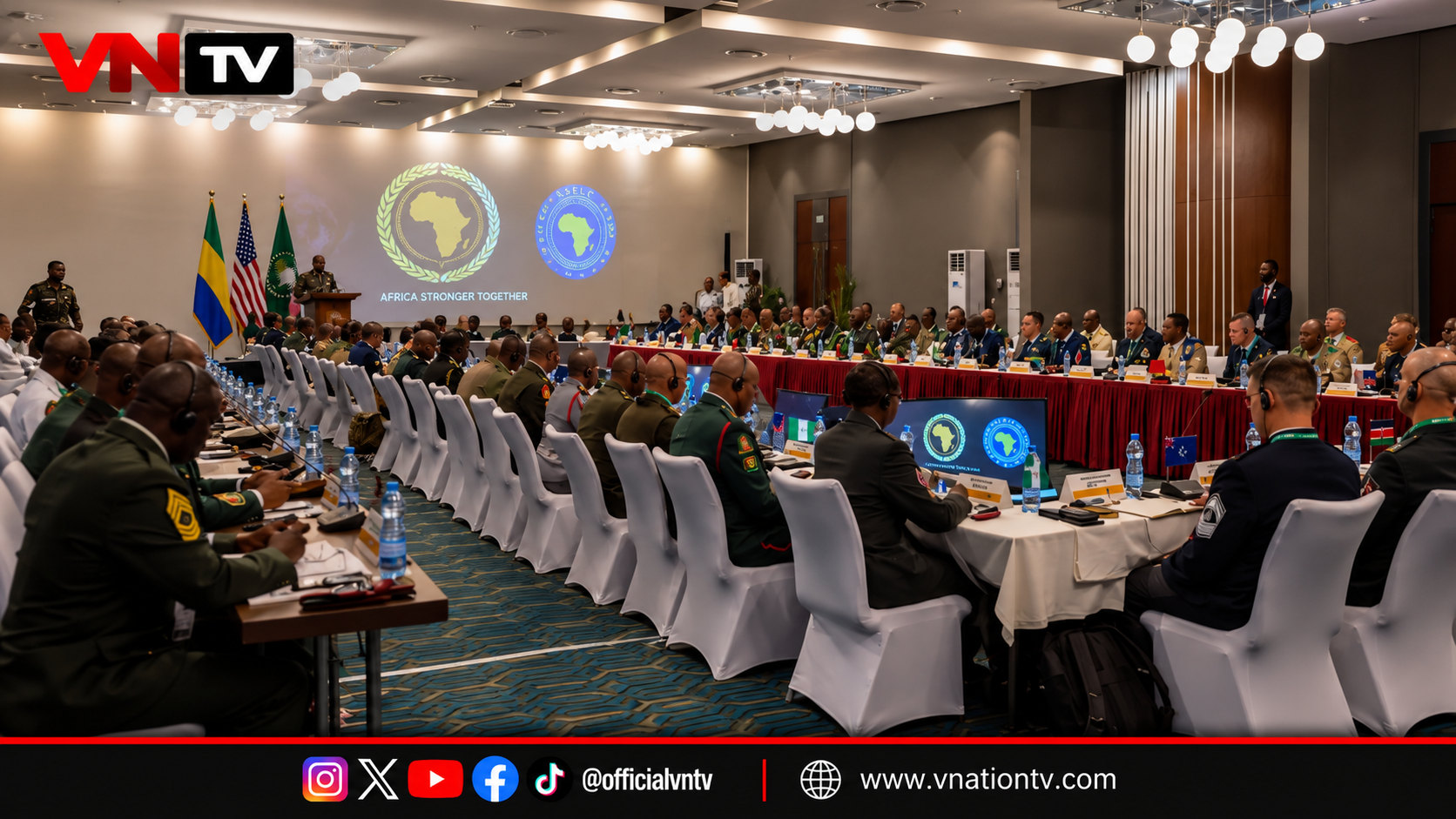
Nigeria participated in the 2026 Africa Senior Enlisted Leader Conference in Libreville, Gabon, alongside military representatives from 26 African countries and international partners. The conference focused on strengthening senior enlisted leadership, military professionalism, training and regional cooperation as African countries confront increasingly cross border security threats.
Nigeria has joined military representatives from across Africa and international partners in Libreville, Gabon, for a major conference aimed at strengthening the leadership of soldiers who play critical roles in translating military commands into operations on the ground.
The eighth Africa Senior Enlisted Leader Conference brought together 127 senior enlisted leaders and other participants from 26 African countries alongside partners from the United States, Europe and NATO.
The conference, known as ASELC, was held in Libreville from September 14 to 17, with participants arriving on September 14 ahead of the opening ceremony the following day.
Nigeria's participation comes as the country confronts security challenges that increasingly extend beyond its borders, including terrorism, insurgency, weapons trafficking, maritime insecurity and organized crime.
FOCUS ON SOLDIERS WHO LEAD FROM THE FIELD
Unlike conferences centered primarily on generals and senior commanders, ASELC focuses on senior enlisted personnel and non commissioned officers.
These personnel occupy an important position between military commanders and troops operating in the field.
Their responsibilities can include training soldiers, maintaining discipline, supervising operations, mentoring junior personnel and ensuring that commanders' instructions are understood and carried out by troops.
Command Sergeant Major Garric M. Banfield, the Command Senior Enlisted Leader of the United States Africa Command, said effective preparation during peacetime can ultimately save lives during combat operations.
Banfield also stressed that senior enlisted personnel are not intended to replace commanders but to help translate their commanders' objectives into practical action throughout military formations.
For Nigeria, strengthening that level of military leadership has implications for operations against Boko Haram and ISWAP, anti banditry missions, border security, peace support operations and maritime security in the Gulf of Guinea.
NIGERIAS SECURITY CHALLENGES CROSS BORDERS
Nigeria's participation also reflects the increasingly regional nature of the country's security challenges.
Militant organizations, trafficking networks, illegal weapons, extremist financing and maritime criminals can operate across national borders.
This has increased the importance of African militaries being able to communicate, exchange intelligence and operate alongside one another when necessary.
Nigeria's Chief of Defense Staff, General Olufemi Oluyede, has previously identified regional intelligence, integrated border management, defense cooperation and joint operations as important elements in confronting transnational security threats.
Nigeria's Defense Headquarters has also said the country remains committed to international collaboration, intelligence sharing and interoperability in addressing violent extremism and other cross border crimes.
PART OF WIDER INTERNATIONAL SECURITY ENGAGEMENT
Nigeria's participation in Libreville comes amid broader military engagement with the United States and other international partners.
AFRICOM Commander General Dagvin Anderson visited Abuja in February alongside Banfield and other American officials for meetings with President Bola Tinubu and senior Nigerian security officials.
Nigeria and the United States have also established a working group designed to provide a more structured mechanism for bilateral security engagement.
ASELC therefore represents another part of a broader network of military relationships focused on training, professional development and cooperation.
Nigeria nevertheless retains control over its military operations and national security decisions.
NINE WEST AFRICAN COUNTRIES PARTICIPATED
Nigeria was one of nine West African countries represented at the conference.
Other participating countries from the region included Benin, Cabo Verde, Côte d'Ivoire, Ghana, Liberia, Mauritania, Senegal and Sierra Leone.
Zimbabwe participated in ASELC for the first time this year.
The conference brought together militaries with different organizational structures, languages and security priorities, but many face overlapping challenges including violent extremism, trafficking, maritime crime and border insecurity.
Organizers said the objective was not to require participating countries to adopt the American military model.
Instead, participants were encouraged to examine the condition of their own enlisted forces, determine where improvements are required and learn from the experiences of other militaries.
AFRICAN MILITARIES LEARNING FROM EACH OTHER
One of the broader objectives of the gathering was to encourage African military leaders to exchange experiences directly with counterparts from other countries.
Different African armed forces have developed their training systems, career structures, professional military education and enlisted leadership models at different rates.
A continental gathering allows participants to compare approaches and examine practices that could potentially be adapted to their own national circumstances.
Nigeria has participated in several previous editions of ASELC, including the inaugural conference in Germany in 2017 and later meetings in Italy, Zambia and Malawi.
Its participation in the 2025 edition could not be independently verified by Premium Times.
WHAT THE CONFERENCE MEANS FOR NIGERIA
The practical value of Nigeria's participation will ultimately depend on whether lessons and relationships developed in Libreville translate into improvements within the country's armed forces.
Better training, stronger junior leadership, professional standards and improved cooperation with neighboring militaries could become increasingly important as Nigeria confronts threats stretching across West Africa, the Lake Chad Basin and the Gulf of Guinea.
Nigeria's participation does not mean a military conference alone can resolve terrorism, banditry or other security challenges.
Instead, ASELC represents an investment in the personnel and professional relationships required to carry out military operations effectively when those threats emerge.
As security challenges become increasingly regional, the ability of soldiers and their leaders to communicate, cooperate and operate professionally across national boundaries is likely to remain an important part of Nigeria's wider defense strategy.