
80 COUNTRIES TURN UP PRESSURE ON IRAN AS WORLD DEMANDS URGENT REOPENING OF STRAIT OF HORMUZ
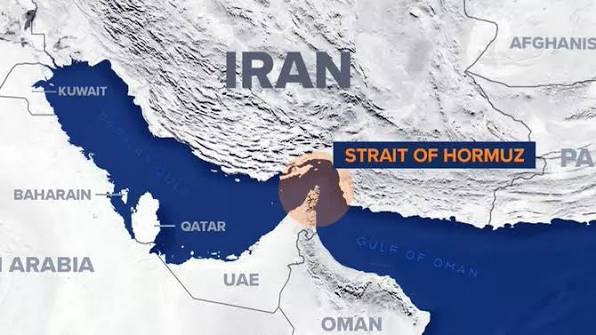
A coalition of 80 countries has demanded the urgent reopening of the Strait of Hormuz, warning that restrictions on one of the world's most important shipping routes and continuing regional attacks are threatening maritime security, energy supplies and international trade.
International pressure on Iran over the Strait of Hormuz has intensified after 80 countries issued a joint declaration demanding the urgent reopening of the strategic waterway and the restoration of unrestricted maritime navigation.
The statement was delivered on Thursday by Bahrain's Foreign Minister Abdullatif bin Rashid Al Zayani on the sidelines of the 81st United Nations General Assembly in New York.
The coalition said restrictions affecting navigation through the Strait of Hormuz were threatening international security, freedom of navigation, energy supplies and global trade.
“Iran's actions in the Strait of Hormuz continue to threaten international security and navigational rights and freedoms,” the joint statement said.
The countries called for the urgent and full reopening of the Strait and demanded safe, secure and unimpeded passage for vessels without tolls, conditions or what they described as illegal charges.
They said internationally recognised navigational rights should be fully restored without delay.
The declaration represents a significant coordinated diplomatic intervention in the continuing crisis surrounding one of the world's most strategically important waterways.
The coalition included Gulf Arab countries and major Western powers, reflecting growing international concern over the economic and security consequences of prolonged disruption.
The Strait of Hormuz connects the Persian Gulf to the Gulf of Oman and the wider Arabian Sea.
Its strategic importance comes primarily from the enormous volume of global energy supplies traditionally transported through the narrow passage.
Major oil and liquefied natural gas exporters including Saudi Arabia, the United Arab Emirates, Qatar, Kuwait and Iraq depend heavily on Gulf shipping routes.
Any prolonged disruption can therefore affect energy prices, shipping costs and supply chains far beyond the Middle East.
The joint declaration also broadened its criticism beyond Iran.
The 80 countries condemned Yemen's Houthi movement over its renewed military operations, including attacks on Saudi Arabia and shipping activity in the Red Sea.
The statement warned that Houthi advances towards the Bab el-Mandeb Strait could further increase risks to commercial vessels, maritime security and global trade.
Bab el-Mandeb represents another strategically important maritime chokepoint, connecting the Red Sea with the Gulf of Aden and shipping routes leading towards the Indian Ocean.
Disruption at both Hormuz and Bab el-Mandeb would place extraordinary pressure on international shipping.
Iran and the Houthis have defended their actions as responses to military threats and attacks against them.
Thursday's international declaration came as separate diplomatic efforts were taking place between Washington and Tehran.
U.S. and Iranian negotiators meeting in New York are exploring a phased arrangement that could potentially link the reopening of the Strait of Hormuz with the lifting of Washington's economic blockade against Iran.
Sources familiar with those discussions say one possible framework would involve reciprocal measures rather than requiring either side to surrender its main source of leverage immediately.
For Tehran, access through the Strait represents significant strategic leverage.
For Washington, economic restrictions and military pressure remain central components of its negotiating position.
No final agreement has been reached.
The two sides remain divided over important details, including the sequence in which concessions would be implemented and the guarantees each government would receive.
Iranian President Masoud Pezeshkian has separately said Tehran does not want the war to continue and argued that Washington must decide whether it wants the conflict to end.
His comments have added to signs that diplomacy is continuing despite the fighting and hostile rhetoric between the two governments.
The diplomatic developments come against a backdrop of continued volatility in global energy markets.
Oil prices climbed on Thursday after a Houthi missile attack on Saudi Arabia renewed concerns about possible supply disruptions.
Brent crude settled at $106.60 a barrel, while U.S. West Texas Intermediate settled at $94.61.
Prices retreated from their session highs after reports emerged that Washington and Tehran were discussing a possible arrangement involving the reopening of Hormuz.
That market reaction illustrates the global economic importance of developments surrounding the waterway.
For the coalition of 80 countries, however, the issue extends beyond energy prices.
Their declaration frames unrestricted navigation through the Gulf and Red Sea as a matter of international maritime security and freedom of navigation.
The simultaneous pressure from the international coalition and negotiations between Washington and Tehran now place the Strait of Hormuz at the centre of efforts to reduce tensions in the region.
Whether Iran agrees to fully reopen the waterway could depend heavily on the outcome of negotiations over Washington's economic blockade and the broader conflict.
For now, no agreement has been announced.
But with 80 governments publicly demanding unrestricted navigation and U.S. and Iranian negotiators separately exploring a potential phased settlement, diplomatic pressure for a resolution is intensifying.