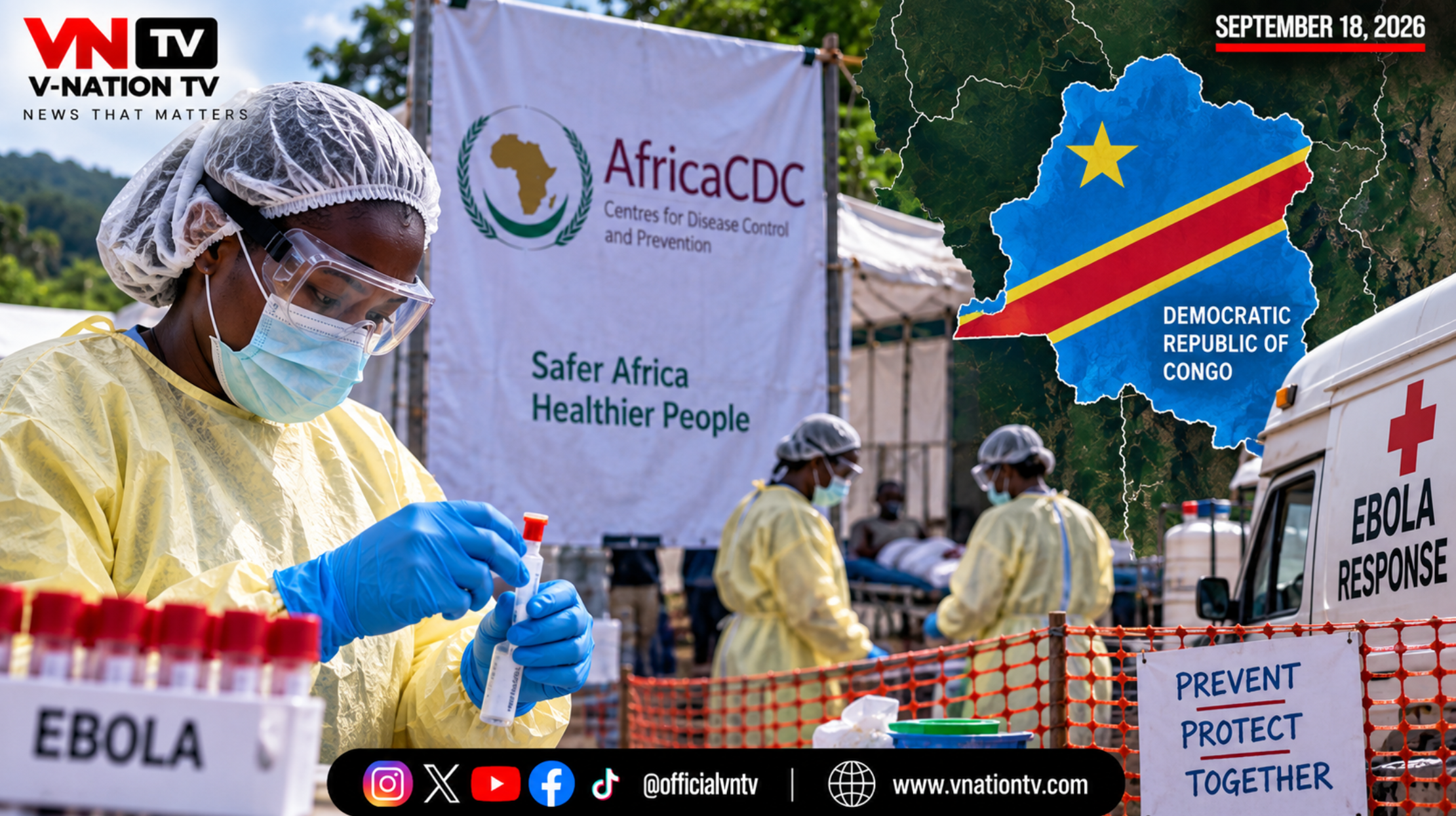
AFRICA CDC CALLS EMERGENCY HEALTH MINISTERS’ MEETING AS EBOLA SPREADS FROM CONGO TO KENYA AND NIGERIA
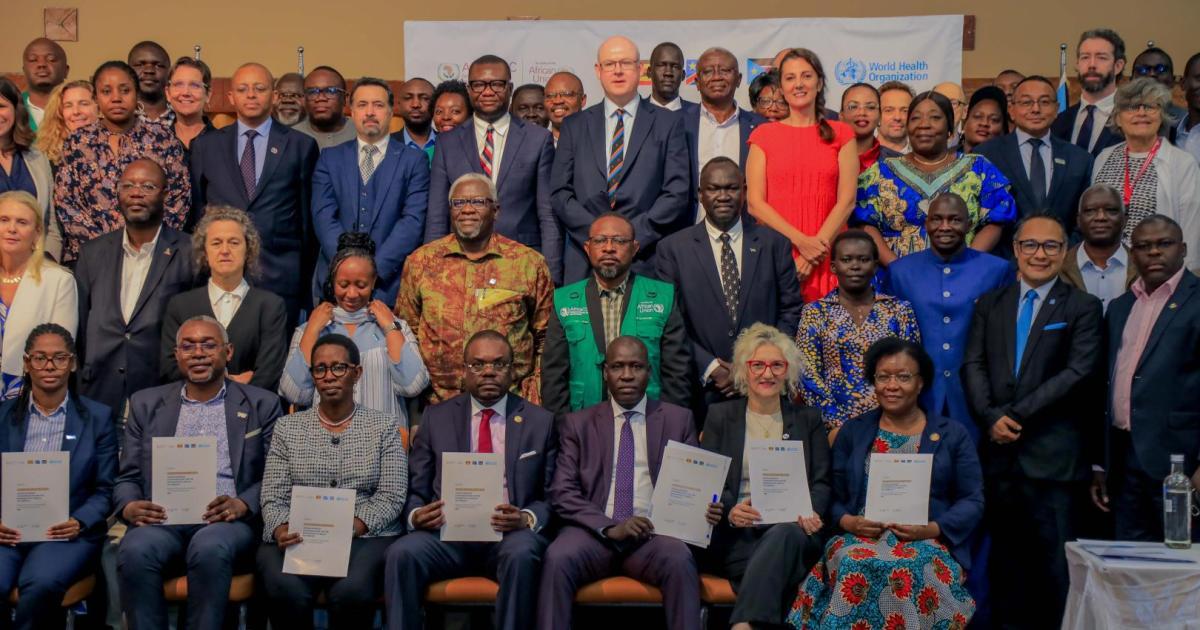
Africa CDC has called an emergency virtual meeting of African health ministers for October 28 as the Bundibugyo Ebola outbreak spreads across three regions of the continent. The disease remains widespread in the Democratic Republic of Congo and has now produced confirmed cases in Kenya and Nigeria, prompting growing concern over cross-border transmission and the movement of infected travellers before symptoms are detected. The meeting will focus on continental coordination, surveillance, support for affected countries, protection of frontline health workers and preparedness in countries that have not yet recorded cases.
The Africa Centres for Disease Control and Prevention has called an emergency high-level meeting of African health ministers as the rapidly expanding Ebola outbreak spreads across Central, Eastern and Western Africa, with confirmed cases now reported in the Democratic Republic of Congo, Kenya and Nigeria. Africa CDC announced on Wednesday, October 21, that health ministers from across the continent will meet virtually on October 28 to review the worsening situation, strengthen cross-border coordination and accelerate support for countries already dealing with cases. The continental health agency said the geographic expansion of the Bundibugyo Ebola outbreak now requires renewed political commitment and stronger cooperation between African governments because infections are no longer confined to the area where the crisis began.
The emergency meeting comes one day after Nigeria confirmed an imported Ebola infection in Abuja, bringing the virus into West Africa and increasing concern that ordinary international travel is allowing infections to move between regions before they are detected. Nigerian authorities have isolated the patient and identified 44 contacts for monitoring, while officials are tracing additional passengers and people who may have been exposed. Kenya is also responding to confirmed infections, including cases among healthcare workers and family contacts linked to its original imported case. Africa CDC says these developments demonstrate that the outbreak can no longer be treated mainly as a crisis affecting the Democratic Republic of Congo and its immediate neighbours.
Africa CDC Director General Dr Jean Kaseya said the continent must now move faster than the virus, warning that Ebola is crossing borders and requires decisive political leadership rather than separate national responses operating in isolation. He said Africa already possesses significant public-health expertise and response capacity but needs to mobilise those resources collectively if transmission is to be stopped. The October 28 ministerial meeting will therefore focus on assessing the current outbreak, identifying gaps in national preparedness, improving coordination between neighbouring countries and accelerating technical and material support to governments already dealing with confirmed infections.
The Bundibugyo outbreak began in the Democratic Republic of Congo and has been expanding for about five months. Africa CDC formally declared it a Public Health Emergency of Continental Security on May 18, signalling that the agency already considered the epidemic a threat capable of affecting multiple African countries. Since then, public-health teams have attempted to strengthen surveillance, treatment, contact tracing and community engagement, but the spread to Kenya and Nigeria has intensified concern that the existing response has not been able to contain movement of the virus across national borders.
Nigeria’s confirmation has become particularly important because the country is Africa’s most populous nation and Abuja is a major regional transport, diplomatic and commercial centre. The patient arrived in Nigeria earlier in October and was initially treated for symptoms resembling malaria before Ebola was confirmed. Nigerian officials subsequently identified 44 contacts, many of them healthcare workers, and began tracing other people connected to the patient’s travel and treatment history. The delay between symptom development and definitive diagnosis has increased the importance of aggressive contact tracing because Ebola becomes transmissible after symptoms begin.
Kenya’s situation provides another warning about the danger of healthcare-associated transmission. Africa CDC said on October 17 that Kenya had confirmed four additional Bundibugyo Ebola cases, bringing the country’s total at that stage to seven, including one death. Three of the newly confirmed cases involved healthcare workers who had treated the original patient, while another involved a family member. The individuals had already been quarantined when they tested positive, demonstrating the importance of identifying and monitoring contacts before symptoms develop into wider community transmission.
The geographic pattern is now one of the main reasons Africa CDC is escalating its response. The Democratic Republic of Congo represents Central Africa, Kenya has recorded cases in East Africa, and Nigeria has now reported an imported case in West Africa. Africa CDC says the spread across three separate regions of the continent requires a response based on continental coordination rather than relying only on national health ministries to manage infections after they arrive.
The October 28 meeting will bring health ministers together virtually, allowing governments to compare surveillance information, discuss cross-border movement, review the capacity of laboratories and treatment centres and determine where additional resources are needed. Africa CDC says the meeting will also examine how to strengthen preparedness in countries that have not yet reported cases but remain at risk because of air travel, land borders or regional transport links.
Cross-border surveillance is expected to be one of the central issues because the latest infections demonstrate the limitations of airport and border screening. People infected with Ebola can travel during the incubation period without displaying symptoms, meaning temperature checks alone cannot reliably identify every infected traveller. Health authorities therefore need systems capable of recording travel history, contacting passengers after arrival and rapidly tracing individuals if a case is later discovered.
The Nigerian case illustrates this problem clearly. The patient entered the country before Ebola was diagnosed and reportedly moved through ordinary travel routes while health authorities were still unaware of the infection. Uganda has disputed suggestions that the woman necessarily contracted Ebola there, saying transit through Uganda does not establish the source of infection and pointing to reported travel in Congo. That disagreement reinforces the importance of reconstructing complete travel histories rather than assigning infections to countries based only on the last place a patient visited.
Africa CDC’s planned meeting will therefore focus not only on treatment but also on how governments exchange information about travellers and possible exposures. A contact who leaves one country before symptoms develop can become the responsibility of another national health system within hours, making rapid communication between ministries essential. The current outbreak has shown that regional disease control depends on authorities being able to share epidemiological information faster than people move between countries.
Healthcare-worker protection is another major priority. The infections reported among Kenyan medical personnel demonstrate how easily Ebola can spread inside health facilities when a patient is initially treated before the disease is recognised. Doctors, nurses, cleaners and other hospital staff can face direct exposure to blood or bodily fluids, particularly when they are treating severe vomiting, diarrhoea or other symptoms without full protective equipment.
Africa CDC has therefore urged member states to strengthen protection for frontline health workers alongside surveillance and contact tracing. This includes ensuring facilities have sufficient personal protective equipment, clear isolation procedures, trained infection-control teams and reliable systems for rapidly testing suspected cases. The agency has repeatedly warned that losing health workers to Ebola damages not only the outbreak response but also ordinary medical services because hospitals become understaffed and communities may become afraid to seek care.
Community engagement will also form part of the ministerial discussion because successful Ebola control depends heavily on public cooperation. People who fear stigma or isolation may conceal symptoms or travel history, while misinformation can encourage families to care for infected relatives at home rather than contacting medical authorities. Public-health agencies therefore need trusted local leaders, religious organisations, community health workers and accurate communication to persuade people to report symptoms early and cooperate with contact-tracing teams.
The difficulty is especially severe in parts of Congo where conflict, displacement and weak state access already complicate health interventions. Some communities have experienced years of insecurity and may distrust outside authorities, while armed groups can make it dangerous for surveillance and treatment teams to operate. These conditions have allowed transmission to continue in areas where ordinary public-health measures are much harder to implement consistently.
The outbreak is caused by the Bundibugyo Ebola virus, a less common species than the Zaire strain associated with some of the best-known previous epidemics. The absence of an approved vaccine or treatment specifically available for widespread use against Bundibugyo increases the importance of traditional outbreak-control measures such as isolation, supportive treatment, infection prevention, safe handling of patients and intensive contact tracing.
The wider epidemic has now infected thousands of people in Congo and killed thousands, making it one of the most serious Ebola emergencies ever recorded. Associated Press reporting on Wednesday said approximately 9,500 infections and at least 4,600 deaths had been recorded in Congo, while WHO and Africa CDC continue to monitor the fast-moving outbreak. These numbers may continue to change as surveillance catches previously unreported infections, particularly in areas where health systems have struggled to reach affected communities.
The rapid increase in infections is one reason Africa CDC says political leadership needs to rise to the same level as the technical response. Disease-control specialists can provide testing, surveillance and treatment guidance, but national governments control many of the resources required to move staff, finance emergency operations, secure borders and maintain public confidence. The October 28 meeting is therefore designed to bring ministers themselves into the response rather than leaving coordination entirely to technical agencies.
The ministerial meeting will also contribute to preparations for a future summit of African heads of state and government under the leadership of Burundi’s President Évariste Ndayishimiye, who currently chairs the African Union. Africa CDC says the progression from technical response to ministerial coordination and potentially heads-of-state engagement reflects the seriousness of the threat and the need for decisions that may require political authority beyond ministries of health.
African governments may also need to discuss financing. Large Ebola outbreaks consume enormous resources because contact tracers must monitor people daily, laboratories need continuous supplies, hospitals require protective clothing and specialised treatment areas, and emergency workers need vehicles, communications systems and secure accommodation. The spread into additional countries means these costs are no longer concentrated in Congo.
Africa CDC and international partners have already mobilised substantial resources during earlier phases of the outbreak. In August, the agency welcomed additional American funding for immediate Ebola response, regional preparedness and humanitarian assistance, while calling for that money to translate into faster detection, safer care and stronger communities. The latest spread suggests further financing may be required if more countries begin reporting imported or locally transmitted infections.
WHO is also urging countries across the region to maintain a high level of readiness while transmission continues. That preparedness includes keeping rapid response teams available, ensuring laboratories can safely test suspected samples, maintaining isolation capacity and preparing systems for contact tracing before a first case is detected. The logic is that countries have a far greater chance of stopping Ebola when one imported infection appears than after dozens of hidden transmission chains have already become established.
Nigeria’s response is being closely watched for precisely that reason. The country successfully contained an imported Ebola outbreak in 2014 through aggressive contact tracing and emergency coordination after an infected traveller arrived in Lagos. That experience created a model later praised internationally, but the current Bundibugyo outbreak is different because the regional epidemic is much larger and infections are already moving between multiple countries.
Nigeria has said it intends to apply lessons learned from 2014 and has activated its national outbreak management systems. The Federal Government and Nigeria Centre for Disease Control are monitoring contacts, strengthening surveillance and asking health facilities to pay careful attention to patients with compatible symptoms and recent travel history. If the Abuja infection is contained without secondary community transmission, it would demonstrate that early tracing can still prevent a single imported case from becoming a national epidemic.
Kenya is facing a slightly different challenge because local transmission has already occurred among known contacts of the initial patient. Africa CDC nevertheless praised Kenyan authorities for identifying the additional cases while those individuals were already in quarantine, arguing that this shows contact tracing is working. The objective is now to prevent the known cluster from expanding into transmission among people with no direct link to the original case.
The experiences of both countries are likely to feature heavily in the October 28 discussions because they provide real-time examples of two different stages of outbreak response. Nigeria is attempting to contain one imported infection and prevent secondary transmission, while Kenya is dealing with a cluster that already includes healthcare workers and a family contact.
For countries that have not reported cases, those experiences may help identify weaknesses before an infection arrives. Governments can review whether airport staff know how to handle suspected cases, whether laboratories can test safely, whether hospitals have adequate protective equipment and whether emergency telephone systems are capable of managing large numbers of public reports.
The crisis also raises questions about air travel and whether countries will impose new restrictions. WHO has generally advised against blanket travel bans during Ebola outbreaks because they can disrupt trade, discourage transparent reporting and make it harder to move medical personnel and supplies. Public-health authorities usually favour targeted surveillance and rapid contact tracing rather than closing borders entirely.
That approach depends on public confidence, however. As cases appear in countries far from the initial outbreak zone, political pressure for stricter travel measures may increase. Health ministers will therefore need to balance scientific recommendations with public concern and ensure that any measures introduced actually reduce transmission rather than simply creating an appearance of action.
The latest outbreak also demonstrates how quickly infectious diseases can transform from national crises into continental security issues. Commercial flights connect African capitals within hours, while extensive land borders and informal crossings make it impossible to treat outbreaks as problems belonging only to the country where they began. Africa CDC’s emergency meeting is an acknowledgment that the response must follow the same regional networks through which people travel.
Kaseya’s message is therefore built around urgency and solidarity. Africa CDC is arguing that countries should not wait until they record their own first case before committing resources or sharing expertise. Countries with laboratory capacity, trained responders or medical supplies can support those already affected, while nations without cases should strengthen preparedness before the virus reaches them.
The ministerial meeting will not itself stop Ebola. Its importance lies in whether governments convert political commitments into operational changes, including faster information sharing, stronger protection for health workers, additional funding, better border coordination and support for countries carrying the heaviest burden.
Earlier ministerial coordination in May brought together health leaders from Congo, Uganda and South Sudan alongside Africa CDC, WHO, UNICEF and other partners. Those discussions focused on surveillance, cross-border preparedness, resource mobilisation and the need to keep essential health services functioning during the Ebola response. The October meeting will occur in a more serious environment because the virus has now reached countries much farther from the original outbreak zone.
Maintaining ordinary medical services will remain important because Ebola emergencies can overwhelm health systems and cause indirect deaths when routine care is interrupted. Pregnant women, children needing vaccination, malaria patients and people with chronic illnesses still require treatment even when hospitals are responding to Ebola. Health ministers will therefore need to strengthen outbreak capacity without allowing fear or resource diversion to collapse other essential services.
The emergency also has implications for health-worker morale. Medical personnel working in outbreak conditions face infection risks, long hours and psychological stress while sometimes dealing with fearful or distrustful communities. Protection means more than supplying gloves and protective suits; it also requires training, appropriate staffing, mental-health support and compensation for workers operating in high-risk environments.
The absence of a widely available approved Bundibugyo vaccine adds urgency to research and clinical development. Previous Ebola responses have benefited from vaccines and treatments targeting other Ebola species, particularly Zaire Ebola virus. Scientists and governments are now under pressure to accelerate tools that could reduce mortality and protect frontline workers against Bundibugyo specifically.
Until those tools become available, containment remains heavily dependent on public-health fundamentals. Every infection prevented through early isolation reduces the number of people who need monitoring, while every missed case can create another chain of transmission. This makes speed the defining factor in the response.
Africa CDC’s October 28 meeting is therefore likely to focus on how quickly countries can move from detection to action. A patient who waits days for testing may expose many more people than someone isolated within hours, while a country that spends days trying to obtain laboratory confirmation from abroad may lose valuable time before launching full contact tracing.
Strengthening regional laboratories may consequently become another priority. Countries need access to safe, reliable testing without shipping every sample across long distances, particularly when air connections may be disrupted or when case numbers rise.
Information systems also matter. Contact tracing conducted on paper can become difficult when hundreds or thousands of people are being monitored across several jurisdictions. Digital systems capable of securely tracking contacts and alerting teams when people cross borders can improve coordination, although privacy and data-protection safeguards remain necessary.
The wider lesson is that outbreak preparedness cannot begin after the first patient arrives. The spread from Congo to Kenya and Nigeria shows that infections can move across Africa faster than governments can build emergency systems from scratch. Africa CDC is now urging every member state to strengthen surveillance, community engagement, cross-border coordination and frontline-worker protection regardless of whether it currently has confirmed cases.
For Nigeria and Kenya, the immediate objective remains stopping known chains of transmission. For Congo, the task is much larger because uncontrolled transmission in the original epicentre continues to generate the risk of further exported cases. As long as large numbers of infections remain active in Congo, other countries will face repeated importation risks even if they successfully contain individual cases.
That is why continental coordination cannot focus only on border protection. Helping Congo bring its outbreak under control is ultimately one of the strongest forms of protection available to neighbouring and distant countries, because fewer infections at the source mean fewer opportunities for the virus to travel.
Africa CDC’s emergency meeting will therefore need to balance national preparedness with collective support for the epidemic’s centre. Countries may be asked to contribute specialist teams, laboratory capacity, supplies or financing even when they have no domestic cases.
The meeting is scheduled for Wednesday, October 28, one week after Africa CDC’s latest announcement. Ministers are expected to assess the outbreak, strengthen cross-border coordination, accelerate assistance to affected countries and reinforce readiness across the continent. The discussions will also feed into preparations for a higher-level African Union summit, showing that the response is moving increasingly from technical public-health management into the arena of continental political leadership.
For now, the confirmed picture is that the Bundibugyo Ebola outbreak remains centred in the Democratic Republic of Congo but has produced infections in Kenya and Nigeria, with Africa CDC describing its spread across three African regions as an escalating threat to continental health security. The agency’s decision to summon health ministers reflects concern that individual national responses are no longer enough and that stronger collective action is required before additional countries begin reporting cases.
The coming days will show whether Nigeria can contain its imported infection, whether Kenya can stop transmission within its identified cluster and whether intensified efforts in Congo can begin reducing the number of infections at the source. Those outcomes will heavily influence the discussions on October 28 and determine whether the emergency meeting becomes a precautionary coordination exercise or the beginning of a much larger continental response.
Africa CDC’s warning is clear: Ebola is crossing borders, and the response must now do the same. The continent has experience, laboratories, health workers and emergency systems capable of controlling the disease, but those resources will only be effective if countries share information quickly, protect frontline workers, support affected neighbours and act before isolated imported infections develop into wider community transmission.