
AFRICA'S RICHEST MAN MAY SELL TO THE INVESTORS HIS OWN IPO TURNED AWAY: IS DANGOTE'S REFINERY SALE A VICTORY FOR NIGERIAN CAPITAL OR A BILLIONAIRE CASHING IN ON A NATION'S FUEL HOPES?
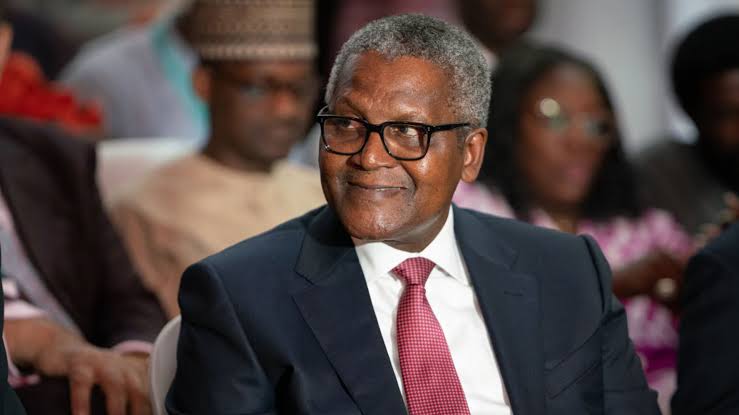
Aliko Dangote, Africa's richest man, is reportedly in talks with Nigeria's Securities and Exchange Commission (SEC) about selling part of his personal stake in Dangote Petroleum Refinery and Petrochemicals FZE. According to a Bloomberg report carried by The Sun, the move follows overwhelming demand in the refinery's initial public offering. Under the reported plan, Dangote would sell some of his existing shares to institutional investors whose applications could not be fully met under the public offer. The talks have not been publicly confirmed by Dangote, the refinery or the SEC. No terms, sizes, prices or timelines have been disclosed. The IPO has been described as Africa's largest-ever share sale. Reports say the target was raised to about $2.1 billion after the offer was oversubscribed. The refinery, located in the Lekki Free Zone near Lagos, can process 650,000 barrels of crude oil a day and is valued at roughly $20 billion. It sits at the center of Nigeria's hopes for fuel security, foreign exchange savings and steadier petrol prices. A secondary sale would not raise new money for the refinery. The cash would go to Dangote as the seller. It would, however, widen the refinery's shareholder base and could deepen Nigeria's capital market. It also raises questions about governance, valuation, insider selling and who really benefits. For ordinary Nigerians, the real test is still the price of petrol at the pump. For Ghana, which buys refined fuel from the region, the refinery's fortunes matter more than many realize.
For years, Aliko Dangote told anyone who would listen that his refinery would one day belong, at least in part, to ordinary Nigerians. Skeptics doubted the refinery would ever be finished. Then it was finished. They doubted it would ever produce petrol at scale. Then it did. They doubted Nigerians and institutions would put serious money into a single company in a market scarred by currency crises and inflation. Now, according to reports, the problem is the opposite. There are not enough shares to go around.
Dangote is in discussions with Nigeria's Securities and Exchange Commission over a possible sale of part of his personal stake in Dangote Petroleum Refinery and Petrochemicals FZE, according to a report by The Sun that cited Bloomberg. The talks follow what has been described as overwhelming demand in the refinery's initial public offering. Under the reported proposal, Dangote would sell some of his existing shares directly to institutional investors whose applications could not be fully accommodated in the public offer. BusinessDay reported the same development on Friday, describing the talks as a response to IPO demand exceeding supply.
It is important to be precise about what is known and what is not. The reports describe discussions with the regulator. They do not describe a finalized deal. The number of shares involved, the price, which institutions would qualify and when any transaction might happen have not been officially disclosed. Neither Dangote Industries nor the SEC has publicly set out the terms. Deals of this kind can change shape, shrink or fall away entirely during regulatory review. Until there is a formal filing or an official statement, the transaction remains a reported possibility.
Even as a possibility, it is a striking one. It suggests that the refinery's IPO, already billed as the biggest share sale in African history, drew more money than the offer was designed to absorb. And it shows how a businessman who has spent decades building his empire largely on his own terms may now be preparing to share a little more of his crown jewel with outside investors.
To understand why this matters, start with the scale of the asset. The Dangote refinery sits on a vast site in the Lekki Free Trade Zone, east of Lagos. It cost about $20 billion to build, a sum larger than the annual budgets of many African countries. It can process 650,000 barrels of crude oil per day, making it the largest single-train refinery anywhere in the world. A single-train design means one integrated processing line rather than several smaller units combined. At full capacity, the plant can produce enough petrol, diesel, aviation fuel and other products to meet all of Nigeria's domestic demand and still have large volumes left for export.
The project took years longer than planned. Construction faced delays, rising costs, financing challenges and the disruption of the COVID-19 pandemic. The refinery began producing diesel and aviation fuel in early 2024 and started supplying petrol in September of that year. Since then, it has steadily increased output, though not without disputes along the way.
The refinery's significance goes far beyond its size. For decades, Nigeria, one of Africa's largest crude oil producers, exported crude and imported most of the refined fuel its people used. Its four state-owned refineries in Port Harcourt, Warri and Kaduna spent years producing little or nothing despite repeated and costly rehabilitation efforts. The result was one of the great paradoxes of the African economy. A country floating on oil queued for petrol, spent billions of dollars a year on fuel imports and paid huge sums in subsidies to keep pump prices low.
The removal of the petrol subsidy by President Bola Tinubu in 2023 changed the economics of that system. Fuel prices jumped, and imported products became far more expensive as the naira weakened. A domestic refinery able to supply the whole country suddenly looked like more than a business opportunity. It looked like a matter of national economic security. Supporters of the refinery describe it as the cornerstone of Nigeria's energy independence: fewer dollars spent on imports, less pressure on the naira, more jobs and a chance to turn crude oil into higher-value products at home.
That is the story the IPO has been selling to investors. The Dangote Group has said it planned to offer around 10 percent of the refinery to the market. Reports during the offer period indicated that the fundraising target was raised to about $2.1 billion as interest built. The details of the final allocation have not yet been fully published. But if institutional investors were left with unfilled orders, as the reports suggest, the offer was heavily oversubscribed, at least in parts of the book.
Oversubscription is the kind of problem every company wants. It signals confidence. It suggests that investors believe in the refinery's future earnings, in its management and in the long-term demand for refined fuel in Nigeria and across West Africa. It also gives the issuer bargaining power. When demand is strong, the company can price shares more ambitiously and choose which investors to favor.
It also creates pressure. Institutions that wanted large allocations and did not get them are unlikely to simply walk away. Some may try to buy shares once trading begins, which could push the share price sharply higher in early trading. That can be good for those who received shares in the IPO. It can also create volatility and accusations that the offer was priced too cheaply, leaving money on the table. A secondary sale by Dangote, if approved, would be one way to channel that excess demand into an orderly transaction rather than a scramble on the trading floor.
Here is where the distinction between a primary and a secondary sale matters. In a primary offering, the company issues new shares and keeps the money raised. That cash can fund expansion, pay down debt or strengthen the balance sheet. In a secondary sale, an existing shareholder sells shares he already owns. The money goes to the seller, not to the company. If Dangote sells part of his personal stake, the refinery itself would not receive the proceeds. Dangote would.
That point will shape how the deal is received. Critics may ask why Africa's richest man needs to cash in on investor enthusiasm. Supporters will argue that the move simply meets demand that would otherwise go unserved. They may also note that the refinery was largely built with Dangote's own money and borrowed funds, often at great personal risk, at a time when few other investors were willing to back it. Seen that way, a partial sale is a reward for risk taken over many years.
There is also a practical reason a founder might sell into strong demand. The refinery carries substantial debt from its construction. Dangote and his wider group have other large projects, including fertilizer, cement, petrochemicals and planned expansions. He has spoken publicly about ambitions to increase the refinery's capacity significantly in the future. Cash from a secondary sale could, in principle, support those ambitions through the group even if it does not go directly into the refinery's accounts. How any proceeds would be used has not been disclosed.
What about control? On this question, the likely answer is that very little would change. Dangote and his holding company own the overwhelming majority of the refinery. Even after the IPO and a possible secondary sale, he would almost certainly remain the controlling shareholder by a wide margin. Selling a slice of a dominant stake is not the same as giving up control. Dangote would still decide the refinery's strategy, appoint its leadership and shape its relationships with the government, crude suppliers and fuel marketers.
The shareholding picture has already shifted once. In 2021, the state oil company NNPC agreed to buy a 20 percent stake in the refinery. That stake was later reduced to 7.2 percent after NNPC did not complete the full payment. The refinery's ownership has therefore always been concentrated, with Dangote at the center. A secondary sale to institutions would broaden the base of minority shareholders, but it would not threaten his grip.
That concentration is both a strength and a risk for new investors. On one hand, Dangote has a proven record of building industrial giants. Dangote Cement, listed on the Nigerian Exchange, has become one of the most valuable companies on the market and one of Africa's largest cement producers. His personal drive is a key reason the refinery exists at all. On the other hand, minority shareholders in a founder-controlled company have limited power. Their influence over major decisions, related-party dealings and dividends depends heavily on governance rules, board independence and the vigilance of regulators.
This is where the SEC's role becomes central. The commission, led by Director-General Emomotimi Agama, oversees Nigeria's capital market under the Investments and Securities Act 2025, which replaced the 2007 law and gave the regulator broader powers. Any sale of shares by a controlling shareholder so soon after an IPO raises questions the regulator will want answered. How will the shares be priced relative to the IPO price? Will the sale be open only to institutions, or will retail investors have any access? Will Dangote be subject to a lock-up period afterward, preventing further sales for a set time? How will the transaction be disclosed to the market? Clear answers would build trust. Unclear ones could damage it.
Retail investors will watch this closely. For many ordinary Nigerians, the Dangote refinery IPO was more than an investment. It was a chance to own a piece of a national symbol. Teachers, traders, civil servants, young professionals and members of the diaspora may have applied for shares, some for the first time in their lives. If institutional investors are later offered extra shares directly from Dangote while retail applicants received only part of what they requested, some will see it as unfair. The perception that big money gets a second bite while small investors are left with crumbs could sour public enthusiasm, even if the deal is entirely legal.
The other side of the argument is that institutional demand helps everyone. Pension funds, asset managers, insurance companies and foreign investors bring long-term capital, research and scrutiny. Nigerian pension funds manage trillions of naira on behalf of millions of workers. If they buy into the refinery, ordinary workers gain indirect exposure through their retirement savings. Strong institutional ownership can also support stable trading and better corporate governance, as large shareholders tend to ask harder questions of management than scattered individual investors can.
How the SEC balances these interests may set a precedent for future listings. Nigeria's capital market has long struggled to attract large, high-quality companies. Many of the country's biggest businesses remain private. Some multinationals have delisted over the years, citing currency problems, weak liquidity or regulatory costs. The arrival of a company as large and symbolic as the Dangote refinery could change that story. If the IPO and any follow-on sale are handled well, other large private firms, from telecoms to energy to manufacturing, may feel more confident about listing in Lagos. If it is handled poorly, it could reinforce old doubts.
The refinery's listing could also reshape the Nigerian Exchange itself. A company of this size would likely become one of the largest by market value, increasing the weight of energy and industry in the main indexes. That could attract more foreign portfolio investors who track African benchmarks. It could also deepen liquidity, as trading in a high-profile stock tends to draw new participants into the market. For a market that has often been dominated by banks, telecoms and cement, that diversification would be welcome.
There are risks that investors, large and small, should weigh. The refinery's earnings depend on the margin between crude oil costs and the prices of refined products. That margin swings with global oil markets, which this year have been unsettled by conflict involving Iran and fears for shipping through the Strait of Hormuz. The refinery has also faced persistent challenges securing enough Nigerian crude. Dangote has publicly complained in the past that he struggled to buy sufficient local crude and had to import cargoes from abroad, including from the United States. The government's naira-for-crude arrangement, launched in 2024 to let local refiners buy crude in naira, was meant to ease that pressure, though its implementation has faced interruptions.
Regulatory and commercial battles add another layer. The refinery has clashed at various times with fuel importers, depot owners, marketers and regulators over pricing, import licenses and product quality. These disputes reflect a deeper shift in Nigeria's fuel market. A single private refinery with the capacity to supply the whole country threatens the business model of importers who have profited for decades. Critics warn of the opposite danger, that a domestic market dominated by one supplier could become a private monopoly. Investors buying into the refinery are buying into those political and commercial fights as well.
Currency risk also matters. The refinery earns revenue partly in naira from domestic sales and partly in dollars from exports. Its debts and some of its costs are in foreign currency. The naira's sharp fall since 2023 has changed the economics of everything from crude purchases to loan repayments. Foreign investors will look closely at how easily they can move dividends out of Nigeria. Local investors will want to know how the company manages the mismatch between its naira and dollar exposures.
Then there is the question of governance at a company so closely tied to one man. Dangote is one of the most powerful business figures on the continent, with close relationships with successive governments. Bloomberg's Billionaires Index has ranked him as Africa's richest person for years. That stature brings access and influence that few companies can match. It also creates concentration risk. Minority shareholders will want assurance that the refinery's board is truly independent, that transactions with other Dangote companies are conducted at fair prices and that the business has strong leadership beyond its founder.
For Ghana, the story is not just about a Nigerian listing. Ghana imports most of its refined petroleum products, and fuel costs feed directly into transport fares, food prices and the value of the cedi. A refinery next door with surplus capacity offers a potential source of supply that is closer, faster and possibly cheaper than cargoes shipped from Europe or Asia. Across West Africa, fuel marketers and governments have watched the Dangote plant as a possible regional supplier. A stronger, better-capitalized and more transparent refinery is good news for regional fuel security. A troubled one, or one caught in political disputes, could disrupt supplies that neighboring countries may increasingly rely on.
Ghanaian investors may also want a stake. Whether foreign retail investors could access the IPO or a later sale depends on the offer's rules and on cross-border investment arrangements. Over time, regional exchange linkages could make it easier for Ghanaians and other West Africans to buy shares in landmark companies listed in Lagos. The Dangote refinery would be an obvious candidate. In that sense, the IPO is a test not only of Nigeria's market but of the idea of a more connected West African capital market.
The broader energy story is just as important. Nigeria's oil sector has long been defined by waste, theft and lost opportunity. Pipeline vandalism and crude theft have cost billions of dollars. The state refineries became symbols of failure. Fuel subsidies drained the treasury for decades. The Dangote refinery represents a different model: privately financed, privately managed and, now, partly publicly owned. Its success would show that large-scale industrial projects can be built and run in Nigeria. Its failure, or its capture by narrow interests, would feed the cynicism that has long surrounded the oil economy.
The IPO also lands at a moment when Africa is debating who owns its most valuable assets. Ghana is weighing whether host communities should own part of the Tarkwa gold mine. Angola is buying a stake in De Beers. Across the continent, governments and citizens are asking why so much of the value created by natural resources ends up in foreign hands. The Dangote refinery offers a different answer. Here is a Nigerian-built asset, owned by a Nigerian billionaire, now opening its doors to Nigerian shareholders. Whether that ownership is broad enough, and fair enough, will shape how the story is remembered.
There is a symbolic dimension that Dangote clearly understands. A refinery owned only by its founder is a private triumph. A refinery owned partly by pension funds, asset managers and millions of ordinary Nigerians becomes something closer to a national institution. That shift may help protect the asset politically. It gives a wide group of citizens and institutions a direct interest in the refinery's success and makes it harder for any future government to treat it as a target. For a businessman who has navigated Nigeria's politics for decades, that is not a small consideration.
What happens next will depend on the SEC's review and on how much detail the parties choose to make public. If the regulator approves a secondary sale, investors will want to see a transparent process with clear pricing, clear eligibility and clear limits on future sales. Retail investors will want reassurance that they have not been sidelined. Institutions will want certainty that they can build meaningful positions. And the market as a whole will want confirmation that the rules apply equally, no matter how big the name on the share certificate.
If the talks do not lead to a deal, the excess demand will likely spill into the secondary market once trading begins. That could produce a strong early rally in the share price, rewarding those who received allocations and potentially raising questions about whether the offer was priced too conservatively. Either way, the reported demand sends a powerful message. Despite inflation, currency weakness and years of economic strain, there is significant appetite in Nigeria and beyond for investing in large, well-known companies with credible growth stories.
For now, the facts on the record are limited but clear. The IPO drew more demand than it could satisfy. Reports say Dangote is talking to the SEC about selling some of his own shares to meet part of that demand. No final terms have been announced. Africa's richest man is not giving up control of his refinery. But he may be preparing to let more of Nigeria's institutions inside it.
The deeper question is the one that has followed this project from the start. The refinery was supposed to change Nigeria's relationship with its own oil. The IPO was supposed to change Nigerians' relationship with the refinery. Whether this reported sale strengthens that promise or bends it toward the already powerful will depend on the fine print that has not yet been published. Investors, regulators and ordinary Nigerians should insist on reading every line of it.