ASHANTIGOLD SACKS KARIM ZITO AND TWO TECHNICAL TEAM MEMBERS AFTER INCONSISTENT START
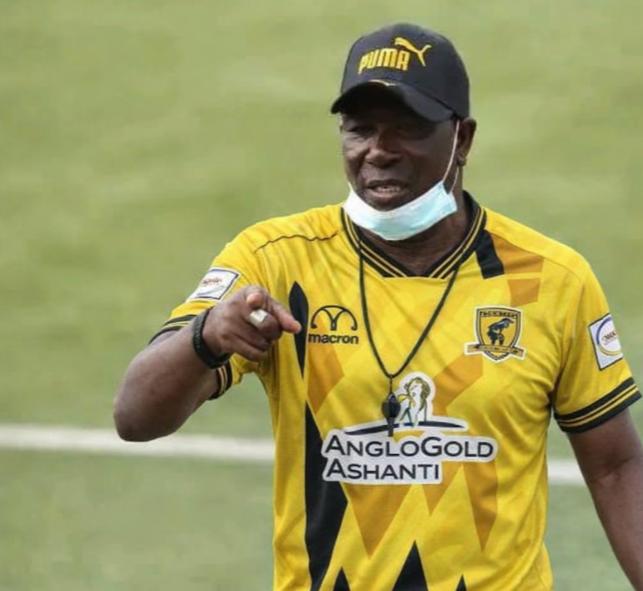
FC AshantiGold 04 have dismissed head coach and technical director Abdul Karim Zito, assistant coach Ernest Okyere and goalkeeper trainer Robert Dabuo with immediate effect. The decision was taken after an Interim Management Committee meeting on October 26 and announced Tuesday. Zito guided the Miners to Premier League promotion earlier this year but leaves after eight top-flight matches, with AshantiGold recording three wins, two draws and three defeats. A caretaker coach has been appointed but has not yet been publicly named.
FC AshantiGold 04 have terminated the appointments of head coach and technical director Abdul Karim Kabutey Zito, assistant coach Ernest Okyere and goalkeeper trainer Robert Dabuo with immediate effect, bringing an abrupt end to the technical team that helped guide the Obuasi club back into Ghana’s Premier League. The club announced the decision on Tuesday, October 27, following a consultative meeting of its Interim Management Committee a day earlier, with management confirming that a caretaker coach will temporarily take charge while the search begins for a substantive head coach and technical director.
The decision comes only months after Zito successfully led AshantiGold out of the Division One League and back into Ghana’s top flight. His appointment in February 2026 was regarded as an important step in the club’s effort to complete its return to the Premier League, and he delivered that objective when the Miners secured promotion with a commanding 4-1 victory over Skyy FC in April. The achievement restored AshantiGold to the highest level of Ghanaian football and placed Zito in charge of preparing the team for the demanding transition from the second tier.
Despite that success, AshantiGold’s opening eight games of the 2026/27 Ghana Premier League season have produced mixed results. The club has recorded three victories, two draws and three defeats, collecting 11 points from a possible 24. While the numbers have not placed the newly promoted side in immediate crisis, management has nevertheless decided that a change in technical direction is required relatively early in the campaign.
The club did not provide a detailed explanation for the dismissals in its official statement. It simply said the decision followed consultations by the Interim Management Committee and thanked the three departing members of the technical staff for their contribution and service. Management also wished Zito, Okyere and Dabuo well in their future endeavours, indicating that the departures were immediate but without publicly outlining specific disciplinary, tactical or administrative reasons.
That lack of detail means the decision should not automatically be attributed to any single result. AshantiGold’s most recent league match was a 1-1 draw against regional rivals Asante Kotoko at the Len Clay Stadium in Obuasi on Sunday, October 25. Samuel Fosu Boateng put AshantiGold ahead in the first half before Patrick Asiedu equalised for Kotoko after the break, leaving both clubs with a point from the Ashanti derby.
Zito had actually expressed satisfaction with aspects of his team’s performance after the Kotoko game, arguing that AshantiGold had created enough chances to take all three points. He believed his players had competed well against his former club and suggested the performance showed progress despite the missed opportunities. Less than 48 hours later, however, the club’s Interim Management Committee decided to remove him and two members of his technical team.
The timing therefore makes the decision particularly striking. AshantiGold had just taken a point from one of Ghana’s biggest clubs and had collected points in five of their first eight matches after returning from the Division One League. For a newly promoted side, those numbers would not normally be considered catastrophic, which raises questions over whether management’s concerns extended beyond the raw results.
The club has not provided evidence supporting any alternative explanation, however, and it would be premature to speculate about internal disagreements, dressing-room problems or differences over recruitment. Until AshantiGold provides more detail, the confirmed position is simply that the Interim Management Committee reviewed the technical department and decided to make an immediate change.
Zito’s departure closes a relatively short but important chapter in AshantiGold’s recent history. He joined the club in February after leaving Asante Kotoko and inherited a team pushing strongly for promotion from Division One League Zone Two. His experience, particularly in Ghanaian domestic football and youth development, was viewed as valuable during the final stages of the promotion campaign.
The veteran coach quickly delivered the main objective. AshantiGold sealed its return to the Premier League on April 26 with a 4-1 victory over Skyy FC, completing a campaign that restored the Obuasi club to the top division after years away from the competition. Promotion represented a major moment for a club historically associated with some of Ghanaian football’s strongest domestic and continental performances.
Zito was subsequently retained to lead the team into the 2026/27 Premier League campaign. Preseason preparations were designed around keeping the newly promoted team competitive while adjusting to the higher intensity and tactical demands of top-flight football. The club’s early objective was expected to centre on stability and consolidation rather than immediately challenging Ghana’s established title contenders.
AshantiGold began the campaign with a 1-1 draw against fellow newcomers Port City FC in September, with Zak Musah scoring the club’s first goal of its new Premier League era. The result provided an encouraging beginning, although subsequent performances showed that consistency would be difficult as the team adjusted to stronger opposition.
By Matchday Eight, AshantiGold had accumulated three victories, two draws and three defeats. The 11-point return placed them in the middle-to-lower section of a tightly contested early-season league table, leaving sufficient time for the club to improve but also creating pressure on management to decide whether the existing technical direction could produce the progression it wanted.
Finishing had become one of Zito’s publicly acknowledged concerns. Earlier in October, after AshantiGold defeated FC Samartex, the coach complained that his team had failed to convert enough of the opportunities it created. He believed the Miners should have won by a larger margin and urged his attacking players to become more clinical before difficult fixtures against Aduana FC and Asante Kotoko.
That theme resurfaced after the Kotoko draw. AshantiGold created opportunities and competed strongly but failed to turn their periods of dominance into a victory. Zito nevertheless viewed the performance positively, particularly given the quality and history of the opposition.
The result ultimately became his final match in charge. Management met the following day and decided that he, Okyere and Dabuo would no longer continue with the team, making the Kotoko fixture the end of a tenure that had delivered promotion but lasted only eight Premier League matches.
Assistant coach Ernest Okyere also departs as part of the restructuring. His exit means AshantiGold is not simply replacing the head coach while keeping the remaining senior technical structure intact. The decision removes multiple key members of the coaching group and suggests management wants a broader technical reset rather than a minor adjustment.
Goalkeeper trainer Robert Dabuo has similarly been relieved of his duties. His departure further expands the scale of the restructuring and means whoever eventually takes over permanently may have considerable freedom to assemble a new technical team around the first-team squad.
AshantiGold has confirmed that a caretaker coach has already been selected, but the club had not publicly identified the individual at the time of the announcement. The caretaker will manage first-team affairs until management completes the appointment of a substantive coach and technical director.
The club’s next Premier League fixture is against Swedru All Blacks on November 1, meaning the caretaker has limited time to prepare the players for another important match. The immediate task will be maintaining stability inside the dressing room after the sudden departure of the coach responsible for bringing the team back into the Premier League.
The timing of a coaching change can be particularly challenging for a newly promoted club because players are still adapting to the level of competition and developing tactical relationships. A new coach may want different playing patterns, training methods or personnel, creating another period of adjustment just two months into the season.
Management will therefore need to balance its desire for improvement with the risk of disrupting the progress already made under Zito. The club has not disclosed whether it already has candidates in mind or how quickly it intends to appoint a permanent replacement.
AshantiGold’s history ensures that expectations in Obuasi are higher than those usually attached to a newly promoted club. The Miners are former Ghanaian champions with a strong historical identity and have previously represented the country in continental competition. Supporters therefore expect the revived club to develop into more than a side simply fighting to avoid relegation.
The current FC AshantiGold 04 project has been attempting to rebuild that status gradually following the club’s return through the lower divisions. Securing Premier League promotion was an important milestone, but establishing a stable top-flight team represents the next stage of the process.
That broader ambition may have influenced management’s willingness to make an early coaching change. A leadership group targeting rapid progress may judge results differently from a club whose only immediate objective is survival, although AshantiGold has not publicly stated that league position alone was the reason for Zito’s dismissal.
The decision also adds another notable chapter to Zito’s long coaching career. He has worked extensively in Ghanaian football, including spells with Dreams FC and Asante Kotoko, and has built a particularly strong reputation for developing young players. He has also worked within Ghana’s national youth-team structure and has been associated with several players who progressed into senior professional football.
At Dreams FC, Zito enjoyed significant success, including an FA Cup triumph and a memorable run in the CAF Confederation Cup. Those achievements strengthened his reputation as one of Ghana’s experienced domestic coaches and were part of the reason his appointment by AshantiGold attracted attention earlier this year.
His time with Asante Kotoko ended shortly before he joined the Miners. Zito resigned from Kotoko in February and moved to AshantiGold approximately two weeks later, taking over a club already pushing towards promotion.
The decision proved immediately successful from AshantiGold’s perspective because promotion was secured only a few months later. That achievement means his tenure is likely to be remembered positively regardless of how abruptly it has now ended.
Promotion from Division One is rarely straightforward, and AshantiGold needed consistency during the second half of the campaign to secure its return. Zito brought experience and organisation during that period and completed the objective expected of him.
The Premier League presented a different challenge. Opponents are tactically stronger, mistakes are punished more frequently and squad depth becomes more important over a long season. Newly promoted teams often need time to adapt, particularly when many of the players responsible for promotion remain central to the squad.
Three wins from eight games demonstrates that AshantiGold were capable of competing, but three defeats also showed the inconsistency management appears determined to address. The two draws, including the latest against Kotoko, prevented the early-season record from becoming significantly worse but were not enough to convince the Interim Management Committee to continue with the same technical leadership.
The club’s statement provides no indication that the players themselves were consulted before the decision. Professional football clubs frequently treat coaching appointments as management decisions, and the immediate priority for the squad will now be adjusting quickly to instructions from the caretaker team.
Attention will also turn to recruitment. A permanent coach appointed during the first half of the season may want changes when the next transfer window opens, particularly if management expects a stronger second half of the campaign.
AshantiGold will need to ensure any new appointment understands both the club’s immediate survival requirements and its longer-term ambitions. A coach focused only on short-term results could stabilise the team but may not fit management’s plans for rebuilding the club as a major domestic force.
The technical-director component is also noteworthy because Zito held both positions. AshantiGold’s statement says a substantive coach and technical director will eventually be appointed, but it is not yet clear whether one individual will again occupy both positions or whether the responsibilities will be separated.
Separating the roles could give the club a clearer long-term technical structure, with a technical director overseeing recruitment and football strategy while the head coach focuses primarily on first-team performance. Keeping the positions combined may provide a coach greater control but also concentrates responsibility in one individual.
The next appointment will reveal more about the direction management intends to take. A younger coach may signal a development-focused strategy, while an experienced Premier League figure could indicate that immediate results and league stability are the principal priorities.
For Zito, the dismissal comes unusually soon after one of his major recent achievements. Coaches who secure promotion are often given considerable time to establish their teams in the higher division, although football management remains highly results-driven and clubs increasingly make changes early when they believe momentum is moving in the wrong direction.
The fact that AshantiGold dismissed three technical staff members at once makes this a more significant restructuring than a conventional head-coach dismissal. It places responsibility on management to ensure replacement structures are ready quickly enough to avoid destabilising the team.
Swedru All Blacks will provide the first test of the post-Zito era. The caretaker staff will need to organise the players quickly, maintain confidence and ensure the coaching change does not distract from preparations.
A positive result could give management time to conduct a careful recruitment process rather than rushing into an appointment. A poor run under the caretaker arrangement would increase pressure for a permanent coach to be named quickly.
Supporters will also want clarity over the reasons for the change. Zito delivered promotion and had accumulated 11 points after eight Premier League matches, which makes the timing less immediately obvious than a dismissal following a prolonged losing streak.
Until the club provides more explanation, however, speculation would be unfair to both management and the outgoing coaches. The official statement makes no allegation of misconduct and does not cite specific disagreements or failures beyond announcing the decision.
The club also expressed appreciation for the technical team's contribution, suggesting the separation is being publicly presented as a football-management decision rather than disciplinary action.
For Zito, promotion remains an important part of his AshantiGold record. He arrived with the team in Division One, completed the promotion campaign and led the club through its first eight matches after returning to Ghana’s top flight.
For AshantiGold, the focus now shifts rapidly toward what comes next. The club has chosen to alter its technical direction while still early enough in the season for a new coach to significantly influence the campaign.
The identity of that coach, and the philosophy management wants implemented, will provide a clearer indication of why the Interim Management Committee believed change was necessary at this stage.
Until then, the caretaker coach will inherit a side with three wins, two draws and three defeats, a club carrying considerable history and supporters expecting the Miners to establish themselves firmly again among Ghana’s leading football teams.
Zito leaves having delivered the immediate objective he was appointed to accomplish, but without being given the opportunity to complete a full Premier League season after promotion. AshantiGold must now prove that its decision to change technical leadership after only eight top-flight matches will strengthen rather than interrupt the club’s return to the highest level of Ghanaian football.