ATIKU CONDEMNS ATTACKS ON SOWORE, SOKOTO ADC CANDIDATE AS 2027 POLITICAL TENSIONS RISE
Former Vice President Atiku Abubakar has condemned separate incidents involving AAC presidential candidate Omoyele Sowore in Ekiti and ADC governorship candidate Manir Muhammad Dan’Iya in Sokoto, warning against political intimidation ahead of the 2027 elections. Sowore says armed men deliberately attacked him, while Ekiti Police describe the incident as an altercation and say officers rescued him. In Sokoto, Dan’Iya alleges that personnel of the Sokoto Marshal and Community Guard blocked and fired on his convoy, claims that remain subject to investigation. Premium Times Nigeria
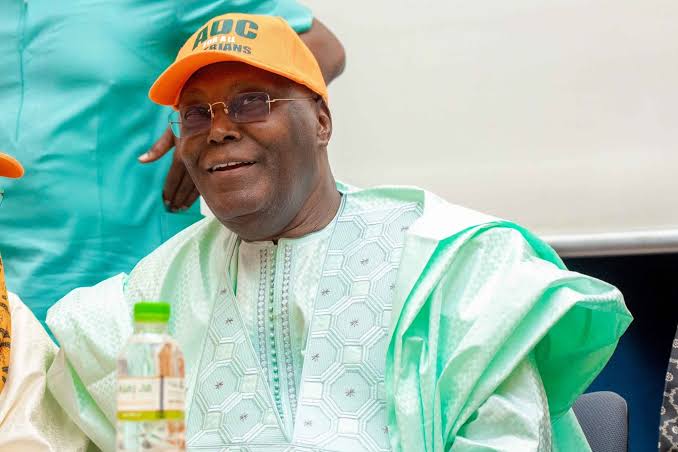
Former Nigerian Vice President Atiku Abubakar has condemned reported attacks involving African Action Congress presidential candidate Omoyele Sowore in Ekiti State and African Democratic Congress governorship candidate Manir Muhammad Dan’Iya in Sokoto, warning that violence and intimidation directed at political actors could undermine confidence in Nigeria’s democratic process as preparations intensify for the 2027 general elections. Atiku, reacting on Saturday, October 31, called for transparent investigations into both incidents and urged the Federal Government and security agencies to guarantee the safety and freedom of political participants regardless of party affiliation, while accusing forces associated with the ruling political establishment of creating an increasingly hostile atmosphere for opposition activity.
The former vice president’s intervention followed two separate incidents that have quickly become politically charged, although important aspects of both remain disputed. In Ekiti, Sowore says he and members of his team were attacked by armed men in Ado-Ekiti and has accused government-linked actors of responsibility, while the Ekiti State Police Command says its preliminary information points instead to an altercation between Sowore and other individuals at a restaurant in the Dalimore area. Police say officers responded to a distress call, intervened and took Sowore to a police hospital for treatment after he sustained an injury, while Sowore has rejected that account and insisted that what happened was a deliberate attack rather than an ordinary confrontation.
The dispute over the Ekiti incident has widened since Friday because Sowore and the police are presenting materially different versions of what happened. Sowore has alleged that armed men targeted him and members of his team and has accused security operatives of monitoring his movements before the incident. Police, however, have denied any suggestion that he was kidnapped and say their personnel rescued him from the scene after receiving a distress call. The command has announced an investigation intended to establish who was involved and what triggered the confrontation, while Sowore has demanded that investigators go beyond arresting lower-level participants and identify anyone who may have organised or sponsored the violence.
Police subsequently said Sowore had been discharged after receiving treatment and noted that he had not formally notified the command about his movements in the state before the incident. The command argued that prior notification would have allowed officers to make security arrangements appropriate for a presidential candidate. Sowore and his supporters have challenged that explanation, maintaining that political actors should be able to travel and participate in lawful activities without being attacked regardless of whether advance security arrangements were made.
The incident occurred against the backdrop of controversy surrounding Sowore’s planned participation in the Ikogosi Marathon. Organisers later announced that he would not be allowed to participate, citing security concerns and what they described as conduct inconsistent with the event’s commitment to a neutral and peaceful sporting environment. Sowore rejected that explanation and accused organisers of complicity in what he described as political intimidation, calling for international athletics authorities to examine the matter. The organisers denied political motivation and said the decision related to security and conduct rather than Sowore’s political views.
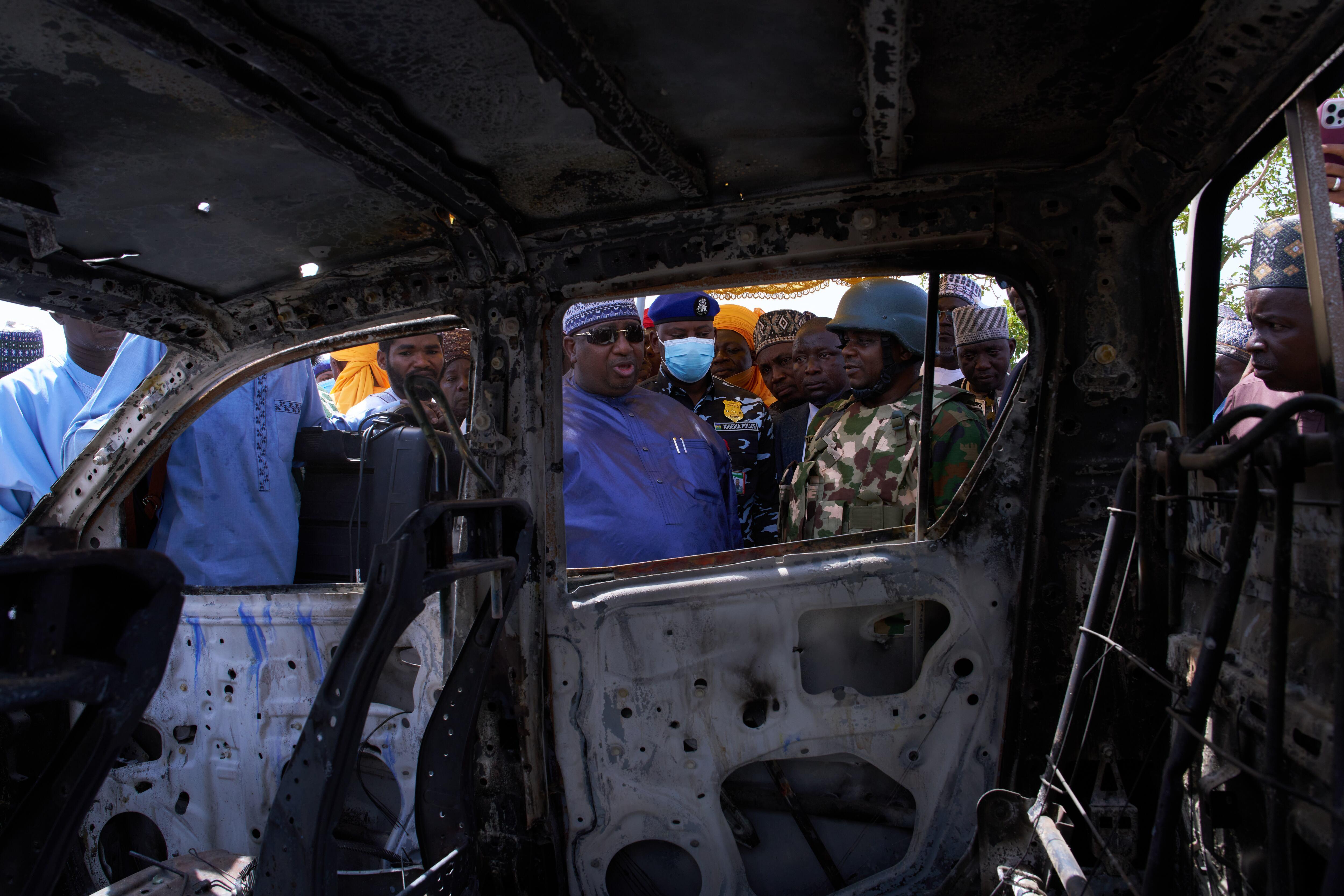
The second incident cited by Atiku occurred in Sokoto State, where ADC governorship candidate Manir Muhammad Dan’Iya alleges that his convoy was blocked and fired upon near the Sokoto Airport on Friday night after he had escorted former governor and serving Senator Aminu Waziri Tambuwal to the airport. Dan’Iya’s camp says personnel identified as members of the Sokoto Marshal and the Sokoto State Community Guard prevented the convoy from proceeding, damaged vehicles and detained two Department of State Services officers attached to his security detail. Those claims have not yet been fully established through an independent investigation, and the precise sequence of events remains contested.
Dan’Iya has asked the Nigeria Police Force, the Department of State Services and other relevant agencies to investigate the confrontation and determine who gave any orders under which the security personnel involved were operating. His camp has also called for preservation of video footage, operational records, witness statements and firearm evidence that could clarify whether shots were fired, who fired them and whether any security personnel acted outside their lawful authority.
Tambuwal has separately condemned the reported confrontation and said allegations that state-backed security outfits blocked an opposition candidate’s convoy and fired shots should be treated seriously. He called for an independent and impartial investigation and warned that security organisations created to protect citizens should not be used as instruments of partisan intimidation. He also urged ADC supporters to remain calm and avoid retaliatory action while investigations proceed.
Atiku’s statement connects both incidents to a broader concern about the political environment ahead of 2027. The former vice president argued that attacks or intimidation involving opposition figures must not become normalised and said political competition should be resolved through elections rather than violence. His criticism is part of a wider opposition argument that the governing All Progressives Congress and institutions controlled by governments at federal and state levels must ensure that opposition parties are able to campaign, travel and organise freely.
Those allegations remain political claims rather than established findings. Neither the Ekiti incident nor the Sokoto confrontation has yet produced a definitive investigation establishing that the APC, the Federal Government or any state government ordered or sponsored violence. Responsible reporting must therefore distinguish between Atiku’s accusation, Sowore’s allegations, Dan’Iya’s claims and facts that have been independently confirmed by police or other authorities.
What has been confirmed in Ekiti is that an incident occurred involving Sowore and other individuals, that he sustained an injury and received medical treatment, and that police have opened an investigation. What remains disputed is whether the incident was a politically organised attack, as Sowore alleges, or an altercation that escalated, as police initially described it. That distinction will be central to the investigation because it determines whether authorities are dealing with an ordinary confrontation or a deliberate attempt to target a presidential candidate.
The Ekiti Police Command has said Commissioner of Police Falade Adegoroye Michael ordered a discreet investigation into the incident and instructed officers to identify everyone involved and ensure that anyone found culpable faces the law. Sowore, meanwhile, says arrests of alleged attackers will not be sufficient if investigators fail to examine whether more powerful individuals directed the incident.
That disagreement illustrates a broader challenge confronting security agencies as political campaigning intensifies. When prominent candidates or activists are involved in violent incidents, police findings will be scrutinised not only for criminal accuracy but for political impartiality. Any perception that officers are minimising violence against one side or exaggerating allegations against another can quickly undermine public confidence.
The Sokoto case presents a similar test because the allegations concern security formations associated with state authorities. Dan’Iya’s camp claims the convoy was blocked by personnel of the Sokoto Marshal and Sokoto State Community Guard, which immediately raises questions about whether state-backed security organisations remained politically neutral during the confrontation. At the time the allegations surfaced, however, the claims required further official verification, making an independent investigation essential before responsibility is assigned.
The alleged detention of two DSS officers attached to Dan’Iya’s detail could make the Sokoto incident particularly sensitive if confirmed. Any confrontation involving personnel from different security organisations raises questions about command structures, rules of engagement and the legality of actions taken at the scene. Investigators would need to establish whether the officers were in fact detained, by whom, for what reason and under what legal authority.
The events also come at a period of increasing political mobilisation across Nigeria. Parties are reorganising, presidential and governorship candidates are increasing public appearances, opposition coalitions are developing campaign strategies and state-level political rivalries are becoming more visible. As political activity accelerates, confrontations that might ordinarily remain local can quickly become national controversies because they are interpreted through the lens of the approaching election.
Nigeria’s electoral history makes concerns about political violence especially sensitive. Previous election cycles have included attacks on campaign offices, clashes between rival supporters, destruction of posters and campaign materials, intimidation at rallies and isolated killings. Electoral authorities, security agencies and civil society organisations have repeatedly warned that violence can suppress participation and damage the credibility of elections even when voting itself proceeds successfully.
Political actors therefore have a responsibility to reduce inflammatory rhetoric while law-enforcement agencies must demonstrate that protection does not depend on political affiliation. Candidates from ruling and opposition parties should be able to travel, campaign and organise within the law without facing violence, while security agencies must respond consistently when confrontations occur.
Atiku’s statement places responsibility particularly on the Federal Government, arguing that President Bola Tinubu’s administration must guarantee an environment in which opposition activity can take place freely. That is a political demand, but it also reflects the constitutional responsibility of Nigerian authorities to maintain public safety and protect citizens’ rights to association, movement and political participation.
The APC and affected state authorities are entitled to challenge allegations that their officials or supporters sponsored attacks, particularly where investigations are incomplete. The principle of political accountability requires claims against governing parties to be investigated, but it also requires that accusations not be treated as proven simply because they are repeated by prominent opposition figures.
That distinction is especially important in Sowore’s case because his account and the police version differ substantially. Sowore says armed men attacked him and his team and that the violence was politically motivated. Police say the incident began as an altercation at a restaurant and that officers responded when called. An independent examination of surveillance footage, witness testimony, medical evidence and the identities of those involved will be necessary to determine which account is better supported.
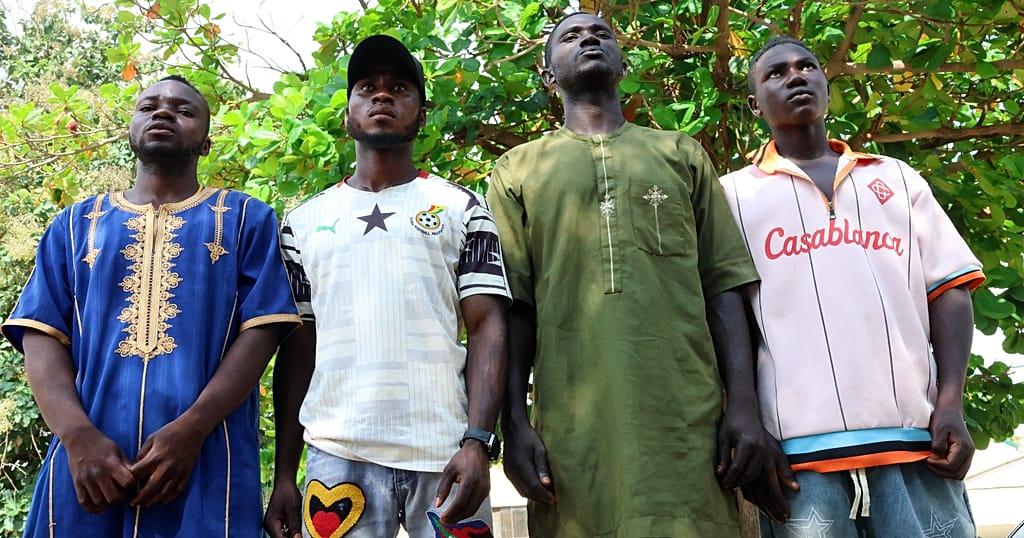
The announcement that suspects have been arrested could provide investigators with an opportunity to establish motive and identify any wider network behind the incident. Sowore has already argued that authorities should not stop with individuals who physically participated if evidence points toward organisers or sponsors. Police will have to determine whether such evidence exists rather than relying on political assumptions from either side.
The Sokoto confrontation also requires forensic and documentary examination. If shots were fired at Dan’Iya’s convoy, investigators can examine damaged vehicles, retrieve projectiles or cartridge cases, review firearm records and identify which personnel were armed at the scene. Video footage and radio or operational communications could also help determine whether orders were issued to block the convoy and whether those instructions were lawful.
For opposition parties, the incidents are likely to become part of a broader campaign narrative about political freedom ahead of 2027. For the ruling party and state governments, the challenge will be demonstrating that security institutions are not being used to disadvantage political competitors. The credibility of both arguments will depend heavily on what independent investigations establish.
Atiku’s intervention is also politically significant because he remains one of the country’s most prominent opposition figures and has been involved in efforts to strengthen cooperation among parties challenging the APC. His decision to link the Ekiti and Sokoto incidents places additional national attention on events that might otherwise have remained primarily state-level controversies.
The former vice president has framed the issue as one of democratic rights rather than only party politics, arguing that political disagreement cannot justify violence or intimidation. That principle is broader than the immediate interests of the AAC or ADC because any precedent allowing violence against one political group can eventually threaten all parties.
At the same time, opposition leaders must avoid presenting every dispute involving supporters as proof of a coordinated national campaign without evidence. Political tension can produce genuine attacks, but it can also lead actors to interpret unrelated confrontations through partisan assumptions. Transparent investigations are therefore more valuable than competing public accusations because they provide a factual basis for accountability.
Civil society organisations have similarly called for independent examination of Sowore’s case, although not all have accepted his version without question. Some groups have urged authorities to investigate the alleged attack while also saying aspects of the activist’s account require clarification. That response reflects the importance of avoiding premature conclusions even when violence against a political figure is alleged.
The Ikogosi Marathon controversy may now complicate the Ekiti investigation further because Sowore has accused organisers of contributing to an unsafe environment and has threatened legal action. Organisers deny political involvement and say their decision to exclude him from the race was based on security considerations. Those competing claims will likely generate separate legal and public-relations disputes beyond the original confrontation.
Sowore’s role as an activist, publisher and presidential candidate ensures that the case will continue attracting national attention. His history of confrontation with Nigerian security agencies has made incidents involving him particularly politically charged, with supporters often viewing state action against him as intimidation while authorities have previously defended their actions as enforcement of law and public order.
Dan’Iya’s status as ADC governorship candidate creates a different political dynamic in Sokoto, where competition for state power and control of political structures is intensifying. His allegation that individuals associated with state security outfits attempted to prevent ADC members from entering or moving freely in Sokoto, if substantiated, would raise serious questions about the political use of local security institutions.
The state government and the security organisations named in those allegations should therefore be given an opportunity to provide their accounts. An impartial investigation must consider not only the opposition candidate’s statement but also operational records and testimony from the personnel accused of wrongdoing.
Atiku’s call for transparency is likely to receive support from opposition parties because a public investigation can reduce speculation. Where authorities release credible findings, security footage or prosecution decisions, allegations can be evaluated through evidence rather than partisan claims. Where investigations remain opaque, political actors are more likely to fill the information gap with competing narratives.
The Federal Government also has an interest in ensuring that these incidents do not develop into a wider perception that opposition activity is unsafe. Nigeria’s democratic credibility ahead of 2027 will depend not only on election-day administration but on whether parties can operate freely throughout the campaign period.
Election credibility begins long before ballots are printed. Candidates must be able to hold meetings, travel, recruit supporters, address the public and challenge incumbents without fear that violence will be used to restrict participation. Security agencies must also be perceived as neutral enough that opposition candidates trust them to investigate threats.
The same expectations apply to opposition supporters. Political parties must prevent their own members from provoking confrontations or using violence against rivals. Protecting democratic competition therefore requires restraint from political actors across the spectrum, not only from those currently holding government power.
Atiku’s statement is ultimately one political interpretation of two unresolved incidents, but his central demand for investigation can be assessed independently of partisan alignment. Both cases involve allegations serious enough to warrant transparent scrutiny, particularly because presidential and governorship candidates are involved.
In Ekiti, investigators must determine whether Sowore and his team were victims of a coordinated attack or whether an altercation escalated into violence as police initially stated. In Sokoto, authorities must establish whether Dan’Iya’s convoy was deliberately blocked and fired upon by security personnel and whether two DSS officers were unlawfully detained.
Those findings will matter far more than early political accusations because they will determine whether criminal charges, disciplinary action or other consequences are justified. They will also provide a test of whether Nigeria’s security institutions can investigate politically sensitive cases without favour.
The events are therefore about more than Sowore, Dan’Iya or Atiku. They concern the conditions under which Nigeria’s 2027 election will be contested. If political actors increasingly believe violence or state security structures can be used to restrict opponents, the campaign environment could deteriorate long before Nigerians reach polling stations.
Conversely, swift and credible investigations could demonstrate that violent incidents will be treated as criminal matters regardless of the parties involved. That would send an important message to candidates, supporters and security personnel that political competition remains subject to law.
For now, Atiku has condemned the incidents and accused the ruling political establishment of creating an atmosphere of intimidation, while police and other authorities continue examining what actually happened. His allegations should be reported as allegations, not established conclusions, but the incidents themselves are serious enough that the demand for transparent investigation is unlikely to disappear.
The immediate responsibility now rests with the security agencies investigating both cases. Their findings will determine whether the incidents were isolated confrontations, politically organised attacks or something in between. With the 2027 campaign period gathering momentum, the credibility of those investigations will become part of a much larger test of whether Nigeria’s political competition can remain peaceful, open and governed by law.