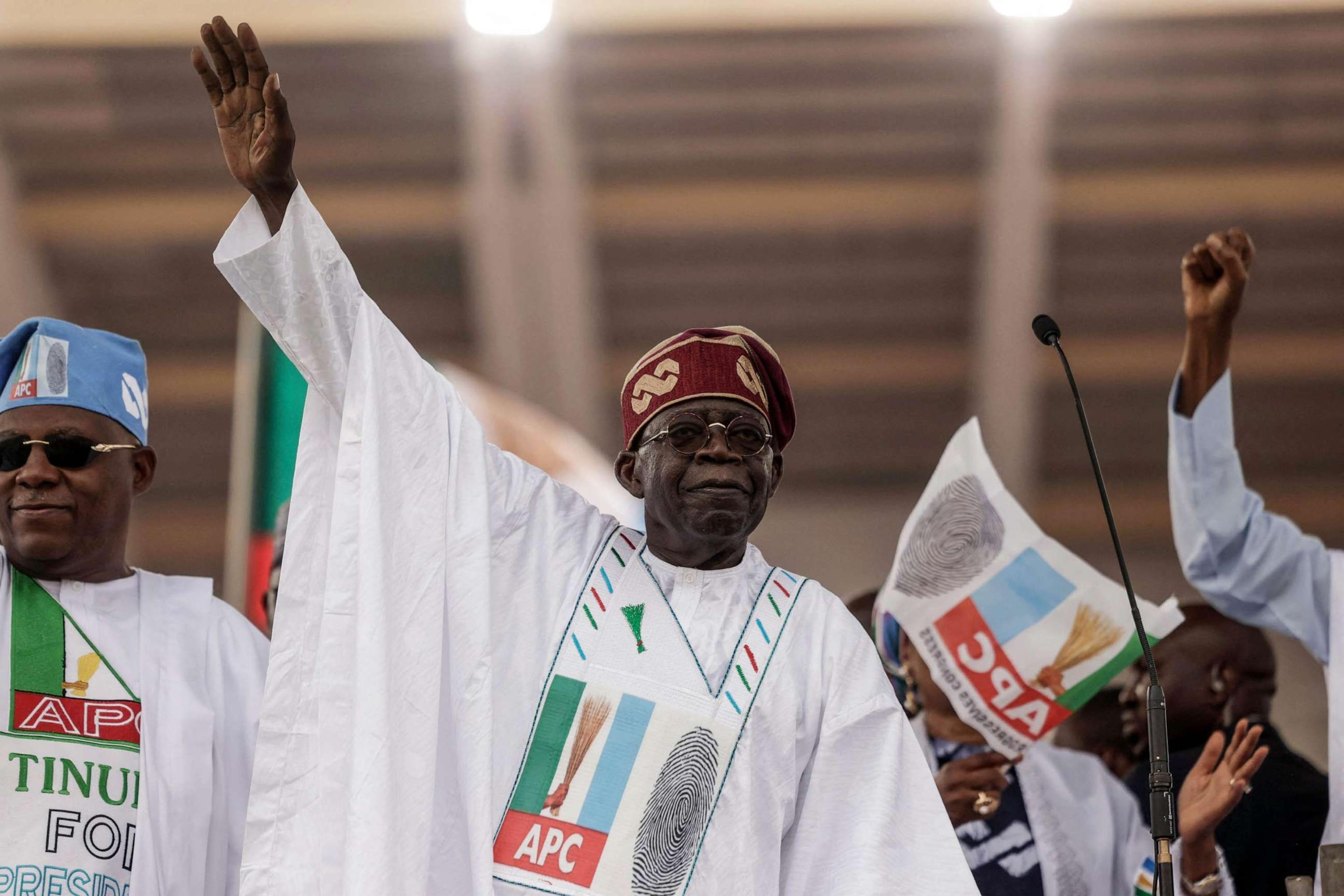
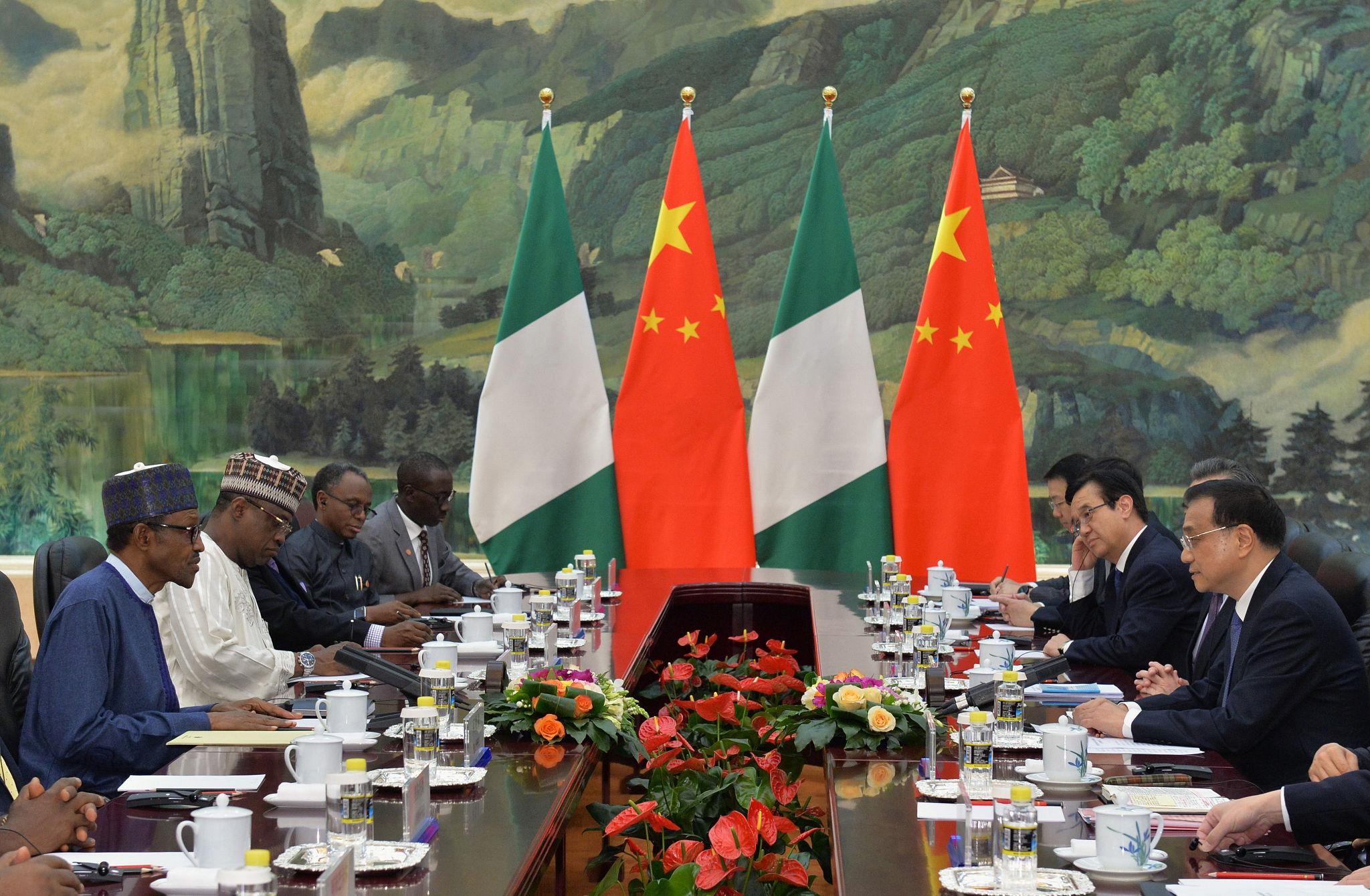
ATIKU HITS TINUBU WITH U.S. FORFEITURE CASE AFTER PRESIDENT QUESTIONS HOW HE BUILT HIS UNIVERSITY
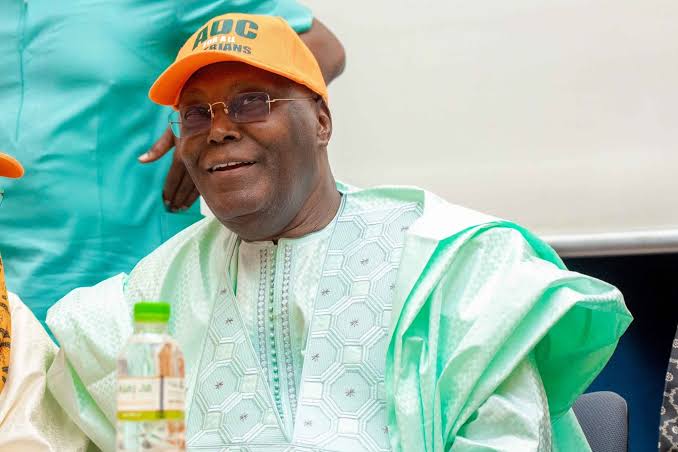
Atiku Abubakar has hit back at President Bola Tinubu after the president questioned how the former vice president financed the American University of Nigeria, responding by raising Tinubu’s 1990s U.S. civil asset-forfeiture case and accusing the administration of worsening poverty and hardship. Atiku also defended his proposed production-based fuel subsidy and criticised APC campaign chief Abdulaziz Yari’s comments about hunger. However, Atiku’s claim that he was laying the foundation for ABTI Academy in 1993 conflicts with AUN’s own official history, which says the academy was established in 2002.
Former Vice President Atiku Abubakar has launched one of his sharpest attacks yet on President Bola Tinubu, invoking the president’s decades-old United States asset-forfeiture case after Tinubu publicly questioned how Atiku was able to establish a private university while serving in government. The confrontation, unfolding as both men intensify campaigning ahead of Nigeria’s 2027 presidential election, has transformed what began as a dispute over the source of Atiku’s educational investments into a broader argument over personal wealth, public integrity, economic hardship, fuel subsidies and the records of two of the country’s most prominent political figures. Atiku, now the presidential candidate of the African Democratic Congress, accused Tinubu of trying to divert attention from the cost-of-living crisis by questioning his business history, while Tinubu accused the former vice president of benefiting from public resources during his years in office.
The dispute began at an APC presidential campaign rally in Port Harcourt, Rivers State, where Tinubu challenged Atiku to explain how he financed the university that eventually became the American University of Nigeria while serving as vice president under President Olusegun Obasanjo from 1999 to 2007. Tinubu alleged that Atiku had benefited from public money and argued that the former vice president lacked the moral standing to return to national office. The president’s comments were direct and personal, shifting the campaign debate away from policy and toward the private financial histories of both candidates.
Atiku responded through a statement issued by Phrank Shaibu, Director of Strategic Communication of the ADC Presidential Campaign Council, arguing that his involvement in education began before he became vice president and that his commercial history could be examined openly. He then turned Tinubu’s attack back on the president by referencing the U.S. civil asset-forfeiture proceeding involving funds connected to accounts associated with Tinubu in the early 1990s. Atiku’s statement described that episode as a contrast between their personal histories, arguing that while Tinubu was dealing with a forfeiture action in the United States, he was pursuing educational investment in Nigeria.
That comparison is politically explosive but requires careful legal qualification. The U.S. matter involving Tinubu was a civil forfeiture proceeding involving approximately $460,000 in funds associated with accounts linked to him. It did not result in a criminal conviction of Tinubu for drug trafficking, and no U.S. court convicted him of a narcotics offence in that matter. Civil forfeiture proceedings are directed at property rather than functioning in the same way as a criminal prosecution against an individual, meaning political descriptions suggesting a criminal conviction would overstate the established record. The Presidency has repeatedly relied on that distinction when responding to opposition criticism of Tinubu’s past.
Atiku’s own timeline also contains a significant inconsistency that should not be ignored. His latest statement says he was laying the foundation for ABTI Academy in 1993, but the American University of Nigeria’s official institutional history says the private primary and secondary school, ABTI Academy, now AUN Academy, was established in 2002. According to AUN, Atiku later approached the American University in Washington for assistance in establishing an American-style university, ABTI University received its licence in 2003 and construction began in October 2004. The first university students were admitted in the 2005–2006 academic period. That means the institution’s own published chronology does not support the claim that ABTI Academy itself was established in 1993.
The discrepancy does not by itself establish Tinubu’s allegation that public resources funded the university, but it weakens the specific chronology Atiku used in his rebuttal. Atiku served as vice president from 1999 until 2007, meaning the dates published by AUN place the creation of the academy, licensing of the university and beginning of construction during his period in office. The existence of that overlap is likely to remain central to Tinubu’s political attack, while Atiku’s campaign is expected to rely on his pre-existing business activities and personal wealth as evidence that the investment did not originate from public funds. No court finding cited in the current exchange establishes that Atiku used government money to build AUN, so Tinubu’s accusation should remain clearly attributed as a political allegation rather than presented as fact.
Atiku broadened his response beyond the university dispute and accused Tinubu’s administration of worsening poverty, unemployment, insecurity and living costs. He argued that the central issue before Nigerians in 2027 should be whether their material conditions have improved under the current government rather than arguments over opposition politicians’ personal histories. Those claims form part of Atiku’s campaign message and are contested by the Presidency, which has repeatedly pointed to lower inflation from earlier peaks, improved external reserves, economic growth and fiscal reforms as evidence that its policies are beginning to stabilise the economy.
The ADC candidate also seized on comments by Abdulaziz Yari, Director-General of the APC Presidential Campaign Council, who said during an Uyo rally that Nigerians who were not lazy should have food on their tables. Yari acknowledged that hunger exists but argued that food remains available in markets and suggested that people with money should still be able to purchase it. The comments quickly drew criticism because they appeared to frame hunger primarily as a question of personal effort despite widespread complaints about affordability. Atiku responded by accusing the government of first creating economic hardship and then insulting those struggling under it.
Yari’s exact remarks are important because the campaign dispute depends heavily on interpretation. He did not say there was no hunger at all; he acknowledged hunger but argued that food availability in markets meant hardworking people should be able to feed themselves. Critics, including Atiku, have focused instead on affordability, saying the problem is not simply whether rice, yam or other staples physically exist in markets but whether ordinary households possess enough income to buy them. That disagreement reflects one of the central economic debates ahead of the 2027 election: whether the government should be judged primarily by macroeconomic indicators or by the purchasing power and living standards experienced by households.
Fuel policy has become another major dividing line between Atiku and Tinubu. The president has defended the removal of the old petrol-subsidy system and argued that Nigeria should not return to the previous structure. Atiku says he would introduce what his campaign calls a transparent, production-based subsidy tied to fuel refined inside Nigeria rather than restoring the old import-subsidy model. Under the proposal described by his campaign, qualifying domestic refineries could receive crude at preferential prices, with the intention that lower production costs would translate into reduced petrol and diesel prices for consumers.
The ADC’s proposal is not yet fully costed. Atiku’s campaign says the programme would be capped, budgeted and independently audited, but it has not published the precise crude discount, volume limits, annual fiscal ceiling or formula that would guarantee lower retail fuel prices. PREMIUM TIMES has noted that supplying crude below market value would still involve an economic cost through forgone revenue, even if the government did not make a conventional cash subsidy payment. The campaign has also acknowledged that legislative changes could be necessary if provisions of the Petroleum Industry Act prevent implementation in the form Atiku proposes.
That policy detail matters because campaign rhetoric about “bringing subsidy back” can easily create the impression that Atiku intends simply to restore the pre-2023 system. His campaign says that is not the proposal. The stated plan would shift support toward domestic production and local refining, with public and private refineries potentially qualifying if they met conditions on production, transparency and domestic supply. Whether the system would actually reduce pump prices without creating new fiscal or market distortions would depend on the implementation details that have not yet been released.
Atiku has incorporated the proposal into what he calls his “Affordable Life” campaign, which focuses heavily on reducing household costs, energy expenses and economic insecurity. He has promised that his campaign will continue despite attacks from the APC and has declared that he expects to be on the 2027 ballot. That assertion has acquired additional importance because the ADC is currently pursuing an appeal following a Federal High Court judgment affecting the party, and the political and legal environment around the party’s candidacy remains active.
His statement that he would defeat Tinubu “decisively” is a campaign claim rather than an objective forecast. With the election still ahead, neither candidate’s victory can be treated as predetermined, and the current political dispute should be reported as part of an intensifying contest rather than evidence of the likely electoral outcome.
Tinubu, for his part, has sought to frame the election around continuity and the claim that his economic reforms are beginning to repair problems accumulated under previous administrations. At the Port Harcourt rally, he argued that past governments left unpaid pensions and gratuities and accused previous leaders, including Atiku, of contributing to economic conditions now being addressed by his administration. The president has similarly urged Nigerians to judge the APC on what it says are improvements in salaries, pensions, infrastructure and economic stability.
Atiku rejects that narrative and argues that the current administration must take responsibility for conditions after more than three years in office. He says Tinubu cannot continue blaming past governments for poverty and hardship while simultaneously asking voters for another mandate. That accusation remains part of the opposition’s political argument and should be distinguished from independently measured economic performance, which includes both improvements in some macroeconomic indicators and continuing hardship for many households.
The university dispute is likely to persist because it gives both candidates an opportunity to challenge the other’s credibility. Tinubu can point to the timing of AUN’s development during Atiku’s vice presidency and ask how the project was financed, while Atiku can demand that Tinubu explain the U.S. forfeiture matter and other questions that opposition politicians have long raised about the president’s personal history. Neither side’s accusation automatically proves the other guilty of wrongdoing.
The official AUN chronology is likely to become particularly important because it provides a neutral institutional record. According to the university, Atiku founded ABTI Academy in 2002, ABTI University was licensed in 2003 and construction began in 2004. This chronology does not support Atiku’s latest assertion that he was laying the foundation of ABTI Academy in 1993, although it also does not support Tinubu’s separate allegation that public money financed the project. Establishing the actual source of the funds would require financial records rather than campaign speeches.
The U.S. forfeiture history requires the same discipline. The case is politically relevant because funds linked to accounts associated with Tinubu were forfeited under U.S. civil procedures, but that history cannot accurately be converted into a statement that Tinubu was criminally convicted of drug trafficking. Atiku’s campaign can cite the forfeiture, and Tinubu’s opponents have done so repeatedly, but news reporting should preserve the legal distinction between property forfeiture and a criminal conviction.
The increasingly personal nature of the 2027 campaign shows how questions of biography and integrity are becoming intertwined with policy. Tinubu is challenging Atiku’s business and investment history, while Atiku is responding with questions about Tinubu’s past and the current administration’s economic record. The confrontation is likely to intensify as rallies move across the country and both campaigns attempt to define the election as a referendum on the character as well as the policies of the candidates.
For voters, the policy differences may ultimately prove more consequential than the insults. Fuel pricing, electricity tariffs, unemployment, food affordability, public debt and insecurity directly affect households, and both candidates are increasingly being pressed to explain what they would do differently. Atiku’s production-subsidy proposal is one attempt to draw that contrast, while Tinubu’s administration argues that reversing existing reforms could recreate fiscal pressures it has spent years trying to remove.
The argument over hunger is similarly becoming a campaign test. Yari’s comments have given the opposition an opportunity to accuse the APC of being disconnected from the economic reality facing families, while the ruling party argues that food availability and improving economic indicators show that the situation is changing. Both positions will be tested against household experience as the election approaches.
Atiku’s latest statement therefore goes far beyond a defence of his university. It is an attempt to shift the burden of scrutiny back onto Tinubu and frame the president’s attack as a distraction from the economy. Tinubu, meanwhile, is trying to turn Atiku’s years in office into evidence that the opposition candidate should not be trusted with another opportunity to govern.
The confrontation is politically powerful precisely because both men have long public histories. Atiku served as vice president for eight years and has contested the presidency multiple times, while Tinubu served as Lagos governor before becoming president and has faced decades of scrutiny over his business and political career. Neither campaign can easily present itself as an entirely new force untouched by Nigeria’s political past.
That makes factual precision especially important as old controversies are recycled into new campaign attacks. The existence of the Tinubu forfeiture case is real, but it was civil rather than a criminal conviction. Atiku’s ownership and founding role in AUN are real, but his latest 1993 ABTI Academy chronology conflicts with the university’s own published history. Yari did make remarks linking food access to personal effort, but he also acknowledged the existence of hunger. Atiku has proposed a production-based subsidy, but the policy is not yet fully costed.
Those distinctions may be inconvenient for campaign messaging, but they are essential for credible reporting.
As the 2027 race develops, the exchange between Tinubu and Atiku is likely to be remembered as one of the moments when the campaign became openly personal. A question about how a university was financed prompted Atiku to reach back more than three decades into Tinubu’s American financial history, while Tinubu’s supporters continue to question how Atiku accumulated and deployed his wealth during and around his years in public office.
The political battle will continue, but the factual record remains more complicated than either campaign’s slogans. Tinubu has not proven that public money built Atiku’s university, Atiku’s 1993 academy claim is contradicted by AUN’s own history, and the American forfeiture matter does not amount to a criminal drug-trafficking conviction of Tinubu.
What is beyond dispute is that the two leading political rivals are now openly attacking each other’s personal records while offering competing economic visions for Nigerians. With the cost of living, fuel prices, unemployment and insecurity already dominating public debate, the fight over who can more credibly promise a better 2027 has moved from policy disagreement into a direct contest over integrity, history and trust.