AUDI CEO FACES BACKLASH AFTER APPEARING WITH TRUMP AT GEORGIA CAMPAIGN RALLY TO ANNOUNCE $4 BILLION U.S. PLANT
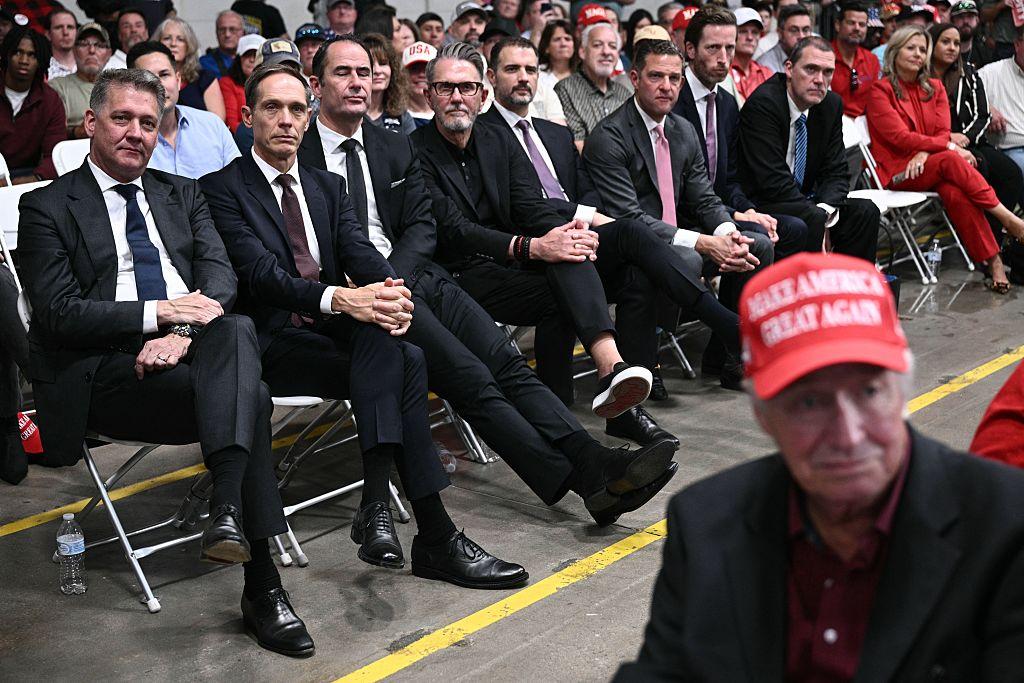
Audi CEO Gernot Döllner is facing criticism in Germany after appearing alongside President Donald Trump at a Georgia campaign rally where plans for a roughly $4 billion Audi factory were announced. IG Metall says the appearance conflicted with Audi’s political-neutrality guidelines, which generally restrict political appearances close to elections, while Audi says management approved an exception and that the delegation attended solely for business reasons. The proposed plant could create about 4,500 jobs and produce up to 200,000 SUVs annually, but it still requires approval from Volkswagen’s supervisory board.
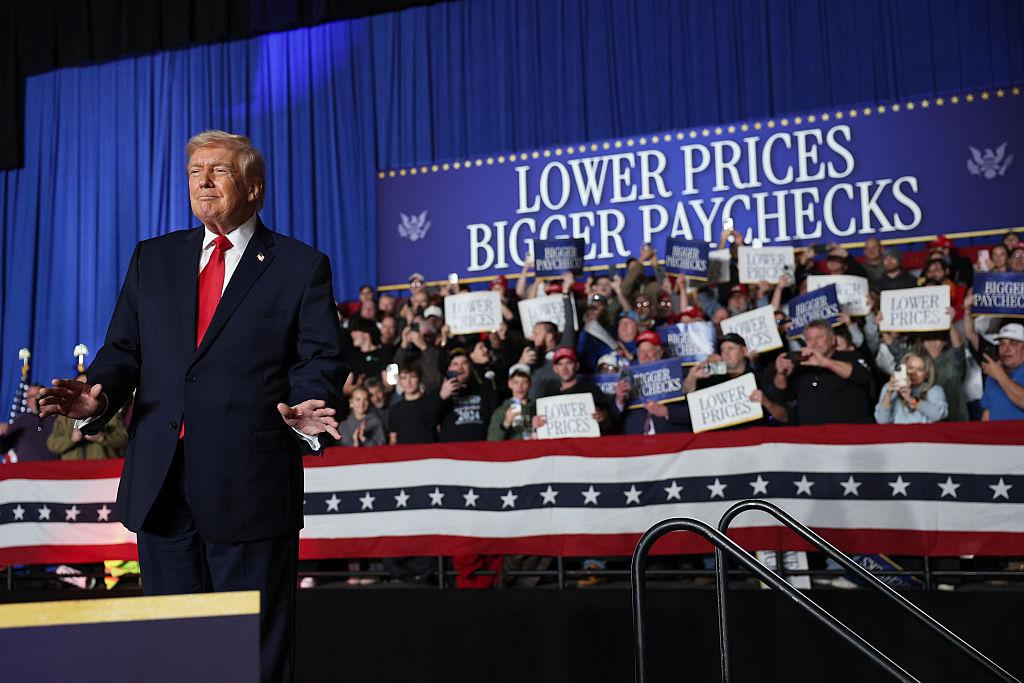
Audi Chief Executive Gernot Döllner is facing a growing political and labour backlash in Germany after appearing alongside U.S. President Donald Trump at a Republican campaign rally in Georgia to announce plans for a roughly $4 billion Audi manufacturing plant in the United States. The proposed facility, which would become Audi’s first dedicated factory in the U.S., is expected to be built near Macon, Georgia, and could eventually produce up to 200,000 sport utility vehicles a year while creating an estimated 4,500 jobs. The announcement was made at a politically charged campaign event in Perry, Georgia, just days before the November midterm elections, turning what Audi describes as a major industrial investment into a controversy over corporate political neutrality and the relationship between Germany’s largest automotive group and the Trump administration.
The controversy centres less on the investment itself than on the way it was unveiled. Döllner attended the rally with senior Audi representatives and was brought on stage by Trump as the president highlighted the proposed factory as evidence that his tariff policies were forcing foreign manufacturers to shift production into the United States. Trump told supporters that Audi’s decision would bring thousands of jobs to Georgia and strengthen American manufacturing, while Döllner thanked the president for his support and said the company had much greater ambitions for the U.S. market. The public appearance immediately raised questions in Germany because Audi maintains internal political-neutrality guidelines intended to keep the company from being drawn directly into election campaigning.
Germany’s powerful IG Metall union has been particularly critical. Union president Christiane Benner described the appearance as politically unacceptable and argued that Döllner had violated the spirit of Audi’s neutrality rules by appearing on a campaign stage shortly before an election. Audi’s internal guidelines generally prohibit political appearances within three months of an election, a restriction designed to protect the company from the perception that it is endorsing individual candidates or parties. Reuters reported, however, that a source familiar with the situation said Audi management had approved an exception to that code because the company considered the event commercially important and connected directly to negotiations over the planned factory.
Audi has defended Döllner’s participation, saying the company’s delegation accepted Trump’s invitation for business reasons rather than as a political endorsement. The automaker says the U.S. investment is intended to strengthen Audi’s competitiveness in one of the world’s most important premium-car markets and reduce the disadvantages it currently faces as a largely import-dependent brand in the United States. Döllner later acknowledged internally that the appearance had caused questions and misunderstanding but maintained that he and Audi production chief Gerd Walker travelled to Georgia to advance negotiations and protect the company’s commercial interests.
Handelsblatt reported that Döllner’s appearance on stage may not have been planned in advance and that Trump’s decision to invite him up was described by people familiar with the event as spontaneous. The newspaper also reported significant nervousness inside Audi because the company was attempting to secure favourable conditions for the U.S. investment and feared that the deal could be jeopardised if the announcement did not proceed in the manner expected by the White House. That account, if accurate, would help explain why Audi accepted a politically uncomfortable setting, although it does not remove the concerns raised by German labour representatives over the company’s neutrality standards.
The proposed factory is strategically important for Audi because the company has historically relied on imports from Europe and Mexico to supply the American market. Trump’s tariffs on European-made vehicles have sharply increased those costs, with Audi estimating that the additional burden amounted to around €1.2 billion last year. By manufacturing more vehicles inside the United States, Audi could reduce its exposure to import tariffs, shorten supply chains and compete more effectively with rivals that already have substantial U.S. production footprints.
Trump has openly presented the Audi announcement as a victory for his industrial and tariff strategy. He told supporters that the planned investment would not have happened without his administration’s trade policies and used the announcement as evidence that tariffs can encourage international manufacturers to move factories and jobs into the United States. That message fits directly into one of the central economic themes of his political campaign, making Döllner’s presence particularly sensitive from the perspective of Audi’s German stakeholders.
The timing of the announcement has intensified the controversy. The Georgia rally was held in the closing days before the November 3 midterm elections, when both Republicans and Democrats are competing for control of Congress. Georgia remains politically important, and Trump’s campaign has been using large-scale rallies to strengthen Republican candidates while emphasising manufacturing investment, tariffs and domestic job creation. Audi’s decision to unveil a multibillion-dollar plant at such an event inevitably allowed the investment to become part of that electoral message, whether or not the company intended to endorse it.
Labour representatives inside Volkswagen have also expressed concern. Daniela Cavallo, the powerful head of the Volkswagen works council, said the company’s expansion in the United States could make strategic sense because Audi needs to improve its relatively weak position in the American market, but she strongly criticised Döllner’s involvement in the campaign event. Her broader concern is that international expansion should not come at the expense of German jobs or production capacity, especially as Volkswagen and Audi are undergoing significant restructuring at home.
That domestic context is critical. Volkswagen is currently considering major reductions in manufacturing capacity and model lines in Germany as it struggles with high costs, weaker demand in Europe, growing competition from Chinese manufacturers and the financial impact of tariffs and the global electric-vehicle transition. Reuters has reported that Volkswagen’s restructuring could eventually affect a very large number of jobs across the group, while Audi itself is also reviewing production capacity and employment in Germany.
For German workers, a $4 billion factory in Georgia therefore raises a difficult question. On one hand, stronger Audi sales in the United States could improve the company’s global financial position and protect the wider group. On the other, a large new production base in America could eventually reduce the need to export vehicles from German plants, particularly if models currently built in Europe are gradually transferred to U.S. production. That is why labour representatives have insisted that any American expansion must come with clear guarantees protecting German employment and industrial value.
The proposed Georgia factory is expected to produce large SUVs including the Audi Q7, Q8 and a planned Q9, according to Reuters. Construction could begin in 2027, while full-scale production is expected to start in the early 2030s. The plant would be designed for annual capacity of roughly 200,000 vehicles, giving Audi a significantly larger direct manufacturing presence in the United States than it has today.
Audi is also planning to use Volkswagen Group’s broader American manufacturing network. The company intends to produce around 25,000 Audi vehicles annually at Scout Motors’ new $2 billion factory in South Carolina, which is currently under construction. That arrangement would allow Audi to begin expanding U.S. production before the Georgia plant reaches full operation.
The investment is not yet final, however. Audi is part of Volkswagen Group, and a project of this scale requires approval from Volkswagen’s supervisory board. That board includes major shareholder representatives, the government of Lower Saxony and labour representatives, giving German stakeholders direct influence over whether the proposal proceeds in its current form. Lower Saxony Premier Olaf Lies, who also sits on Volkswagen’s supervisory board, has stressed that no final decision has yet been made and that the responsible corporate bodies must formally approve the investment.
That approval process could become politically sensitive because labour representatives control significant influence within Volkswagen’s governance structure. German codetermination laws give employee representatives substantial representation on supervisory boards, meaning opposition from unions cannot simply be ignored. The disagreement is therefore not merely symbolic criticism after a campaign appearance; it could become part of the internal negotiations over the conditions attached to the U.S. investment.
Audi and Volkswagen will likely argue that U.S. manufacturing is necessary for long-term competitiveness. Audi’s American market share remains relatively modest compared with German rivals BMW and Mercedes-Benz, both of which already operate major manufacturing facilities in the United States. Local production could lower costs, improve delivery times and protect Audi against future tariff increases.
The proposed factory may also receive substantial financial support from U.S. state and local authorities. Reuters reported that the project could qualify for around $1.4 billion in incentives, although the final structure of those benefits has not been publicly detailed. Economic-development packages of this size can include tax abatements, infrastructure support, land assistance and workforce-training incentives designed to attract major industrial investments.
Such incentives are often politically controversial because taxpayers effectively subsidise private companies in exchange for promised jobs and future economic activity. Supporters argue that large manufacturing facilities create long-term employment, supplier networks and tax revenue, while critics question whether governments sometimes pay too much to secure investments that companies may have made anyway. The Audi project is likely to face similar scrutiny in Georgia once more detailed financial terms become available.
The investment could create an important automotive cluster around the planned site near Macon. A factory capable of producing 200,000 vehicles annually would require a large supply network involving components, logistics, maintenance, engineering and services, potentially generating additional employment beyond the 4,500 direct jobs Audi expects to create. This multiplier effect is one reason U.S. states compete aggressively for vehicle manufacturing projects.
Georgia has already become an increasingly important centre for electric-vehicle and automotive manufacturing. Hyundai has invested heavily in the state, while battery manufacturers and suppliers are expanding across the southeastern United States. Audi’s arrival would deepen that industrial base and could help the state attract further European suppliers.
For Trump, that makes the factory especially useful politically. Manufacturing projects provide tangible examples that can be presented to voters as evidence that trade policy is reshaping corporate investment decisions. Trump has repeatedly argued that tariffs force companies to build inside the United States rather than ship products from abroad, and Audi’s announcement fits closely with that narrative.
For Audi, however, attributing the investment solely to tariffs is more complicated. The company says it also wants to expand its U.S. customer base and strengthen its long-term presence in one of the world’s largest premium-car markets. Local production could have made strategic sense even without tariffs, although the additional import costs clearly increased pressure on the company to accelerate a decision.
That difference in interpretation lies at the heart of the political controversy. Trump portrays the investment as proof that his economic pressure worked. Audi portrays it as a commercial decision intended to improve competitiveness. German unions worry that the same commercial decision has been packaged in a way that makes the company appear to endorse Trump politically.
IG Metall’s criticism is therefore focused heavily on corporate governance and public perception. The union does not necessarily oppose Audi building vehicles in the United States. Benner has acknowledged that strengthening Audi’s position in the American market can be economically sensible. Her objection is that the chief executive appeared on a campaign stage and became part of an election event during a period when Audi’s own rules are intended to keep the company politically neutral.
German political figures have also criticised the appearance. Lower Saxony Premier Olaf Lies said the setting was inappropriate and stressed that the company’s U.S. expansion must not weaken German employment. Other politicians have gone further, arguing that Audi allowed itself to be used as part of Trump’s campaign messaging.
Audi has rejected the implication that the investment is directed against Germany. The company says expanding in the United States is part of a global strategy intended to strengthen the brand and make the overall business more resilient. Audi supervisory board chairman Manfred Döss has similarly argued that the company cannot secure its future through cost cuts alone and must continue investing in markets where it sees growth opportunities.
The controversy also reflects the difficult position facing European manufacturers under Trump’s trade policies. Companies must decide whether to absorb tariffs, raise prices, reduce exports or shift production closer to American consumers. For large automakers, localisation can be the most commercially attractive option, but that can create political tension in their home countries if domestic workers fear production is moving abroad.
Germany is especially sensitive because automobile manufacturing remains one of the country’s most important industrial sectors. Volkswagen, BMW, Mercedes-Benz and their suppliers employ hundreds of thousands of workers directly and indirectly, while the industry contributes substantially to exports and regional economies. Any large-scale shift of vehicle production to the United States therefore has implications far beyond one company.
Audi’s own challenges add another layer. The brand has struggled in recent years with weaker sales, delayed model launches, competition from Chinese electric-vehicle makers and the broader financial pressure facing Volkswagen Group. U.S. localisation could help address some of those problems, but the investment requires billions of dollars at a time when the parent company is simultaneously trying to cut costs.
That financial tension is one reason Volkswagen’s supervisory-board approval remains important. The board will need to determine whether the expected long-term gains justify the scale of the investment and whether funding the project is compatible with restructuring elsewhere in the group.
The involvement of labour representatives means job guarantees could become part of the negotiation. German unions may seek assurances that key models, engineering functions or components will remain in Germany even as Audi expands abroad. They may also demand investment commitments for existing plants to prevent the Georgia facility from becoming a precursor to deeper domestic cuts.
The Trump administration, meanwhile, may seek guarantees of its own. U.S. economic-development agreements often include production targets, employment commitments and investment milestones linked to financial incentives. Audi could therefore find itself negotiating simultaneously with American political authorities and German corporate stakeholders before the project is finally approved.
The political symbolism will likely persist regardless of those negotiations. Photographs and video of Döllner appearing alongside Trump have already circulated widely in both the United States and Germany, making the announcement part of the broader debate over how multinational corporations should interact with political leaders during election campaigns.
Corporate executives frequently meet presidents and government officials because major investments require regulatory approvals, tax arrangements and infrastructure commitments. The controversy arises when those interactions occur inside explicitly partisan campaign events, where the distinction between commercial engagement and political endorsement becomes harder to maintain.
Audi’s neutrality policy was designed precisely to manage that risk. The reported management exception may protect Döllner from an internal procedural violation, but it does not necessarily resolve the reputational criticism from unions and politicians who believe the company should have refused the setting.
The case could therefore influence how German companies handle similar invitations in future. Executives may become more cautious about appearing at rallies or campaign events even when major commercial announcements are involved, particularly during the months immediately preceding elections.
For Trump, the incentives run in the opposite direction. Presidents seeking re-election or campaigning for congressional allies benefit from bringing business leaders on stage because corporate investment announcements reinforce claims of economic success. The Audi factory provided a particularly powerful example because of the size of the investment, the number of jobs involved and the global reputation of the brand.
The controversy is also likely to remain relevant during Volkswagen’s internal approval process. Supervisory-board members will be assessing not only the economics of the Georgia plant but also the conditions attached to it and the effect on existing operations. The political dispute surrounding Döllner’s appearance may make that discussion more contentious, but it does not necessarily mean the investment will be rejected.
Both German labour representatives and political officials have said that expanding in the United States can be strategically justified if German plants and jobs are protected. That suggests the core debate may ultimately focus less on whether Audi should enter the American manufacturing market and more on how the investment is structured.
The proposed plant therefore sits at the intersection of several major economic and political pressures: Trump’s tariff strategy, Germany’s industrial slowdown, Volkswagen’s restructuring, Audi’s need for growth and the increasing politicisation of multinational investment decisions. Each side sees the project through a different lens, making a straightforward business announcement much more contentious than Audi may initially have expected.
For American workers and Georgia officials, the project represents thousands of potential jobs and billions of dollars of industrial investment. For Trump and Republicans, it provides a campaign example of tariffs bringing manufacturing into the United States. For Audi, it offers protection from import costs and a path toward stronger market share. For German labour organisations, however, it raises questions about corporate political neutrality and whether overseas expansion will eventually come at the expense of domestic employment.
Those competing interests will shape what happens next. The proposed Georgia plant remains subject to Volkswagen supervisory-board approval, and key details concerning incentives, production allocation and job guarantees have yet to be finalised. Audi has made clear that it wants the project to proceed, but its leadership will need to convince powerful German stakeholders that the investment strengthens rather than weakens the broader group.
The immediate controversy surrounding Döllner is therefore unlikely to disappear quickly. The chief executive has defended his decision to attend the rally as necessary for Audi’s commercial interests, while IG Metall and other critics argue that a company leader should have maintained greater distance from an explicitly partisan event. Both positions reflect a larger question faced by multinational corporations operating in increasingly politicised economies: how far should executives go in engaging political leaders when billions of dollars in investment and thousands of jobs are at stake?
For now, the most important factual distinction is that Audi has announced plans for the Georgia factory but Volkswagen has not yet given final approval. The $4 billion project is therefore a proposed investment rather than an irrevocably completed decision. Likewise, Döllner’s rally appearance has been criticised as inconsistent with Audi’s neutrality principles, but the company says an exception was authorised and denies that the appearance represented a political endorsement.
The next major development will come from Volkswagen’s supervisory board, where shareholder representatives, Lower Saxony and labour leaders will have a formal say in whether the investment proceeds. If approved, construction is expected to begin next year and vehicle production could start early in the next decade. If conditions are changed or approval is delayed, Audi may have to renegotiate parts of the plan with U.S. authorities.
Until then, the Georgia announcement remains both an industrial proposal and a political controversy. The factory could significantly reshape Audi’s position in the U.S. market, but the way it was unveiled has already created tensions at home that the company will have to resolve long before the first vehicle rolls off the production line.