BANK OF CANADA HIKES INTEREST RATE TO 2.5%, WARNS MORE INCREASES COULD FOLLOW
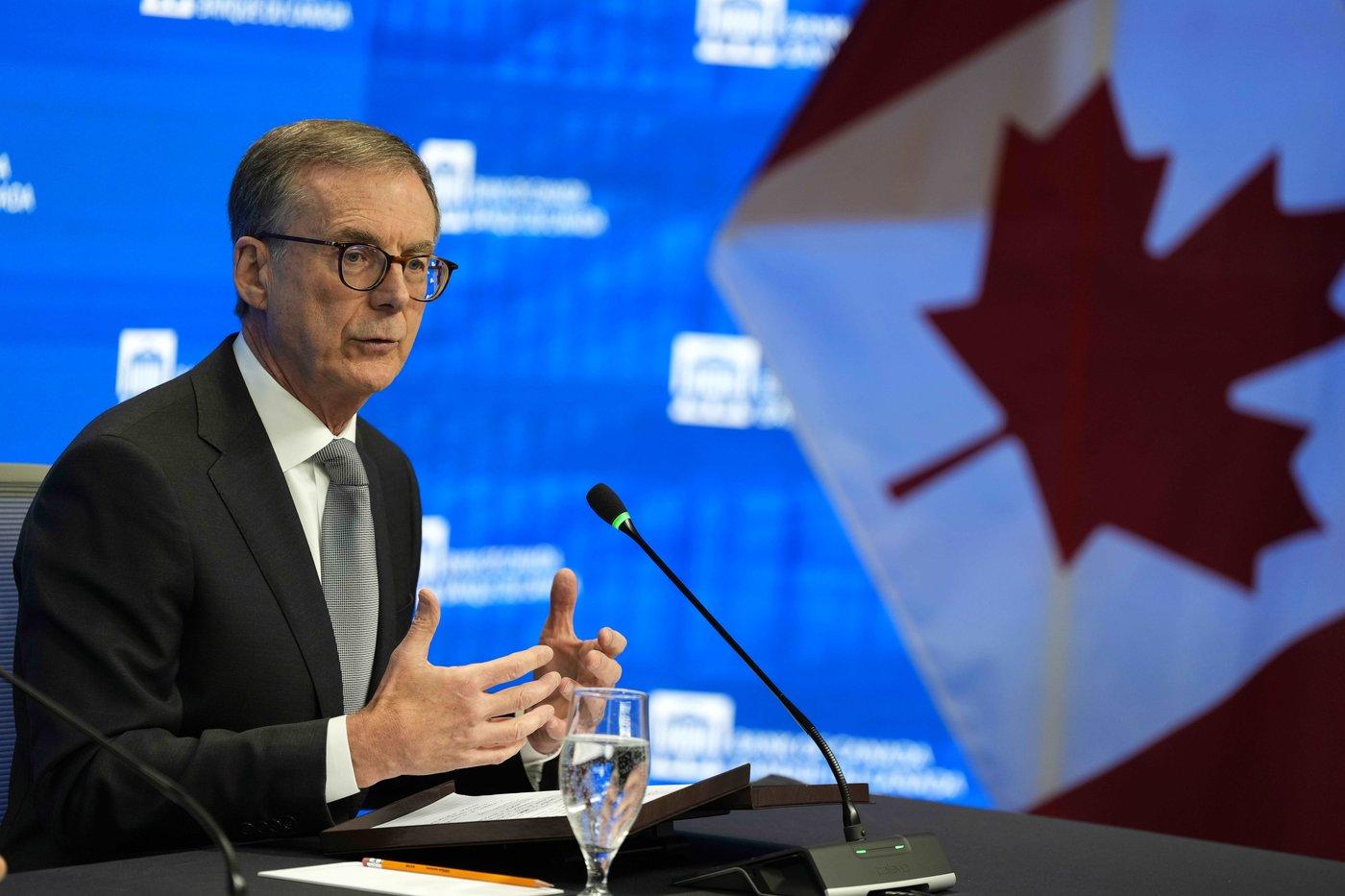
The Bank of Canada has raised its benchmark overnight rate by 25 basis points from 2.25% to 2.50%, its first interest-rate increase since July 2023. The central bank sharply increased its 2027 inflation forecast to 3.1% from 2.0% and warned that more rate increases could be necessary if elevated energy prices spread into broader inflation. Governor Tiff Macklem said policymakers would proceed carefully because economic uncertainty remains high.
The Bank of Canada has raised its benchmark interest rate for the first time in more than three years, lifting the overnight rate by a quarter percentage point to 2.50% as policymakers move to prevent surging energy costs from spreading into a broader and more persistent inflation problem.
The central bank announced the increase on Wednesday, October 28, raising the policy rate from 2.25% to 2.50%. The Bank Rate was increased to 2.75%, while the deposit rate moved to 2.45%. The decision marked the first rate increase since July 2023 and signaled a significant shift in monetary policy after a prolonged period in which policymakers had been focused largely on supporting an economy weakened by trade uncertainty and softer domestic demand.
Governor Tiff Macklem said the central bank’s inflation outlook had deteriorated substantially since its July Monetary Policy Report, largely because global oil prices and other energy costs had remained elevated for longer than previously expected. The Bank now believes there is a greater risk that those increases will spread beyond gasoline and other directly affected components and become embedded across a wider range of consumer prices.
Macklem said the combination of a substantially higher inflation outlook and an economy that has shown greater resilience than expected justified an immediate increase in borrowing costs. He also made clear that Wednesday’s move may not necessarily be the last, warning that the policy rate could need to rise further if inflationary pressures continue to broaden.
At the same time, the governor stressed that policymakers intend to move cautiously because of considerable uncertainty surrounding energy markets, trade policy, economic growth and financial conditions. The Bank is therefore not committing in advance to a fixed sequence of increases and will assess incoming economic data before deciding whether another rate hike is required.
The shift in the inflation forecast was one of the most important elements of Wednesday’s announcement. The Bank now expects Canadian consumer-price inflation to average approximately 3.1% in 2027, sharply higher than the 2.0% projection published in July. Inflation is expected to remain above 3% through much of 2027 before gradually moving back toward the Bank’s 2% target around the middle of 2028.
The revised forecast reflects a combination of higher energy costs, more expensive imported goods and additional cost pressures moving through supply chains. The Bank said higher oil prices are affecting consumers directly through gasoline and heating costs while also increasing expenses for transportation, manufacturing, travel and businesses that depend heavily on fuel.
Inflation was already running at 3.1% in September. Energy inflation had risen particularly sharply, with gasoline and heating-oil prices contributing heavily to the increase. The Bank said inflation excluding gasoline was substantially lower, while measures of underlying core inflation remained comparatively contained.
That distinction is crucial to the central bank’s decision. A temporary increase in gasoline prices does not automatically require higher interest rates, particularly because monetary policy cannot directly increase global oil supply. The Bank’s concern is that prolonged energy-price increases could eventually cause businesses to raise prices across a broad range of goods and services and could influence wage negotiations and consumer expectations.
If households and businesses begin expecting inflation to remain persistently high, those expectations can themselves contribute to more sustained price increases. Central banks therefore often act before those effects become fully entrenched, even when the initial inflation shock originates outside the domestic economy.
The Bank said energy inflation had climbed sharply as disruptions to global supply pushed crude oil and refined-product prices higher. Persistent geopolitical instability in the Middle East has contributed to those pressures, while damaged refinery capacity and constrained shipments have added further uncertainty to the global energy outlook.
The impact has been particularly visible at Canadian gasoline pumps. Higher fuel costs directly affect drivers but can also raise the price of moving goods by truck, rail and air, increasing costs throughout the economy.
The Bank’s updated projections show inflation remaining elevated into 2027 as those cost pressures move gradually through the system. Policymakers expect the effects eventually to fade, but not as quickly as previously anticipated.
Economic growth has also been stronger than the Bank expected earlier this year, reducing some of the concern that higher rates could immediately push an already weak economy into a deeper downturn.
The Bank now expects Canada’s economy to expand by approximately 1% in 2026, compared with the 0.7% growth forecast in July. Growth is projected to strengthen to about 2% in both 2027 and 2028.
Consumption, exports, business investment and government spending have contributed to the improved outlook, although renewed trade tensions with the United States are expected to weigh on growth toward the end of the year.
The stronger-than-expected economy gives the Bank somewhat more room to raise rates without immediately threatening a severe contraction, although policymakers acknowledge that substantial risks remain.
Trade tensions with the United States continue to complicate the outlook. New U.S. tariffs and Canadian countermeasures are increasing costs for some companies and creating uncertainty around future investment and exports.
The combination of tariffs and elevated energy prices presents an unusually difficult challenge for monetary policy because both can raise inflation while simultaneously slowing economic activity. Higher interest rates may help restrain inflation, but they can also weaken borrowing, investment, housing demand and consumer spending.
Macklem emphasized that the Bank is attempting to balance those competing risks rather than responding mechanically to the headline inflation rate.
For Canadian households, Wednesday’s decision could translate into higher borrowing costs relatively quickly. Variable-rate mortgage holders are among those most directly exposed because their payments or interest costs can adjust when the Bank of Canada changes its policy rate.
Homeowners with fixed-rate mortgages will generally not experience an immediate change until renewal, although expectations of future central-bank policy can influence longer-term bond yields and therefore mortgage rates available to new borrowers and people refinancing existing loans.
Home-equity lines of credit and other loans tied directly to banks’ prime rates could also become more expensive following the increase.
Commercial banks typically adjust their prime lending rates after major Bank of Canada policy changes, meaning consumers with variable-rate debt may begin to see the effects almost immediately.
The decision could also affect businesses. Companies that rely on credit to finance inventories, equipment, property or expansion may face higher interest expenses, potentially reducing investment or slowing hiring.
At the same time, the central bank is seeking to prevent inflation from becoming sufficiently entrenched that much larger increases in borrowing costs would be required later.
That preventive logic was central to Macklem’s explanation. The Bank believes acting now with a relatively modest quarter-point increase could reduce the likelihood that inflation expectations become destabilized.
The move had been widely anticipated by financial markets before Wednesday’s announcement. A Reuters survey conducted between October 21 and 23 found that 19 of 34 economists expected the Bank to raise the overnight rate to 2.50%.
A majority of economists in that survey also expected at least one additional increase by the end of March 2027, although the Bank itself has not committed to that path.
Market expectations had shifted significantly as energy prices remained elevated and inflation data showed renewed pressure. Earlier in the year, many economists had expected the Bank to remain on hold for longer.
Wednesday’s increase marks an important reversal in Canada’s recent monetary-policy cycle. The Bank had spent earlier periods lowering interest rates after inflation eased from the severe increases experienced following the pandemic and global supply disruptions.
Policy had eventually settled at 2.25%, where the Bank maintained the rate while assessing the effects of trade tensions, economic weakness and persistent energy inflation.
In September, the Bank left the rate unchanged at 2.25% but warned that risks had shifted. Policymakers noted that energy prices were remaining elevated and cautioned that the longer those pressures lasted, the greater the risk they would spread to other prices.
The October increase shows that the Bank concluded those risks had become sufficiently serious to justify action.
The central bank’s 2% inflation target remains the central anchor of its policy framework. Although inflation can temporarily move above or below that level, the Bank aims to keep it near 2% over time within a broader control range of 1% to 3%.
Current inflation is therefore sitting at or slightly above the upper end of that range depending on the period measured.
The challenge for policymakers is determining whether the increase reflects a temporary energy shock that should largely be tolerated or the beginning of a broader inflation process requiring monetary tightening.
The Bank’s latest assessment is that the risk of broader spillover has increased materially.
That judgment is reflected not only in the rate increase but also in the sharp upward revision to the inflation outlook. The jump from 2.0% to 3.1% in the 2027 annual forecast represents a substantial change for a central bank whose mandate is centered on price stability.
The Bank expects inflation to rise further in the near term before easing. Its October outlook indicates inflation could remain above 3% through the third quarter of 2027.
Energy prices are not the only concern. Higher prices for non-energy imports are also contributing to pressure, while tariffs and counter-tariffs can make imported goods and production inputs more expensive.
Some service-sector inflation also remains elevated, particularly in areas affected by transportation and travel costs.
There are nevertheless signs that inflation is not yet broad-based across the entire economy. Core measures remain relatively close to the Bank’s target, and the proportion of consumer-price components rising rapidly has not increased dramatically.
Those indicators explain why policymakers are still emphasizing caution rather than signaling an aggressive tightening cycle.
The Bank will also be watching the labor market closely. Wage growth has remained around 3% by several measures, while unemployment indicators suggest that some excess capacity remains.
Long-term unemployment is elevated and job vacancies remain subdued, indicating that job seekers can still face difficulty finding work.
A weakening labor market could reduce inflationary pressure and discourage the Bank from raising rates further. Conversely, stronger wage growth combined with persistent price increases could reinforce the case for additional tightening.
Housing will also be closely monitored. Canada’s housing market is particularly sensitive to interest rates because of high property prices and large household mortgage balances.
Higher rates can suppress home purchases and construction and increase debt-servicing costs for households renewing mortgages.
The Bank must therefore weigh the inflation benefit of tighter policy against the financial strain it can create for indebted homeowners.
The Canadian dollar may also react to changes in the interest-rate outlook. Higher rates can make Canadian assets more attractive relative to those in other countries, although exchange-rate movements depend heavily on global markets and expectations for U.S. interest rates as well.
A stronger Canadian dollar can reduce the cost of imported goods and provide some help in controlling inflation, but currency effects are never guaranteed.
Wednesday’s decision will consequently be interpreted not only as a one-off increase but also as a signal about how policymakers now view the balance of risks.
Macklem’s warning that rates may need to rise further leaves the door clearly open to another move. His simultaneous promise to proceed carefully indicates that the Bank is not yet convinced a full series of increases will be necessary.
The next decisions will depend heavily on inflation data, energy prices, trade developments and evidence of whether higher costs are spreading into wages and a broader range of goods and services.
If inflation begins easing toward target without further policy action, the Bank could choose to hold the rate at 2.50%. If the opposite occurs and elevated energy costs become generalized inflation, another increase could follow.
For households and businesses, that uncertainty means borrowing conditions may remain volatile into 2027.
The immediate message from the Bank is nevertheless clear. Policymakers have become sufficiently concerned about inflation to reverse course and raise rates for the first time since 2023, even while acknowledging continuing risks to economic growth.
The October decision therefore marks a turning point in Canadian monetary policy. Whether it becomes the beginning of a broader tightening cycle will depend on how quickly inflation responds and whether the energy shock that triggered the move remains concentrated or spreads across the Canadian economy.