
BOLSONARO BEATS POLL EXPECTATIONS, FINISHES AHEAD OF LULA AS BRAZIL CONFIRMS PRESIDENTIAL RUNOFF
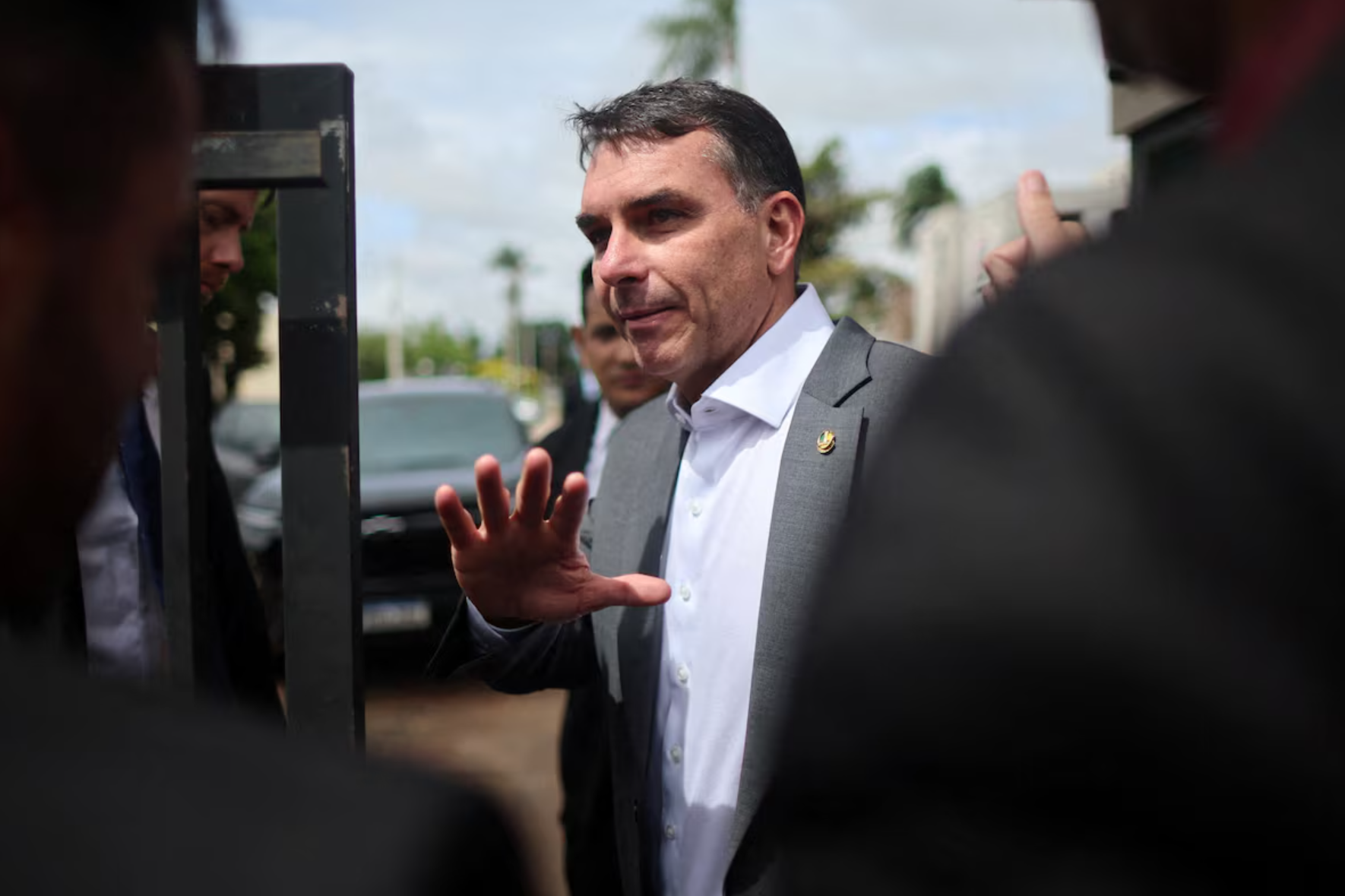
Senator Flávio Bolsonaro has finished ahead of President Luiz Inácio Lula da Silva in the first round of Brazil’s presidential election, outperforming most pre election polling. Bolsonaro secured about 47 percent of valid votes, while Lula finished with approximately 45 percent. Neither candidate reached the more than 50 percent required for an outright victory. The two will now face each other in a decisive runoff election on October 25. Bolsonaro’s stronger than expected performance has reshaped the race and could also influence Brazilian financial markets as investors assess the possibility of a change in government.
Senator Flávio Bolsonaro has finished first in the opening round of Brazil’s presidential election, defeating President Luiz Inácio Lula da Silva in a result that surprised many pollsters and set up a closely watched runoff on October 25.
Bolsonaro secured approximately 47 percent of valid votes.
Lula finished second with roughly 45 percent.
Neither candidate reached the majority required to win outright.
BOLSONARO OUTPERFORMS POLLS
The result represents a stronger showing for Bolsonaro than most pre election surveys had suggested.
Many polls published in the final days of the campaign showed Lula narrowly ahead in the first round.
Instead, Bolsonaro finished in front.
That difference between polling expectations and the actual result is now one of the biggest stories coming out of the election.
ABOUT 55.8 MILLION VOTES FOR BOLSONARO
Final counting showed Bolsonaro with approximately 55.8 million votes.
Lula received almost 53.2 million.
The margin was significant enough to clearly establish Bolsonaro as the first round leader, but not large enough to avoid a second round.
RUNOFF CONFIRMED FOR OCTOBER 25
Brazilian electoral authorities have confirmed that the race will continue to a runoff.
Under Brazilian law, a presidential candidate must receive more than 50 percent of valid votes to win in the first round.
Because neither Bolsonaro nor Lula reached that threshold, the top two will face each other again on October 25.
LULA FINISHES SECOND DESPITE POLL LEADS
Lula entered election day as the candidate most surveys expected to finish first.
Several major polls showed him holding a narrow advantage over Bolsonaro.
The result therefore represents a setback for the incumbent.
However, Lula remains within striking distance heading into the runoff.
BOLSONARO CAMPAIGN GAINS MOMENTUM
For Flávio Bolsonaro, the first round result gives his campaign significant momentum.
He entered the election carrying the political legacy of his father, former President Jair Bolsonaro.
His campaign focused heavily on crime, inflation, public debt and criticism of Lula’s government.
He also presented himself as more aligned with business interests and closer ties with the United States.
HIS FATHER REMAINS CENTRAL TO CAMPAIGN
Jair Bolsonaro has remained a major political influence throughout the election.
The former president is serving a prison sentence following his conviction over an attempted coup connected to the aftermath of the 2022 election.
Flávio Bolsonaro has promised to pursue an amnesty for his father.
That pledge is likely to remain a major issue in the second round.
LULA SEEKS FOURTH PRESIDENTIAL TERM
Lula is seeking an unprecedented fourth nonconsecutive term.
He previously governed Brazil between 2003 and 2010 before returning to office in 2023.
His campaign has emphasized social welfare programs, employment and efforts to reduce inequality.
He has also presented himself as a defender of Brazil’s democratic institutions.
COST OF LIVING REMAINS IMPORTANT
Economic pressure has been one of the biggest issues for voters.
Concerns over inflation, debt and household finances have shaped the campaign.
Bolsonaro has argued that Lula’s economic policies have failed to deliver enough relief.
Lula has countered that his government has expanded social protection and improved employment.
CRIME ALSO SHAPED THE RESULT
Public security remains another major concern.
Bolsonaro campaigned on tougher measures against organized crime.
Lula has argued that policing must be combined with social and economic policies.
Crime is expected to remain a central issue throughout the runoff campaign.
BUSINESS COMMUNITY WATCHES CLOSELY
The first round result is also being closely watched by financial markets.
Bolsonaro is generally viewed as more supportive of market oriented economic policies.
His stronger than expected performance could influence investor expectations about fiscal policy, privatization and regulation.
Brazilian markets are expected to react when trading resumes.
MARKET REACTION COULD BE POSITIVE
Reuters reported that Bolsonaro’s stronger showing may encourage investors who favor tighter fiscal policies and a more business friendly government.
However, markets will also be watching the second round closely.
The final result could have implications for the Brazilian real, government bonds and equities.
LULA STILL HAS PATH TO VICTORY
Bolsonaro’s first place finish does not determine the runoff result.
The second round is effectively a new election.
Both candidates will now attempt to win support from voters who backed other candidates in the first round.
Those voters could become decisive.
THIRTEEN CANDIDATES CONTESTED FIRST ROUND
Thirteen candidates participated in the opening vote.
The combined support received by the other candidates now becomes politically important.
Both Lula and Bolsonaro will seek endorsements from eliminated candidates and their parties.
SMALLER PARTIES COULD BECOME KINGMAKERS
Parties that did not advance to the runoff may now negotiate political support.
Endorsements could influence voters, particularly in closely contested states.
The distribution of congressional seats will also affect coalition negotiations.
CONGRESS ELECTION ALSO IMPORTANT
Brazilian voters also elected all 513 members of the Chamber of Deputies.
Two thirds of the Senate was also contested.
The final composition of Congress will shape how easily the eventual president can pass legislation.
GOVERNABILITY WILL MATTER AFTER ELECTION
Brazilian presidents typically need broad political coalitions.
Neither Lula nor Bolsonaro can assume automatic congressional support.
Whichever candidate wins on October 25 will need to negotiate with multiple parties.
POLARIZATION REMAINS DEEP
The election has again exposed Brazil’s deep political divisions.
Lula and Bolsonaro represent sharply different political movements.
Their supporters differ on economic policy, public security, foreign relations and the role of government.
The runoff is therefore expected to remain highly polarized.
RELATIONSHIP WITH UNITED STATES ALSO IN FOCUS
Brazil’s relationship with the United States has become more politically important.
Lula has criticized U.S. pressure and tariffs.
Flávio Bolsonaro has advocated closer ties with Washington.
That contrast is likely to receive greater attention in the second round.
TRUMP RELATIONSHIP MAY BECOME CAMPAIGN ISSUE
Flávio Bolsonaro has cultivated links with U.S. President Donald Trump.
Lula has criticized what he describes as foreign interference in Brazilian politics.
The issue could become more prominent as the runoff campaign intensifies.
ELECTION AUTHORITIES REPORT SMOOTH VOTING
Brazil’s electoral authorities said the first round was conducted successfully.
The country relies heavily on electronic voting machines.
Despite political tensions, no major nationwide disruption was reported.
WHAT THE RESULT SHOWS
The first round establishes one clear fact.
Flávio Bolsonaro received more votes than Lula.
It also shows that the presidential race remains competitive.
The final result will now depend on how voters realign before October 25.
WHAT POLLS GOT WRONG
Most major polling organizations correctly identified Lula and Bolsonaro as the leading candidates.
However, many underestimated Bolsonaro’s first round support.
The difference demonstrates why polls should be treated as snapshots of voter opinion rather than predictions.
WHAT IS CONFIRMED
Flávio Bolsonaro finished first in Brazil’s first round presidential election.
He received about 47 percent of valid votes.
Lula received approximately 45 percent.
Neither candidate secured an outright majority.
The runoff will take place on October 25.
WHAT HAPPENS NEXT
Both candidates will now begin an intense three week runoff campaign.
They will seek endorsements from eliminated candidates and target undecided voters.
The economy, crime, corruption, public debt and Brazil’s foreign relations are expected to remain central issues.
For Bolsonaro, the first round result provides momentum.
For Lula, the challenge is to recover voters and reverse the first round deficit.
The presidency will now be decided on October 25.