BRAZIL ELECTION COULD SHAPE FUTURE OF AMAZON RAINFOREST AS SCIENTISTS WARN OF ECOLOGICAL RISKS
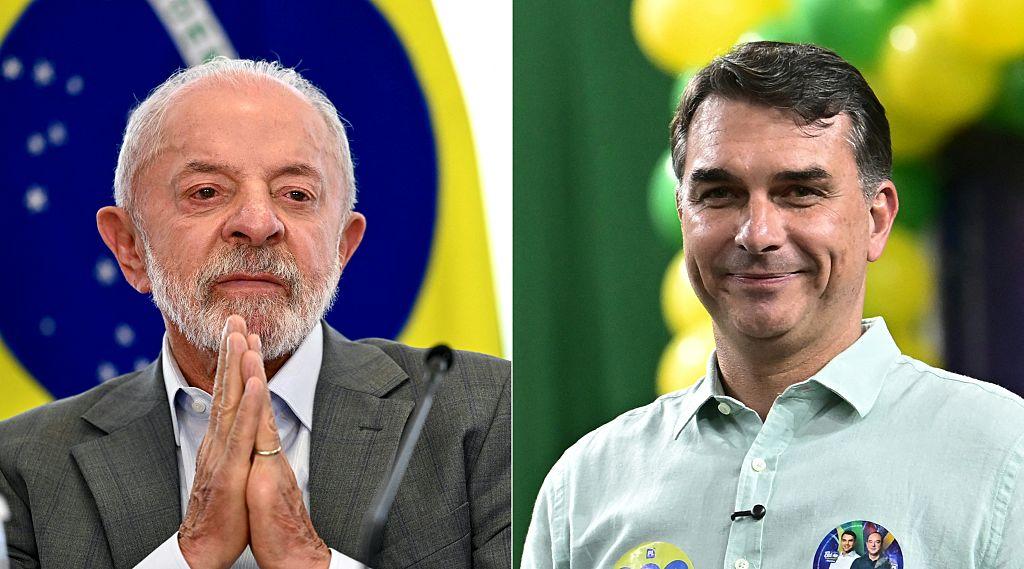
Brazil’s presidential runoff between Luiz Inácio Lula da Silva and Flávio Bolsonaro could significantly influence environmental policy in the country that contains most of the Amazon rainforest. Lula has pursued lower deforestation, stronger enforcement and international financing for sustainable development, while Bolsonaro has called for changes to environmental laws and greater authority for landowners. Scientists warn that deforestation, forest degradation, drought and rising temperatures are weakening parts of the Amazon, although researchers disagree about precisely how close the rainforest is to an irreversible ecological tipping point.
Brazil’s presidential runoff on Sunday could help determine the direction of environmental policy in the country that contains most of the Amazon rainforest, as scientists warn that the world’s largest tropical forest is facing mounting pressure from deforestation, fire, rising temperatures and increasingly severe drought.
President Luiz Inácio Lula da Silva and Senator Flávio Bolsonaro enter the October 25 runoff with sharply different political approaches to environmental regulation, land management and the role of the federal government in protecting the Amazon. Although the rainforest has not dominated the campaign to the same extent as economic issues, public security and social policy, environmental researchers say decisions made by Brazil’s next government could have consequences extending far beyond the country’s borders.
Brazil contains approximately 60% of the Amazon basin, giving its government an outsized role in the future of an ecosystem that influences rainfall across South America, contains extraordinary levels of biodiversity and stores vast quantities of carbon in its vegetation and soils.
Scientists have become increasingly concerned that continued forest loss combined with global warming could weaken the ecological processes that allow the Amazon to sustain itself as a humid tropical rainforest. Forest trees release enormous quantities of water vapor into the atmosphere, helping generate rainfall that feeds other parts of the forest. When enough trees are removed or damaged, that moisture cycle can weaken, potentially making some regions drier and more vulnerable to fire and additional forest loss.
Researchers often describe the possibility of a major self-reinforcing transition as an Amazon “tipping point.” The term refers to a threshold beyond which ecological changes may become difficult or impossible to reverse, even if the original pressure is later reduced.
There is no scientific consensus that the entire Amazon is approaching a single fixed threshold, however, and researchers caution against presenting any particular deforestation percentage or temperature level as a precise countdown.
Some studies have suggested that widespread changes could become substantially more likely if forest loss exceeds roughly 20% while global temperatures rise by around 2 degrees Celsius above preindustrial levels. Other research indicates that the interaction between warming and deforestation may lower the threshold in vulnerable parts of the basin.
A major study published in Nature in May 2026 found that when deforestation is considered alongside climate change, large-scale forest transitions could become possible under global warming of approximately 1.5 to 1.9 degrees Celsius combined with deforestation of roughly 22% to 28%. The researchers emphasized that the process would not necessarily happen uniformly across the entire Amazon and that different regions have different levels of resilience.
Other scientists remain more cautious about how directly models can predict real-world collapse. Field observations and long-term experiments show that drought, fire and forest degradation can severely weaken rainforest ecosystems, but researchers have not established a single universal threshold at which the entire Amazon would abruptly shift into a different state.
What is less disputed is that portions of the rainforest are already under significant stress.
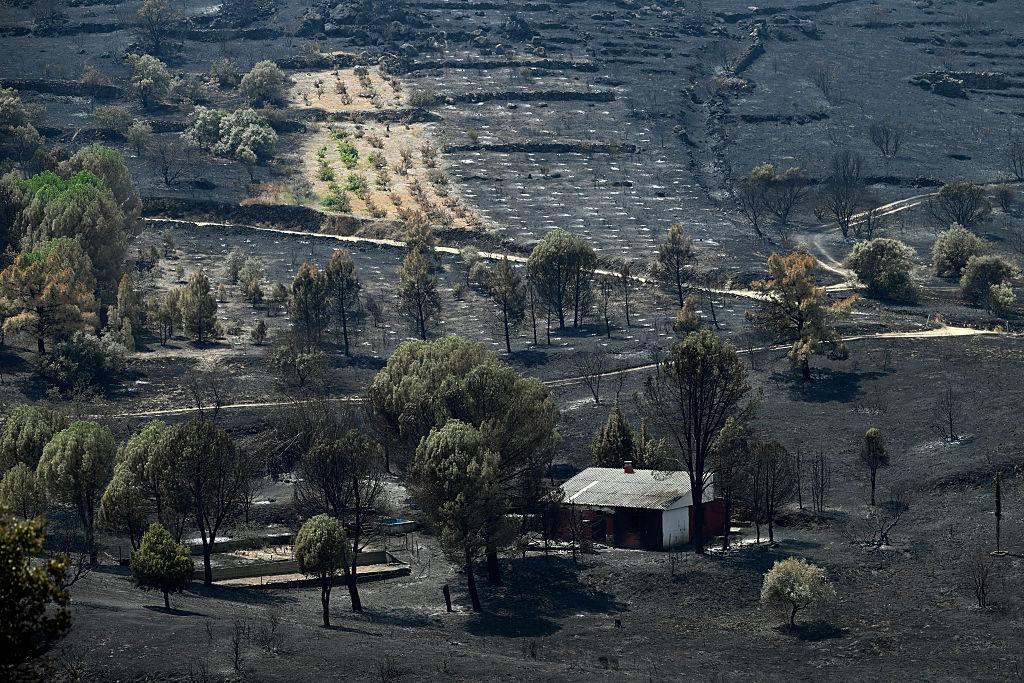
The southern and southeastern Amazon have experienced longer dry seasons, higher temperatures and more frequent extreme drought conditions. Some heavily disturbed areas have become more flammable, while certain regions have weakened as carbon sinks and, in some periods, released more carbon dioxide than they absorbed.
A Nature study published this week found that long-term deforestation and degradation have reduced rainfall across Amazonia while increasing temperatures, with human-caused fires and forest clearing remaining major contributors to carbon emissions. The research concluded that sharply reducing deforestation, controlling burning and restoring degraded forests will be essential to reducing the risk of more severe ecological transitions.
That scientific debate gives Sunday’s election added environmental significance.
Lula, who returned to the presidency in January 2023 after previously serving two terms from 2003 to 2010, has made reducing Amazon deforestation a central part of his climate policy. His government has strengthened federal environmental enforcement, restored funding and authority to agencies weakened under former President Jair Bolsonaro and recommitted Brazil to eliminating illegal deforestation by 2030.
The latest official figures show a significant decline in forest clearing during Lula’s current administration.
Brazil’s National Institute for Space Research reported this month that approximately 3,335 square kilometers of the Brazilian Amazon were deforested during the 12 months through July 2026. That represented a decline of about 42% from the previous period and the lowest annual rate recorded since Brazil’s PRODES satellite monitoring program began its current historical series in 1988.
The previous record low was approximately 4,571 square kilometers in 2011-2012.
The decline is substantial when compared with earlier periods. Amazon deforestation reached almost 30,000 square kilometers annually during the mid-1990s and rose sharply again during the presidency of Jair Bolsonaro between 2019 and 2022.
Environmental enforcement weakened during the elder Bolsonaro’s administration, while his government frequently clashed with Indigenous groups, environmental organizations and foreign governments over Amazon policy. Forest clearing reached its highest level in about 15 years during that period.
Lula returned to office promising to reverse that trajectory.
His government has expanded enforcement against illegal mining, logging and land clearing, revived international environmental partnerships and sought financing for forest conservation and sustainable development.
Brazil has also continued promoting mechanisms intended to compensate communities and governments for protecting forests rather than clearing them for cattle ranching, soy production, mining and other economic activities.
Lula has pledged to achieve zero deforestation by 2030, although meeting that target will require continued reductions over the next four years and stronger action against forest degradation and fires as well as outright clearing.
Environmental advocates generally view Lula’s record as substantially more protective of the Amazon than that of his predecessor, but his administration has faced criticism of its own.
Brazil continues to support major oil and infrastructure projects, including proposals that environmental groups argue could create new pressure around the Amazon region. Lula has defended oil development as necessary for Brazil’s economic growth and energy transition, arguing that developing countries cannot immediately abandon fossil-fuel revenue while wealthier nations continue consuming oil and gas.
That position has created tension between the administration’s forest-protection agenda and its broader energy policy.
Flávio Bolsonaro, meanwhile, has presented a different approach.
The senator, who is the eldest son of former President Jair Bolsonaro, has said he supports environmental protection but has questioned mainstream climate science and argued that Brazil’s environmental laws need to be modernized.
He has advocated giving property owners and communities in the Amazon greater influence over land-management decisions and has criticized regulations he considers excessive or economically restrictive.
His campaign manifesto has also pledged stronger environmental monitoring in areas facing severe deforestation and wildfire pressure. Bolsonaro has said enforcement should focus on organized environmental crime rather than small farmers and people engaged in traditional extractive activities.
Environmental organizations remain skeptical, in part because of the record of his father’s administration and because the younger Bolsonaro has provided relatively limited detail about how he would finance and enforce forest protection.
His proposal to give landowners greater authority has raised concerns among environmental groups that protections could be weakened if regulatory decisions shift away from federal environmental agencies.
Bolsonaro and his supporters argue that environmental rules have too often punished rural producers while failing to address organized criminal networks involved in illegal mining, logging and land grabbing.
The distinction between the two candidates therefore involves not simply whether the Amazon should be protected, but how that protection should be enforced and how much authority should remain with federal agencies.
The political environment surrounding the rainforest could also change regardless of who wins the presidency because Brazil’s newly elected Congress has shifted considerably to the right.
Bolsonaro’s Liberal Party gained seats in both chambers during the first round of elections, while conservative and centrist lawmakers together could form powerful legislative majorities.
Some lawmakers have called for reducing environmental licensing requirements, limiting restrictions on land use and making it easier to regularize properties on land that was previously occupied illegally.
Environmental organizations warn that such measures could weaken some of the mechanisms responsible for the recent decline in deforestation.
A Lula victory would therefore not necessarily guarantee that his existing environmental program continues without resistance. His government could face a Congress more willing to challenge environmental agencies, Indigenous land protections and licensing rules.
A Bolsonaro victory, by contrast, could give lawmakers supportive of deregulation greater alignment with the executive branch.
The election is taking place as researchers are documenting changes across the Amazon that extend beyond clear-cut deforestation.
Forest degradation has become an increasingly important concern. A forest may remain standing when viewed from a satellite but still lose ecological resilience because of selective logging, repeated fires, drought or fragmentation.
Researchers cited by the Associated Press estimate that degradation affects approximately 40% of the Amazon.
That distinction matters because stopping deforestation alone may not be sufficient to maintain the rainforest’s ability to regulate climate and store carbon.
A forest damaged repeatedly by fire can lose large trees, become hotter and drier near the ground and become increasingly vulnerable to another fire. Tropical rainforests are not naturally adapted to frequent burning, meaning repeated fires can gradually transform sections of forest into lower, more open vegetation.
Drought intensifies those risks.
Scientists have documented severe Amazon droughts during recent decades, including extreme events associated with El Niño and unusually warm Atlantic Ocean conditions.
When drought reduces river levels and dries vegetation, fire risk increases. Trees also suffer from water stress, leading to greater mortality and reduced carbon absorption.
The latest Nature research found that climate stress and human activities reinforce one another. Areas that have lost more forest tend to experience hotter and drier conditions, making remaining forests more vulnerable to future fires and drought.
That feedback loop is central to concerns about ecological tipping points.
The Amazon generates much of its own rainfall through moisture released by vegetation. Trees absorb water through their roots and release it into the atmosphere through their leaves. That moisture can then fall again as rain elsewhere in the basin.
If large enough areas of forest are removed, the moisture supply can weaken. Less rainfall can then damage additional forest, potentially creating a self-reinforcing process.
The impact would not necessarily be limited to wildlife.
Rainfall generated by the Amazon contributes to agricultural production and water availability across parts of Brazil and neighboring South American countries. Changes in atmospheric moisture flows could therefore affect farming regions far beyond the rainforest itself.
The Amazon also plays an important role in the global carbon cycle.
Healthy forests absorb carbon dioxide through photosynthesis and store carbon in trees and soils. When forests are burned or cleared, much of that stored carbon is released back into the atmosphere.
Research has shown that parts of the Amazon have already shifted from absorbing more carbon than they emit to becoming net sources of carbon, particularly in heavily deforested and fire-affected regions.
The basin as a whole is not uniformly behaving in the same way, but scientists say the weakening of its carbon-storage function increases the urgency of preventing further degradation.
Researchers are also monitoring the consequences for biodiversity.
The Amazon contains millions of species, many of which exist nowhere else. Large-scale changes in rainfall, temperature or vegetation could reduce suitable habitat and increase extinction risks even in areas that have not been directly cleared.
Indigenous territories are another major component of the environmental debate.
Research has repeatedly shown that Indigenous-managed lands tend to retain more native vegetation than comparable areas outside protected territories.
Brazilian Indigenous organizations have therefore argued that protecting land rights is an important part of Amazon conservation.
The issue has entered the election directly because a federal court in Pará ordered the government this week to ensure transportation for Indigenous voters in remote communities during Sunday’s runoff.
Some communities in the Amazon are located hundreds of kilometers from polling stations and require multi-day river journeys to vote.
The outcome of the election could influence future Indigenous land demarcation, enforcement against illegal mining and infrastructure development inside or near protected territories.
Lula’s administration resumed recognition of Indigenous territories after the process largely stopped under Jair Bolsonaro.
Flávio Bolsonaro and allied lawmakers have criticized some land-demarcation policies and argued for greater protections for property owners and economic activity.
Those differences are likely to remain politically contentious even after the election.
The Amazon question also has international consequences.
Brazil is one of the world’s most important countries in global climate negotiations because of the size of the rainforest and the scale of emissions associated with land-use change.
Foreign governments and international institutions have provided funding for Amazon conservation, including through the Amazon Fund, which finances projects intended to reduce deforestation and support sustainable development.
International financing increased again after Lula returned to office and restored environmental cooperation with European countries.
A change in government could influence whether those relationships expand, contract or are redesigned.
Bolsonaro has emphasized Brazilian sovereignty over natural resources and has criticized foreign pressure over environmental policy, echoing arguments frequently made by his father.
Lula has also defended Brazilian sovereignty but has generally been more willing to seek international climate financing and present Amazon protection as part of Brazil’s diplomatic strategy.
The eventual environmental consequences of Sunday’s result will not depend on one president alone.
Commodity prices, law enforcement, state governments, Congress, courts, landowners, Indigenous communities and international markets will all influence what happens to the forest.
Global warming is another factor Brazil cannot control by itself.
Even if deforestation falls to zero, continued global greenhouse-gas emissions could expose the rainforest to hotter conditions and more severe drought.
Scientists therefore stress that preventing large-scale ecological change requires both local forest protection and worldwide reductions in carbon emissions.
That is also why researchers disagree over exactly how close the Amazon is to a tipping point.
Some scientists argue that observed drying, warming and forest degradation show that parts of the basin may already be approaching dangerous thresholds.
Others caution that models remain uncertain and that the concept of a single basin-wide point of no return oversimplifies a complex ecosystem covering millions of square kilometers.
What they broadly agree on is that the risks increase as deforestation, degradation and warming intensify.
The election therefore matters not because scientists can predict that one candidate would immediately save or destroy the Amazon, but because government policy can substantially alter the rate of forest loss and the level of pressure placed on already vulnerable regions.
Brazil’s own recent experience demonstrates that connection.
Deforestation rose substantially when enforcement weakened and has fallen sharply after federal monitoring and enforcement were strengthened.
The record-low deforestation figure announced this month shows that government policy can produce measurable changes within a relatively short period.
Whether that trend continues will depend on political decisions made after Sunday’s election and on Brazil’s ability to address threats that extend beyond clear-cutting, including fires, drought, illegal mining, forest degradation and climate change.
The runoff therefore places the future of the Amazon within a much broader political choice facing Brazilian voters.
Lula is seeking a fourth nonconsecutive presidential term and is campaigning on continuity in social, economic and environmental policy. Bolsonaro is offering a more conservative government that would change the balance between environmental regulation, private property rights and economic development.
Neither candidate has made the rainforest the defining issue of the campaign, but the consequences of their environmental approaches could last well beyond the next presidential term.
Scientists studying the forest say the key challenge is maintaining enough intact rainforest to preserve the moisture cycles, biodiversity and carbon storage that make the Amazon function as it does today.
The exact boundary between a stressed forest and an irreversible ecological transition remains uncertain.
That uncertainty, researchers argue, is a reason for caution rather than delay.
Once large-scale ecological feedbacks begin, restoring a tropical forest could become far more difficult than preventing the damage in the first place.
Sunday’s election will not by itself determine whether the Amazon crosses such a threshold, but it will help determine the policies governing the majority of the rainforest during a period scientists increasingly regard as critical.
The next Brazilian administration will inherit a forest with lower annual deforestation than at any point in the modern satellite record, but also an ecosystem already altered by decades of clearing, fire and climate stress. Whether the country can preserve the gains in forest protection while addressing degradation, drought and long-term warming will be one of the most consequential environmental tests facing whoever wins the presidency.