BRITAIN BUYS BACK A SLICE OF EUROPE AND CALLS IT A "LANDMARK": BURNHAM'S BREXIT RESET OPENS DOORS FOR EUROPE'S YOUTH WHILE AFRICA FACES TIGHTER VISAS, SHRINKING AID AND A NEW CARBON WALL
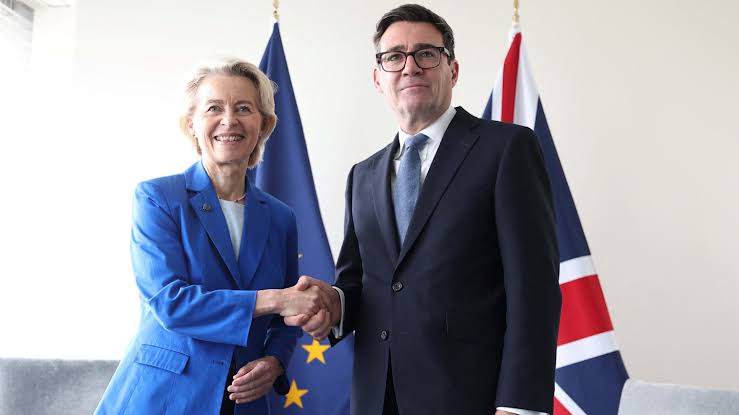
The United Kingdom and the European Union agreed a reset of their post-Brexit relationship at a summit in Brussels on Friday, November 20, 2026. Prime Minister Andy Burnham called it a "landmark agreement." The package covers three main areas: a food and drink trade deal on sanitary and phytosanitary (SPS) rules, a link between the British and European emissions trading systems, and a youth mobility scheme. That scheme will let 100,000 young people from each side live, work, study or travel in the other's territory for up to three years. British students will also rejoin the EU's Erasmus+ program from 2027. Burnham said the deals would add 0.5 percent to UK GDP, a boost of about £17 billion. There is a catch. The three sectoral deals have been signed, but they will not enter into force until a dispute over university tuition fees is settled. That issue was effectively kicked down the road after talks went to the wire. Burnham insisted "the deal is done" and rejected claims that it is a "fig leaf." He also admitted it is "probably the limit of what we can achieve in this parliament." European Council President António Costa said the EU wants "the closest possible relationship" with Britain, but he reminded London of the "indivisibility" of the single market's four freedoms. A 10-year plan for Britain is due next month. For Nigeria, Ghana and the rest of Africa, the reset raises sharp questions about UK trade rules, carbon border taxes, shrinking aid, tighter visa routes and scholarships, and where Africa fits as Britain turns back toward Europe.
Ten years after Britain voted to leave the European Union, a British prime minister stood in Brussels and described the morning's work as a fresh start. "Today, we do draw a line on a decade of drift and division by reconnecting with old friends," Andy Burnham told reporters, flanked by European Commission President Ursula von der Leyen and European Council President António Costa. "I think people across Britain can look forward now to a better, more hopeful decade ahead of us."
It was a carefully staged moment. The welcome ceremony was heavily choreographed, with several British ministers in attendance. The language on both sides was warm. Von der Leyen spoke of "three major agreements where many people thought we would never be able to come to the finish line." Costa offered a gentle joke about how the two sides measure distance differently and drive on opposite sides of the road. "But the most important is that we are heading in the same direction," he said, "and that is what matters."
Underneath the warmth sat a more complicated reality. Talks went down to the wire on Friday morning. The three sectoral deals at the heart of the reset have been signed, but they will not take effect until the two sides resolve a disagreement over university tuition fees. That issue has been, in the blunt phrase used by observers in Brussels, kicked down the road. No legal texts have yet been published. The UK government released about 27 pages of summit documents on Friday afternoon, and more detail is expected. The deal, in other words, is real, but it is not finished.
Burnham was keen to dismiss that framing. "The deal is done; it's there in black and white," he said, adding that a bill to implement the agreements would enter Parliament as early as next week. When a reporter suggested the agreement was merely a "fig leaf" covering the lack of a bigger vision, he called that "a little harsh." "Our experts and European experts, in the same room, dealing with these challenges, together, that is progress," he said. "I would say not a fig leaf."
Both things can be true. The reset is the most significant step toward closer UK-EU ties since Britain left the bloc. It is also a modest one, tightly limited by the political red lines that still define Britain's relationship with Europe. Understanding why it matters, and why it may matter in unexpected ways for Africa, requires looking closely at what was agreed and what was not.
The first pillar is food and drink. The SPS agreement covers the rules on animal and plant health and food safety that govern trade in agricultural products. Since Brexit, British exporters of meat, dairy, fish, fruit and vegetables have faced border checks, health certificates and paperwork that did not exist when Britain was inside the single market. For small producers, those costs were often enough to make exporting to Europe unviable. Burnham pointed to the toll on Britain's farm and food sector, saying "we can do something to turn around" the loss of more than 30 percent of exports to the EU over the past decade.
Von der Leyen described the SPS deal as "a two-way street for our businesses on both sides of the channel," promising "easier trade, lower costs, and more choice and more affordable food" for consumers. Burnham leaned hard on the cost-of-living angle, saying the agreement would "help take pressure off" businesses and "bring the cost of food down." For a government facing voters weary of high prices, that message matters. SPS deals of this kind, however, usually involve the UK following EU food and animal health rules in exchange for easier access. That has long been the sticking point for Brexit supporters. They argue it turns Britain into a rule-taker in an area it left the EU to control. The full terms of alignment will become clearer once legal texts are published.
The second pillar is carbon. The two sides agreed to move toward linking their emissions trading systems, the carbon markets that make polluters pay for each ton of carbon dioxide they emit. Britain created its own scheme after leaving the EU, but its carbon price has often trailed the European one. Linking the systems would create a larger, more stable market. It would also help British industry avoid the EU's Carbon Border Adjustment Mechanism, known as CBAM, which charges importers for the carbon emitted in producing goods such as steel, aluminum, cement, fertilizers, hydrogen and electricity. Von der Leyen said work would continue "towards the UK's participation in our electricity market," a further step that could reshape energy trade across the Channel and North Sea.
The third pillar is people, and it is where Burnham invested most of his emotional energy. The youth mobility scheme will allow 100,000 young people from each side to spend up to three years in each other's territory to work, study, volunteer or travel. Burnham described it as "a new freedom for anyone under 31." British students will also rejoin Erasmus+, the EU's flagship exchange program, from 2027. Britain left Erasmus+ after Brexit and replaced it with its own Turing Scheme.
"So for young people out there who are wondering how this deal today affects them and their lives, I would say: this deal is for you," Burnham said. "Brexit did take away opportunity from our young people. It limited their horizons in their lives, but also it was followed by Covid and the impact then was greater as a result of that." He summed up the message in four words: "Hope is the word."
Costa echoed that theme. "These young people, a large part of them, was not here ten years ago, but they are here today," he said. "And this is our duty to open to them new opportunities."
Beyond the three main deals, the summit produced a list of softer commitments. The two sides agreed to set up a dialogue on economic security and to deepen digital cooperation in artificial intelligence, quantum technology and secure connectivity. They launched what von der Leyen called "a new structured dialogue on migration" to "prevent dangerous crossings and save lives." They also planned their first talks on sending refused asylum seekers to third countries. Defense, military mobility and continued support for Ukraine featured heavily too.
Burnham put a headline number on the economic package. He said it would add 0.5 percent to UK GDP, worth about £17 billion, and called it "the single biggest growth measure that we could take in this parliament." That figure deserves both attention and caution. Independent estimates have consistently found that Brexit reduced UK trade and output, with long-run losses often put at several percent of GDP. A gain of half a percentage point would be meaningful, but it would recover only a fraction of what Brexit is estimated to have cost. Government projections of this kind also depend heavily on assumptions about how quickly deals are implemented and how businesses respond.
That brings the conversation back to tuition fees. The dispute centers on what young Europeans should pay to study at British universities. Since Brexit, EU students in Britain have generally been charged international fees, which are far higher than those paid by British students. Brussels has pushed for better terms for European students as part of the mobility package. British universities, many of which rely on international fees to stay afloat, have warned about the financial impact. The government has been wary of handing a concession that critics could frame as a subsidy for foreign students.
Some analysts in Brussels described the hold-up as mostly political. Others saw a tactical purpose. By making the three sectoral deals conditional on a tuition fees settlement, the EU appears to have neutralized one of Britain's main sources of leverage. London cannot bank its gains on food, carbon and mobility until it gives ground on fees. UK officials pushed back on Friday against suggestions that the disagreement could jeopardize the whole package. But until it is resolved, the reset remains signed rather than active.
A separate row over voting rights also surfaced during the talks. Some observers said it dispelled any illusion that Britain enters these negotiations from a position of strength. That is the deeper truth of the reset. The EU is a bloc of 27 countries and roughly 450 million people. Britain needs access to its largest market far more than the EU needs any single concession from Britain. Every step closer will come on terms largely shaped in Brussels.
Costa made that plain, diplomatically. "We respected the sovereign decision taken by the British people in 2016," he said, recalling the European Council's words after the referendum: "We regret, but we respect." The EU, he said, "remains open to have the closest possible relationship" with the UK. Then came the reminder. "You know our principles well," he said, including "the indivisibility of all of our four freedoms of the single market." Those four freedoms are the free movement of goods, services, capital and people. In plain terms, Britain cannot pick the parts of the single market it likes while rejecting free movement. Any deeper relationship, including a return to the single market or customs union, would come with obligations British politicians have so far refused to accept.
Burnham did not hide from that. He accepted that "incremental steps only take us so far" and that Britain needs to consider "what is the right long-term relationship." He said today's package is "probably the limit of what we can achieve in this parliament given what needs to be done to implement it." He also announced that a 10-year plan for Britain would be published next month, setting out ambitions for industrial renewal, regional growth and new opportunities for young people. "All of those ambitions, in my view, are connected to our long term relationship with our nearest partner," he said.
His most revealing line came when he spoke about the past. "The important point is that Britain of today and the EU of today is not the one of 2016," he said. "So we need to draw a line, look at the world as it is now, open up a discussion, see what those options are and then allow there to be a process of consideration, as we look towards the next parliament." That is not a pledge to rejoin the EU. It is, however, the clearest signal yet from a sitting prime minister that the long-term question is open again. Burnham was careful to add that "we will not be running ahead of public opinion" and that "the British people will be the boss of what happens next." He also argued that "public opinion has been ahead of politicians on this question," pointing to polling that shows most Britons now favor closer ties with Europe.
Von der Leyen offered her own diplomatic nudge. "It's ultimately for the people of the UK to decide where the journey goes," she said. "But I very much welcome, Andy, your willingness to have a broader debate about the future relationship. We are open for brainstorming." Asked whether the British could make up their minds, she smiled. "I have many British friends, and they are very good at making up their minds. I know that by experience."
The political ground in Britain is shifting too. Senior Conservatives have reportedly urged their leader, Kemi Badenoch, to drop talk of Brexit as part of a broader strategy change. That suggests even the party that delivered Brexit sees fading electoral value in fighting over it. The Brexit argument will not disappear, but its center of gravity has moved.
The summit also unfolded against a darker backdrop. On the same day, two Russian cruise missiles and a jet-powered drone were reported to have crashed in Poland during Russian attacks on Ukraine. All three leaders condemned the incident. Burnham called it "utterly unacceptable" and sent "a strong message of solidarity" to Polish Prime Minister Donald Tusk. Costa said it showed "Russia is going in the wrong direction." Burnham argued that "Europe is becoming more coordinated in terms of defense and security," and that the reset is part of that shift. "Some of what we've seen in Europe came at us without us being fully prepared," he said. "Not just the aggression, but also the disruption within our democracies and other factors that have sought to weaken Europe."
That security framing explains much of the urgency behind the reset. A war on Europe's eastern flank, an unpredictable relationship with Washington and a week in which the leaders of the United States, China and Russia issued a joint peace declaration at the APEC summit without mentioning the wars in Ukraine and Iran have all pushed Britain and the EU toward each other. The reset is about food prices and student exchanges. It is also about two parts of a weakened Europe deciding they cannot afford to stay apart.
For readers in Lagos, Abuja, Accra and Kumasi, this may look like a European family matter. It is not. Britain remains one of Africa's most important partners in trade, education, migration, finance and development. When Britain changes direction, the effects reach West Africa, sometimes directly and sometimes through quieter channels.
Start with the contrast that will strike many young Africans. Britain has just agreed to let 100,000 young Europeans live, work and study in the UK for up to three years. Over the same period, routes into Britain for young Africans have narrowed. In January 2024, Britain barred most international postgraduate students from bringing family dependants, a change that hit Nigeria particularly hard, since Nigerians had been among the largest groups using that route. The 2025 immigration white paper went further, raising the bar for skilled worker visas, ending overseas recruitment for care workers and proposing to shorten the Graduate route that allows international students to work after their studies. Many Nigerian and Ghanaian families had built plans around those routes. Some invested savings in UK degrees partly because of the work opportunities that followed.
None of this means the youth mobility scheme is aimed at Africa. It reflects a reciprocal deal with Britain's closest neighbors. But the message is hard to miss. Britain is opening doors for European youth while tightening them for many others. For young Nigerians caught up in the "japa" wave of emigration, and for Ghanaians weighing study abroad, the gap between the two will feel personal. It may also push more African students toward other destinations, including Canada, Germany, Ireland, the Netherlands, Turkey and the Gulf, as well as universities within Africa itself.
The tuition fees dispute adds another layer. British universities depend heavily on fees paid by international students, including tens of thousands from Nigeria and Ghana. If a settlement with the EU reduces the fees universities can charge European students, institutions may look to make up the shortfall elsewhere. That could mean higher fees for non-European students, or more aggressive recruitment in markets such as West Africa. The outcome is uncertain, but African families paying for British degrees have a stake in how this row ends.
Scholarships are a related concern. The Chevening program, funded by the Foreign, Commonwealth and Development Office, has for decades brought promising African professionals to study in Britain. Many of its alumni now hold senior posts in government, business and civil society across Nigeria, Ghana and the continent. Chevening and similar schemes are part of Britain's soft power in Africa. They depend, however, on a foreign affairs budget under strain. In 2025, the government announced it would cut overseas aid from 0.5 percent to 0.3 percent of gross national income by 2027 to fund higher defense spending. As Britain invests diplomatic and financial energy in Europe and in its own security, programs aimed at Africa will compete for a smaller pool of money. Whether flagship scholarships are protected is a question African governments and alumni networks should press London to answer clearly.
The aid cut itself is the biggest direct effect of Britain's changing priorities on Africa. British aid has supported health, education, humanitarian relief, governance and climate programs across the continent, including in northern Nigeria, where humanitarian needs remain severe, and in Ghana's poorer northern regions. Reducing aid to 0.3 percent of national income means billions of pounds less each year. The reset does not cause those cuts. But the same strategic logic is at work: Europe and defense are moving up Britain's list of priorities, and development spending is moving down.
Trade is more complicated. Ghana trades with Britain under the UK-Ghana Trade Partnership Agreement, which carried over the terms of Ghana's earlier arrangement with the EU after Brexit. Nigeria benefits from Britain's Developing Countries Trading Scheme, which offers reduced tariffs on many goods, and the two countries signed an Enhanced Trade and Investment Partnership in 2024. After Brexit, British officials often promoted Africa as a place where an independent UK trade policy could deliver new gains. A Britain that moves closer to EU rules, especially on food standards, has less room to strike its own path.
The SPS deal is where that matters most for African exporters. If Britain aligns its food and plant health rules more closely with EU standards, African exporters of fresh produce, cocoa products, cashews, shea, fish and processed foods may effectively face one set of requirements for both markets. That could simplify life for exporters already meeting EU standards. It could also remove any chance that Britain might offer a more flexible regime for African goods. Nigeria knows how costly European food rules can be. The EU banned imports of Nigerian dried beans in 2015 over pesticide residues, a restriction that cost exporters dearly and remained in place for years. Ghanaian vegetable exporters have also faced EU restrictions in the past. A UK more tightly bound to EU standards would make compliance even more central to market access across both.
Carbon is the next frontier. The EU's CBAM entered its financial phase in 2026, and Britain plans to introduce its own carbon border mechanism from January 2027. Linking the UK and EU carbon markets would likely mean the two sides exempt each other from their border charges, creating a shared carbon zone. Exporters outside that zone, including African ones, would face carbon costs in both markets unless their own production meets the required standards or their countries adopt comparable carbon pricing. Nigeria, for example, has become an exporter of urea fertilizer, a product covered by carbon border rules. Ghana's ambitions in aluminum, built on its bauxite reserves, could also be affected over time. Other African exporters, including Mozambique's aluminum, Egypt's fertilizers and South Africa's steel and iron, are already exposed.
This links the Brussels summit directly to the anger African negotiators expressed this same week at the COP31 climate talks in Antalya, Turkey. There, Ghana's environment minister, Zanetor Agyeman-Rawlings, chair of the African Group of Negotiators, accused rich countries of excluding Africa through "technicalities" and "inaccessible finance." Developing countries have rallied against CBAM as a trade barrier that collects carbon revenue for Europe while offering little support to help poorer exporters clean up production. A UK-EU carbon alliance strengthens that barrier. If Britain and Europe want to avoid deepening resentment, they will need to show how carbon border revenue or climate finance can help African industries decarbonize, rather than simply priced out.
Migration is another area to watch. The UK and EU have agreed to begin talks on sending refused asylum seekers to third countries. Britain's previous attempt to send asylum seekers to Rwanda was struck down by its Supreme Court in 2023 and scrapped by the incoming Labour government in 2024. EU countries have since explored the idea of "return hubs" outside Europe. Many of the people crossing the Mediterranean and the Atlantic come from or pass through Africa. Only this week, dozens went missing after a migrant boat capsized off Senegal. Any new UK-EU arrangement on third countries is likely to involve African governments, either as partners in return deals or as countries asked to host processing centers. Such arrangements raise serious questions about human rights, sovereignty and fairness. African governments will need to negotiate firmly if they are approached.
There is also a broader geopolitical shift to consider. For decades, Britain presented itself to Africa through the Commonwealth, historic ties, the English language, the City of London and a large diaspora. After Brexit, "Global Britain" promised to deepen those relationships. The reset suggests a quieter recalibration. Britain is looking first to its nearest neighbors for growth, security and stability. Africa may increasingly deal with Britain and the EU as a more coordinated bloc on trade standards, carbon rules, migration and security.
That is not necessarily bad for Africa. A more stable Britain that trades more easily with Europe could be a stronger economy and a more reliable partner. British investors, banks and insurers that are central to African markets may gain from a calmer relationship with the EU. Coordinated UK-EU positions on issues such as critical minerals, infrastructure finance and security in the Sahel could carry more weight. The African Union, now a permanent member of the G20, has more leverage in global forums than it once did. African governments could use the reset to push for a joint UK-EU approach that treats Africa as a partner rather than a supplier or a border.
The risk is that Africa becomes an afterthought. If London and Brussels focus on each other while cutting aid, tightening visas and raising carbon barriers, Africa could find itself facing a more united European front with fewer offsetting benefits. Countries such as China, Turkey, the Gulf states, India and Russia have spent years expanding their influence across the continent. A Britain that retreats from Africa while reconnecting with Europe would leave more space for them.
Nigeria and Ghana have practical steps they can take. They can press Britain to preserve and expand trade preferences, and to ensure that SPS alignment does not shut out African produce. They can push for carbon border revenue to support African industrial decarbonization. They can lobby for student, skilled worker and youth mobility routes that recognize the depth of their ties with Britain, including the large Nigerian and Ghanaian communities that already contribute to British society. They can defend scholarship programs like Chevening and seek new education partnerships. And they can make clear that any migration arrangement must respect the dignity of the people involved and the sovereignty of African states.
For Britain, the reset is a test of whether a country can repair a damaged relationship without reopening the wounds that caused it. Burnham has chosen a cautious path. He has secured practical gains, framed them around young people and the cost of living, and signaled a bigger debate to come without committing to any outcome. His critics on one side will say he has betrayed Brexit by tying Britain to EU rules. His critics on the other will say he has settled for crumbs when the country needs a far deeper relationship. Both camps will watch the tuition fees talks, the implementing bill and the 10-year plan due next month for clues about where he is really heading.
For Europe, the reset offers a chance to bring a major military and economic power back into closer partnership at a dangerous moment. The EU has made clear it will not compromise on its core principles. It has also shown it wants Britain close.
For Africa, the lesson is that Britain's European homecoming is not a neutral event. It will shape how Africans study, travel, trade, borrow, export and negotiate with one of their oldest partners. Europe's young people heard Burnham say "this deal is for you." Young people in Lagos and Accra will want to know what Britain has to say to them.
The reset is signed. It is not yet in force. The next round of negotiations, on tuition fees and on the bigger question of Britain's place in Europe, will decide whether Friday in Brussels is remembered as a turning point or a pause. Whatever happens, Africa should be at the table asking its own questions, rather than learning the answers after the deals are done.