CAF SCRAPS FOUR-YEAR AFCON PLAN, RESTORES TOURNAMENT TO TWO-YEAR CYCLE AFTER MAJOR POLICY U-TURN
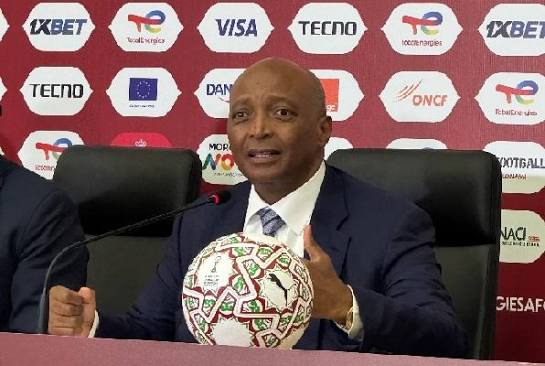
For the website lead image, use CAF President Patrice Motsepe alongside AFCON branding or the tournament trophy, because this is an administrative decision rather than a match result. A second image can show the AFCON trophy being celebrated by a recent champion, reinforcing the tournament’s significance to African football. CAF’s own announcement and Reuters both provide appropriate contemporary visual references, while the 2027 host preparations in Kenya, Tanzania and Uganda provide another strong secondary angle.
The Confederation of African Football has reversed one of the most controversial competition changes it announced in recent years, officially abandoning plans to stage the Africa Cup of Nations every four years and restoring the continent’s flagship national-team tournament to its traditional two-year cycle. The decision was taken unanimously by the CAF Executive Committee and brings an end to months of uncertainty surrounding the future structure of AFCON, which had been set for a dramatic calendar overhaul following an earlier decision to reduce the tournament’s frequency. CAF now says preserving AFCON as a regular biennial competition is necessary to protect the interests of its 54 member associations, African footballers, supporters and the wider financial structure of the continental game.
CAF President Patrice Motsepe confirmed the reversal after the Executive Committee reconsidered the policy adopted in 2025 to eventually move AFCON to a four-year cycle. The proposed restructuring would have brought Africa’s premier national-team tournament closer to the scheduling model used by the FIFA World Cup and UEFA European Championship, while a new Africa Nations League was expected to occupy the competitive space between AFCON tournaments. That plan has now been shelved after CAF concluded that the proposed Nations League would require several years before it could generate enough commercial revenue and financial support to replace the role currently played by AFCON. CAF’s reassessment effectively acknowledges that Africa’s existing flagship tournament remains too important financially and developmentally to be reduced before a replacement competition is strong enough to sustain the continent’s football economy.
Motsepe said CAF’s decision was based on advancing, protecting and promoting African football while also considering the interests of African players employed by clubs outside the continent. He said the organisation was particularly concerned that the proposed Nations League would not immediately be able to make the substantial financial and football-development contributions needed to keep CAF competitions globally competitive and financially self-supporting. That concern became central to the reversal because AFCON is not simply a sporting competition; it is one of CAF’s most valuable commercial assets and an important source of television income, sponsorship revenue, prize money and financial distributions that ultimately support football programmes across the continent.
The new position means the next Africa Cup of Nations will go ahead in 2027 in Kenya, Tanzania and Uganda, followed by subsequent editions in 2028, 2031 and 2033. The sequence is unusual because the transition back to the biennial format will not produce a perfectly uninterrupted two-year pattern immediately. CAF says there will not be a final AFCON tournament in 2030 because the FIFA World Cup is taking place that year, and the continental governing body intends to respect the long-standing practice of avoiding a major confederation national-team championship in the same calendar year as the World Cup. The schedule therefore moves from 2028 to 2031 before returning to the intended two-year rhythm with another tournament in 2033.
The reversal is significant because CAF had defended the four-year proposal earlier in 2026, even as opposition grew among supporters, officials and football stakeholders across the continent. Motsepe had argued that changing AFCON’s frequency could help improve the competition’s global positioning, reduce clashes with other major international tournaments and make the event more commercially exclusive. By October, however, the CAF president had publicly acknowledged that the decision was being reviewed, telling a strategy conference in Cabo Verde that the organisation was reassessing whether moving AFCON to every four years was truly in the best interests of African football. The October 29 Executive Committee decision has now converted that review into a complete policy reversal.
For African national associations, the return to a two-year AFCON cycle protects one of their most important opportunities for competition, revenue and international exposure. Many CAF member associations operate with financial resources far below those available to major European and South American federations, making participation in AFCON particularly important. Qualification can bring prize money, commercial exposure, sponsorship opportunities and additional support that federations can use beyond the senior national team, including youth development, women’s football, coaching programmes, administrative operations and domestic football structures. Reducing AFCON to once every four years would have removed one of those regular opportunities unless the proposed Nations League could quickly produce comparable commercial value.
The financial argument appears to have been particularly persuasive inside CAF. Recent editions of the Africa Cup of Nations have grown significantly as global sporting products, attracting major audiences, new sponsors and broader international broadcast distribution. CAF’s own tournament material says the 2023 edition in Côte d’Ivoire attracted audiences approaching two billion viewers worldwide, was shown across close to 180 countries and produced sharp increases in ticketing and digital engagement. That growth has made AFCON a central part of CAF’s strategy to build a financially stronger and more self-sustaining continental football system. Reducing the frequency of such an established competition while relying on an untested Nations League would therefore have carried significant commercial risk.
The competition also occupies a unique cultural position in African sport. AFCON is one of the few events capable of commanding simultaneous national attention across much of the continent, while also engaging millions of Africans living in Europe, North America, the Middle East and elsewhere. It combines elite football with national identity, regional rivalry and cultural expression in a way that cannot easily be reproduced by a newly created competition. CAF itself emphasised this point in announcing the reversal, describing AFCON as an event that celebrates Africa’s football, cultures, customs and traditions while bringing together people from all 54 member nations and the global African diaspora.
The two-year system also gives players significantly more opportunities to compete for Africa’s biggest national-team trophy. International careers are relatively short, and a footballer who remains at senior level for 10 or 12 years could appear in five or six AFCON tournaments under a biennial model but perhaps only two or three if the competition were held every four years. That difference can fundamentally shape international careers, particularly for players representing countries that do not regularly qualify for the FIFA World Cup. AFCON remains the highest realistic international stage for many African footballers, which means reducing its frequency would have reduced the number of opportunities available to an entire generation of players.
Smaller and emerging football nations also benefit from a shorter competition cycle because qualification campaigns arrive frequently enough to sustain development and public interest. A country that narrowly misses one AFCON can regroup and attempt to qualify again within two years rather than waiting most of a World Cup cycle. A national team experiencing rapid improvement can convert that progress into tournament participation relatively quickly, while federations can use regular qualifying campaigns as benchmarks for coaching development, player recruitment and youth progression. The biennial structure therefore serves a developmental role that extends beyond the tournament finals themselves.
CAF’s reversal does not mean the organisation has abandoned the idea of introducing an Africa Nations League. Instead, the governing body appears to have accepted that such a competition must be allowed to develop gradually rather than being expected to replace AFCON immediately. A continental Nations League could eventually create additional competitive matches, commercial opportunities and broadcast inventory, but it would have to prove that it can attract sufficient sponsorship, television audiences and supporter interest before CAF can depend on it financially. The decision to protect AFCON while developing other competitions is therefore a more cautious strategy than reducing an established tournament before the replacement product has demonstrated its viability.
The scheduling difficulties that originally contributed to the four-year proposal nevertheless remain unresolved. African football increasingly operates within an overcrowded global calendar dominated by expanded domestic competitions, continental club tournaments, FIFA international windows, the enlarged Club World Cup and the World Cup itself. Many of Africa’s leading national-team players are employed by European clubs, creating recurring disputes whenever AFCON overlaps with domestic club seasons. Clubs have frequently complained about losing important players during crucial periods, while African federations have argued that the continent’s premier international tournament deserves the same respect afforded to national-team competitions elsewhere.
CAF will therefore still need to manage the calendar carefully even after restoring the biennial cycle. The 2030 World Cup is already influencing the revised schedule, and future competitions may require similar adjustments if international calendars become even more congested. The two-year principle does not necessarily mean AFCON will always take place on exactly the same month or with perfectly equal intervals between every edition. Instead, CAF is committing to maintaining the tournament as a broadly biennial event while retaining enough flexibility to avoid major clashes with the global football calendar.
The first major test of the restored policy will be AFCON 2027, which is scheduled to run in Kenya, Tanzania and Uganda and will mark the competition’s return to East Africa for the first time since Ethiopia hosted in 1976. The tournament will also be historic because three countries will jointly stage the finals, creating a substantial infrastructure and logistical challenge involving stadiums, transport, immigration, security, accommodation and cross-border coordination. CAF has repeatedly inspected preparations in the host countries, while governments in Kenya, Tanzania and Uganda have pledged to deliver the facilities and operational standards required for the competition.
Qualification for the 2027 tournament is already underway, with 48 African nations competing across 12 groups for places in the 24-team finals. Kenya, Tanzania and Uganda are automatically qualified as co-hosts, while other national teams are progressing through qualifying windows scheduled across late 2026 and early 2027. The existing qualification programme demonstrates that CAF’s reversal does not disrupt the immediate tournament calendar, allowing preparations for 2027 to continue while the organisation restructures the editions that follow.
The 2028 tournament will follow quickly after the East African edition, creating an unusually compressed transition between finals. CAF has not yet publicly finalised every hosting detail surrounding all future editions, meaning further announcements will be required as the revised calendar is implemented. What is clear is that the organisation wants to preserve continuity rather than allow a long four-year gap to emerge after 2027. The decision also gives broadcasters, sponsors and commercial partners greater certainty because AFCON will continue generating regular tournament inventory instead of disappearing for extended periods.
There are also broader commercial reasons for keeping the competition frequent. AFCON has become more internationally marketable as African stars have assumed increasingly prominent roles at the world’s biggest clubs. Players from countries including Nigeria, Senegal, Morocco, Egypt, Côte d’Ivoire, Algeria, Ghana, Cameroon and South Africa attract global audiences who now follow the tournament alongside traditional African supporters. That visibility creates sponsorship value and strengthens broadcast demand, giving CAF an incentive to maintain the tournament’s presence rather than limiting exposure through a four-year cycle.
Supporters will likely view the reversal as one of the most consequential decisions CAF has made regarding AFCON in years because the original four-year announcement had raised concerns that the governing body was attempting to make African football conform too closely to European and FIFA structures. The biennial rhythm has been part of AFCON’s identity for decades and has produced a continuous cycle of qualifying campaigns, rivalries, dramatic tournaments and national celebrations. For many supporters, changing that rhythm risked weakening something distinct about African football in pursuit of a calendar structure designed around competitions elsewhere.
The reversal also raises legitimate questions about CAF’s original decision-making process. Moving AFCON to every four years was not a minor administrative adjustment but a fundamental restructuring of the organisation’s most important tournament. CAF’s current explanation makes clear that the proposed Nations League would take several years to produce the financial contribution required to replace the biennial AFCON model, which inevitably raises the question of why that commercial risk was not fully resolved before the four-year system was initially announced. The organisation has effectively acknowledged that the replacement competition was not ready to carry the financial burden expected of it.
At the same time, reversing the policy before it became deeply embedded may prevent greater disruption later. Football governing bodies are often criticised for maintaining unpopular or financially questionable reforms because of political embarrassment or institutional resistance. In this case, CAF has chosen to reconsider the consequences and restore the established tournament structure before the planned transition could substantially reduce the number of AFCON competitions being played. That may ultimately prove less damaging than forcing through an arrangement that member associations, supporters and commercial partners remained uncomfortable with.
CAF’s wider financial strategy makes the decision even more important. Motsepe has pursued a policy of increasing funding to member associations and zonal unions, while CAF has also sought to expand prize money, improve competition standards and attract stronger international commercial partnerships. Those ambitions depend on reliable revenue. AFCON remains one of the clearest ways for CAF to generate that income, and the governing body is unlikely to risk weakening its strongest product before alternative competitions can generate comparable resources.
The debate over the tournament’s frequency is therefore ultimately about much more than how often supporters watch Africa’s best national teams compete. It involves the economic architecture of African football, the development of national associations, the careers of players, the interests of broadcasters and sponsors, and CAF’s ability to finance competitions and football programmes across 54 countries. A successful AFCON can help generate resources that support other areas of the game, while a poorly planned restructuring could have consequences far beyond the men’s senior tournament.
For national-team coaches, the return to the biennial cycle also creates greater continuity. Coaches can develop teams around regular qualification campaigns and tournament cycles rather than navigating long periods without the continent’s principal championship. Young players can move from youth football into senior competition and realistically target an AFCON within a relatively short period, while established players do not have to wait four years for another chance after elimination or failure to qualify.
The competitive nature of African football makes those opportunities especially important. AFCON has repeatedly shown that traditional powers cannot assume qualification or deep tournament runs, with emerging sides increasingly capable of challenging established nations. A two-year cycle allows the balance of power to change more visibly and frequently, ensuring that a strong generation of players is not forced to wait four years before competing at continental level.
The decision will not eliminate disagreements with European clubs, nor will it resolve every complaint about player workload. Those issues are likely to remain part of AFCON for as long as a large percentage of Africa’s top players are employed outside the continent. CAF will have to continue negotiating with FIFA, leagues, clubs and player organisations to protect the competition while avoiding unreasonable scheduling demands. But the governing body has now made clear that solving those problems will not come through removing AFCON from half of the traditional tournament cycles.
The revised calendar also leaves CAF with the challenge of ensuring that the 2028, 2031 and 2033 tournaments are planned early enough to avoid future uncertainty. Host selection, qualifying formats, infrastructure inspections and commercial agreements will need to move in step with the new schedule. A return to the two-year system creates more frequent organisational demands on CAF, but those demands are familiar because the confederation has operated a biennial AFCON for most of the tournament’s modern history.
For Kenya, Tanzania and Uganda, the reversal gives the 2027 tournament additional symbolic importance. Their jointly hosted edition will not merely be another AFCON; it will become the first tournament played after CAF formally reaffirmed the championship’s long-term position at the centre of African national-team football. A successful tournament would give the organisation momentum as it moves into the 2028 edition and would strengthen CAF’s argument that AFCON remains capable of expanding commercially and geographically without needing to be reduced to a four-year event.
The importance of that success cannot be overstated. CAF has spent years trying to improve the international reputation of African football administration following repeated criticism involving infrastructure, scheduling, governance and commercial organisation. AFCON’s recent growth has been one of the strongest pieces of evidence available to the confederation that its premier competition can operate as a major global sports property. Protecting that progress while improving tournament organisation is likely to remain a central priority under Motsepe.
The restored schedule will also give sponsors and broadcasters more regular access to an African competition that has become increasingly valuable. Biennial tournaments produce more frequent advertising opportunities, more consistent broadcast cycles and stronger continuity between commercial partners and supporters. A four-year format could theoretically make each tournament feel more exclusive, but it would also reduce the number of times CAF can monetise its strongest international football property. The organisation’s latest decision suggests that the financial advantages of regular tournaments currently outweigh the potential benefits of scarcity.
For African supporters, the practical outcome is far simpler than the commercial calculations behind it. The Africa Cup of Nations will continue to return regularly rather than disappearing for most of a World Cup cycle. National teams will have repeated chances to qualify, players will have more opportunities to compete for the trophy, and supporters will continue to experience one of the continent’s most important sporting events approximately every two years.
CAF’s policy reversal therefore represents both a return to tradition and an admission that the planned alternative was not yet ready. The four-year model was presented as part of a wider restructuring of African international football, but the financial importance and cultural strength of AFCON ultimately proved difficult to replace. Instead of forcing the tournament into a model similar to other global competitions, CAF has chosen to preserve the structure that has helped make AFCON one of Africa’s most recognisable sporting institutions.
The future of the proposed Africa Nations League remains an important question because CAF may still seek to introduce it as an additional competition rather than a replacement for AFCON. If properly designed, the Nations League could give African countries more competitive fixtures and create another source of commercial revenue. However, CAF’s latest decision makes clear that any new tournament will have to establish its own value without weakening the competition that currently finances and defines much of African international football.
The governing body will now be judged on how effectively it implements the revised calendar. Announcing a return to the two-year cycle is only the first step; CAF must ensure host countries are prepared, qualification calendars are workable, players are protected from excessive workloads and future editions are commercially sustainable. The organisation must also avoid another abrupt strategic reversal by providing clear long-term planning to federations, broadcasters, clubs and supporters.
What is no longer uncertain is AFCON’s immediate future. The 2027 finals will take place in Kenya, Tanzania and Uganda, followed by another edition in 2028. CAF will avoid staging the final tournament during the 2030 FIFA World Cup year, meaning AFCON returns in 2031 and again in 2033. Beyond those transitional adjustments, the confederation has now recommitted itself to a tournament held roughly every two years.
That decision protects one of African sport’s most powerful traditions while preserving a major source of income for the continental game. It also ensures that African footballers and supporters will not have to wait four years between opportunities to compete for and celebrate the continent’s most prestigious national-team trophy. After months of debate over whether AFCON should be reshaped to fit a different global model, CAF has ultimately returned to the structure African football knows best.
The message from Cairo is therefore unmistakable: the four-year AFCON experiment is over before it truly began. CAF has decided that its flagship competition is too commercially important, too culturally significant and too valuable to its 54 national associations to be reduced to once every four years. The Africa Cup of Nations will remain at the centre of African football on a two-year cycle, beginning with the road to East Africa in 2027 and continuing through a revised calendar designed to preserve AFCON’s place as the continent’s defining football tournament.