CAMEROON SUSPENDS ISSA TCHIROMA’S OPPOSITION PARTY FOR THREE MONTHS AHEAD OF 2027 ELECTIONS
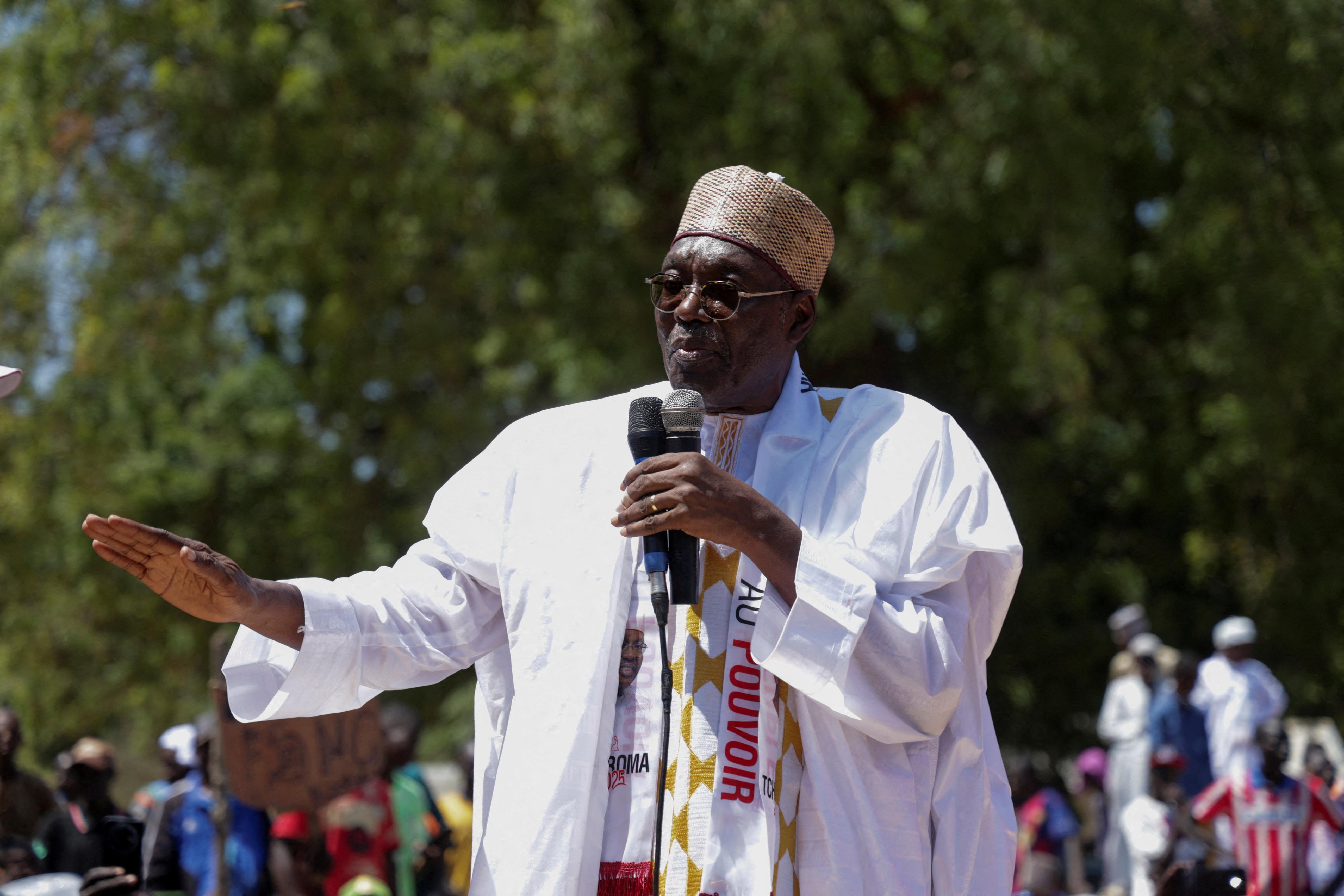
Cameroon’s government has suspended Issa Tchiroma Bakary’s Front for the National Salvation of Cameroon for three months, prohibiting party activities nationwide. Territorial Administration Minister Paul Atanga Nji says the measure relates to alleged calls for insurrection, violence and serious public-order disturbances connected to the disputed October 2025 presidential election. Tchiroma, who rejected Paul Biya’s declared victory and later went into exile in The Gambia, has not returned to Cameroon. The suspension comes as legislative and municipal elections are expected in early 2027, although no exact official polling date has yet been announced.
Cameroonian authorities have suspended the opposition Front for the National Salvation of Cameroon, FSNC, for three months, barring the party led by exiled presidential challenger Issa Tchiroma Bakary from political activity across the country as Cameroon moves toward legislative and municipal elections expected in early 2027. Territorial Administration Minister Paul Atanga Nji signed the order on Tuesday, October 27, accusing the party of involvement in activities linked to the disputed October 12, 2025 presidential election that the government says included calls for insurrection, incitement to violence and serious disturbances of public order.
The suspension applies throughout Cameroon and prohibits the FSNC from organising political meetings, rallies and other activities for the duration of the three-month sanction. Authorities warned that party officials or supporters who violate the order could face prosecution, while governors, divisional officers and other territorial administrators have been instructed to ensure that the restriction is enforced.
The ministerial order, identified as No. 00163/A/MINAT, cites a series of allegations connected to events before, during and after the 2025 presidential election. Among the reasons listed are alleged calls for insurrection, attacks on national integrity and sovereignty, incitement to violence resulting in destruction of public and private property, serious disturbances of public order and the residence abroad of one of the party’s statutory leaders.
The allegations remain the government’s stated justification for the administrative measure and should not be treated as independent findings of guilt against every member of the party. Local reporting says the order also refers to ongoing proceedings before competent courts and convictions handed down by the Yaoundé Military Tribunal on October 8, 2026 in cases connected to violence surrounding the 2025 election.
The suspension takes effect at a politically sensitive moment for Cameroon. The FSNC has two members of parliament and several local elected representatives and had become far more prominent nationally after Tchiroma emerged as one of President Paul Biya’s strongest challengers during last year’s presidential election.
Tchiroma, a former government minister who later broke with Biya’s political establishment, built significant support during the campaign, particularly among younger Cameroonians frustrated with decades of political continuity. Biya, now 93, has ruled Cameroon since 1982 and was declared the winner of the October 2025 presidential election with 53.66 percent of the vote, securing another term in office.
Official results gave Tchiroma 35.19 percent, placing him second. He rejected the declared outcome and claimed that he, rather than Biya, had won the election. In the days surrounding the result, he repeatedly urged supporters to defend what he described as the people’s mandate and challenged the legitimacy of the official result.
His refusal to accept the outcome became the focal point of a major post-election confrontation. Demonstrations erupted in opposition strongholds and major cities, including Douala, Garoua and Maroua, as protesters challenged the result and demanded recognition of Tchiroma’s claims.
Security forces responded forcefully. Cameroon’s government initially reported that 16 people had been killed during the unrest, while opposition figures and rights organisations put the toll considerably higher. Reuters later reported, citing two United Nations sources, that security forces killed 48 civilians during the crackdown, most of them with live ammunition, although the Cameroonian authorities did not adopt that figure as their official death toll.
That discrepancy remains significant. The exact number of people killed in the post-election violence has been disputed, and reporting should distinguish clearly between government figures, opposition claims and casualty estimates supplied by international organisations.
Tchiroma eventually disappeared from public view as the authorities intensified pressure on his movement. In November 2025, The Gambia confirmed that it was temporarily sheltering him on humanitarian grounds after he left Cameroon.
The Gambian government said Tchiroma had entered the country on November 7 and was being hosted because of concerns for his safety. Banjul also stressed that Gambian territory would not be permitted to serve as a base for subversive activity against Cameroon and said it was consulting regional partners, including Nigeria, in an effort to support a peaceful resolution of the post-election crisis.
Tchiroma has remained in Gambian exile while continuing to challenge the official outcome of the presidential election. His absence is now explicitly referenced by Cameroonian authorities as one of the considerations supporting the temporary suspension of his party.
The three-month order could keep the FSNC formally inactive until approximately January 27, 2027, placing the end of the suspension extremely close to the expected window for parliamentary and municipal elections. That timing makes the decision particularly consequential even though the government has characterised it as a temporary administrative measure.
Cameroon has not yet formally announced an exact date for the next legislative and municipal elections. However, current legal deadlines and preparations point toward voting in early 2027 after repeated extensions of the mandates of existing elected officials.
The term of members of the National Assembly was extended for a second time in March 2026 and now runs until December 20. Cameroon’s Constitution provides that when parliamentary terms are extended, an election for a new National Assembly must take place between 40 and 120 days after the extension expires, creating a legal window stretching from late January into April 2027.
Municipal councillors elected in February 2020 have also had their mandates extended twice, with their current terms now set to expire on February 28, 2027. Under the electoral rules presently in force, municipal elections would normally need to take place before the expiry of those terms unless another extension is adopted.
Cameroon has frequently held legislative and municipal elections together, and political parties have been preparing on the assumption that the two votes could again be combined in early 2027. No presidential decree officially convoking voters for a specific date had been published at the latest reporting stage, however.
That uncertainty makes it more accurate to say that elections are expected in early 2027 rather than describing a particular election date as confirmed.
The suspension of the FSNC therefore lands at precisely the moment political parties would ordinarily be organising candidates, establishing alliances and preparing campaign machinery. Even if the restriction expires before voting, three months without normal political activity could affect the party’s ability to select candidates, hold meetings, recruit supporters and prepare for the election.
Critics of the measure are likely to argue that this creates an uneven playing field, particularly because the FSNC’s leader was Biya’s main challenger in the most recent presidential election. The government, however, presents the suspension as a public-order measure connected to conduct surrounding the 2025 unrest rather than an attempt to prevent electoral competition.
That difference in interpretation is likely to shape political debate over the coming months. Supporters of the government can point to violence, property destruction and official allegations of insurrection as grounds for intervention, while opposition figures and rights advocates are likely to focus on whether administrative powers are being used disproportionately against political opponents.
Cameroon’s Territorial Administration Ministry has significant authority over political associations, demonstrations and public-order matters. Political parties are subject to national rules governing their activities, and the government can impose restrictions where authorities say a party is acting in violation of those laws.
The FSNC may challenge the order through Cameroon’s administrative courts, although no formal appeal had been publicly announced in the first hours after the suspension. The availability of judicial review will be particularly important because the party is being prohibited from normal political activity during an election-preparation period.
The government’s reference to military-court proceedings also adds another legal dimension. Cameroonian authorities have prosecuted individuals connected to the post-election protests, and the October 8 proceedings cited in the suspension order indicate that the state views the unrest not merely as political protest but as conduct potentially falling within criminal or national-security law.
Human-rights organisations have previously questioned Cameroon’s use of military courts in cases involving civilians and political unrest, arguing that ordinary civilian courts should handle many such cases. The government has maintained that national-security offences and certain forms of organised violence fall within the jurisdiction permitted by domestic law.
The wider dispute cannot be separated from Cameroon’s unusual political history. Biya has been president for more than four decades, making him one of the world’s longest-serving heads of state. His Cameroon People’s Democratic Movement dominates national institutions and holds a large parliamentary majority.
Opposition parties have participated in elections throughout much of that period but have repeatedly complained about access to media, electoral administration, restrictions on protests and the broader advantages enjoyed by the ruling party. The government has consistently rejected claims that Cameroon lacks genuine political competition and points to the existence of multiple registered parties and opposition representation in parliament and local government.
Tchiroma’s rise during the 2025 presidential contest was notable partly because he had previously served within Biya’s government. He held senior positions including Minister of Communication and Minister of Employment and Vocational Training before eventually moving into opposition politics.
His campaign was able to unite sections of the opposition electorate that had often been divided among numerous candidates. His rhetoric focused heavily on change after decades of Biya’s rule, unemployment among younger citizens, governance and the need for political renewal.
The campaign also demonstrated the growing importance of Cameroon’s youthful population. Many citizens were born long after Biya took office in 1982 and have never experienced a peaceful transfer of presidential power. Tchiroma’s rallies attracted large crowds in several northern and urban areas and turned what had initially appeared to be another heavily incumbent-favoured election into a more competitive political contest.
Biya nevertheless remained in office after the Constitutional Council confirmed his victory. The government argued that the official count reflected the will of voters and warned opposition figures against attempting to overturn the result outside legally established procedures.
Tchiroma rejected that argument and insisted that official institutions had failed to reflect what he considered the true vote. His decision not to pursue a conventional challenge before the Constitutional Council became part of the subsequent political dispute, with his camp expressing distrust in the institutions responsible for adjudicating the election.
The result was a dangerous confrontation between a government demanding respect for the certified outcome and an opposition movement claiming that electoral victory had been stolen. Street protests became the principal expression of that conflict and eventually produced the deadly crackdown that continues to influence politics a year later.
Tuesday’s suspension shows that authorities have not treated those events as closed. The government continues to link the FSNC directly to the unrest and says conduct by party figures warrants restrictions beyond prosecutions of individual protesters.
The FSNC’s supporters are likely to challenge collective punishment of an entire party for alleged actions connected to individuals or protest movements. Whether Cameroonian courts accept the government’s legal justification could therefore become an important test of the boundary between national-security regulation and political-party rights.
The suspension may also affect political alliances. Opposition parties have been discussing strategies ahead of the legislative and municipal elections, where fragmentation could benefit the ruling CPDM under Cameroon’s electoral system.
If the FSNC is unable to hold meetings or participate in negotiations for three months, other opposition parties may have to decide whether to proceed independently, wait for the restriction to expire or incorporate FSNC-linked candidates through alternative arrangements where legally possible.
Candidate registration deadlines could become especially important. If formal electoral procedures begin while the suspension remains in force, legal questions could arise over whether the FSNC can submit candidate lists or participate in administrative preparations despite being prohibited from political activity.
The government has not yet provided detailed public guidance on how the suspension would interact with possible election deadlines. That issue may become urgent if President Biya convokes voters while the party remains suspended.
The timing also matters because Cameroon has already postponed parliamentary and local elections more than once. Deputies elected in 2020 were originally expected to face voters earlier, but their mandates have been extended. Municipal mandates have similarly been prolonged.
Biya said in February 2026 that the electoral timetable required a slight adjustment because of what he described as compelling constraints. Subsequent legislation formalised the extensions, while electoral authorities continued technical preparations.
By late October, political parties were increasingly expecting elections in early 2027 even though the government had still not provided a firm date. The FSNC suspension therefore adds another element of uncertainty to an already fluid electoral calendar.
International observers are likely to examine whether all significant political forces have a meaningful opportunity to participate. Elections held while a major opposition party is restricted could attract additional scrutiny, particularly given the disputed presidential contest and post-election violence of 2025.
The government can argue that participation in elections does not exempt political parties from public-order laws. Democracies routinely impose legal sanctions on political organisations or individuals accused of violence. The central question is whether such sanctions are based on clearly demonstrated conduct, applied proportionately and subject to effective judicial review.
Opposition groups and civil-society organisations will therefore likely focus on the evidence supporting the government’s allegations, the legal procedure used to suspend the party and whether equivalent standards are applied to governing-party supporters accused of misconduct.
Regional partners may also monitor developments. Cameroon is an important Central African state dealing simultaneously with political tensions, separatist violence in its English-speaking regions, insecurity spilling across borders and economic pressures.
Instability around national elections can therefore have implications beyond party politics. The violence following the 2025 presidential vote demonstrated how quickly an electoral dispute could become a wider public-order crisis.
The Gambian government’s decision to shelter Tchiroma was itself an unusual regional development. Banjul stressed that its humanitarian assistance should not be interpreted as political support for his claim to Cameroon’s presidency and said it respected Cameroon’s sovereignty.
That careful position reflects the sensitivity of hosting a major opposition figure who continues to dispute the legitimacy of a neighbouring government. Cameroon has not publicly accepted Tchiroma’s claim to political asylum as evidence of persecution and continues to treat some of his post-election statements as incitement.
The opposition leader’s future could therefore become linked to the status of his party. If the FSNC wants to participate fully in the 2027 elections, it may have to decide whether Tchiroma can continue leading effectively from exile or whether domestic officials should assume a larger operational role.
The government’s suspension order specifically mentioning the foreign residence of a statutory leader puts that issue directly into the legal dispute.
There is also a question of whether the suspension might be extended. The current order specifies three months, but the authorities have not ruled out additional legal action if the party fails to comply. Any effort to prolong the restriction into the election period would likely intensify domestic and international controversy.
For now, the measure is temporary and has a defined expiration period. The government has not announced that the FSNC has been permanently dissolved or banned, and reporting should distinguish a three-month suspension from permanent prohibition.
Similarly, the order does not cancel the mandates of the party’s two sitting MPs based on the information currently available. It restricts party activity, but the legal consequences for elected officeholders may depend on further interpretation or additional action.
That distinction will matter as parliament approaches the end of its current extended term. FSNC lawmakers remain part of a legislature due for renewal, while the party itself is temporarily barred from organising politically.
The broader democratic implications will depend partly on what happens during the suspension. If the party challenges the decision successfully or is permitted to resume normal activity before candidate registration and campaigning, the practical impact may be limited. If key electoral deadlines occur while the restriction remains active, the consequences could be far greater.
The post-election death toll also remains a source of political tension. The government’s initial figure of 16 fatalities differs sharply from the 48 deaths reported by Reuters based on two United Nations sources. Opposition groups and human-rights organisations have cited still higher figures.
No single number should therefore be presented without attribution. What is not disputed is that multiple people died during the crackdown and that security forces used force against demonstrators after the disputed election.
Those deaths continue to shape perceptions of the government’s response to political dissent. Authorities maintain that security forces were confronting disorder and violence, while critics say excessive force was used against people challenging the election result.
The FSNC suspension extends that unresolved conflict into the next electoral cycle. Rather than beginning the 2027 parliamentary and municipal campaign in a calmer environment, Cameroon is entering it with the principal challenger from the previous presidential election in exile and his party temporarily prohibited from operating.
For Biya’s government, the challenge will be demonstrating that the action is grounded in law and security concerns rather than electoral advantage. For the opposition, the challenge will be defending political space while avoiding actions that allow authorities to invoke public-order legislation.
For voters, the most immediate uncertainty is whether the restrictions will affect the range of parties and candidates available when the next elections are eventually called.
Cameroon’s authorities have not yet announced a fixed polling date, but the legal calendar means key decisions must be made soon if municipal and legislative elections are to proceed in early 2027.
The timing means the FSNC suspension may become one of the defining political disputes of the pre-election period.
At present, the confirmed facts are that Cameroon’s Territorial Administration Ministry has suspended the FSNC nationwide for three months, that the government attributes the decision to alleged conduct connected to the 2025 election and subsequent unrest, and that Tchiroma remains in exile in The Gambia after rejecting Biya’s officially declared victory.
What remains unresolved is whether the party will challenge the order successfully, whether the restriction will interfere with its participation in upcoming elections and how Cameroon’s authorities will manage an electoral environment already burdened by the violence and disputed outcome of the previous presidential vote.
Those questions will become more urgent as the country moves closer to the expected 2027 parliamentary and municipal elections and as the January expiration of the suspension approaches.