CDD TURNS HEAT ON MAHAMA AS PRESSURE MOUNTS FOR NEW EC DEPUTY CHAIR EMELIA AGBENYO TO QUIT OVER DOCUMENTED NDC CAMPAIGN LINKS
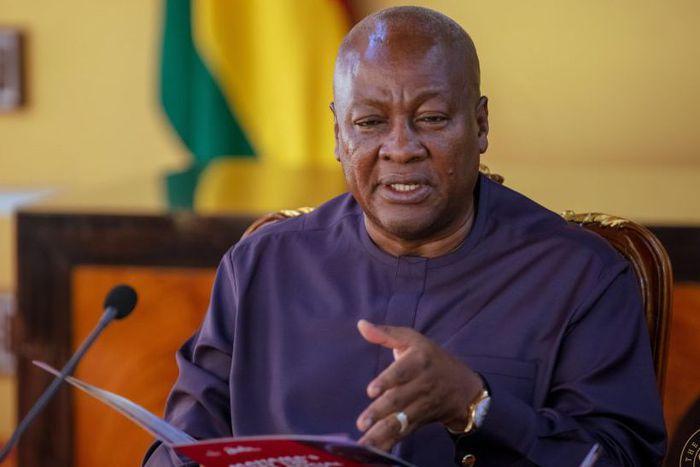
CDD Ghana has called on President John Dramani Mahama to advise newly appointed Electoral Commission Deputy Chairperson Emelia Afi Agbenyo to resign over concerns that her documented involvement with the NDC’s 2024 campaign could undermine confidence in the neutrality of the Commission. CODEO has separately demanded her resignation, pointing to her role as an NDC governance spokesperson and other publicly documented political activity. Agbenyo was sworn in on October 12 alongside Dr Joseph Kwaku Asamoah. Government officials have defended her competence and the constitutional validity of the appointment, although Foreign Minister Samuel Okudzeto Ablakwa has acknowledged that the optics surrounding it are unfavorable.
Pressure is mounting on President John Dramani Mahama and newly appointed Electoral Commission Deputy Chairperson Emelia Afi Agbenyo after the Ghana Center for Democratic Development called on the President to advise her to resign over concerns that her publicly documented association with the governing National Democratic Congress during the 2024 election campaign could damage confidence in the neutrality of the country’s electoral management body. The intervention by CDD Ghana adds another influential civil society voice to the controversy surrounding Agbenyo’s appointment only days after she was sworn into office, deepening a national debate over whether political actors who have recently played visible partisan roles should later be appointed to positions requiring the highest possible perception of independence and impartiality.
CDD Ghana’s Programmes Manager, Paul Aborampah Mensah, said the issue had moved beyond questions about whether Agbenyo was professionally qualified to serve at the Electoral Commission and had become one of public confidence. Speaking on Eyewitness News, he argued that the President may not have fully appreciated the political consequences of the appointment when it was made, but that the controversy now surrounding Agbenyo provides an opportunity for Mahama to reconsider the situation. Mensah suggested that the President could advise her to step aside or that Agbenyo herself could resign on moral grounds in order to protect public trust in the EC.
The CDD position is significant because it closely mirrors a call already issued by the Coalition of Domestic Election Observers, CODEO, which comprises more than 40 civil society and professional organisations and has observed Ghanaian elections for more than two decades. CODEO has called directly on Agbenyo to resign and urged Mahama to demonstrate consistency with views he expressed while in opposition about the dangers of appointing politically identifiable figures to the Electoral Commission. The coalition says its objection is not based on Agbenyo’s technical competence but on the principle that an electoral commission must not only be independent in law and practice but must also be seen by citizens and political competitors as independent.
The controversy stems from Agbenyo’s documented involvement with the NDC during the 2024 general election campaign. She was publicly announced among the party’s sectoral spokespersons and served as a spokesperson on governance. CODEO has also pointed to social media posts attributed to her during the campaign period that expressed support for John Mahama and the NDC’s change message. Those public activities have become central to the criticism because they occurred less than two years before she was appointed to the senior leadership of the institution that will supervise Ghana’s future elections.
The argument being made by CDD, CODEO and the opposition New Patriotic Party is not simply that Agbenyo once held political opinions. In any democracy, citizens including professionals are entitled to political views and participation. The concern being raised is the proximity between visible partisan campaign activity and appointment to one of the most sensitive constitutional bodies in the country. Electoral commissioners make decisions capable of affecting voter registration, electoral procedures, constituency operations, dispute management, result collation and the overall public legitimacy of national elections. In a deeply competitive political environment, even the perception that a senior commissioner is politically aligned can become combustible.
Agbenyo was sworn in by Mahama on Monday, October 12, together with Dr Joseph Kwaku Asamoah. Their appointments filled vacancies created after Dr Bossman Eric Asare resigned to return to academia and Samuel Tettey retired after reaching the compulsory retirement age. At the swearing in ceremony, Mahama gave the new deputies an unusually direct instruction on neutrality, telling them that he did not expect preferential treatment for himself, his government or his party. He told them to treat every political party and every candidate equally under the law and said the responsibility of the Commission was to the Republic and the people of Ghana.
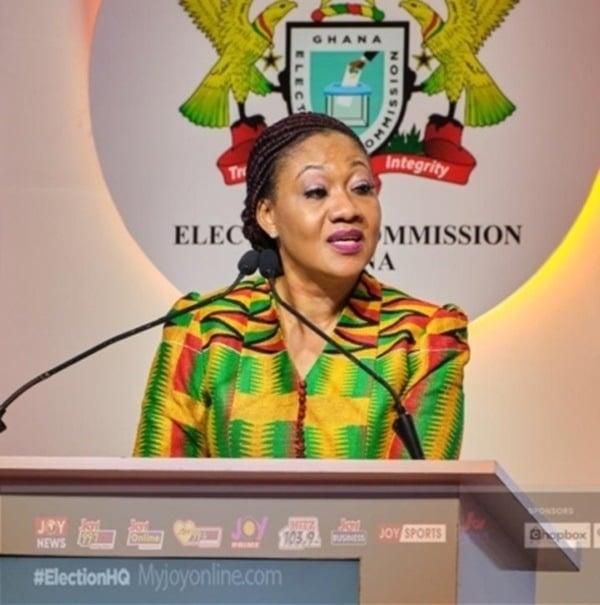
Electoral Commission Deputy Chairperson Emelia Afi Agbenyo
That message was clearly intended to reinforce the constitutional independence of the EC. Yet it has also become part of the current controversy because critics are asking whether a public declaration of neutrality is enough to overcome perceptions created by an appointee’s recent partisan involvement. CODEO argues that the integrity of the EC depends not only on whether commissioners believe themselves capable of acting fairly but also on whether competing parties and the public can reasonably trust that they will do so.
The NPP was among the first political groups to strongly object to Agbenyo’s appointment. The opposition party demanded that Mahama withdraw it, pointing to her role as an NDC governance spokesperson during the 2024 campaign and to videos and social media material showing her participation in party political activities. The NPP said it was unacceptable for someone it considers an active NDC operative to join the top leadership of the institution responsible for organising elections only a relatively short time after publicly campaigning for one of the parties that will compete in those elections.
The NPP’s position has itself been challenged by government officials, who accuse the party of applying a standard it did not consistently observe while in power. Minister of State responsible for Government Communications Felix Kwakye Ofosu has defended Agbenyo’s appointment and argued that the NPP lacks the moral authority to complain after what he described as the previous government’s own appointment of individuals with political associations to the Electoral Commission. His argument is effectively that the current criticism must be understood against the history of partisan accusations that have surrounded EC appointments under different governments.
That defence, however, has not ended the debate. In fact, the controversy has now extended beyond predictable government versus opposition exchanges because several civil society organisations are applying the same principle to Agbenyo that they previously applied to appointments made by NPP administrations. CODEO has specifically reminded the public that it opposed the appointment of Dr Peter Appiahene in 2023 over allegations of partisan affiliation with the NPP. At the time, the NDC itself criticised the appointment, and Mahama, then in opposition, called for reforms to the way Electoral Commission members are selected.
That history has become particularly uncomfortable for the current administration. CODEO has cited Mahama’s own 2023 position, when he criticised the appointment of people he described as known party activists to the Commission and advocated constitutional reforms that would introduce additional scrutiny, including parliamentary approval for new commissioners. The coalition is now telling the President that the principle he defended while in opposition should apply equally when he is the one exercising appointment power.
The issue therefore touches on a much larger and recurring problem in Ghanaian politics. Nearly every change of government is followed by accusations that constitutional bodies, security institutions, state companies and regulatory agencies are being filled with individuals sympathetic to the party in power. Successive governments often defend appointments they make while criticising similar actions taken by their predecessors. Civil society groups say this cycle gradually weakens institutions because public trust begins to depend less on the institution itself and more on which political party appointed its leadership.
CDD’s Paul Aborampah Mensah warned specifically against allowing the leadership of key institutions to become vulnerable to every political transition. He argued that Ghana should avoid a situation where each change in government leads to a change in the perceived political character of institutions that are supposed to operate independently of whichever party holds executive power. His concern is that if the trend continues, confidence in the people managing elections could deteriorate to a point where disputed outcomes become even more difficult for citizens and parties to accept.
That concern is particularly serious for an electoral commission because elections are ultimately sustained by legitimacy. No electoral body can physically force millions of citizens and political actors to believe that every decision it makes is fair. Its authority depends heavily on trust built through transparent procedures, impartial conduct and the willingness of losers to accept outcomes. When commissioners become the subject of partisan suspicion before they have even supervised a major election, the institution begins its work at a disadvantage.
Supporters of Agbenyo reject the suggestion that her previous political engagement automatically means she will act improperly at the EC. Haruna Iddrisu has said her appointment is constitutionally appropriate, while acknowledging that critics are entitled to remind the government of positions the NDC took in the past. The constitutional process allows the President, acting on the advice of the Council of State, to appoint the chairperson, deputy chairpersons and other members of the Electoral Commission.
Foreign Affairs Minister Samuel Okudzeto Ablakwa has gone even further in personally defending Agbenyo. Speaking on JoyNews, Ablakwa described her as a woman of integrity, competence and independence and said he had known her since their student activism days. He argued that she has the professional qualities necessary to serve in the position and expressed confidence that she would not engage in blatant political bias.
At the same time, Ablakwa made an important concession that has added another layer to the controversy. He acknowledged that the optics surrounding the appointment do not look good and said he would have preferred a different situation. He also accepted that people who remind the NDC of its earlier criticisms of perceived partisan EC appointments are entitled to do so. That admission from a senior member of the Mahama administration demonstrates that concerns about the public appearance of the appointment are not limited to the opposition.
The distinction between legality and optics has therefore become one of the central themes of the debate. An appointment can be constitutionally valid while still raising questions about political judgment. There has been no authoritative finding that Agbenyo is legally disqualified from serving because of her previous involvement with the NDC. The case being made by CDD and CODEO is instead that the standard for electoral commissioners should go beyond minimum constitutional eligibility.
Their position is that senior EC officials must inspire confidence among all parties, including those that did not support the government that appointed them. If the opposition enters an election already convinced that a deputy chairperson belongs politically to the governing party, every controversial decision involving that commissioner could be interpreted through a partisan lens regardless of whether the decision was actually lawful or fair.
That is why CODEO says Agbenyo’s professional record is not the primary issue. Before joining the EC, she served as Deputy Director General responsible for operations at the Ghana TVET Service and has significant experience in development cooperation, governance, public sector management, gender policy and institutional reform. She has managed programmes and partnerships involving organisations such as UNDP, USAID, KOICA and GIZ Ghana. She also has academic qualifications from the University of Ghana and GIMPA.
Those credentials mean the controversy cannot simply be reduced to a claim that an unqualified person was given an important office. Even critics generally acknowledge that she has substantial professional experience. The question is whether that professional background can overcome the political perception created by her recent public association with the NDC.
The issue has also revived debate over the role of the Council of State. Under Article 70 of the Constitution, the President appoints members of the Electoral Commission acting on the advice of the Council of State. CODEO argues that the public has too little visibility into how the Council assesses potential commissioners and whether issues such as recent partisan activity are considered before advice is given.
The coalition wants the Council of State to develop more transparent procedures so citizens can understand how it carries out this constitutional responsibility. Critics argue that the current system effectively leaves most of the process behind closed doors, allowing controversy to erupt only after an appointment has already been completed.
CODEO has also renewed its call for broader constitutional reform. It supports an open, competitive and merit-based selection system with stronger independent scrutiny and some form of parliamentary oversight. The coalition argues that if the process is transparent from the beginning, concerns about political affiliation can be examined before an individual takes office rather than after the swearing in ceremony.
This debate has followed Ghana for years. Jean Mensa’s appointment as EC Chairperson under former President Nana Akufo-Addo was heavily criticised by the NDC, which frequently questioned the Commission’s neutrality. The NPP, in turn, accused previous EC leadership of similar political bias. Every cycle has therefore contributed to a dangerous pattern where whichever party is in opposition tends to distrust the Commission more than whichever party is in government.
Afrobarometer research cited by CODEO has shown declining public trust in the Electoral Commission, with confidence reaching particularly low levels around the 2024 election period. For civil society organisations, this means every appointment to the Commission should ideally help rebuild trust rather than create another controversy.
CDD Fellow Dr John Osae Kwapong made a similar argument earlier in the week, saying openly partisan appointments do not help an institution already struggling with public confidence. His concern was not simply whether Agbenyo could personally perform the job fairly but whether citizens who know her political history will trust the institution when it makes difficult decisions.
The danger is most obvious during close elections. Electoral systems operate relatively smoothly when the winning margin is large and parties have little reason to contest the result. The true test comes when the margin is narrow, legal challenges arise and commissioners must make decisions capable of determining whether disputed ballots, constituencies or procedures are accepted.
In those moments, public perception becomes almost as important as technical competence. A commissioner whose neutrality is already questioned may find it difficult to convince sceptical political actors that an unpopular decision was based solely on law and evidence.
Agbenyo has not been accused of misconduct in her new position, and there is no evidence that she has used her EC office to favour the NDC. She has only been in office for days. That distinction is essential. The current controversy concerns her previous political activity and what it may mean for public perception, not proven wrongdoing committed as Deputy Chairperson.
President Mahama’s defenders therefore argue that critics are effectively prejudging her before she has had the opportunity to demonstrate how she will perform. They point to the President’s public instruction that neither he nor the NDC should receive preferential treatment as evidence that the government expects genuine independence from the Commission.
Critics reply that institutional trust should not depend on waiting for a future controversy to discover whether an appointee can separate partisan history from constitutional responsibility. In their view, the entire purpose of avoiding recent political actors in electoral management is to prevent that credibility problem from arising in the first place.
That disagreement is unlikely to disappear quickly because both sides are arguing from different definitions of independence. Government supporters emphasise constitutional legality, competence and the possibility that an individual can leave partisan activity behind when taking public office. Civil society critics place greater weight on appearance, public confidence and the need to remove even reasonable suspicion of political allegiance from the leadership of the EC.
The NPP’s involvement adds another political dimension because its own record in government is now being examined alongside its current criticism. Government communicators have repeatedly asked why opposition figures who defended controversial EC appointments under the previous administration now demand a different standard. The NPP responds that Agbenyo’s visible role in the NDC’s 2024 campaign makes the current case especially direct.
For Ghana, however, reducing the issue to which party was hypocritical first risks missing the institutional problem identified by CDD and CODEO. If every governing party uses the actions of its predecessor as justification for repeating disputed appointment practices, the cycle becomes permanent. Over time, citizens may come to see the EC leadership not as independent constitutional officials but as alternating groups associated with whichever political party controls the presidency.
That outcome would have serious consequences for Ghana’s democratic reputation. The country has long been regarded internationally as one of West Africa’s more stable electoral democracies, built in part on repeated peaceful transfers of power between the NDC and NPP. That record depends on political parties accepting election results even when they lose.
Electoral credibility is therefore not an abstract administrative concern. It is part of the infrastructure that has allowed political competition to remain largely peaceful. Every controversy over the neutrality of the EC places additional pressure on that infrastructure.
CDD’s demand now puts the next move in the hands of both Agbenyo and the President. The organisation is not claiming that Mahama can simply dismiss a constitutionally appointed deputy commissioner at will. Instead, it is asking him to use his political influence to advise her to resign voluntarily, or for Agbenyo herself to conclude that stepping down would better protect the institution.
There has been no indication from Agbenyo that she intends to resign. Senior government officials continue to defend her competence, and the Presidency has not announced any plan to reverse the appointment.
That means the controversy is likely to continue, particularly because opposition parties and civil society organisations can now point to the NDC’s own historical arguments against partisan appointments to the Commission.
The pressure also places Mahama in a politically delicate position. Keeping Agbenyo allows the government to insist that professional competence and constitutional procedure should prevail over political accusations. Asking her to leave would amount to accepting the argument that recent visible partisan activity should disqualify, or at least discourage, appointment to the EC.
Either choice could influence future debates about who should be eligible to serve on the Commission.
The more important long-term question may therefore be whether the controversy finally creates enough pressure for Ghana to redesign the appointment process itself. If commissioners were chosen through a system involving public applications, clearly published criteria, independent vetting and parliamentary scrutiny, political parties might have less room to accuse presidents of quietly placing allies inside the Commission.
No process can completely eliminate political disagreement. Even commissioners selected through Parliament could become controversial in a deeply polarised environment. But supporters of reform argue that transparency would make it harder for any government to appoint someone with obvious political baggage without first answering difficult questions publicly.
For now, Ghana remains under the existing constitutional arrangement, and Emelia Afi Agbenyo remains a Deputy Chairperson of the Electoral Commission.
What has changed is the level of pressure surrounding her appointment.
The NPP has demanded her removal. CODEO has called for her resignation. CDD Ghana has now asked Mahama to advise her to step aside. Even a senior minister in Mahama’s government has acknowledged that the optics are not ideal while defending her integrity.
That combination ensures the issue is no longer simply another partisan argument between government and opposition. It has become a broader debate over how much political history Ghana is willing to tolerate in the leadership of the institution entrusted with deciding the rules and administration of elections.
Agbenyo may ultimately remain in office and demonstrate complete professional independence. She may also decide that the controversy makes continued service difficult. The President may defend the appointment or reconsider it. None of those outcomes has yet been determined.
What is already clear is that her appointment has reopened one of the most sensitive questions in Ghanaian democracy.
Can an Electoral Commission command unquestioned public confidence when one of its senior officials was visibly campaigning with a political party less than two years before joining its leadership?
CDD Ghana’s answer is that the risk to public trust is too great.
The Mahama administration now has to decide whether it agrees.