
COLOMBIA SENDS ALLEGED DRUG KINGPIN “SPIDER” TO US TO FACE COCAINE AND NARCO TERRORISM CHARGES
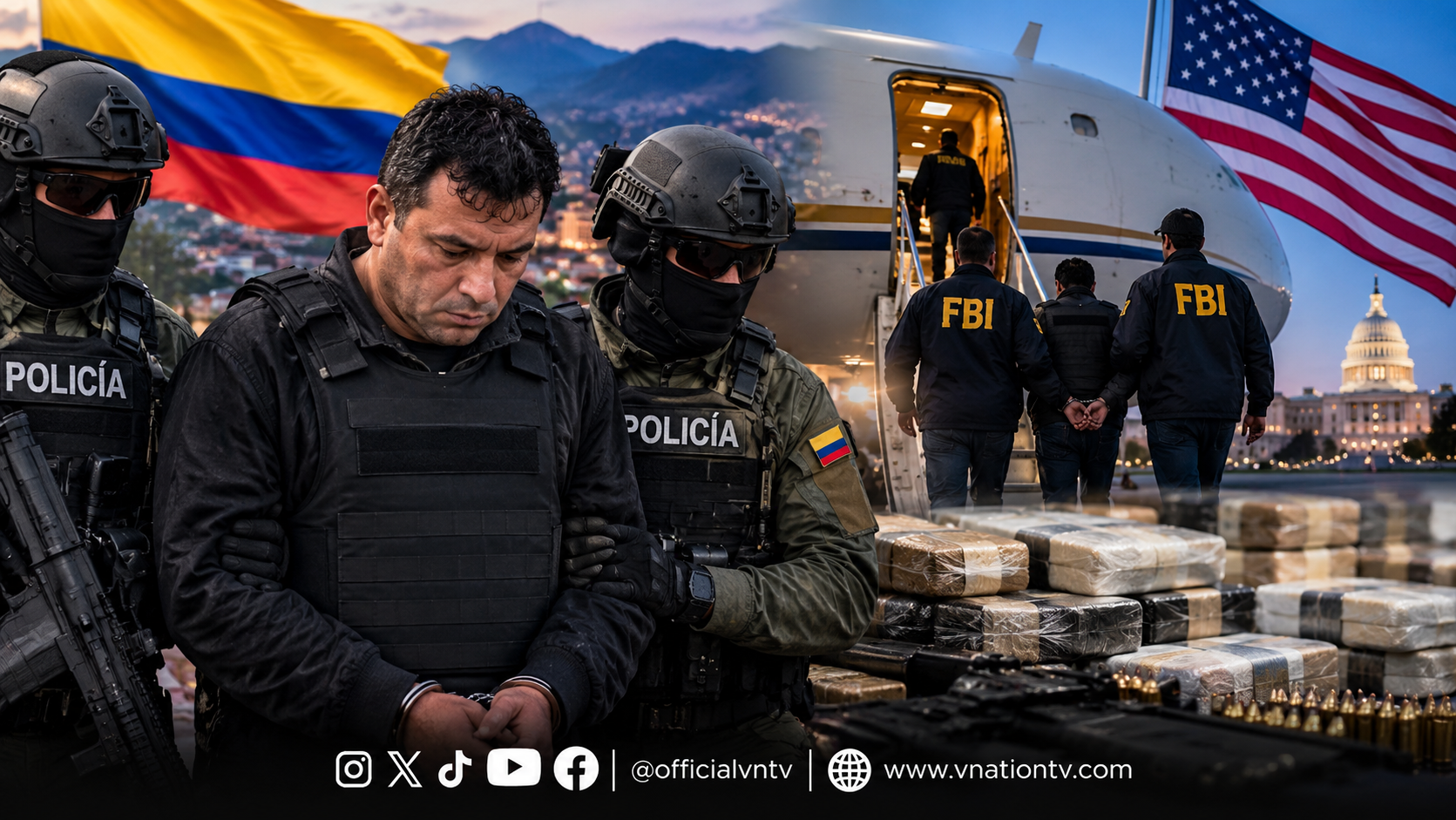
Colombia has extradited Geovany Andres Rojas, better known as “Spider,” to the United States, where prosecutors accuse the alleged former FARC dissident commander of involvement in large-scale cocaine trafficking and narco-terrorism. The transfer marks the first extradition of a senior illegal armed-group commander under President Abelardo De La Espriella.
Colombia has extradited alleged drug-trafficking leader Geovany Andres Rojas, known by the alias “Araña” or “Spider,” to the United States to face federal charges linked to cocaine trafficking and narco-terrorism.
Rojas was handed over to U.S. authorities under heavy security on Friday, September 25, before being flown to the United States.
The U.S. Department of Justice said he arrived in San Diego later Friday accompanied by federal law enforcement agents.
Colombian President Abelardo De La Espriella was present during the extradition process, which represents one of the most significant transfers of an alleged armed-group commander since his administration took office in August.
Rojas is accused of being a senior leader of the Border Commands, an armed organization linked to dissident elements of the former Revolutionary Armed Forces of Colombia, commonly known as FARC.
The group emerged from fighters who rejected or abandoned the historic 2016 peace agreement between the Colombian government and FARC.
U.S. prosecutors accuse Rojas of helping coordinate large-scale cocaine trafficking operations stretching across Colombia and Ecuador.
A federal grand jury in the Southern District of California returned a superseding indictment in March 2025 charging him with international conspiracy to distribute cocaine and narco-terrorism.
According to U.S. authorities, Rojas allegedly helped orchestrate multi-ton cocaine shipments destined for the United States.
The allegations have not been proven at trial, and Rojas is presumed innocent unless convicted.
His extradition follows a lengthy legal and political process in Colombia.
Rojas was arrested in Bogotá in February 2025 while participating in activities connected to peace negotiations between armed groups and the government of then-President Gustavo Petro.
His detention generated controversy because he had been involved in the negotiations as a representative of the Border Commands.
The previous Colombian administration had suspended several extraditions involving armed-group leaders participating in peace talks.
That policy changed following De La Espriella's election.
In August, the new president authorised the extradition of Rojas and several other alleged criminal and armed-group leaders whose transfers had previously been suspended.
The Colombian presidency said the government would no longer allow participation in peace negotiations to shield people wanted by foreign courts from extradition.
The Rojas transfer is particularly significant because it is the first extradition of a senior illegal armed-group commander under the new president.
De La Espriella said Colombia would continue cooperating with international authorities against drug-trafficking organisations.
He has pledged to pursue criminal networks throughout the cocaine supply chain, from production and transportation to senior leadership.
The Colombian president said his administration had carried out 94 extraditions since taking office.
Rojas' transfer also signals a significant shift from the strategy pursued by Petro.
Petro's administration attempted to negotiate with several armed organisations under its so-called Total Peace policy, seeking agreements aimed at reducing decades of violence.
De La Espriella has taken a more security-focused approach, abandoning some negotiations and increasing military pressure on illegal armed groups.
Those organisations remain heavily involved in Colombia's illicit economy.
Authorities say cocaine trafficking, illegal mining and extortion continue to provide substantial sources of financing for armed groups operating across remote areas of the country.
Rojas' alleged organisation has operated particularly around Colombia's southern border regions.
U.S. prosecutors allege that the trafficking activities associated with Rojas extended into neighbouring Ecuador and date back several years.
American authorities have portrayed the extradition as evidence of renewed security cooperation between Washington and Bogotá.
The U.S. Department of Justice said Rojas' transfer resulted from cooperation involving Colombian authorities and multiple American agencies, including the Drug Enforcement Administration, FBI and Homeland Security Investigations.
Rojas will now face the U.S. federal judicial process in California.
The charges against him remain allegations.
Prosecutors will be required to establish his guilt beyond a reasonable doubt if the case proceeds to trial.
For Colombia, however, his departure sends a broader political message.
The new administration is signaling that senior figures in armed organizations who are wanted abroad will no longer necessarily be protected from extradition because of their participation in peace negotiations.
For Washington, the arrival of “Spider” puts an alleged senior figure in Colombia's cocaine trade directly before the U.S. justice system.