CONGRESS HOLDS THE PURSE, TRUMP HOLDS THE WAR: DEMOCRATS PLAN TO STARVE THE IRAN WAR OF FUNDS AS EARLY AS DECEMBER, REVIVING THE WEAPON THAT HELPED END AMERICA'S WAR IN VIETNAM
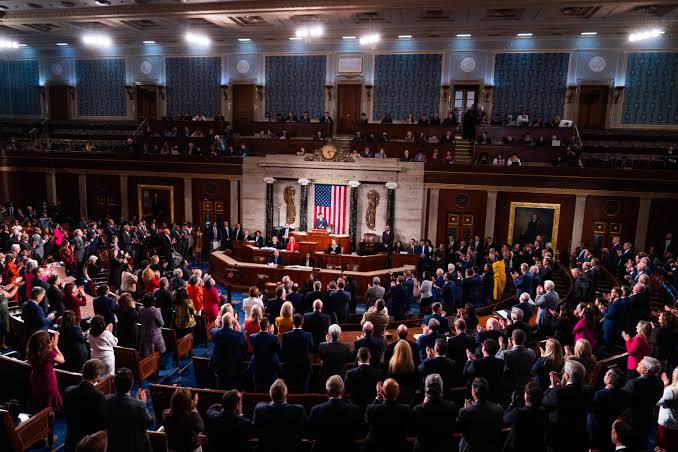
Democrats in the US Congress plan to use the government's spending power to force President Donald Trump to end the US-Israel war on Iran, possibly as early as December. Congress used the same tactic in 1973, when it cut off funds for American bombing in Southeast Asia. The current federal funding bill expires on December 11. Lawmakers must pass a new budget or a short-term spending plan by then to avoid a government shutdown just before Christmas. Democrats have proposed cutting off money for the war even before the new Congress takes office on January 3. After that date, they will control both chambers and can write clauses into spending bills that forbid any funds for hostilities against Iran. They have also said they will not approve Trump's request to raise the defense budget from about $950 billion to $1.5 trillion, plus an extra $67 billion for the war. Congress cannot end a war on its own, and Trump is expected to veto any measure that tries. War powers resolutions have already passed both chambers, but the administration ignored them. Public opinion is on the Democrats' side. A Reuters/Ipsos poll found that 71 percent of Americans, including 51 percent of Republicans, want Congress to end the conflict. A December showdown carries real risks: vetoes, a pre-Christmas shutdown and questions over troops' pay. For Nigeria and Ghana, the stakes run through oil prices, the Strait of Hormuz, and pressure on the naira and the cedi.
The US Constitution gives the president command of the armed forces. It gives Congress something less dramatic but just as powerful: the money. Nearly eight decades of American war-making have shown that presidents can start conflicts with little input from lawmakers. Ending them is another matter. When a war loses public support, the fight often moves from the battlefield to the budget. That is where the war on Iran now appears to be heading.
Democrats are preparing to use Congress's control of federal spending to force President Donald Trump to end the US-Israel war on Iran, possibly as early as December. The plan draws directly on history. In 1973, a Congress weary of Vietnam used its funding power to cut off money for American bombing in Southeast Asia. Half a century later, a new generation of lawmakers is reaching for the same tool.
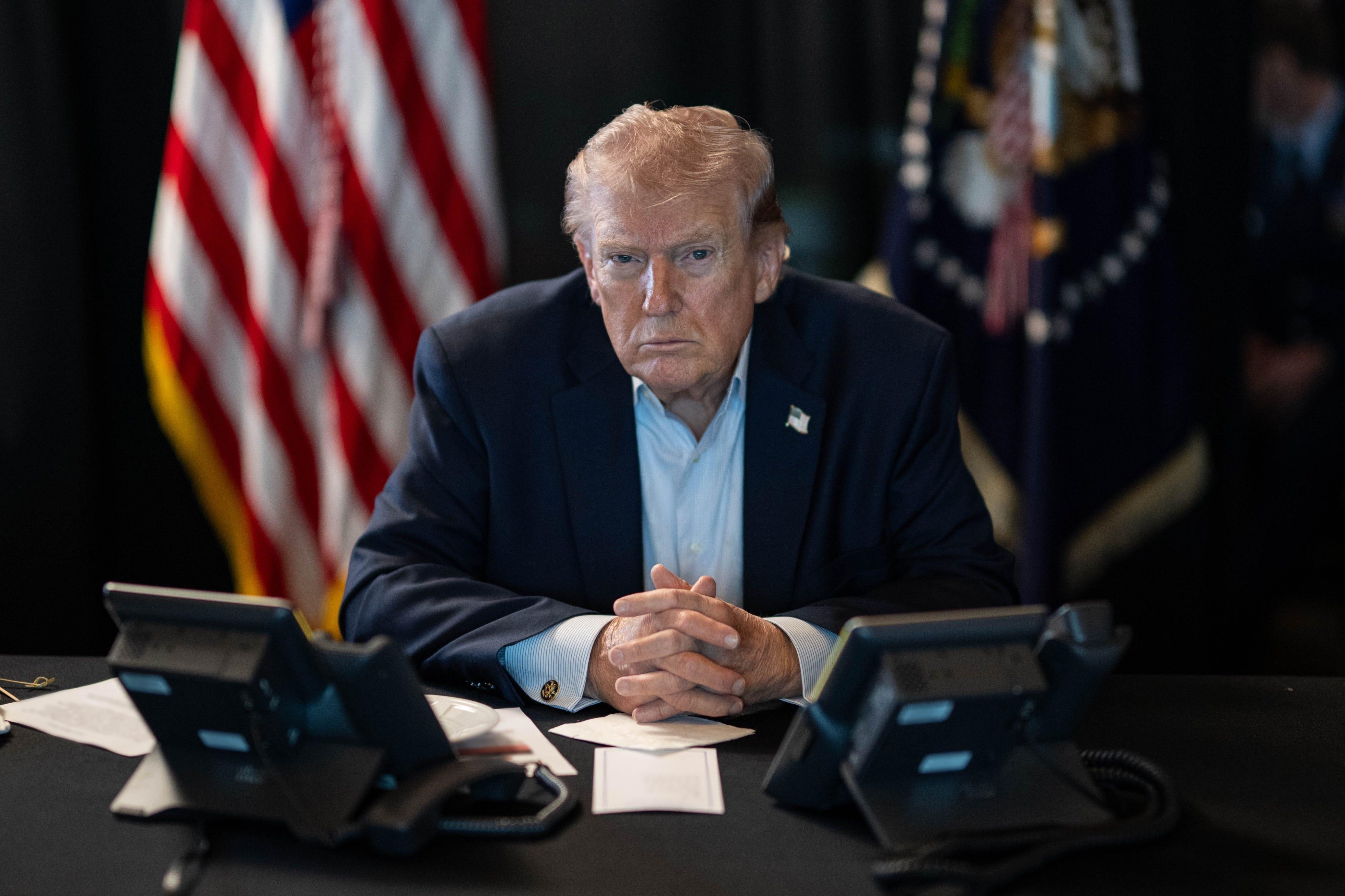
The war began on February 28, when Trump launched military action against Iran alongside Israel. He did so without seeking approval from Congress. Nearly nine months later, the conflict has become one of the most unpopular foreign policy decisions of his presidency. Voters delivered their verdict in this month's midterm elections, handing Republicans a heavy defeat and giving Democrats control of both the House and the Senate. Democrats now hold their largest House majority since the early 1990s. Trump has acknowledged that unhappiness with the war contributed to his party's losses. Yet he continues to defend it, insisting both that he has won and that the fighting will go on.
That contradiction sits at the center of the coming confrontation. A president who says he has won a war but refuses to end it hands his opponents a simple argument. If the mission is complete, why keep paying for it?
The first test comes quickly. The current government funding bill expires on December 11. Before that date, Congress must pass either a full-year budget or a short-term spending measure, known as a continuing resolution, to keep the federal government open. If it fails, the government shuts down just before Christmas. Federal workers go unpaid, services slow or stop, and holiday travel is disrupted.
Democrats see that deadline as leverage. They have proposed cutting off funding for the war even before the new Congress is sworn in on January 3. Their hope is that anti-war Republicans, or fiscal hawks worried about the soaring federal deficit, might join them during the remaining weeks of the current session.
Republican leaders have made clear they will not go along. "A Republican Congress is not going to send bills to a Republican president that he's going to veto, so if that's their demand, well, we'll just wait until next year," said Representative Tom Cole of Oklahoma, who chairs the powerful House Appropriations Committee.
Cole's comment captures the arithmetic of December. Until January 3, Republicans still control Congress. A December cutoff would need enough Republican votes to pass both chambers. That is not impossible, since some Republicans have broken with Trump on the war before. But it is a long shot. The December push is better understood as an opening move. It is a signal of intent, a test of Republican unity and a way to put every lawmaker's position on the record before the balance of power shifts.
The real leverage arrives in January. Once Democrats control both chambers, they can write clauses into spending bills that forbid the use of any federal funds for hostilities against Iran. Trump could veto those bills. But a veto would not simply block an anti-war measure. It would block funding for the government itself. The president would then face a stark choice: accept the restriction or risk a government shutdown, potentially including no pay for the troops fighting the war, in order to prolong it.
Democrats have a second budget weapon. Trump has asked Congress for a dramatic rise in defense spending, from about $950 billion to $1.5 trillion, plus an extra $67 billion specifically for the Iran war. Democrats have said they will not approve a budget of that size next year. They can also refuse to authorize any war funding in the National Defense Authorization Act, the annual law that sets Pentagon policy and spending levels. The NDAA has passed every year since 1961. A failure would embarrass both parties. That long record is exactly why the bill carries so much political weight. Lawmakers on both sides would come under heavy pressure to find a compromise, and Democrats could make ending the war the price of that compromise.
The comparison with Vietnam is not just a slogan. It is the clearest example in modern American history of Congress using money to bring a war to a close. By early 1973, the Paris Peace Accords had been signed and most American ground troops were leaving Vietnam. But US bombing continued in Cambodia, and Congress feared the war could drag on indefinitely under a different name. In June 1973, President Richard Nixon vetoed a spending bill that would have cut off money for the bombing. Congress refused to back down. The two sides reached a compromise, and lawmakers passed the Case-Church Amendment, named after Senators Clifford Case and Frank Church. It barred the use of funds for US combat activities in and over Vietnam, Laos and Cambodia after August 15, 1973. On that date, American bombing in Cambodia stopped.
Months later, Congress went further. In November 1973, it passed the War Powers Resolution over Nixon's veto, requiring presidents to consult Congress and limiting how long troops could be committed to hostilities without authorization. In 1975, when President Gerald Ford asked for emergency military aid for South Vietnam, Congress said no. Saigon fell weeks later.
The lesson Democrats draw from that history is that Congress does not need to win a war powers argument in court to end a war. It only needs to stop paying for it. The lesson their critics draw is different. Vietnam's final years left deep scars, and many conservatives still argue that cutting funds abandoned an ally. Republicans are likely to accuse Democrats of undermining troops in the field and weakening America's hand against Tehran. That argument will be loud. Whether it persuades voters who already oppose the war is another question.
Recent history also shows the limits of the funding weapon. In 2007, a Democratic Congress sent President George W. Bush a war spending bill that set a timeline for withdrawing troops from Iraq. Bush vetoed it, and Democrats, unwilling to be blamed for cutting off troops in combat, passed a new bill without the deadline. In 2019, Congress passed a resolution to end US support for the Saudi-led war in Yemen. Trump vetoed it, and the Senate failed to override. Funding fights can end wars. They can also end in retreat when the political cost of a standoff becomes too high.
That is why the legal and constitutional picture matters. Congress cannot unilaterally end a war. The president commands the military, and no law allows lawmakers to order troops home directly. What Congress can do is pass laws, control spending and use its oversight powers to make continuing a war more difficult and more politically costly.
It has already tried the most direct route. Democrats, joined by a handful of Republicans, have repeatedly voted for war powers resolutions to end the fighting unless Trump seeks congressional authorization. One of those resolutions passed both the House and the Senate. The administration ignored it. Legal experts say there is no consensus on whether such a resolution is binding. That uncertainty is one reason the budget has become the central battlefield. A president can argue about the meaning of a resolution. It is much harder to spend money Congress has explicitly forbidden.
Democrats plan to keep pushing on every front. They expect more votes on war powers resolutions and have promised further legislation once they control both chambers. Trump is expected to veto any measure to stop the fighting. Overriding a veto requires two-thirds majorities in both the House and the Senate, which means Democrats would need significant Republican support. Backers of the effort say it is worth trying anyway. Each vote sends a message to the White House and to voters. They also argue that Republican sentiment could shift if the war drags on.
Oversight is the third front. An impeachment effort against Defense Secretary Pete Hegseth, led by Republican Representative Thomas Massie and backed mainly by Democrats, failed this month. Among the charges was waging the Iran war without congressional approval. Democrats may try again next year, viewing Hegseth as the official most responsible for the war after Trump. Once they chair congressional committees, Democrats can hold hearings, launch investigations into the war's strategy, cost and conduct, and issue subpoenas to compel testimony. Lawmakers have already written to the State and Defense departments, asking them to preserve documents related to decisions on the war. If the administration refuses to cooperate, Congress has quieter tools too. It can withhold money for officials' travel budgets, and the Senate can refuse to confirm Trump's nominees.
Public opinion gives Democrats a strong hand. A Reuters/Ipsos poll this month found that 71 percent of Americans want Congress to pass legislation ending the conflict. That includes 93 percent of Democrats and, strikingly, 51 percent of Republicans. When a majority of a president's own party wants a war to end, lawmakers in that party start to feel exposed. The midterm results reinforced the point. Several Republicans who lost their seats had defended the war.
Still, the risks are real on all sides. A government shutdown before Christmas would hurt millions of Americans who have nothing to do with foreign policy. Democrats would be accused of holding the entire government hostage. Republicans would be accused of shutting it down to protect an unpopular war. Both sides would try to assign blame, and history suggests voters often punish whoever appears more reckless. The question of troops' pay is especially sensitive. No lawmaker wants to be seen as leaving soldiers unpaid while they are deployed. Democrats will need to frame any funding cutoff as a plan to bring troops home safely, not to abandon them.
Trump faces risks of his own. He is now in the lame-duck phase of his presidency, with two years left and a hostile Congress about to take its seats. His recent summit in Shenzhen with Chinese President Xi Jinping and Russian President Vladimir Putin produced no visible progress on Iran. Analysts say his legacy will be judged largely on whether the wars in Iran and Ukraine end. A prolonged standoff with Congress over war funding would keep the Iran conflict at the center of American politics for months, and keep his approval ratings under pressure. Some observers believe that pressure could push him toward a negotiated pause. Others warn that a president under siege at home sometimes escalates abroad to change the story.
For readers in Lagos, Abuja, Accra and Kumasi, a budget fight on Capitol Hill can seem far removed from daily life. It is not. Few political battles anywhere in the world travel to West African homes as quickly as those that affect the Persian Gulf, because few things move oil prices as fast.
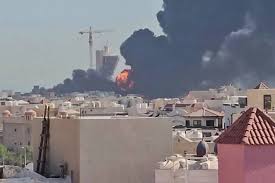
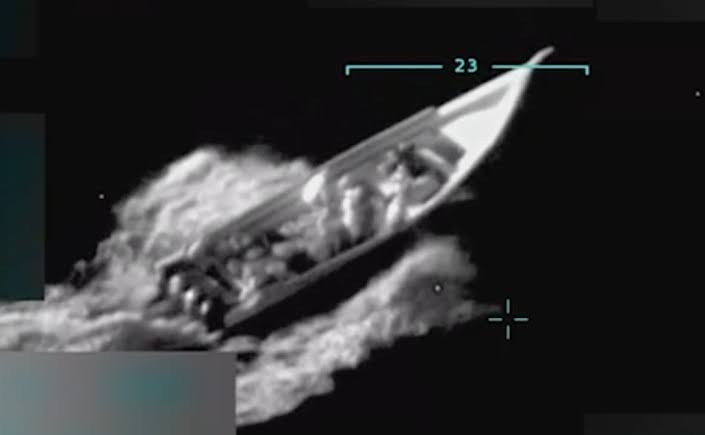
Iran sits on the northern shore of the Strait of Hormuz, the narrow channel between the Persian Gulf and the Gulf of Oman. Roughly a fifth of the world's oil supply passes through it, along with a large share of global liquefied natural gas. Throughout this war, fear of disruption in the strait has kept a risk premium on crude prices. Tanker insurance and shipping costs have risen with it. Markets react to fear as well as to actual shortages. A single attack on a vessel, or a threat to close the strait, can send prices higher within hours.
A December showdown in Washington could move markets in either direction. If Democrats appear close to forcing an end to the war, traders may begin pricing in a calmer Gulf. Oil prices could ease. If Trump responds with defiance, or if the standoff coincides with new fighting, prices could jump. Uncertainty itself is costly. Markets dislike not knowing whether a war will end in weeks or drag on for another year.
For Nigeria, the effects cut both ways. Oil still provides most of the country's export earnings and a large share of government revenue. Higher crude prices can boost foreign exchange inflows and support the federal budget. On paper, a costly Gulf war looks like a windfall. In practice, Nigeria has often struggled to produce its full oil quota because of pipeline vandalism, theft and underinvestment, so it cannot always pump more when prices rise. And since the removal of the petrol subsidy in 2023, global price swings reach Nigerian consumers far more directly. Higher crude prices mean higher pump prices, higher transport fares, higher food costs and higher bills for the generators that power homes and small businesses.
An end to the war would reverse some of those pressures. Cheaper oil would ease fuel costs and inflation for households. It would also squeeze government revenue and could weaken support for the naira if foreign exchange earnings fall. The growth of domestic refining, led by the Dangote refinery, reduces Nigeria's dependence on imported petrol and diesel. But local refiners still buy crude at prices set on world markets. For the Central Bank of Nigeria, managing the naira through either scenario will require careful handling of reserves and interest rates.
Ghana's exposure is more one-sided. Ghana produces crude oil but still relies heavily on imported refined products such as petrol and diesel. When oil prices rise, the import bill rises with them, increasing demand for dollars and putting pressure on the cedi. The currency has already lost ground this year, and a weaker cedi makes imports more expensive still, feeding inflation. Ghana is also still recovering from its debt crisis and working within an IMF-backed program. A prolonged Gulf conflict that keeps oil prices high would strain that recovery. An end to the war, by contrast, could offer relief at the pump, help stabilize the cedi and give the Bank of Ghana more room to manage inflation.
The wider region faces similar pressures. Most West African countries are net importers of refined fuel. Higher oil prices raise the cost of transport, farming, manufacturing and electricity. They widen trade deficits, weaken currencies and squeeze budgets already stretched by debt payments and shrinking foreign aid. Disruptions around the Gulf can also ripple into Red Sea and Suez Canal shipping routes, raising freight costs for goods moving between Africa, Asia and Europe.
There is a political lesson here too. The future of a war that affects fuel prices in Lagos and Accra will be decided not on a battlefield, and not at a summit of great powers, but in committee rooms and floor votes on Capitol Hill. African governments have no seat in that process. They can, however, prepare for it. That means building fuel reserves, managing foreign exchange buffers carefully, planning budgets around a range of oil price scenarios rather than a single hopeful benchmark, and investing in regional refining capacity that reduces exposure to distant supply shocks.
The coming weeks will reveal how serious this effort is. If Democrats force a December vote on war funding, watch how many Republicans break ranks. Even a small number of defections would signal that support for the war is cracking inside the president's own party. If Republican leaders simply pass a short-term spending bill that pushes the fight into the new year, the decisive battle will come after January 3. Either way, the direction of travel is clear. A Congress that can no longer stop the war with resolutions is preparing to stop it with the budget.
The Vietnam precedent offers both hope and warning. In 1973, a determined Congress did end American bombing in Southeast Asia by cutting off the money. But it took a presidential veto, a compromise and months of political struggle. And the war's final chapter brought consequences that Americans still argue about today. The Iran war will not end neatly, whatever Congress decides. What is changing is who gets to decide.
For West Africa, the measure of this fight will be simple. If December's showdown in Washington moves the war toward an end, the region may see steadier oil markets, calmer currencies and some relief at the pump. If it collapses into a shutdown, a veto battle and an open-ended conflict, Nigerians and Ghanaians will keep paying a share of the cost of a war fought thousands of kilometers away. The vote counts in Washington will soon be written into fuel prices in Lagos and exchange rates in Accra.