DANGOTE RAISES AFRICA INVESTMENT TARGET TO $70 BILLION, PLANS 10,000MW POWER INTERVENTION
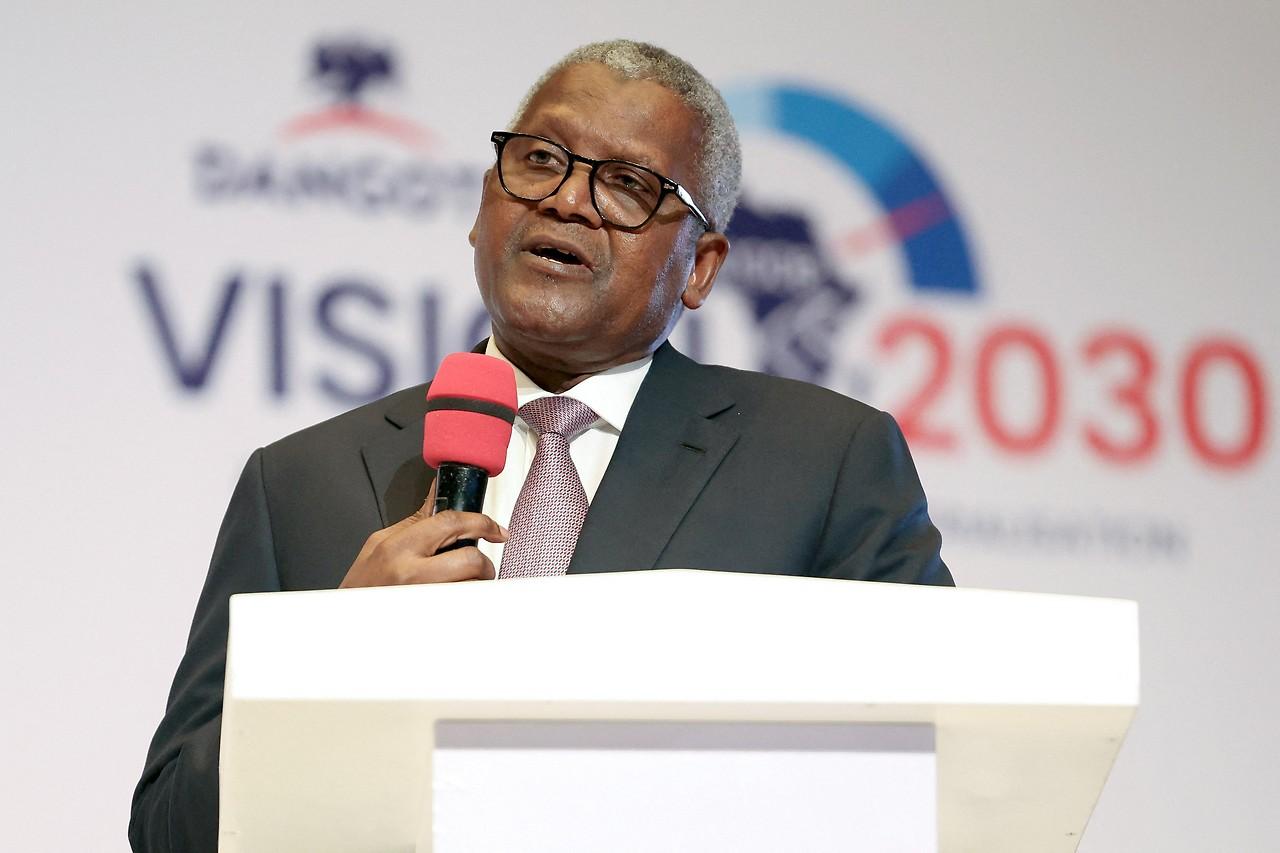
Aliko Dangote has raised Dangote Industries’ planned African investment programme from $50 billion to about $70 billion under Vision 2030 and says the group is considering a separate 10,000MW electricity generation intervention across the continent, potentially including Nigeria. The company already generates almost 1,500MW of captive power for its own operations and expects that internal capacity to rise to between 4,500MW and 5,000MW by 2030. Dangote argues that reliable power, industrial production and job creation are essential to Africa’s economic development, although specific locations, financing structures and timelines for the 10,000MW programme have not yet been announced.
President and Chief Executive of Dangote Industries Limited, Aliko Dangote, has announced plans to raise the group’s investment target across Africa from an initial $50 billion to about $70 billion under its Vision 2030 programmed, while also considering a separate 10,000-megawatt electricity generation intervention aimed at addressing one of the continent’s most persistent barriers to industrial growth. Dangote said the expanded investment ambition would focus on increasing industrial production, strengthening infrastructure, creating jobs and reducing Africa’s dependence on imported goods and unreliable energy systems. He made the disclosure while addressing creative industry stakeholders from Northern Nigeria, including journalists, bloggers, entertainers, content creators and Kannywood stars, as he outlined a broader economic strategy built around manufacturing, energy and private-sector-led development.
Dangote said the decision to increase the investment target reflects the growing scale of opportunities his group is pursuing across the continent and a conviction that African businesses must take greater responsibility for financing the continent’s economic transformation. He argued that Africa cannot wait indefinitely for foreign investors or governments to provide all the capital required for industrial development, particularly in areas such as electricity, manufacturing and infrastructure where persistent shortages continue to limit competitiveness. According to him, the continent has abundant natural resources and a large population, but those advantages will not translate into sustainable prosperity unless businesses can operate with reliable power, modern infrastructure and access to long-term investment.
The proposed 10,000MW power intervention is one of the most ambitious elements of the Vision 2030 strategy because it would represent a major expansion beyond the electricity Dangote Industries already generates for its own operations. Dangote said the group currently produces close to 1,500MW of captive power for its factories, refinery, cement plants and other industrial facilities, and expects that internal capacity to increase to between 4,500MW and 5,000MW by 2030. The separate 10,000MW programme would therefore represent a broader intervention potentially serving industrial clusters, commercial users or national power systems across Africa rather than simply supplying Dangote-owned businesses.
Dangote indicated that Nigeria could be included in the programme, although the group has not yet announced the countries, technologies, financing arrangements or individual project timelines that would make up the 10,000MW target. That means the figure should be treated as a strategic ambition under Vision 2030 rather than as a completed portfolio of approved projects. Developing electricity infrastructure of that scale would require substantial capital, regulatory approvals, fuel or renewable-energy supply arrangements, transmission capacity and long-term agreements with governments, utilities or industrial customers.
The distinction between captive power and wider commercial electricity generation is important because Dangote Industries has historically built its own energy infrastructure primarily to protect its industrial operations from weak public electricity systems. Large factories require uninterrupted power, and in many African markets the national grid has not been reliable enough to support continuous high-volume production. By generating its own electricity, the group has been able to operate cement plants, fertiliser facilities and the Dangote Petroleum Refinery without depending entirely on national power networks that frequently suffer from supply shortages and instability.
The proposed expansion into a broader 10,000MW intervention would therefore represent a significant strategic shift. If the projects are structured to sell electricity to national grids, industrial parks or large commercial customers, Dangote Industries could emerge as one of the continent’s most important private power producers. Such a move would add electricity infrastructure to a portfolio that already includes cement, fertiliser, refining, petrochemicals, logistics and other industrial businesses, further expanding the group’s role in sectors considered critical to African economic development.
Dangote identified unreliable electricity as one of the biggest obstacles facing businesses, particularly small and medium-sized enterprises that cannot afford to build their own generating plants. Many companies across Nigeria and other African countries rely heavily on petrol or diesel generators, increasing operating costs and making locally produced goods more expensive than imports from countries with stable electricity systems. Dangote argued that reliable large-scale power would reduce business costs, improve productivity and make it easier for companies to expand and employ more people.
The power challenge is particularly severe in Nigeria, where businesses and households have historically depended on private generators because grid supply remains insufficient. While large corporations can invest in dedicated power systems, smaller businesses often spend a disproportionate share of their revenue on fuel and generator maintenance. Dangote said this situation weakens competitiveness, limits investment and discourages the growth of industries capable of creating large numbers of jobs.
He argued that the electricity deficit is therefore not simply an infrastructure problem but a wider economic challenge affecting employment, manufacturing and national development. Without reliable power, factories struggle to operate efficiently, small businesses remain trapped at low levels of productivity and investors face higher costs. Dangote’s proposed 10,000MW intervention is being positioned as part of a broader attempt to address those constraints while creating an environment in which African businesses can compete more effectively.
The group’s decision to raise its Africa investment target from $50 billion to about $70 billion represents a substantial expansion of the original Vision 2030 plan. Earlier in November, Dangote had spoken of a $60 billion investment ambition during the launch of a fuel storage and pipeline project in Namibia, before subsequently increasing the figure again. The rapid upward revision indicates that the group continues to add large projects to its continental strategy as new investment opportunities emerge.
Moving from $50 billion to $70 billion represents an increase of about 40 percent in the original investment ambition. At that scale, Dangote Industries would be committing capital comparable to the annual economic output of several smaller African economies. If implemented, the programme could generate substantial activity in construction, manufacturing, logistics, energy, finance and employment across multiple countries.
The Dangote Petroleum Refinery in Lagos illustrates the type of large-scale project behind the group’s Vision 2030 philosophy. The refinery has significantly altered Nigeria’s downstream petroleum sector by introducing large domestic refining capacity in a market that had depended heavily on imported fuel. Dangote has repeatedly argued that African countries should process more of their natural resources locally rather than exporting raw commodities and importing finished products at higher prices.
The group is already planning a significant expansion of the refinery, with Vision 2030 including proposals to increase capacity from around 700,000 barrels per day to approximately 1.4 million barrels per day by 2029. If achieved, the expansion would place the facility among the largest refining complexes in the world and further strengthen Nigeria’s potential role as an exporter of refined petroleum products to African and international markets. Dangote has also announced plans to list the refinery business on the Nigerian Exchange, which could provide additional capital for future expansion while allowing outside investors to participate in the company.
The refinery strategy is closely connected to Dangote’s broader petrochemical ambitions. He has argued that Nigeria should move beyond exporting crude oil and capture more value by producing fuels, plastics, chemicals and other industrial products domestically. According to Dangote, major investment in petrochemicals could generate significant revenue while creating employment and reducing dependence on imported manufactured goods.
That approach reflects a broader shift toward value-added production across Dangote Industries. Cement manufacturing was one of the earliest examples of the strategy, followed by fertiliser, refining and other industrial activities. Power generation could now become the infrastructure that supports the next stage of that expansion because every major industrial project depends on stable energy supply.
The proposed 10,000MW intervention could also create benefits beyond Dangote-owned companies if the electricity is connected to industrial parks, mining operations, manufacturing clusters or public grids. Industrial development often accelerates around areas with dependable electricity because investors are more willing to build factories where energy supply is predictable. Reliable power could therefore attract additional private investment around locations where Dangote’s projects are developed.
The group has not yet disclosed the technology mix it intends to use for the programme. Gas-fired power plants could play an important role because several African countries have significant natural gas reserves, while solar, hydro and other renewable-energy technologies may also become part of the portfolio. The eventual combination will influence the cost of electricity, environmental impact and financing requirements of the programme.
Gas generation offers the advantage of relatively stable baseload power where fuel is available, while renewable systems can reduce fuel costs and carbon emissions but may require additional storage or grid-management infrastructure. Dangote Industries will therefore need to balance reliability, cost and environmental considerations as it develops specific projects.
Nigeria could emerge as a major beneficiary because of the scale of its electricity deficit and industrial market. The country has one of Africa’s largest populations and economies but continues to generate relatively limited grid electricity compared with its size. Businesses often rely on private generation, and the cost of that dependence has become one of the most frequently cited obstacles to industrial expansion.
Dangote said solving the power problem would have direct implications for job creation because businesses would be able to expand production and employ more people. He has repeatedly linked unemployment to wider social and security concerns, arguing that economies with large numbers of young people but limited economic opportunities are more vulnerable to instability. Reliable power and industrial growth, in his view, are therefore part of a broader strategy for social stability rather than simply a corporate investment opportunity.
That argument was particularly relevant to the Northern Nigerian creative-industry stakeholders he addressed. Northern Nigeria continues to face serious challenges involving unemployment, poverty and insecurity, and Dangote used the engagement to connect industrial development with the need to expand opportunities for young people. He argued that sustainable security ultimately depends partly on whether citizens can find productive employment and participate in economic growth.
The creative industries themselves would also benefit from improved electricity infrastructure. Film production, broadcasting, music, digital content creation and entertainment depend heavily on reliable power for studios, editing suites, servers, lighting and distribution systems. High electricity costs therefore affect not only traditional manufacturers but also emerging industries that are increasingly important to Africa’s youth economy.
The meeting with journalists, bloggers, entertainers and Kannywood stars also reflects Dangote Industries’ effort to communicate its investment plans to a wider audience. Large industrial projects can appear disconnected from everyday economic realities, but the group is increasingly presenting electricity, manufacturing and infrastructure as issues directly connected to employment, household incomes and business survival.
Vision 2030 also reinforces Dangote’s long-standing belief that African companies should expand across national borders. Dangote Cement already operates in several countries and has become one of the continent’s largest industrial businesses. The group has used that network to demonstrate that African-owned companies can build large-scale operations across multiple jurisdictions rather than depending on foreign multinational firms to dominate major sectors.
The company is now exploring or developing additional projects across West, East and Southern Africa, including investments connected to fuel storage, cement, refining, fertiliser and energy. Namibia recently emerged as one of the most visible examples when Dangote announced plans for a fuel storage and pipeline project near Walvis Bay. That announcement was accompanied by a $60 billion Africa investment target before the figure was revised upward again.
The fact that the target has moved from $50 billion to $60 billion and now about $70 billion suggests that Vision 2030 remains an evolving programme rather than a fixed list of projects. Dangote has presented the current figure as the group’s latest ambition, and further additions could change the total again as new opportunities are identified. The scale of the programme will therefore depend heavily on how quickly the group can secure financing and execute projects across different markets.
Financing will be one of the most important challenges because a $70 billion programme requires access to enormous amounts of long-term capital. Dangote Industries is expected to rely on a combination of internal cash flow, bank financing, capital-market transactions and strategic partnerships. The group already carries significant financial obligations associated with the refinery and other projects, meaning lenders and investors will closely examine how future expansion is structured.
The planned listing of the refinery could help raise additional capital and diversify funding sources. Dangote Industries may also consider bringing external investors into selected businesses or projects where partnership financing reduces the pressure on the group’s balance sheet. Large power projects are particularly suited to project-finance structures in which repayment depends on long-term electricity revenues.
Dangote has also called on African banks and financial institutions to provide more support for large industrial projects. He argues that the continent cannot achieve meaningful industrialisation if local financial systems remain unwilling or unable to fund companies building infrastructure. At the same time, he has acknowledged that investor confidence depends on strong corporate governance, policy stability and transparent financial management.
The financing issue is especially important for electricity because power plants require heavy upfront investment and typically operate over several decades. Investors therefore need predictable tariffs, stable regulations and credible customers capable of paying for electricity. Many African power sectors have struggled with utility debt, politically sensitive tariffs and weak transmission networks, making project financing difficult.
Dangote Industries will therefore need to carefully choose the markets where it deploys the 10,000MW programme. Countries with strong industrial demand, reliable regulatory frameworks and credible electricity buyers may attract the largest investments. Large private industrial customers could also provide more predictable revenue than national utilities in some markets.
Combining electricity generation with existing industrial operations could reduce that risk. Dangote already has major factories across several countries, meaning those facilities could serve as anchor customers for new generating capacity. Excess electricity could then potentially be supplied to surrounding industries, communities or national grids where regulations allow.
The group’s existing captive-power portfolio provides valuable technical experience. Operating almost 1,500MW of electricity generation across industrial sites means Dangote Industries already manages power assets at significant scale. Increasing that capacity to as much as 5,000MW by 2030 would represent a major expansion even without the separate 10,000MW programme.
If both ambitions were eventually achieved, Dangote-related power capacity could approach 15,000MW. That would place the group’s electricity footprint at a scale comparable with the generating capacity of some national power systems in Africa. However, installed capacity does not necessarily equal electricity actually delivered, because fuel shortages, maintenance and transmission constraints can reduce output.
That distinction will matter when assessing the programme. The success of the investment will depend not only on how many megawatts are installed but on how reliably electricity is generated and delivered to customers. Dangote’s criticism of unreliable public power suggests that dependable supply will be one of the key benchmarks by which the projects are judged.
Transmission infrastructure could become one of the biggest challenges. Africa has many examples of generating plants that cannot operate at full capacity because national grids are unable to transmit the electricity produced. Nigeria has experienced this repeatedly, with generation sometimes exceeding the amount the transmission network can safely carry.
A successful Dangote intervention may therefore require investment not only in generating plants but also in transmission and distribution infrastructure. The company has not yet said whether such spending is included within the 10,000MW plan, but large projects may require dedicated lines to connect power stations with industrial customers or national grids.
Private investment in transmission is gaining attention across Africa because governments increasingly recognise that generation alone cannot solve electricity shortages. New regulatory frameworks could allow private companies to build and operate transmission infrastructure, particularly around industrial corridors and economic zones. Dangote Industries could potentially participate in those opportunities if the broader Vision 2030 programme develops as planned.
Nigeria is already pursuing its own electricity reforms, including efforts to strengthen transmission and create areas with more reliable power supply. Any Dangote investment would therefore need to complement rather than duplicate government programmes. Coordination between private generators, regulators and grid operators will be essential if new capacity is expected to improve electricity supply meaningfully.
The scale of the announcement means significant questions remain unanswered. The first is where the 10,000MW capacity will be located. Dangote has made clear that the initiative is continental and potentially includes Nigeria, but no specific country allocation has been released.
The second major question is the type of energy the group intends to use. Gas is likely to remain important, particularly in Nigeria, but renewable energy may become increasingly attractive as global lenders prioritise cleaner projects. The final technology mix could differ considerably from one country to another depending on available resources.
The third question concerns timing. Vision 2030 provides a broad target, but power projects can take several years to plan, finance and construct. If the group expects a substantial portion of the 10,000MW programme to become operational by 2030, development work will need to move quickly.
The fourth issue is financing. Depending on technology and location, building 10,000MW of generation could require tens of billions of dollars. That capital will compete with the group’s refinery expansion, petrochemical programme, cement investments and other Vision 2030 projects.
Dangote Industries’ ability to generate cash from existing operations will therefore be crucial. Cement remains one of the group’s strongest businesses, while the refinery and fertiliser operations provide additional sources of revenue and foreign exchange. Those businesses form the financial foundation for the wider investment programme.
The continental expansion also has important implications for African trade integration. Dangote has repeatedly argued that African economies import goods they have the resources to produce locally. His strategy is built around processing those resources inside Africa and selling finished products across regional markets.
The African Continental Free Trade Area could help support that approach by reducing barriers to cross-border trade. Cement, fertiliser, refined petroleum products and other manufactured goods can potentially be produced in one market and sold across several neighbouring countries. Power is more difficult to trade because electricity requires interconnected grids, but regional power pools already exist in different parts of the continent.
West Africa, Southern Africa and East Africa all have electricity trading arrangements at different levels of development. Additional generating capacity could eventually strengthen those systems if transmission connections improve. Dangote’s power investments could therefore have regional implications beyond the countries in which individual plants are located.
The social impact will depend heavily on how the electricity is distributed. Projects focused primarily on industrial customers could still create significant benefits through factory expansion, employment and economic activity, while projects feeding national grids could provide more direct benefits to households and smaller businesses. The pricing structure will also determine how much the programme improves competitiveness.
Affordable electricity is particularly important because reliable power that remains too expensive will not solve the problems Dangote identified. Small businesses need electricity prices that allow them to operate profitably without returning to generators. The programme will therefore need to balance investor returns with the objective of reducing overall energy costs.
Environmental considerations will also become increasingly important as the projects move from concept to implementation. Africa urgently needs more electricity, but investors are also under pressure to reduce carbon emissions and support cleaner energy systems. Dangote Industries already operates energy-intensive businesses such as cement and refining, meaning its future electricity strategy will attract attention from environmental groups and lenders.
Renewable energy could help reduce the group’s overall emissions, particularly if solar or hydro projects are integrated into industrial operations. Gas could also play a transitional role in markets where coal or diesel generators remain common. The company has not yet announced specific emissions or renewable-energy targets connected to the 10,000MW programme.
Local economic participation will be another important factor. Large power projects require construction companies, engineers, equipment suppliers and long-term maintenance services. If African firms are integrated into those supply chains, the programme could create economic benefits beyond direct employment at power stations.
Technical skills will also be required. Engineers, electricians, technicians and operators will need training to manage sophisticated generation and transmission equipment. Dangote has historically invested in technical training around its factories, and Vision 2030 could significantly increase demand for those skills.
That workforce development would align with Dangote’s broader emphasis on youth employment. Africa’s rapidly growing population can become an economic advantage if young people have access to productive jobs, but it can also intensify social pressure if employment opportunities remain limited. Dangote has repeatedly argued that industrialisation is one of the most effective ways to create employment at scale.
His message to Northern Nigerian creative-industry stakeholders therefore went beyond business expansion. He connected electricity, manufacturing and jobs to questions of security and social stability, arguing that economies cannot remain peaceful and prosperous when large numbers of citizens feel excluded from opportunity. That framing is likely to remain central to how Dangote Industries presents Vision 2030.
The ambition is also likely to attract scrutiny because Dangote Industries already holds powerful positions in several strategic sectors. Cement, fertiliser and petroleum refining are economically important industries, and moving aggressively into electricity could further expand the group’s influence. Governments and regulators will therefore need to ensure that new investments operate within transparent competitive frameworks.
Independent regulation will be particularly important where Dangote-owned plants sell electricity to public utilities. Long-term power purchase agreements can create substantial obligations for governments, meaning pricing and contract terms must be transparent and sustainable. The same scrutiny will apply to access to transmission networks and licensing.
Land acquisition and environmental approvals could also become important once specific project locations are announced. Large power plants and transmission lines can affect communities, agriculture and natural ecosystems, making consultation and compensation essential. These issues cannot be evaluated fully until the group publishes more detailed plans.
For now, the 10,000MW announcement should be treated as a strategic commitment rather than a final construction schedule. The $70 billion Vision 2030 target sets the broader scale of Dangote Industries’ continental investment ambition, while the power initiative represents one of the most potentially transformative components within that strategy.
The group’s existing 1,500MW captive capacity demonstrates that it already has substantial experience producing electricity for industrial operations. Increasing that figure to between 4,500MW and 5,000MW by 2030 would by itself represent a significant expansion. Adding a separate 10,000MW external intervention would place power generation among the most important businesses in the group.
If successfully executed, the programme could become one of the largest private-sector electricity investments ever undertaken in Africa. It could support industrial clusters, reduce dependence on diesel generators and improve energy security in markets where the projects are developed. It could also help establish Dangote Industries as a major continental energy company alongside its existing manufacturing businesses.
The risks remain considerable because electricity markets are heavily regulated and require long-term capital. Currency weakness, changes in government policy, unpaid utility bills and infrastructure limitations can undermine otherwise viable projects. Dangote himself has repeatedly emphasised the need for stable policy environments if investors are expected to commit capital over several decades.
Policy consistency is particularly important because power plants cannot be relocated easily once they are built. Investors need confidence that tariffs, taxes and contractual arrangements will remain predictable throughout the life of a project. Governments seeking private electricity investment will therefore need to demonstrate that regulatory decisions will not change arbitrarily.
Nigeria will be one of the most important tests of that argument. The country urgently needs additional electricity but has struggled for years with problems involving transmission, distribution, debt and tariff reform. Private generation can add capacity, but it cannot solve structural problems across the entire power market without broader reform.
Dangote’s continental approach may therefore provide diversification. Investing across several countries would reduce dependence on any single regulatory environment while allowing the group to pursue opportunities where industrial demand is strongest. Africa’s overall electricity deficit is large enough to support substantial investment across multiple regions.
Hundreds of millions of Africans still lack reliable access to electricity, while urbanisation and industrialisation continue increasing demand. That creates a major long-term market for generating capacity, transmission infrastructure and distributed energy solutions. Dangote Industries is positioning itself to become a large participant in that market.
The $70 billion investment target demonstrates the scale of the company’s confidence in Africa’s long-term growth prospects. Dangote has repeatedly argued that the continent possesses the resources and population required to become a major manufacturing centre but lacks sufficient infrastructure and capital investment. Vision 2030 is intended to address some of those gaps through large-scale private investment.
The group’s record suggests it is prepared to undertake projects considered unusually difficult. The Dangote refinery experienced delays, rising costs and significant financing pressure before becoming operational, but its completion demonstrated that projects of exceptional scale can be developed in Nigeria despite challenging conditions. Dangote may now be applying a similar philosophy to electricity infrastructure.
Power, however, creates a different set of challenges because electricity is closely tied to national regulatory systems. Unlike refined petroleum products, which can be exported internationally, electricity usually must be consumed relatively close to where it is generated unless regional grids are strongly interconnected. That makes cooperation with governments and utilities particularly important.
The next phase of Vision 2030 will therefore be judged by the details that follow the announcement. Investors will want to know which countries have been selected and how the projects will be financed. Governments will want to understand the expected contribution to national power systems, while local communities will look for evidence of employment and improved electricity access.
Dangote Industries will also need to explain whether the 10,000MW programme will be delivered through wholly owned projects, joint ventures or partnerships with governments and other investors. Large infrastructure programmes often require several financing models rather than one uniform approach.
For now, Dangote’s announcement provides the clearest indication yet that electricity will become a central part of his group’s future strategy. Raising the Africa investment target from $50 billion to about $70 billion represents a major expansion of Vision 2030, while the proposed 10,000MW intervention demonstrates that the group increasingly views reliable power as essential to every other industrial objective.
Dangote’s central argument is that Africa cannot achieve industrial transformation while businesses continue relying on expensive generators and weak electricity systems. Manufacturing will remain uncompetitive, small businesses will struggle to grow and job creation will remain insufficient unless power infrastructure improves substantially.
Whether Dangote Industries can deliver the full scale of its ambition remains uncertain, particularly given the enormous financing and regulatory requirements involved. However, even partial implementation of the $70 billion investment programme and the proposed power expansion could have significant consequences for industrial growth across the continent.
If the projects succeed, Dangote Industries could become an even more influential force in African infrastructure, extending its role from cement, refining and fertiliser into large-scale electricity generation. The programme could support manufacturing, create jobs, strengthen regional trade and provide a new model for private-sector participation in African infrastructure.
Vision 2030 is therefore evolving beyond a conventional corporate expansion plan. It represents a broader bet that Africa’s next phase of economic growth can be driven by local manufacturing, reliable infrastructure and African-owned capital at a scale rarely attempted by a private company on the continent. Dangote is positioning his group to become one of the central investors in that transformation.